Earring Tape Guide: Supporting Heavy Drops and Securing Cuffs
Discover the technical science of earring tape. Learn how to use silicone lobe supports and acrylic adhesives to secure heavy drops and ear cuffs.

The Biomechanics of Earlobe Sagging and Earring Weight
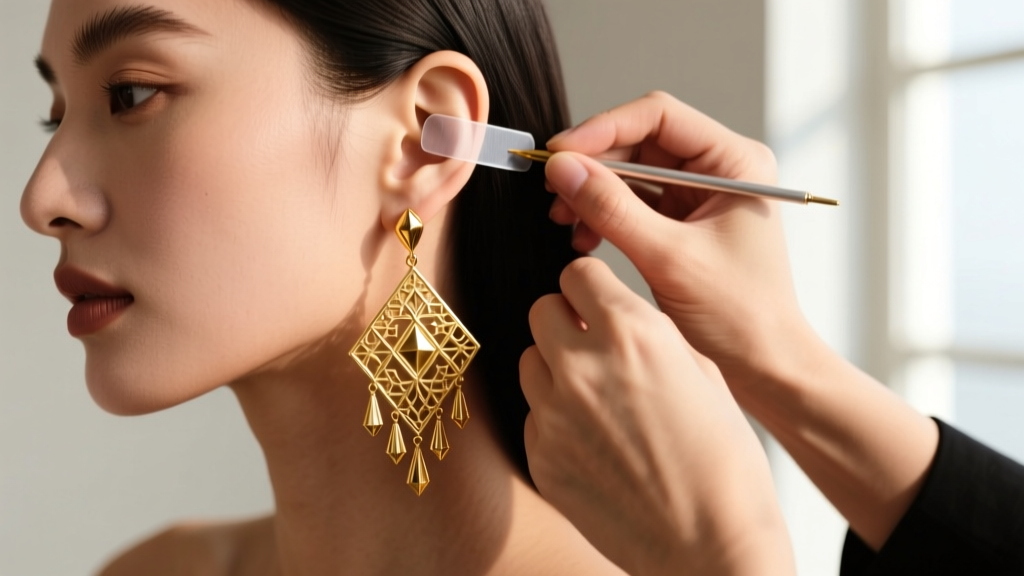
The human earlobe, anatomically known as the lobule, is a unique structure. Unlike the upper ear, which is reinforced by a rigid framework of elastic cartilage, the lobule is composed entirely of areolar connective tissue and adipose (fat) cells. This lack of structural rigidity makes it highly susceptible to mechanical creep—a phenomenon where tissue permanently elongates under sustained stress. As of 2026, the fine jewelry market has seen a massive resurgence in architectural, high-carat drop earrings and solid gold statement pieces that frequently exceed 20 to 30 grams in weight.
When a heavy drop earring is suspended from a standard 20-gauge or 18-gauge piercing, gravity exerts a continuous downward shear force. Over time, this stretches the piercing channel and thins the inferior aspect of the lobule. Earring tape is not merely a cosmetic fashion hack; it is a vital structural exoskeleton. By distributing the localized shear force of the earring post across a broader surface area of the posterior lobule, earring tape neutralizes the downward vector, preserving tissue integrity and keeping heavy drops oriented perfectly forward.
Material Composition: Silicone vs. Acrylic Earring Tape
Not all earring tape is created equal. The efficacy and dermatological safety of the tape depend entirely on its chemical composition. Understanding the difference between pressure-sensitive silicone adhesives (PSAs) and acrylic-based adhesives is critical for both jewelers and collectors of fine jewelry.
Medical-Grade Silicone Tape
Silicone earring tape utilizes a silicone gel adhesive layer. Silicone is inherently hypoallergenic and possesses a lower modulus of elasticity, meaning it stretches microscopically with natural facial movements and jaw articulation without losing adhesion. It relies on van der Waals forces for adhesion rather than aggressive chemical bonding. This makes medical-grade silicone tape the gold standard for supporting heavy lobe drops, as it can be gently removed and reused without stripping the stratum corneum (the outermost layer of skin).
Acrylic-Based Fashion Tape
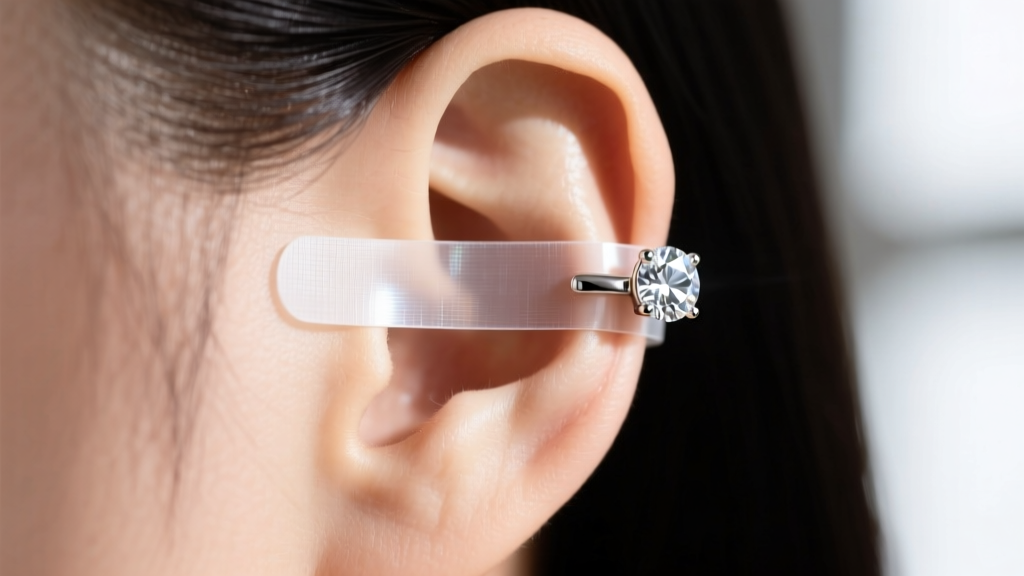
Standard double-sided fashion tape relies on acrylic pressure-sensitive adhesives. These offer aggressive initial tack and high shear strength, making them ideal for anchoring rigid, non-pierced ear cuffs to the helix or tragus cartilage where sebum production is higher and skin movement is minimal. However, acrylates are notorious contact sensitizers. Prolonged use of acrylic earring tape on the delicate skin behind the ear can lead to allergic contact dermatitis (ACD), a significant concern for daily wearers.
Tensile Strength and Adhesion Metrics
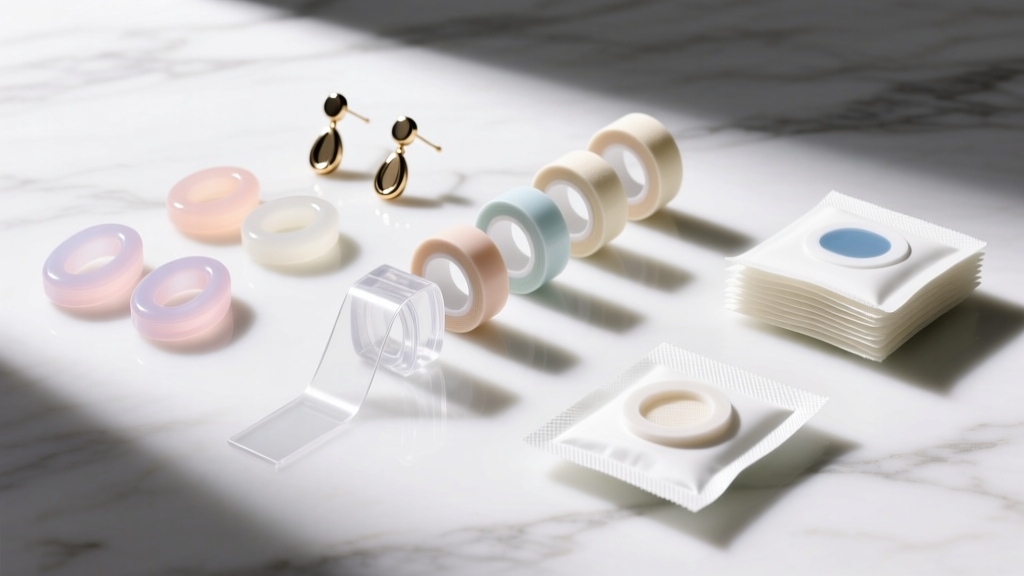
When selecting an earring tape for specific jewelry types, it is essential to match the adhesive properties to the biomechanical demands of the piercing site. The following data table outlines the technical specifications of common earring support materials.
| Material | Adhesive Type | Shear Strength | Reusability | Sensitization Risk | Ideal Application |
|---|---|---|---|---|---|
| Medical Silicone | Silicone Gel PSA | Low-Medium | High (Washable) | Very Low | Heavy lobe drops, sensitive skin |
| Acrylic Fashion Tape | Acrylic PSA | High | Single-Use | Moderate-High | Ear cuffs, helix anchors |
| Hydrocolloid Patches | Moisture-Activated | Medium | Single-Use | Low | Post-piercing support, lobe repair |
Application Protocols for Heavy Fine Jewelry
Proper application of earring tape requires meticulous skin preparation and precise placement. Failure to prep the skin adequately will result in adhesive failure within hours, especially in high-humidity environments or during events where perspiration is likely.
Securing 30g+ Drop Earrings
For substantial drop earrings, the goal is to create a load-bearing bridge behind the earlobe. Begin by cleansing the posterior lobule with 70% isopropyl alcohol to strip away natural sebum and dead skin cells. Allow the alcohol to flash off completely. Cut a piece of medical-grade silicone tape to match the exact dimensions of the earring's backing plate or clutch. Apply the tape to the skin, pressing firmly for 15 seconds to activate the pressure-sensitive adhesive. Crucially, wait an additional 60 seconds before inserting the heavy earring post. This curing time allows the silicone gel to achieve maximum surface contact and optimal shear resistance.
Anchoring Non-Pierced Ear Cuffs
Ear cuffs placed on the upper helix or conch rely on tension to stay in place, but they are prone to slipping due to the natural oils produced by the scalp and hair products. To secure a cuff, apply a micro-strip of acrylic earring tape to the inner curve of the metal cuff, not directly to the cartilage. The acrylic adhesive will grip the skin's texture, preventing rotational slipping. Because the upper ear has less adipose tissue, the rigid acrylic tape provides the necessary structural lock without the flexibility of silicone, which would allow the cuff to pivot.
Dermatological Safety and Removal Protocols
The most common point of failure with earring tape occurs during removal. Peeling acrylic tape away from the skin at a 90-degree angle can cause epidermal stripping, leading to micro-tears, erythema (redness), and compromised skin barriers. Furthermore, repeated exposure to acrylate adhesives can trigger a Type IV delayed hypersensitivity reaction, as documented by the DermNet NZ dermatological database.
To safely remove earring tape, never pull it dry. Instead, saturate a cotton swab with a lipid-based solvent such as pure squalane oil, jojoba oil, or a dedicated medical adhesive remover. Gently massage the oil into the edges of the tape. The lipid molecules will intercalate into the adhesive matrix, breaking the van der Waals bonds and allowing the tape to slide off the skin without mechanical traction. Following removal, cleanse the area with a gentle, non-foaming cleanser to remove residual oils before the next application.
Conclusion: Integrating Tape into Fine Jewelry Care
As jewelry designs continue to push the boundaries of scale and weight, the structural limitations of human anatomy must be respected. Earring tape is an essential tool in the modern jeweler's and collector's arsenal. By understanding the material science of silicone versus acrylic adhesives, and adhering to strict application and removal protocols, you can confidently wear 30-gram diamond drops and architectural ear cuffs without compromising your tissue health or risking the loss of heirloom pieces. For further reading on skin safety and jewelry allergies, the American Academy of Dermatology provides comprehensive guidelines on managing contact dermatitis from wearable accessories, while the Mayo Clinic offers excellent clinical overviews on allergic reactions to metals and adhesives.


