Ultimate Guide to Cleaning and Caring for Earring Wire Hoops
Learn expert techniques to clean, sanitize, and maintain earring wire hoops. Prevent metal fatigue and keep your continuous hoops shining like new.

The Unique Vulnerability of Earring Wire Hoops
When it comes to ear jewelry, earring wire hoops occupy a unique space between delicate aesthetics and structural vulnerability. Unlike sturdy clickers or thick huggies, wire hoops—whether they are continuous endless hoops, French wires, or captive bead rings with thin wire segments—rely on slender gauges to pass through the fistula. Most standard earring wire hoops are crafted in 20-gauge (0.81mm) or 18-gauge (1.02mm) thicknesses, with some ultra-fine fashion pieces dipping to 22-gauge. This slender profile makes them exceptionally prone to two distinct issues: surface tarnish from environmental exposure and mechanical metal fatigue from improper handling.
Maintaining these pieces requires more than a quick wipe with a jewelry cloth. It demands an understanding of metallurgy, proper sanitization protocols for sensitive cartilage or lobe piercings, and specific mechanical handling techniques to prevent the wire from snapping. In this comprehensive guide, we break down the exact care, maintenance, and cleaning routines required to extend the lifespan of your favorite wire hoops.
Material-Specific Cleaning Protocols
Not all metals react identically to cleaning agents. Using the wrong chemical solution can strip plating, accelerate oxidation, or damage porous gemstone inlays often found on decorative wire hoops. According to the Gemological Institute of America (GIA), warm water and a mild, phosphate-free dish soap remain the safest baseline for most jewelry, but specific metals require targeted approaches.
| Material | Recommended Cleaner | Agents to Avoid | Ultrasonic Safe? |
|---|---|---|---|
| 14k/18k Solid Gold | Mild dish soap + warm water | Chlorine, bleach | Yes (if no porous gems) |
| Sterling Silver (925) | Silver polish or baking soda paste | Rubber bands, salt water | Yes (with caution) |
| Implant-Grade Titanium | 70% Isopropyl alcohol or saline | Harsh abrasives | Yes |
| Gold-Plated / Vermeil | Damp microfiber cloth only | Liquid soaps, ultrasonic | No |
Gold and Platinum Wire Hoops
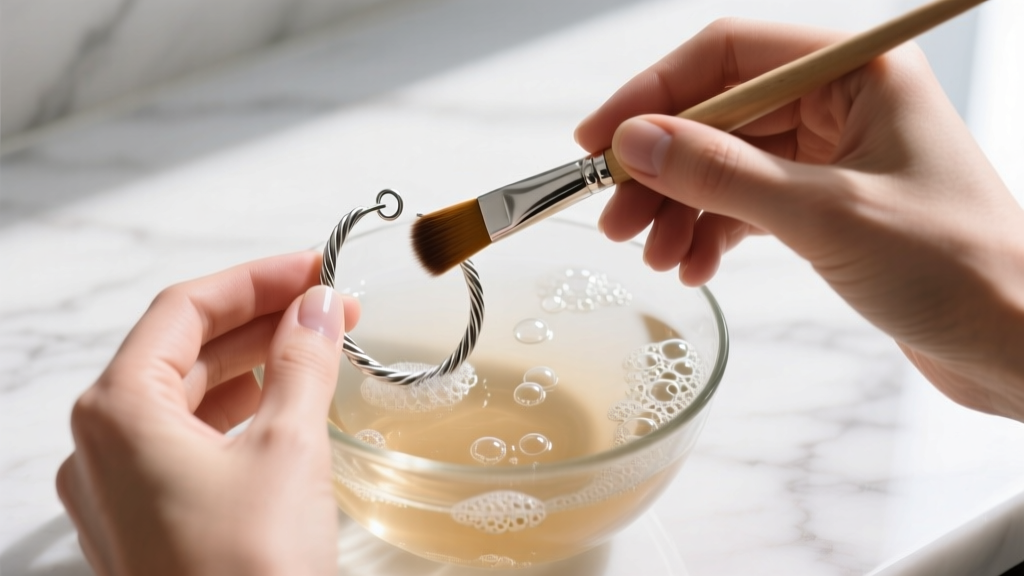
Solid gold and platinum earring wire hoops are highly resistant to tarnish but easily accumulate sebum, dead skin cells, and cosmetic residues. To clean them, mix a few drops of phosphate-free dish soap (like Dawn) into a bowl of warm distilled water. Let the hoops soak for 10 to 15 minutes. Use a baby toothbrush with extra-soft bristles to gently sweep the wire, paying special attention to the tension joint or the small groove where the wire locks into the receiving tube. Rinse with distilled water and pat dry with a lint-free microfiber cloth.
Sterling Silver and Oxidation Management
Sterling silver wire hoops are notorious for sulfide tarnish, which manifests as a dull, blackish film. If your hoops lack gemstones, you can use a specialized silver dip for 10 seconds, followed by an immediate and thorough water rinse. However, if your wire hoops feature oxidized (blackened) detailing, avoid silver dips entirely, as they will strip the intentional patina. Instead, use a treated silver polishing cloth, rubbing strictly along the length of the wire to restore the shine without compromising the crevices.
Titanium and Niobium (Hypoallergenic Options)
For those with nickel allergies, implant-grade titanium (ASTM F136) and niobium are the gold standards for earring wire hoops, especially in fresh or easily irritated piercings. The Association of Professional Piercers (APP) notes that titanium's passive oxide layer makes it incredibly resilient. You can safely sanitize titanium wire hoops using 70% isopropyl alcohol or a sterile saline wound wash. Avoid using harsh abrasive pastes, which can create microscopic scratches on the mirror finish, potentially harboring bacteria over time.
Structural Maintenance: Preventing Wire Fatigue
The most common cause of death for earring wire hoops is not chemical damage, but mechanical failure. 'Work hardening' or metal fatigue occurs when a metal is repeatedly bent back and forth at the exact same stress point. Over time, the crystalline structure of the metal becomes brittle, leading to a sudden, clean snap.
The Correct Way to Open and Close Continuous Hoops
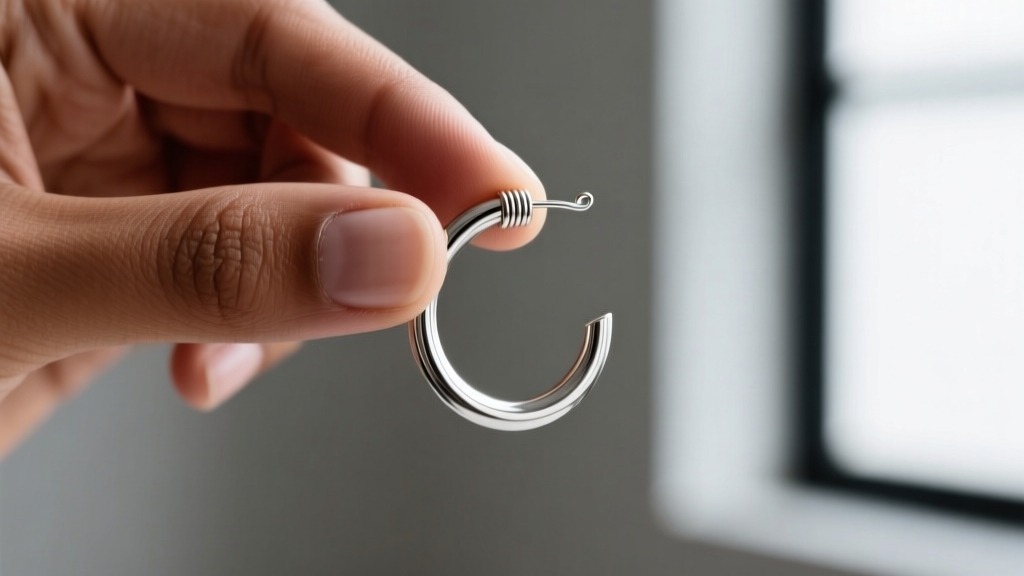
Many wearers mistakenly open continuous earring wire hoops by pulling the two ends apart horizontally, like pulling a wishbone. This lateral stress guarantees eventual snapping. Instead, you must use the twist method. Hold one side of the hoop steady and gently twist the other side towards you or away from you (laterally along the axis of the wire). This opens the hoop in a spiral motion, completely bypassing the stress points that cause metal fatigue. To close, twist it back until the ends align perfectly, then gently squeeze them together.
Tension Calibration for French Wires
French wires (fishhook styles) rely on a delicate curve to sit in the earlobe without falling out. If your wire has been bent out of shape, do not use your bare fingers to reshape it, as the oils and uneven pressure can warp the wire asymmetrically. Use nylon-jaw jewelry pliers to gently coax the wire back into its original 'J' or 'U' curve. Nylon jaws prevent the steel teeth of standard pliers from marring the soft metal of the earring wire.
Sanitization for Sensitive Piercings
Cleaning the jewelry is only half the battle; sanitizing it before insertion is critical for preventing contact dermatitis and localized infections. Wire hoops pass entirely through the fistula, meaning any bacteria trapped in the microscopic grooves of the wire's locking mechanism will be dragged directly into the tissue.
- Daily Maintenance: For worn hoops, wipe the wire post with a cotton swab dipped in 70% isopropyl alcohol before going to sleep to remove daily sebum buildup.
- Deep Sanitization: If you are swapping out hoops or storing them, soak the wire portion in a small cup of 70% isopropyl alcohol for 5 to 10 minutes. Do not exceed 10 minutes, especially if the hoop features glued gemstone settings, as alcohol can degrade cyanoacrylate adhesives over time.
- Ultrasonic Cavitation: For solid metal hoops without porous stones (like opals, pearls, or turquoise), an ultrasonic cleaner using a mild jewelry solution is highly effective. The high-frequency sound waves create microscopic bubbles that implode, blasting debris out of the wire's locking joints and tension seams.
Storage Solutions to Prevent Warping and Tangling
Because earring wire hoops are inherently thin and lightweight, they are magnets for tangling in standard jewelry boxes. A tangled 20-gauge wire hoop can easily kink if pulled forcefully, permanently ruining its circular geometry.
To prevent this, store your wire hoops individually. Thread continuous hoops through small, resealable silicone pouches or specialized anti-tarnish ziplock bags. If you prefer a jewelry organizer, use one with individual felt slots or hang them on a dedicated T-bar stand. Never toss loose wire hoops into a communal drawer where they can become entangled with heavy chains or harder gemstones that could scratch the metal finish.
Conclusion
Caring for earring wire hoops requires a shift in perspective: treat them as precision mechanical instruments rather than mere accessories. By adopting the lateral twist method to prevent metal fatigue, utilizing material-specific cleaning agents, and adhering to strict sanitization protocols, you can ensure your wire hoops remain structurally sound and brilliantly polished for years to come. Whether you are wearing delicate 22-gauge gold threads or durable 16-gauge titanium rings, proper maintenance is the key to effortless, lifelong wear.


