Technical Guide to Earrings Hooks: Wire Gauge & Metal Grades
Master the mechanics of earrings hooks. Explore wire gauge sizes, hypoallergenic metal grades, and ergonomic designs for secure, comfortable wear.

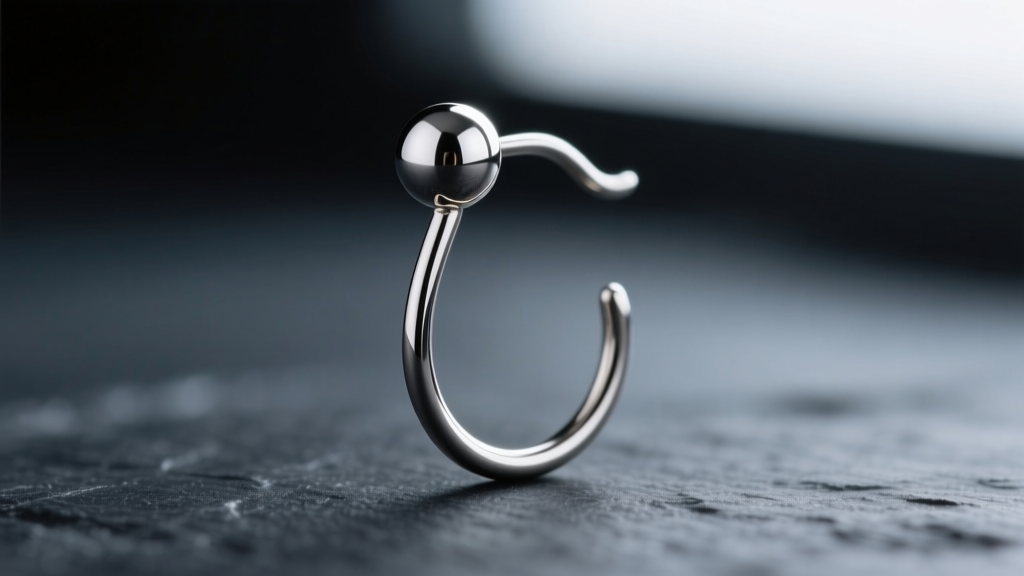
The Engineering Behind Earrings Hooks
When evaluating fine jewelry, consumers and even many jewelers obsess over the center stone or the primary metal alloy of the setting. Yet, the structural integrity and biocompatibility of the entire piece often rest on a component weighing less than a gram: the earring wire. Earrings hooks are not merely passive hangers; they are dynamic load-bearing springs that must withstand the pendulum effect of human movement, resist corrosive sebum and environmental moisture, and navigate the delicate tissue of the earlobe without causing micro-tears or contact dermatitis.
In this expert deep dive, we deconstruct the metallurgy, mechanical engineering, and ergonomic failure modes of modern earring hooks. Whether you are a bench jeweler fabricating custom drops or a collector seeking biocompatible archival pieces, understanding the technical specifications of ear wires is non-negotiable.
The Physics of the Drop: Center of Gravity & Lobe Stress
The primary mechanical challenge of any dangle or drop earring is the pendulum effect. As the wearer moves, the earring swings, creating kinetic energy that transfers directly to the fistula (the piercing channel). If the center of gravity is positioned too far below the earlobe, the leverage multiplies the static weight of the earring, leading to tissue stretching, migration, or catastrophic tearing.
To mitigate this, master jewelers manipulate the anterior curve of the earring hook. A properly engineered French hook features a swept-forward curve that positions the drop's center of gravity closer to the mastoid bone, reducing the sheer force on the lobe. Furthermore, the inclusion of a spherical tip (often called a 'bead' or 'ball end') at the posterior exit of the wire is not merely decorative; it acts as a physical stopper to prevent the wire from sliding completely through the fistula during high-kinetic activities, while its smooth radius prevents the sharp wire edge from scoring the delicate epithelial lining of the piercing channel.
Wire Gauge Specifications & Load Tolerances
Wire gauge dictates the thickness of the metal, directly influencing both the tensile strength of the hook and the comfort of the wearer. The standard piercing size for healed earlobes is 20-gauge, though variations exist based on the intended load of the earring body. According to fabrication standards outlined by Rio Grande Jewelry Supply, selecting the incorrect gauge for a specific drop weight is the leading cause of wire deformation.
| Wire Gauge | Diameter (mm) | Max Recommended Drop Weight | Best Application |
|---|---|---|---|
| 22-Gauge | 0.64 mm | < 2.5 grams | Ultra-lightweight pearls, hollow resin drops, minimalist chains. |
| 20-Gauge | 0.81 mm | 2.5 - 6.0 grams | Standard gemstone drops, medium hoops, everyday dangles. |
| 18-Gauge | 1.02 mm | 6.0 - 12.0 grams | Heavy statement pieces, large cabochons, chandelier earrings. |
Expert Note: Using 18-gauge wire for standard lobes can cause discomfort and gradual stretching if worn continuously. Conversely, using 22-gauge wire for a 7-gram gemstone drop will result in rapid work hardening and eventual snapping at the apex of the curve.
Metallurgy: Decoding Hypoallergenic Alloys
The term 'hypoallergenic' is largely a marketing construct with no standardized legal definition in the United States jewelry market. True biocompatibility requires adherence to specific ASTM (American Society for Testing and Materials) standards. The Association of Professional Piercers (APP) strictly recommends only specific implant-grade materials for initial piercings and sensitive healed fistulas.
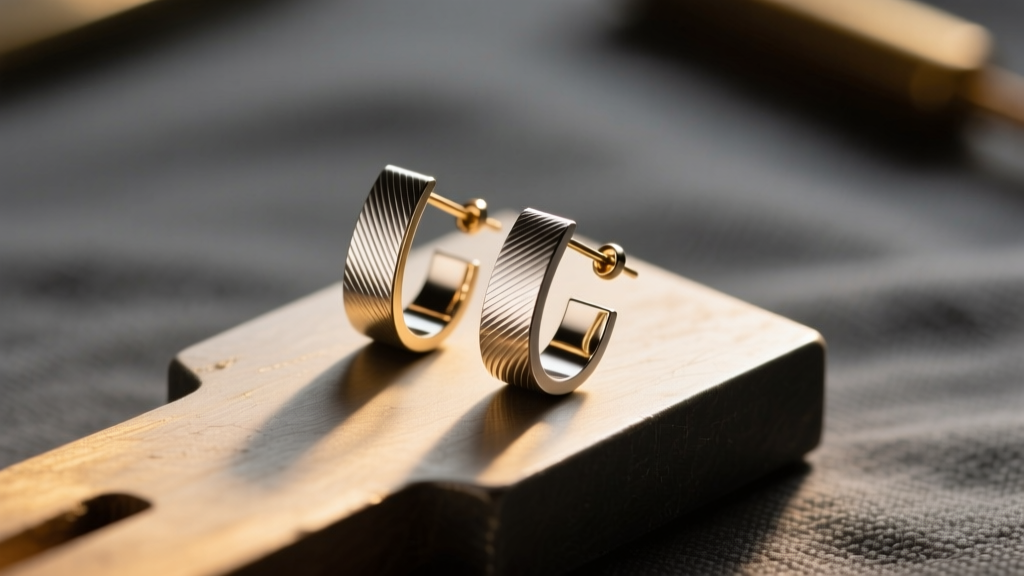
Implant-Grade Titanium (ASTM F136)
Ti6Al4V ELI (Extra Low Interstitial) is the gold standard for sensitive ears. Unlike commercially pure titanium, Grade 23 contains vanadium and aluminum, which increase its yield strength without compromising its biocompatibility. It is entirely nickel-free and highly resistant to chloride-induced pitting, making it impervious to sweat and sebum.
Niobium (ASTM F67)
Niobium is a reactive metal that is highly malleable and completely nickel-free. Because it is not an alloy, there is zero risk of trace metal leaching. Bench jewelers favor niobium for earring hooks because it can be anodized to produce vibrant, permanent colors without the use of toxic chemical baths or surface platings that can wear off inside the piercing channel.
Surgical Steel (ASTM F138)
While 316L stainless steel is common, it does contain nickel (typically 10-14%). The alloy is considered safe for most healed lobes because the nickel is tightly bound within the steel's crystalline matrix. However, individuals with severe nickel allergies will still experience contact dermatitis from 316L hooks due to microscopic surface corrosion.
The EU Nickel Directive vs. US Standards
Jewelers sourcing or manufacturing earring hooks must navigate differing international regulations. The European Union's Nickel Directive (94/27/EC) strictly limits nickel release from post-assembly jewelry to 0.5 µg/cm²/week. In contrast, the US lacks a federal mandate for nickel release limits in adult jewelry, relying instead on California's stricter state-level metal-containing jewelry laws. Consequently, 'surgical steel' hooks manufactured for the US market may fail EU compliance testing, resulting in localized allergic reactions for highly sensitive consumers.
Testing Protocol: To verify compliance, metallurgical labs use the EN 1811 standard, which involves immersing the earring hook in an artificial sweat solution for seven days and measuring the nickel ion concentration via spectrophotometry.
Ergonomic Profiles and Failure Modes
The geometry of the hook dictates its security and longevity. Below is an analysis of the three most common profiles and their inherent mechanical vulnerabilities.
- French Wire (Shepherd Hook): The most ubiquitous profile. Failure Mode: High loss rate. Without a silicone back or a posterior ball end, the smooth wire easily slides out of the fistula when catching on hair or clothing. The open loop at the bottom can also pry open if the drop ring is soldered improperly.
- Leverback: Features a hinged wire that snaps into a locking latch. Failure Mode: Spring fatigue. In mass-produced, cast leverbacks, the internal tension spring or the thin locking tab frequently fractures due to porosity in the casting or low-quality alloy blends.
- Kidney Wire: A continuous loop where the wire hooks into its own eyelet. Failure Mode: Deformation. Because the wire must be thin enough to pass through the eyelet and the lobe, it lacks the structural rigidity of a French hook and easily bends out of its planar alignment when subjected to lateral pressure.
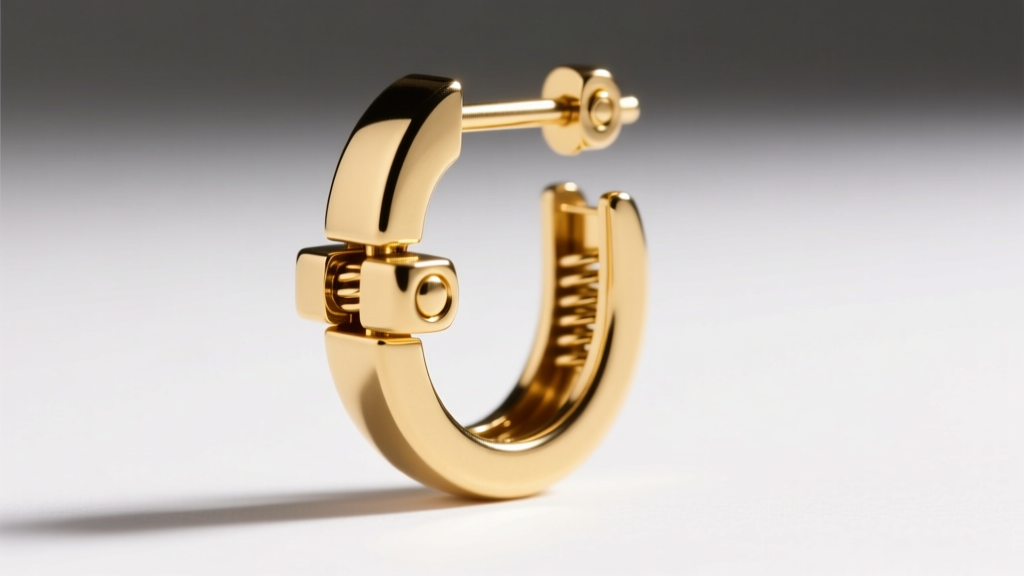
Troubleshooting Metal Fatigue & Work Hardening
One of the most frequent complaints from consumers is an earring hook 'snapping' without warning. This is rarely a defect in the metal's original purity, but rather a consequence of work hardening. When a wire is bent during fabrication, or repeatedly stressed by the wearer putting the earring on and taking it off, dislocations in the metal's crystal lattice multiply. This increases the Vickers hardness of the wire but severely decreases its ductility.
To prevent catastrophic snapping, bench jewelers must anneal the earring hooks after forming them. Annealing involves heating the metal to a specific critical temperature (e.g., 1200°F for sterling silver, or specific lower thresholds for karat golds) and quenching it, which resets the crystal lattice, restoring the wire's flexibility and spring-back memory. If you are hand-forging your own earring hooks from dead-soft wire, always finish the piece with a low-temperature anneal to ensure the hook retains the necessary tensile elasticity to survive daily wear.
Sourcing & Custom Fabrication Standards
When sourcing earring hooks for a fine jewelry line, demand mill certificates from your wire suppliers to verify the exact alloy composition. For custom fabrication, invest in a draw plate to reduce wire to exact 20-gauge or 21-gauge tolerances, ensuring a consistent 0.81mm diameter that will smoothly navigate standard 18-gauge and 16-gauge healed fistulas without causing micro-abrasions. By prioritizing metallurgical purity, precise gauge tolerances, and ergonomic center-of-gravity design, you elevate the earring hook from a mere finding to a masterclass in functional jewelry engineering.


