Earrings In The Bible: Ancient Origins To Modern Trends
Explore the symbolism of earrings in the Bible and how ancient Middle Eastern gold jewelry trends inspire modern ear styling and cartilage piercings.


When we analyze the trajectory of jewelry history, few texts offer as much cultural and metallurgical insight as ancient religious scriptures. The concept of earrings in the bible extends far beyond simple adornment; these pieces were markers of wealth, tribal allegiance, spiritual devotion, and sometimes, idolatry. Today, as the 2026 fashion landscape embraces the "Desert Antiquity" and "Biblical Core" aesthetics, modern jewelers and piercing enthusiasts are looking back to ancient Levantine metalwork for inspiration. From heavy hammered hoops to intricate granulation techniques, the historical references found in scripture are actively shaping contemporary ear curation trends.
The Linguistic and Historical Context of Biblical Ear Adornment
To understand how ancient styles translate to modern ear curation, we must first examine the original Hebrew terminology used in the texts. According to concordance data available via BibleGateway, there are two primary words translated as earrings or nose rings in the Old Testament: agil and nezem.
Agil (עָגִיל): Specifically referring to an earring, often a drop or a pendant style that hangs from the earlobe. This term appears in texts describing the spoils of war and the wealth of the Midianites (Judges 8:24).
Nezem (נֶזֶם): A more versatile term denoting a ring that could be worn in the nose (septum) or the ear. When Abraham’s servant gifts Rebekah jewelry in Genesis 24:22, he presents her with a gold nezem weighing a half-shekel, alongside bracelets.
Historically, these pieces were not the delicate, mass-produced 20-gauge wire loops we see in modern fast fashion. Ancient Middle Eastern earrings were substantial, often crafted from high-karat gold, featuring hammered textures, twisted wire, and granulation—tiny gold beads fused to the surface without solder. This raw, unpolished, and heavy aesthetic is exactly what is driving the 2026 resurgence of ancient-inspired ear styling.
Translating Ancient Texts into Modern Jewelry Design
The transition from historical artifact to wearable modern art requires a deep understanding of both metallurgy and contemporary piercing anatomy. Modern artisans are reviving ancient techniques but adapting them for today's standardized gauge sizes and cartilage placements.
The "Rebekah" Aesthetic: Septum-to-Ear Chains and Heavy Hoops
The gifting of the nezem to Rebekah has sparked a massive trend in interconnected facial and ear jewelry. Modern interpretations frequently feature a 16-gauge (1.29mm) septum clicker ring connected via a delicate, draped 14k gold chain to a 14-gauge helix cuff or a heavy lobe huggie. This mimics the continuous, draped aesthetic of ancient nomadic jewelry while utilizing modern, secure threading systems like internal M2 threading to prevent tissue tearing.
The "Shechem" Minimalist: Burying the Excess
In Genesis 35:4, Jacob commands his household to bury their foreign gods and their agilim (earrings) under the oak tree at Shechem as a symbol of spiritual purification and a break from idolatry. In the context of modern style analysis, this narrative mirrors the "quiet luxury" and minimalist ear curation movement. The "Shechem" aesthetic favors singular, high-quality, implant-grade titanium (ASTM F-136) bezel studs in 18-gauge (1.02mm) for the lobes and 16-gauge for the tragus, prioritizing biocompatibility and sleek, unadorned geometry over maximalist gold.
Material Analysis: Biblical Gold vs. Modern Alloys
One of the most critical aspects of adapting ancient styles is understanding material science. The gold mentioned in biblical texts was often native gold or electrum (a natural alloy of gold and silver), frequently reaching 22k to 24k purity. While historically significant, pure gold is far too soft for modern body jewelry, especially in high-friction areas like the tragus or daith. The Gemological Institute of America (GIA) notes that alloying gold is essential for durability and color manipulation.
| Material Grade | Gold Purity | Historical Equivalent | Modern Application & Durability | Approx. Price Range (Per Stud) |
|---|---|---|---|---|
| 24k Gold | 99.9% | Ancient Biblical Gold | Too soft for body jewelry; bends easily and harbors bacteria in scratches. | $300 - $500+ |
| 22k Gold | 91.6% | Royal / Temple Artifacts | Used only for decorative dangles; not recommended for post or wire insertion. | $200 - $400 |
| 18k Gold | 75.0% | N/A (Modern Invention) | Ideal for 16g/14g hoops and cuffs. Excellent balance of rich color and structural integrity. | $120 - $250 |
| 14k Gold | 58.5% | N/A (Modern Invention) | The standard for 18g/16g threadless push-pins and cartilage studs. Highly durable. | $60 - $150 |
| Implant-Grade Titanium | 0% (Ti-6Al-4V) | N/A | The ultimate standard for fresh piercings and sensitive ears (nickel-free). | $30 - $80 |
How to Style "Biblical Core" Ear Curations in 2026
Creating an ear curation inspired by these ancient texts requires a strategic approach to placement, texture, and motif. Here is a practical framework for achieving this look without appearing costumey.
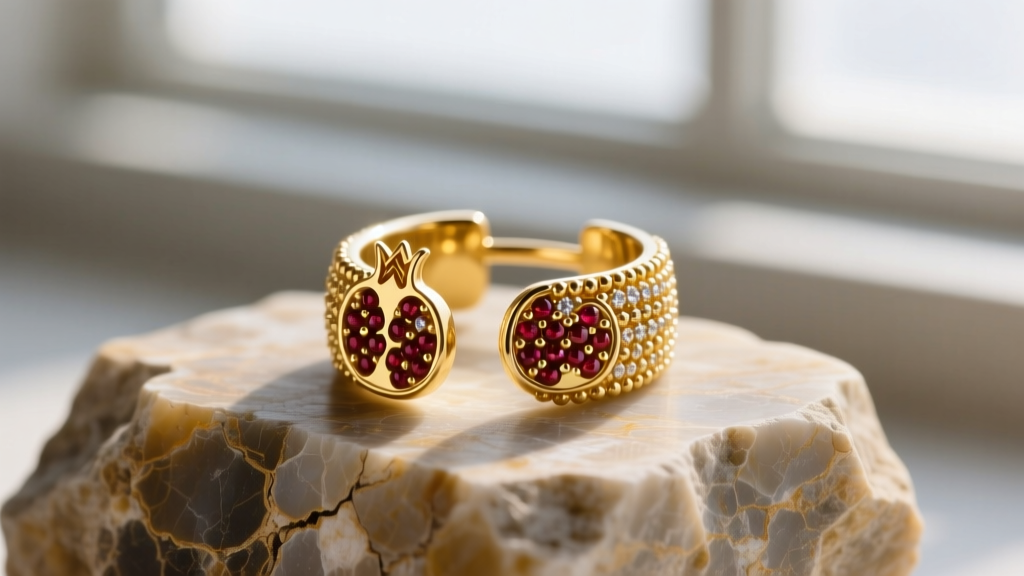
- The Pomegranate Motif: Pomegranates were heavily symbolic in ancient Israelite culture, adorning the hem of the High Priest's robes. Look for 14k gold tragus studs featuring microscopic granulation that mimics pomegranate seeds. A 5mm to 6mm diameter is optimal for the tragus to avoid catching on hair.
- Hammered Huggies for the Lobe: Instead of high-polish modern hoops, opt for 16-gauge or 14-gauge huggies with a hand-hammered finish. This replicates the look of ancient metalwork forged over open flames. Ensure the inner diameter (ID) is precisely measured—usually 8mm to 10mm for standard lobes—to prevent the hinge from pressing into the skin.
- Almond Blossom Helix Cuffs: The almond tree is one of the first to bloom in the Middle East and holds significant biblical symbolism. Ear cuffs shaped like twisted almond branches, wrapping around the upper helix or auricle, provide an organic, asymmetrical look that requires no additional piercing.
- Frankincense and Myrrh Resin Inlays: Some avant-garde jewelers are now encapsulating ethically sourced tree resins in 18k gold bezel settings for conch piercings. This adds a deeply historical, aromatic element to a modern 14-gauge conch stud.

Sourcing Authentic Ancient-Inspired Ear Jewelry
When shopping for pieces that reflect the historical weight of earrings in the bible, provenance and craftsmanship are paramount. Avoid mass-produced, gold-plated brass from fast-fashion retailers, as the base metals can cause severe contact dermatitis, especially in cartilage piercings where blood flow is limited and healing is slow.
Instead, seek out specialized body jewelry artisans who utilize the lost-wax casting method—a technique that dates back thousands of years to the very regions described in biblical texts. Brands that specialize in "archaeological revival" jewelry often use recycled 14k and 18k solid gold, ensuring that the metallurgical integrity is sound while maintaining the aesthetic of antiquity. Always verify that the post or wire is made of ASTM F-136 implant-grade titanium or solid 14k/18k gold, and that the threading is internal or threadless to protect your piercing fistula during insertion.
Final Thoughts on Faith, History, and Ear Adornment
The evolution of earrings in the bible from markers of tribal wealth and spiritual controversy to modern symbols of personal expression is a testament to the enduring power of jewelry. Whether you are drawn to the maximalist, interconnected gold chains of the Midianite spoils, or the quiet, purified minimalism of Jacob's burial at Shechem, ancient history offers a profound well of inspiration for contemporary ear styling. By understanding the historical context, respecting the metallurgy, and adhering to modern anatomical gauge standards, you can curate an ear aesthetic that is not only visually stunning but deeply rooted in human history.


