Best Metals For Earrings Leaf Designs: Material Guide
Discover the best metals for earrings leaf designs. Compare weight, tarnish resistance, and gauge requirements for gold, silver, and titanium.

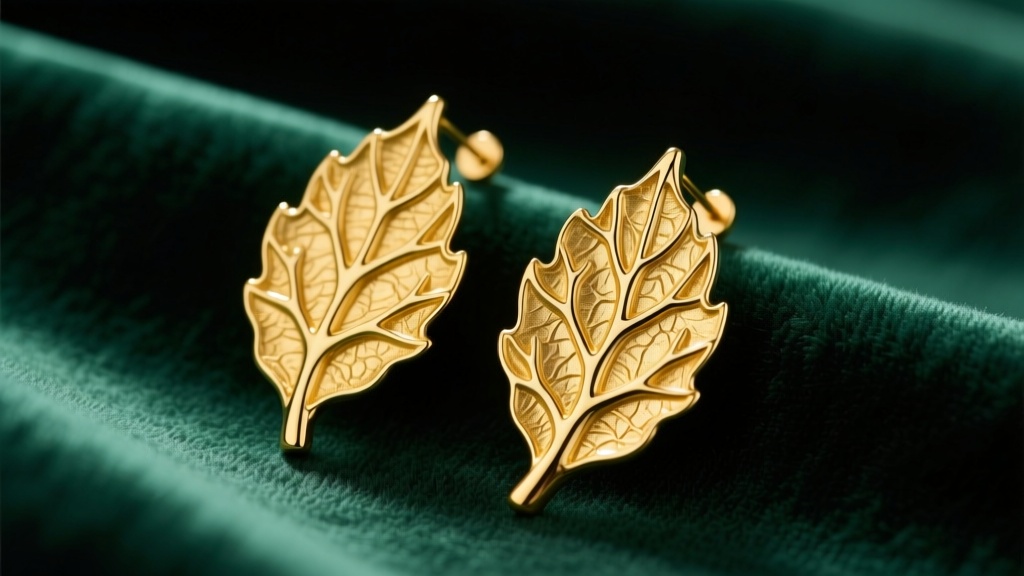
The Unique Engineering Challenges of Leaf Earrings
Botanical jewelry has remained a dominant force in the accessories market, but designing and wearing leaf-shaped earrings presents a unique set of metallurgical and structural challenges. Unlike simple geometric studs or smooth hoops, an earrings leaf motif inherently features a high surface-area-to-volume ratio, intricate micro-crevices, and an asymmetrical weight distribution. When you select a metal for a botanical design, you are not just choosing a color; you are dictating the piece's structural integrity, its susceptibility to environmental degradation, and its long-term comfort on the earlobe.
Large leaf drops act as tiny sails, catching wind and hair, which places disproportionate lateral stress on the earring post and the solder joint connecting the post to the leaf's 'stem.' Furthermore, the deep veins that give leaf earrings their realistic texture are notorious traps for moisture, dead skin cells, and sulfur-rich air, accelerating localized corrosion in reactive metals. Understanding these physical properties is essential for both designers and collectors looking for pieces that will survive daily wear without bending, tarnishing, or tearing the earlobe.
Material Breakdown: Weight, Tarnish, and Detail Retention
Solid Gold: 14k vs. 18k Alloys
Gold remains the premier choice for fine botanical jewelry, but the karatage drastically alters the physical properties of the leaf. Pure 24k gold is far too soft to hold the crisp edges of a leaf vein and will bend under its own weight if the drop exceeds 30mm. Therefore, alloyed gold is mandatory. According to the Rio Grande Metals Guide, 18k gold (75% pure gold) offers a rich, warm yellow hue but possesses a Vickers hardness (HV) of roughly 110-120. This makes it suitable for small to medium leaf studs.
However, for large, dangling leaf earrings with thin, elongated stems, 14k gold (58.5% pure gold) is vastly superior. The higher copper and zinc content in 14k gold increases its hardness to approximately 135-150 HV. This added rigidity prevents the delicate leaf stems from warping when the earring is bumped or caught on clothing. The trade-off is a slightly paler yellow color and a higher risk of nickel or copper allergies for sensitive wearers, making nickel-free 14k alloys a strict requirement for reputable jewelers in 2026.
Sterling Silver and the Crevice Corrosion Trap
Sterling silver (92.5% silver, 7.5% copper) is highly favored for its bright, reflective luster and affordability. It casts beautifully, capturing the microscopic serrated edges of an oak or maple leaf with stunning precision. However, the copper content makes sterling silver highly susceptible to oxidation.
In smooth jewelry, tarnish is easily wiped away. In leaf earrings, the deep, recessed veins create an environment ripe for 'crevice corrosion.' Moisture and sulfur compounds become trapped in these narrow channels, depleting the oxygen and creating an acidic microenvironment that rapidly accelerates tarnishing. To combat this, high-end silver leaf earrings are often plated with a 0.5 to 1.0-micron layer of rhodium or e-coated with a clear anti-tarnish polymer. While the Assay Office London notes that rhodium does not affect the legal hallmark of sterling silver, buyers must be aware that this plating will eventually wear off at the high-friction edges of the leaf, requiring professional re-plating every few years.
Titanium and Niobium: The Lightweight Alternatives
For those seeking dramatic, oversized leaf silhouettes without the agonizing weight of precious metals, aerospace-grade titanium and niobium are revolutionary. Titanium (specifically Grade 23 / Ti6Al4V ELI) is exceptionally strong, completely hypoallergenic, and weighs roughly 45% less than stainless steel and nearly 70% less than gold. A 50mm solid gold leaf earring might weigh a lobe-stretching 14 grams, whereas the exact same volume in titanium weighs a mere 4 grams.
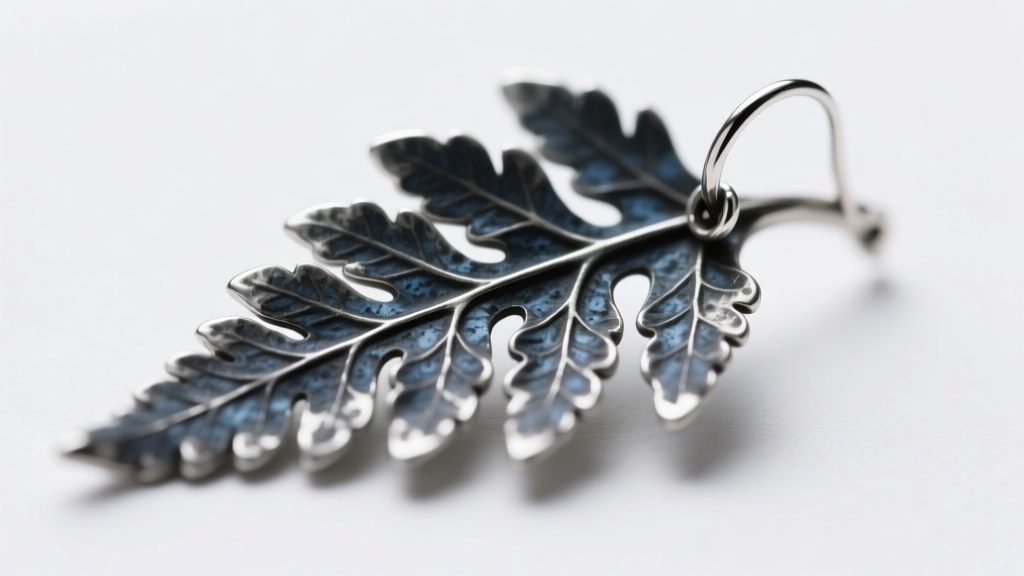
The challenge with titanium lies in its manufacturing. It has a very high melting point and is notoriously difficult to cast using traditional lost-wax investment methods. Therefore, intricate titanium leaf earrings are typically CNC-machined from solid billets or stamped from sheet metal. While this results in incredibly precise, sharp-edged geometric leaf designs (like a monstera or ginkgo), it lacks the organic, fluid imperfections of cast gold or silver. Niobium, meanwhile, can be anodized to produce stunning, permanent iridescent colors—perfect for creating autumnal copper, deep forest green, or vibrant violet leaf finishes without the use of fragile chemical patinas.
Weight, Gauge, and Structural Matrix
The most common failure point in botanical earrings is a bent post or a torn earlobe. Standard earring posts are 20-gauge (0.81mm thick), which is entirely inadequate for heavy, wide leaf drops. When selecting or designing an earrings leaf piece, the post gauge must scale proportionally with the material's density and the design's surface area. Below is a structural matrix for a standard 45mm x 25mm solid leaf drop earring.
| Material | Avg. Weight (per earring) | Minimum Post Gauge | Recommended Backing | Wear Comfort Limit |
|---|---|---|---|---|
| 18k Solid Gold | 11.5g | 16-gauge (1.29mm) | Heavy-duty friction back or locking clutch | 4-6 Hours |
| 14k Solid Gold | 10.2g | 18-gauge (1.02mm) | Standard friction back with wide base | 8-10 Hours |
| Sterling Silver | 6.8g | 20-gauge (0.81mm) | Standard butterfly back | 12+ Hours |
| Grade 23 Titanium | 3.2g | 20-gauge (0.81mm) | Standard butterfly back | 24/7 Continuous |
| Brass (Base Metal) | 9.5g | 18-gauge (1.02mm) | Wide silicone back | Not Recommended |
Surface Treatments: Enamel and Oxidation
Beyond the base metal, the surface treatment of leaf earrings dramatically impacts their longevity and maintenance requirements. Guilloché enamel—a technique where translucent glass enamel is fused over an engine-turned, geometrically engraved metal base—is a staple in high-end botanical jewelry. The light refracts through the glass, mimicking the translucent cellular structure of a real leaf. However, glass enamel is brittle; dropping a guilloché leaf earring on a tile floor will almost certainly shatter the enamel webbing.
Alternatively, chemical oxidation (often called 'blackening' or 'antiquing') is used to darken the recessed veins of silver and copper leaf earrings, creating high contrast and a vintage aesthetic. This is achieved using liver of sulfur. While beautiful, this oxidation layer is merely a surface sulfide and will wear away on the raised, high-contact areas of the leaf over time, requiring the owner to embrace the evolving patina or seek professional re-oxidation.
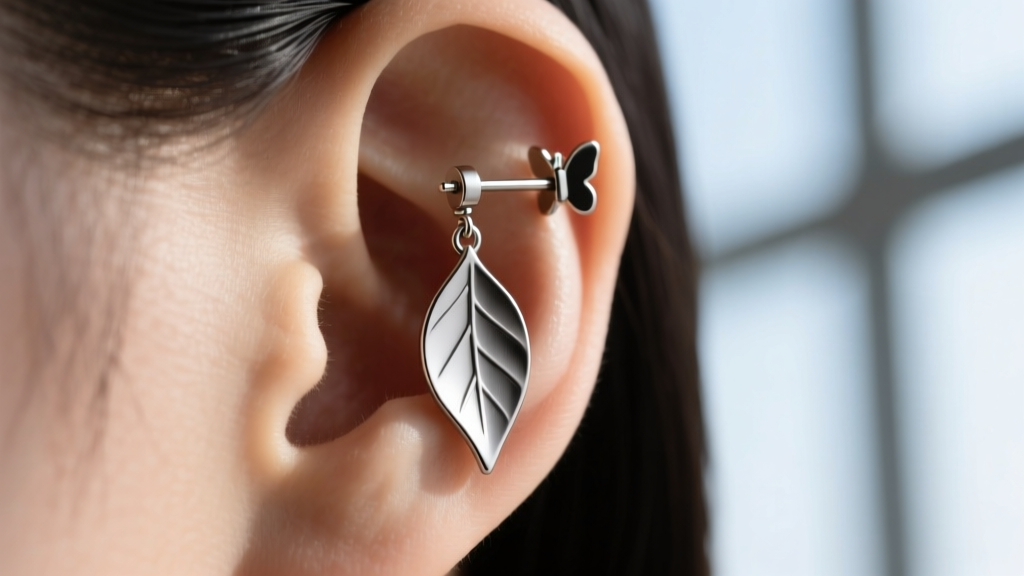
Care and Maintenance for Botanical Crevices
Cleaning leaf earrings requires a departure from standard jewelry maintenance routines. The intricate topography of a leaf design makes them highly vulnerable to improper cleaning techniques.
- Avoid Ultrasonic Cleaners for Treated Pieces: The high-frequency cavitation bubbles in ultrasonic cleaners can easily strip chemical oxidization from silver leaf veins and shatter micro-fractures in enamel finishes. Only use ultrasonics for plain, un-treated solid gold leaf earrings.
- The Soft Brush Technique: For deep vein cleaning, use a baby-soft toothbrush with a drop of mild, phosphate-free dish soap and lukewarm water. Aggressive scrubbing with standard jewelry brushes will leave micro-scratches on the polished high-points of the leaf, dulling the contrast between the shiny surface and the matte veins.
- Drying is Critical: Water spots trapped in the serrated edges of a silver leaf will leave mineral deposits that look like permanent tarnish. Always dry botanical earrings immediately with a blast of compressed air or a low-heat hairdryer to ensure no moisture remains in the micro-crevices.
- Storage Separation: Because leaf edges are often deliberately sharp or pointed to mimic nature, storing them loose in a jewelry box will result in the leaf tips scratching adjacent pearls or gemstones. Store them individually in soft flannel pouches or dedicated compartmentalized slots.
By matching the specific metallurgical properties of gold, silver, or titanium to the structural demands of the botanical design, you ensure that your leaf earrings remain as striking and structurally sound on their hundredth wear as they were on their first.


