Earrings Lyrics Malcolm Todd: Technical Jewelry Deep Dive
Decode the earrings lyrics Malcolm Todd fans love. A technical deep dive into indie-style oxidized silver, raw gems, and precise gauge sizing.

The Sonic Aesthetic: Translating Sound to Metal
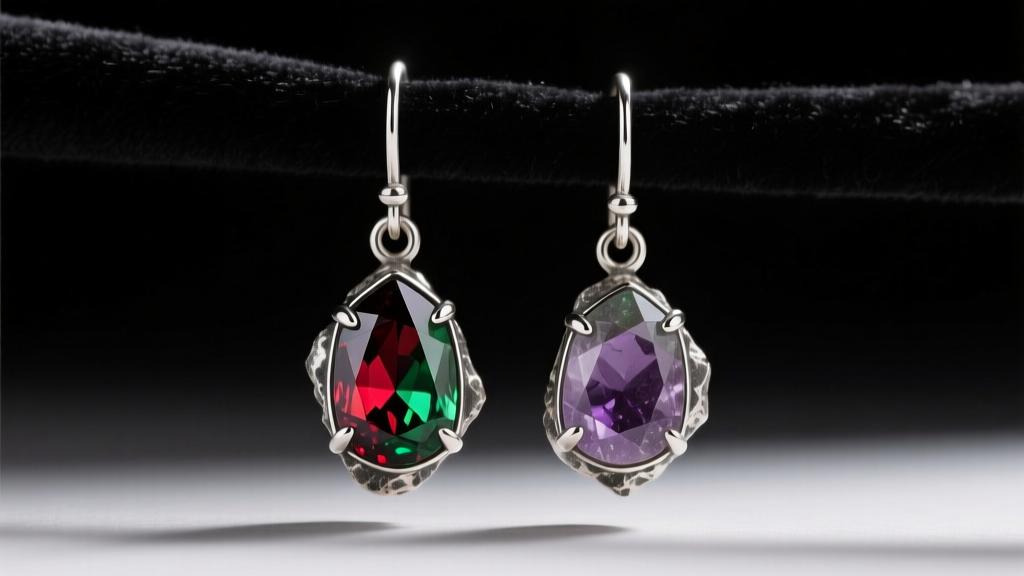
When dissecting the cultural footprint of the earrings lyrics Malcolm Todd fans frequently cite, we uncover a narrative steeped in intimacy, nostalgia, and raw emotion. The indie-R&B artist's evocative storytelling doesn't just resonate auditorily; it paints a vivid visual aesthetic that has heavily influenced contemporary jewelry trends. As we navigate the style landscape of 2026, the intersection of indie music aesthetics and bespoke metallurgy has never been more pronounced. Fans and jewelers alike are attempting to capture that specific sonic melancholy and translate it into wearable art.
However, achieving the "worn, nostalgic" vibe referenced in indie aesthetics requires more than just buying mass-produced vintage-style jewelry. It demands a rigorous understanding of material science, precise gauge sizing, and gemstone durability. This expert deep dive explores the technical execution required to craft earrings that embody the soulful, unpolished essence of independent music, breaking down the exact specifications needed for both lobe and cartilage applications.
Material Science: Achieving the Indie Patina
The hallmark of the indie-jewelry aesthetic is a departure from high-polish, flawless finishes. Instead, it embraces oxidation, texture, and the passage of time. To achieve this, jewelers primarily utilize 925 Sterling Silver, an alloy composed of 92.5% pure silver and 7.5% copper. It is the copper content that allows for the chemical manipulation necessary to create that sought-after moody, darkened finish.
The Liver of Sulfur Oxidation Process
To artificially age sterling silver, master jewelers use Liver of Sulfur (LOS), a mixture of potassium sulfide, potassium polysulfide, potassium thiosulfate, and sodium sulfate. When LOS is dissolved in warm water and the silver earring components are submerged, a chemical reaction occurs, forming silver sulfide (Ag2S) on the surface of the metal.
- Dilution Ratio: A standard darkening bath requires approximately 1 gram of LOS gel per 250ml of warm water (around 50°C).
- Immersion Time: Submerging 20-gauge ear wires for 45 to 60 seconds yields a deep, gunmetal-black patina.
- Neutralization: The chemical reaction must be halted immediately using a baking soda and water bath (1 tablespoon per cup of water) to prevent flaking.
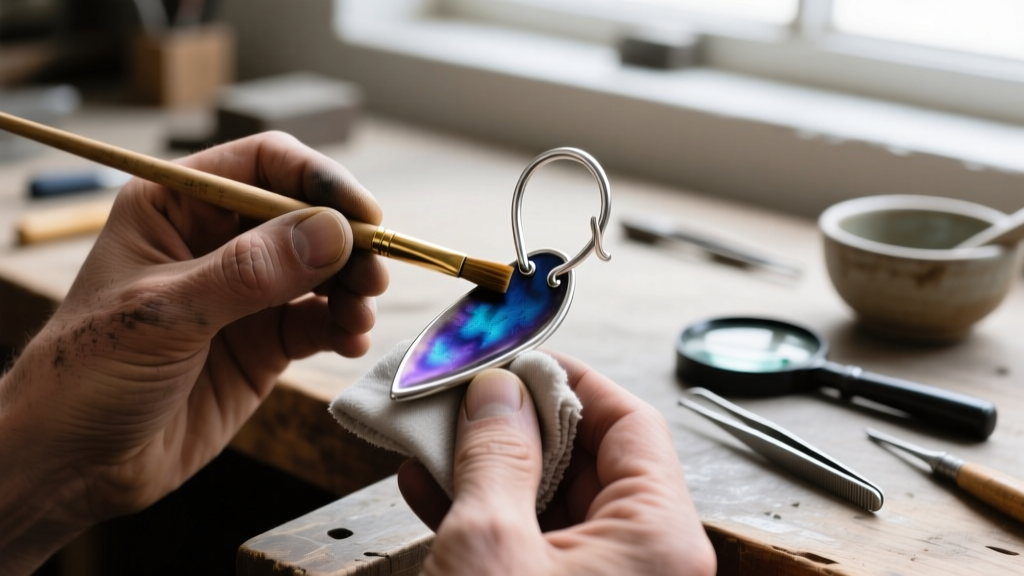
Once oxidized, the jeweler uses a fine-grit polishing cloth or a brass brush to selectively remove the black patina from the high points of the earring's design, leaving the recesses dark. This creates a high-contrast, three-dimensional effect that mimics decades of natural wear.
Troubleshooting Patina Failures
Even experienced bench jewelers encounter issues when oxidizing complex earring designs. Here are the most common failure modes and their technical solutions:
- Flaking or Peeling Patina: This occurs when the LOS solution is too hot or too concentrated, causing the silver sulfide layer to build up too thickly. Solution: Dilute the solution further and reduce the water temperature to 40°C.
- Patchy Oxidation: Often caused by residual polishing compounds or skin oils on the metal. Solution: Ultrasonically clean the sterling silver components in a mild alkaline detergent for 3 minutes prior to LOS immersion.
- Color Shifting to Brown/Gold: This is an intermediate stage of oxidation. Solution: Extend the immersion time by 15-second increments until the sulfur layer thickens into a stable black.
Technical Specifications: Gauges, Findings, and Weight
The structural integrity of an earring is just as critical as its visual appeal. According to the Association of Professional Piercers (APP), understanding gauge thickness is vital for preventing migration and tissue tearing, especially when supporting heavier, raw gemstones typical of the indie aesthetic.
Comparison Chart: Earring Findings and Security
| Finding Type | Standard Gauge | Tensile Security | Best Application |
|---|---|---|---|
| French Wire (Fishhook) | 20g (0.81mm) | Low-Medium | Lightweight drops, occasional wear, standard lobe piercings |
| Leverback Closure | 18g (1.02mm) | High | Heavy raw stones, active lifestyles, secure lobe wear |
| Threadless Push-Pin | 18g-16g (1.02-1.29mm) | Very High | Cartilage, helix, and forward helix placements |
| Clicker Segment Ring | 16g (1.29mm) | Maximum | Daith, rook, and conch piercings requiring structural rigidity |
For dangle earrings inspired by soulful, heavy indie tracks, leverbacks are the superior choice. The internal spring mechanism provides a mechanical lock that prevents the earring from being pulled out by hair or clothing, a common failure point for standard 20-gauge French wires when burdened with heavy gemstone drops.
Gemstone Selection: Raw vs. Faceted Stones
The visual language of indie and alternative jewelry heavily favors raw, uncut, or roughly faceted gemstones over precision-cut diamonds or sapphires. However, selecting raw stones for daily-wear earrings requires a strict adherence to the Mohs Hardness Scale and an understanding of crystal cleavage. The Gemological Institute of America (GIA) provides extensive data on gemstone durability that every jeweler must consult before setting a raw stone.
Durability Analysis of Popular Indie Gemstones
Raw Tourmaline (Mohs 7.0 - 7.5): An excellent choice for drop earrings. Tourmaline lacks distinct cleavage planes, meaning it is highly resistant to chipping if bumped against a surface. Its natural striations and deep, moody greens or pinks perfectly match the emotional depth of indie music aesthetics.
Raw Moonstone (Mohs 6.0 - 6.5): While visually stunning with its adularescence, moonstone has perfect cleavage in one direction. If a raw moonstone drop earring is dropped on a tile floor, it is highly likely to split along its cleavage plane. Jewelers must use bezel settings with reinforced galleries to protect the girdle of the stone.
Raw Opal (Mohs 5.5 - 6.5): Generally discouraged for daily-wear dangle earrings. Opals contain up to 20% water. The kinetic energy from a heavy dangle earring swinging and striking the neck or collarbone can cause internal fracturing (crazing) in raw opals over time.
Piercing Placement and Ergonomics
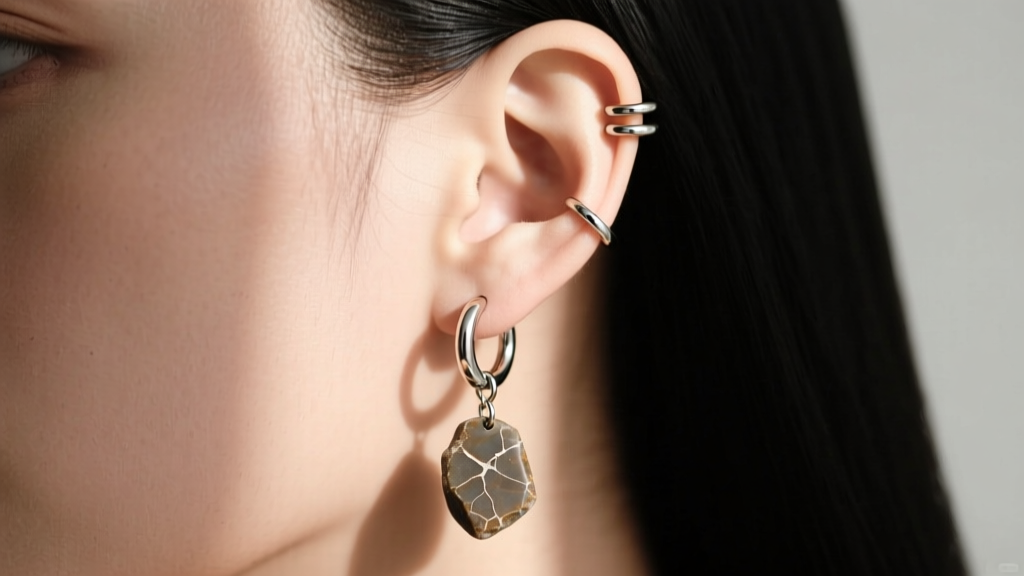
Translating an auditory vibe into a physical ear stack requires an understanding of facial ergonomics and piercing angles. The indie aesthetic often embraces a "curated but effortless" look, which technically means utilizing a mix of threadless ends and hinged segments to create a cohesive flow along the ear's anatomy.
For the lower lobe, a 45mm oxidized sterling silver drop earring featuring a raw tourmaline crystal provides the necessary visual weight. However, to prevent lobe stretching over time, the overall weight of the earring should not exceed 12 grams. If a heavier stone is desired, the design must incorporate an ear cuff or a secondary stabilizing chain that distributes the kinetic load across the upper cartilage.
For the helix and forward helix, 16-gauge (1.29mm) implant-grade titanium (ASTM F136) is the mandatory standard for initial piercings and long-term health. While sterling silver is acceptable for healed lobes, the copper content in 925 silver can cause localized argyria (skin staining) or allergic contact dermatitis in the tighter, more sensitive cartilage channels. Therefore, a true expert bench jeweler will craft the aesthetic elements in oxidized silver but utilize titanium for the actual posts and clicker mechanisms that enter the body.
Conclusion: The Weight of the Music
The enduring appeal of the earrings lyrics Malcolm Todd listeners connect with lies in its authenticity. Translating that authenticity into physical jewelry requires rejecting the shortcuts of mass production. By mastering the chemical oxidation of sterling silver, adhering to strict gauge tolerances, and respecting the geological limitations of raw gemstones, jewelers can create pieces that don't just look the part—they possess the structural integrity and material depth to become lifelong artifacts. In 2026, the most profound fashion statements are those backed by uncompromising technical expertise.


