Elf Ear Jewelry Trends 2026: Cartilage Cuffs & Styling
Discover 2026 elf ear jewelry trends, from implant-grade titanium cuffs to helix chains. Learn gauge sizing, styling frameworks, and slip-proofing tips.

The Anatomy of the 2026 Elf Ear Aesthetic
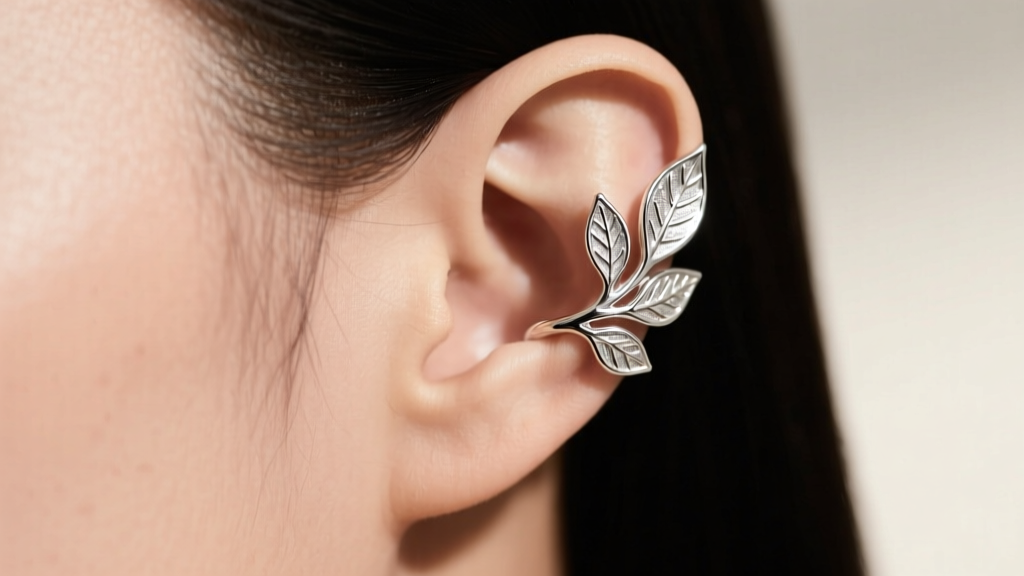
The fantasy-core movement has matured significantly over the past few years, and in 2026, elf ear jewelry has officially transitioned from niche cosplay accessories to high-end, anatomically respectful body jewelry. The modern elven aesthetic no longer relies on silicone prosthetics or heavy, uncomfortable clip-ons. Instead, today’s trend focuses on strategic cartilage illusions. By utilizing the scapha fossa (the flat depression of the upper ear) and the outer helix rim, designers are creating elongated, pointed silhouettes that mimic the ethereal look of elven ears without requiring surgical alteration or complex piercings.
According to trend forecasts featured in Vogue’s analysis of the fairycore evolution, the demand for non-pierced, high-tension ear cuffs has surged by 40% since 2024. However, as the aesthetic moves into luxury and everyday wear, the structural engineering of these pieces has become paramount. A beautiful cuff that slips off when you turn your head is a failed design. In this guide, we break down the exact material grades, wire gauges, and styling frameworks required to master the elf ear look in 2026.
Material Grades & Wire Gauges: Engineering the Grip
The most common failure mode in elf ear jewelry is metal fatigue. When a cuff is repeatedly squeezed to fit over the cartilage and released, lower-quality metals lose their "memory" and fail to maintain the necessary radial tension against the ear. To achieve a secure fit on the upper helix, the wire gauge and metal composition are non-negotiable.
The Gauge Sweet Spot: 18g vs. 16g
While delicate 20-gauge (0.8mm) wire looks ethereal, it lacks the structural integrity to grip the thicker upper cartilage. The industry standard for secure, non-pierced elf ear cuffs in 2026 is 18-gauge (1.0mm) to 16-gauge (1.2mm). This thickness provides enough rigidity to hold its shape against the natural spring of the helix rim, while remaining malleable enough for a jeweler to custom-fit to your specific ear curvature.
Metallurgy: Beyond Basic Brass
Even though ear cuffs do not penetrate the skin, they rest against areas where the skin is thin and highly reactive to sweat and friction. The Association of Professional Piercers (APP) notes that prolonged contact with porous or alloy-heavy metals can cause severe contact dermatitis. Therefore, the 2026 market has largely abandoned cheap cast brass in favor of hypoallergenic alternatives.
| Material | Gauge Standard | Tension Retention | Price Range (2026) | Best For |
|---|---|---|---|---|
| ASTM F136 Titanium | 18g - 16g | Exceptional (High Springback) | $85 - $180 | Sensitive skin, daily wear, active lifestyles |
| 925 Sterling Silver | 16g - 14g | Moderate (Requires Re-shaping) | $45 - $120 | Intricate cast designs, occasional wear |
| 14k Solid Gold | 16g | Low (Soft Metal, Bends Easily) | $250 - $600+ | Luxury statements, custom-fitted by a jeweler |
| Niobium | 18g | High (Anodized Color Options) | $60 - $140 | Color-matching without plating flaking |
Styling Framework: The Helix-to-Lobe Chain Illusion
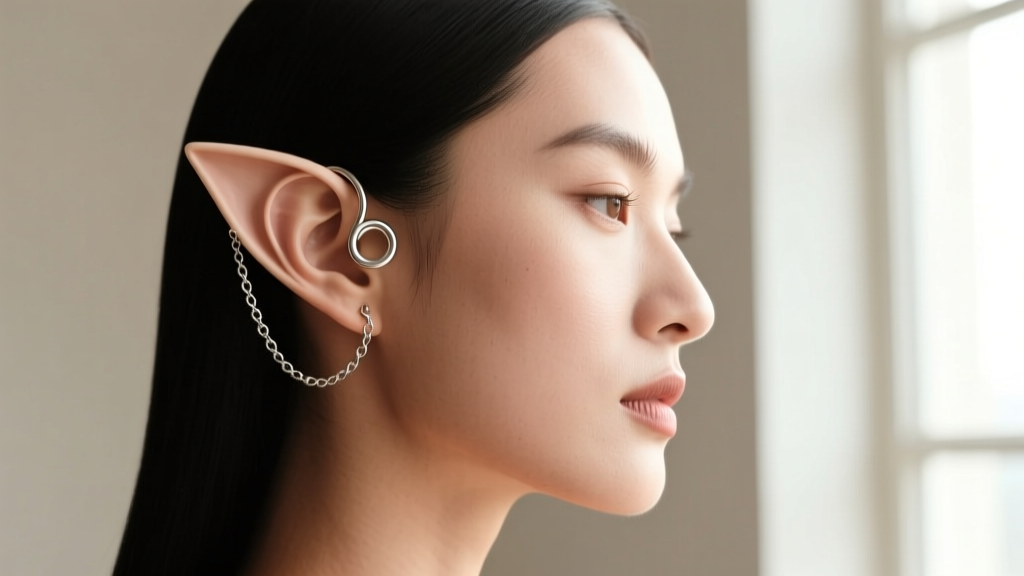
The true secret to the modern elf ear aesthetic isn't just a single cuff; it's the visual manipulation of the ear's verticality. In 2026, the most sought-after styling technique involves the helix-to-lobe ear chain. This piece connects a standard lobe earring (usually a stud or a small hoop) to an upper helix cuff or piercing via a delicate, draping chain.
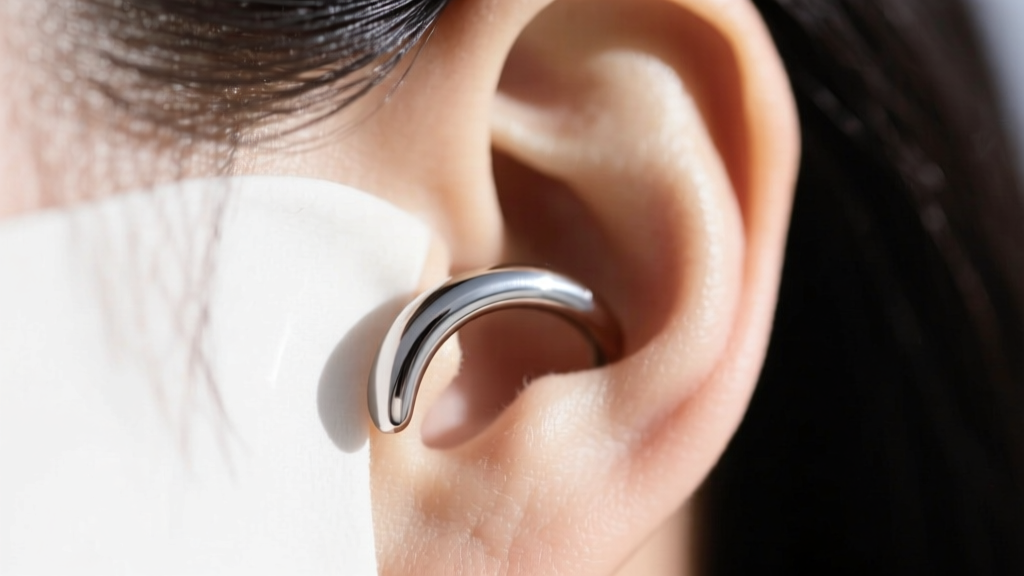
This chain creates a continuous vertical line that visually elongates the ear, drawing the eye upward and outward to mimic a pointed tip. To execute this flawlessly, follow these structural rules:
- The Anchor Point: Your lobe earring must be secure. A heavy chain pulling on a thin, 22-gauge lobe wire will cause tearing. Use a 14g or 12g lobe hoop, or a sturdy flat-back labret stud, as the bottom anchor.
- Chain Weight: Opt for micro-cable or rolo chains (1.2mm to 1.5mm width). Anything heavier will drag the upper cuff down, breaking the tension seal against the helix.
- The Negative Space: Leave the mid-helix and tragus completely bare. Overcrowding the middle of the ear destroys the elongated illusion and makes the jewelry look cluttered rather than ethereal.
Troubleshooting: The Slip-and-Snag Cycle
If your elf ear jewelry constantly slips off or snags in your hair, you are likely experiencing a tension mismatch. The outer helix is not a perfect circle; it is an asymmetrical, rolled ridge. Mass-produced cuffs are typically cast in a generic semi-circle, which fails to account for individual anatomical variations like Darwin's tubercle or a flat scapha.
Adjusting Tension Without Snapping the Metal
Never use your bare fingers to aggressively squeeze a cuff closed, especially if it is made of sterling silver or gold. This creates microscopic stress fractures and work-hardens the metal, leading to sudden snaps. Instead, use nylon-jaw jewelry pliers. The nylon coating protects the metal finish from scratching while allowing you to apply even, controlled pressure to narrow the tension gap by 1-2 millimeters.
"The biggest mistake consumers make with ear cuffs is treating them like rings. You shouldn't be sliding them over the thickest part of your cartilage and yanking them down. You must place them at the thinnest point of the upper helix ridge, gently compress them to lock into the natural groove, and let the metal's springback do the work." — Master Jeweler & Body Modification Specialist, 2026
Managing Hair Friction
For those with long or textured hair, the friction from strands catching on the cuff's decorative elements (like leaves, spikes, or gemstone prongs) is the primary cause of loss. The 2026 solution? Snag-free bezel settings and swept-back motifs. When shopping for elf ear cuffs, look for designs where the decorative elements face outward or downward, rather than hooking upward into the hairline.
Market Pricing & Sourcing Authentic Pieces
As the demand for high-quality fantasy jewelry grows, the market has stratified into distinct tiers. Knowing where to invest your money ensures you get a piece that lasts a lifetime rather than one that turns your skin green after a single wear.
Tier 1: Commercial Fashion ($25 - $60)
Brands in this tier typically use sterling silver or gold vermeil. While beautiful for events, the wire is often too thin (20g or higher), and the plating will eventually wear off at the friction points. These are best reserved for occasional wear.
Tier 2: Artisan & Indie Casters ($80 - $200)
This is the sweet spot for authentic elf ear jewelry. Independent jewelers on platforms like Etsy or specialized body jewelry boutiques use lost-wax casting to create intricate, organic designs (vines, scales, celestial motifs) in solid 925 silver or niobium. They often offer custom sizing based on photos of your ear profile.
Tier 3: Luxury & Custom Body Jewelers ($300 - $800+)
For those who want the elf ear aesthetic in solid 14k or 18k gold, brands like BVLA (Body Vision Los Angeles) and Maria Tash offer bespoke, anatomically mapped ear cuffs. At this price point, you are paying for CAD (Computer-Aided Design) modeling that perfectly matches the unique topography of your helix, ensuring a grip that feels like a second skin.
Final Thoughts on the Elven Silhouette
The 2026 elf ear jewelry trend is a triumph of form meeting function. By understanding the biomechanics of cartilage grip, respecting metal gauges, and utilizing vertical styling chains, you can achieve a flawless, fantasy-inspired silhouette that holds up to the rigors of daily life. Invest in implant-grade titanium or solid metals, respect the tension gap, and let your ear architecture guide the design.


