Emerald Teardrop Earrings: 2026 Trend & Styling Analysis
Discover the 2026 trends for emerald teardrop earrings. Learn how to style, select gemstone grades, and choose the perfect metal settings for your face shape.

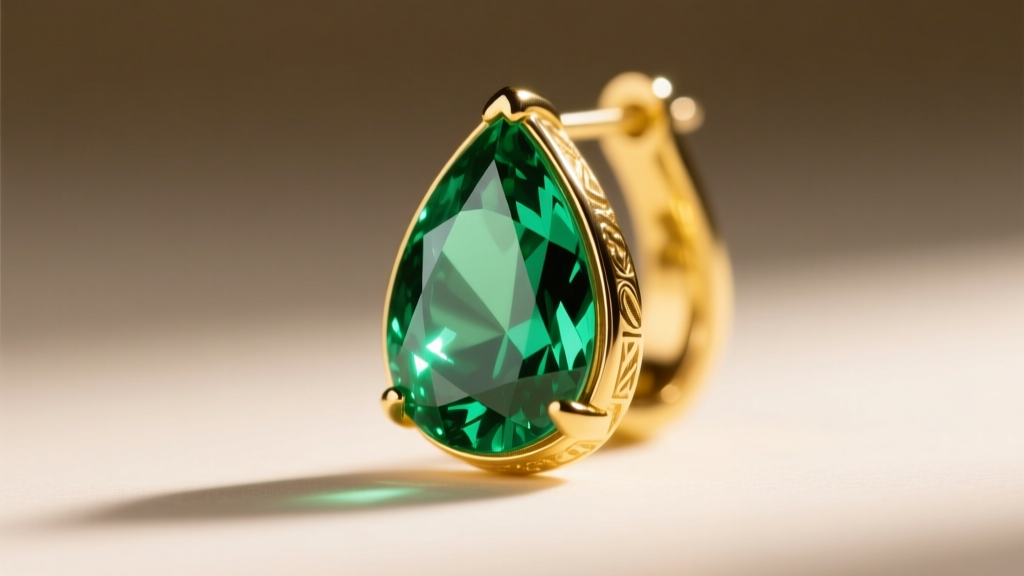
The jewelry landscape in 2026 has decisively pivoted. After years of ultra-minimalist, quiet luxury dominating the market, collectors and style enthusiasts are embracing 'loud character'—pieces with historical weight, vivid color, and organic imperfections. At the forefront of this shift are emerald teardrop earrings. Combining the vintage romance of the pear silhouette with the unmatched, velvety saturation of fine emeralds, these pieces represent the pinnacle of modern heirloom styling. Whether you are navigating the high jewelry market or seeking the perfect statement piece for evening wear, understanding the gemological and architectural nuances of the teardrop emerald is essential.
The Resurgence of the Pear-Cut Emerald in 2026
The pear cut, often referred to as the teardrop, is a hybrid shape that merges the rounded belly of an oval with the tapered point of a marquise. In 2026, we are witnessing a massive departure from the rigid symmetry of round brilliant diamonds in favor of organic, character-rich colored gemstones. The emerald teardrop earring has become a red-carpet staple and a highly sought-after acquisition for private collectors. This surge is driven by a desire for elongation and movement; the teardrop silhouette naturally draws the eye downward, creating a slimming, elegant line that complements modern, architectural fashion silhouettes.
Gemstone Anatomy: Grading Emeralds for Teardrop Settings
Unlike diamonds, which are graded on a strict, standardized clarity scale, emeralds require a more nuanced evaluation. According to the Gemological Institute of America (GIA), emeralds are classified as Type III gemstones, meaning they are almost always included. When selecting emerald teardrop earrings, you must evaluate three critical factors: color saturation, the 'jardin', and cut proportions.
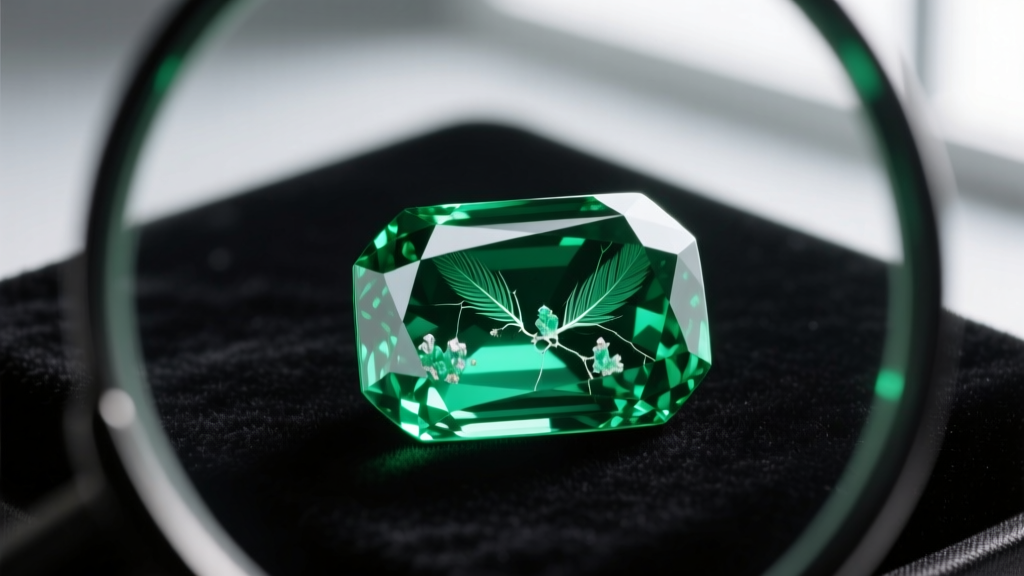
The 'Jardin' and Clarity Expectations
The French term 'jardin' (garden) refers to the mossy, fern-like inclusions natural to emeralds. In 2026, the market has fully embraced the jardin as a fingerprint of authenticity, rejecting heavily treated, glass-clear emeralds in favor of stones with visible, but not structural-compromising, inclusions. However, because the teardrop shape concentrates stress at its pointed tip, you must avoid stones with surface-reaching fractures or heavy carbon spots located near the point of the pear.
Cut Quality: Maximizing the Pear Silhouette
The geometry of the pear cut dictates its brilliance and vulnerability. The ideal length-to-width ratio for a teardrop emerald sits between 1.45 and 1.75. Ratios below 1.40 result in a 'chunky' appearance that lacks elegance, while ratios above 1.80 create a needle-like shape that is highly prone to chipping. Furthermore, gem cutters must carefully manage the 'bow-tie effect'—a dark shadow that can appear across the center of the stone if the pavilion facets are poorly aligned.
Setting Architecture: The Non-Negotiable V-Prong
Emeralds rank between 7.5 and 8 on the Mohs scale of hardness. While this makes them resistant to scratching, their high inclusion content makes them exceptionally brittle and susceptible to cleavage if struck. When setting a teardrop emerald, the pointed tip is the most vulnerable area of the entire stone.
A standard rounded prong is a critical failure point for pear-cut emeralds. Any reputable jeweler in 2026 will mandate a custom-fitted V-prong to encapsulate the tip, distributing pressure evenly and protecting the stone from catastrophic chipping during daily wear.
Additionally, the setting should feature a secure basket or halo that supports the rounded belly of the teardrop, ensuring the stone does not tilt forward when worn on the earlobe.
Metal Pairings & Setting Architectures
The metal chosen for your emerald teardrop earrings drastically alters the stone's perceived color and overall aesthetic. Because emeralds possess a complex secondary hue (often bluish or yellowish), the metal must be selected to enhance, rather than muddy, the primary green.
| Metal Type | Color Effect on Emerald | Durability & Setting Suitability | 2026 Trend Status |
|---|---|---|---|
| 18k Yellow Gold | Amplifies warmth and yellowish-green undertones; creates a vintage, regal look. | Excellent malleability for custom V-prongs; requires periodic polishing. | Highly dominant in heritage and neo-vintage designs. |
| Platinum | Provides a stark, cool contrast that makes bluish-green (Colombian) emeralds pop. | Superior tensile strength; the safest choice for securing brittle teardrop tips. | The standard for high-jewelry and investment-grade pieces. |
| 18k Rose Gold | Creates a striking, complementary contrast (red/green spectrum); softens harsh tones. | Good durability due to copper alloy; offers a romantic, modern aesthetic. | Rising rapidly in alternative bridal and avant-garde fashion. |
Face Shape Mapping for Teardrop Drops
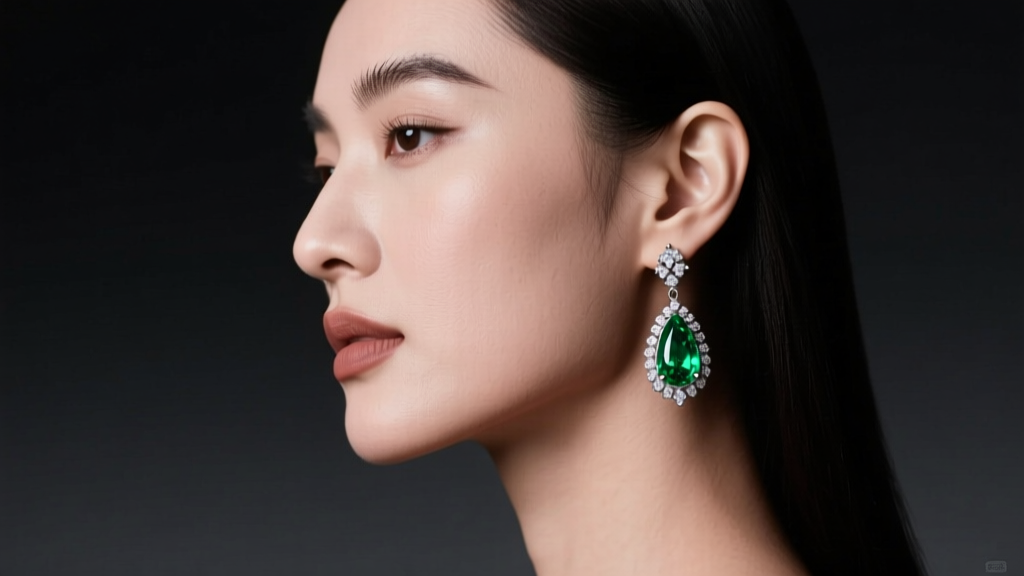
The elongating power of emerald teardrop earrings makes them a versatile tool for balancing facial proportions. However, the drop length and the width of the gemstone's belly must be calibrated to your specific face shape.
- Round Faces: Opt for elongated teardrops with a length-to-width ratio closer to 1.70. The sharp, downward point will visually lengthen the face and draw attention away from the width of the cheeks. Avoid wide, short drops that add horizontal volume.
- Square Faces: Choose teardrops with a softer, wider rounded belly and a shorter overall drop (around 1 to 1.5 inches). The curves of the pear shape will soften a strong, angular jawline without over-elongating the face.
- Heart-Shaped Faces: You want to add visual weight to the lower half of the face to balance a wider forehead. Select teardrop earrings with a pronounced, wide bottom half that sits just below the earlobe, avoiding overly long, dangling chains.
- Oval Faces: The universal shape. Oval faces can carry virtually any teardrop proportion, from short, chunky pear studs to dramatic, 2.5-inch chandelier drops featuring secondary diamond accents.
Treatment Transparency: Oiling and Stability
It is an industry-standard practice, recognized by the GIA's care and cleaning guidelines, to treat emeralds with oils or resins to fill surface-reaching fractures and improve clarity. However, the type of filler dictates the long-term stability of your teardrop earrings.
Cedar Oil: The traditional, accepted method. It is temporary and can dry out over time, requiring re-oiling by a professional jeweler every few years. Ultrasonic cleaners will strip cedar oil, leaving the emerald cloudy and fractured.
Opticon / Polymer Resins: A modern, permanent filler that provides structural integrity to highly included stones. While more durable for daily wear, purists and investment buyers often penalize resin-treated emeralds in the secondary market.
Investment & Pricing Tiers (2026 Market Data)
Navigating the pricing of emerald teardrop earrings requires an understanding of origin and treatment. Colombian emeralds (specifically from the Muzo and Chivor mines) command the highest premiums due to their pure, saturated green hue lacking secondary blue or gray modifiers.
Commercial Tier ($800 - $3,500)
Stones in this range typically feature moderate to significant inclusions, noticeable color zoning, and are likely treated with resins or heavy oils. They are often set in 14k gold with standard prongs. Suitable for fashion-forward, occasional wear.
Fine Jewelry Tier ($4,000 - $15,000)
This tier encompasses well-cut pear emeralds with minor clarity enhancement (cedar oil), vibrant saturation, and eye-clean zones in the belly of the stone. Expect secure 18k gold or platinum settings with proper V-prongs and diamond halo accents.
Investment & High Jewelry Tier ($20,000+)
Reserved for unheated or minimally oiled Colombian or Zambian emeralds exceeding 2.5 carats per stone, boasting exceptional transparency and the coveted 'Muzo green' designation. These pieces are accompanied by reports from top-tier laboratories like Gübelin or SSEF and are set in bespoke platinum mountings.
Conclusion: Styling the Modern Heirloom
Emerald teardrop earrings are not merely accessories; they are wearable history. As 2026 continues to champion individuality and organic beauty over mass-produced perfection, the pear-cut emerald stands out as a masterclass in color and form. By prioritizing proper V-prong architecture, understanding the nuances of the jardin, and selecting a metal that harmonizes with the stone's unique secondary hues, you secure a piece that transcends seasonal trends and cements itself as a permanent fixture in your personal style narrative.


