How to Secure and Style Fish Hook Earring Backs: A Beginner Guide
Learn how to secure, style, and choose the best fish hook earring backs. Expert tips on gauges, materials, and preventing lost dangles.

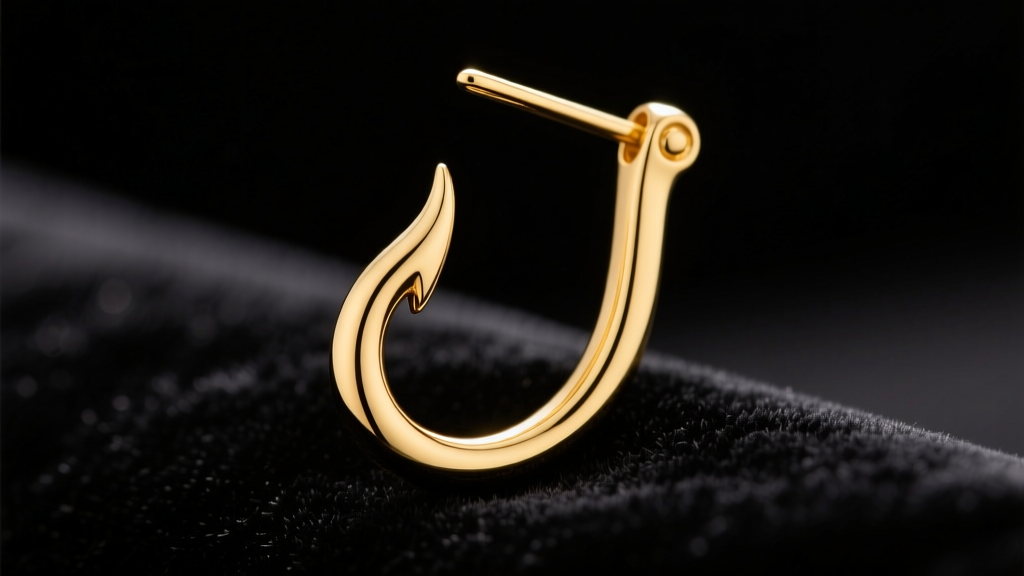
The Anatomy of a Fish Hook Earring Back
Fish hook earring backs—frequently referred to as French wires or shepherd's hooks—are the undisputed champions of dangle and drop earrings. Their elegant, minimalist design allows jewelry to move freely, catching the light with every turn of the head. However, their open-back design is also their biggest vulnerability. For beginners, understanding the anatomy of the fish hook is the first step toward wearing them with confidence.
A standard fish hook consists of three distinct parts:
- The Wire: The straight section that passes through the ear piercing.
- The Bend: The curved arch that rests against the back of the earlobe, providing a friction anchor.
- The Loop: The small closed ring at the bottom where the dangle or charm is attached.
Unlike post-and-clutch earrings that lock mechanically behind the ear, fish hooks rely entirely on gravity, friction, and the natural anatomy of your earlobe to stay in place. When you understand this, securing them becomes a matter of simple physics rather than luck.
Why Do French Wire Earrings Fall Out?
The most common complaint among jewelry enthusiasts is the sudden loss of a favorite dangle earring. To prevent this, we must look at the center of gravity. When an earring is top-heavy or when the dangle extends far below the loop, the weight pulls the bottom of the earring backward. This causes the top of the wire to tilt forward, effectively sliding the wire out of the piercing canal.
Additionally, daily activities create friction hazards. Removing a sweater, brushing your hair, or even talking on a cell phone can catch the exposed back of the wire, pulling it upward and out of the ear. According to jewelry conservation experts, the majority of lost earrings occur during clothing changes or hair grooming, making proactive security measures essential for any French wire wearer.
Material Grades and Gauge Sizes
Not all fish hooks are created equal. The thickness of the wire (gauge) and the metal composition dictate both the comfort and the durability of the earring back. If you have sensitive ears or heavy dangles, choosing the right specifications is non-negotiable.
Understanding Wire Gauges
Earring wire thickness is measured in gauges (G). The higher the gauge number, the thinner the wire. Here is a breakdown of standard fish hook sizes:
| Gauge Size | Millimeter (mm) | Best Application | Durability |
|---|---|---|---|
| 22G | 0.64mm | Featherweight drops, delicate chains | Low (bends easily) |
| 20G | 0.81mm | Standard dangles, medium gemstones | Medium (industry standard) |
| 18G | 1.02mm | Heavy statement pieces, large hoops | High (resists warping) |
Choosing Hypoallergenic Metals
The skin inside the ear piercing canal is highly reactive. If you experience itching or dark discoloration on your earlobes, you are likely reacting to nickel or copper alloys often found in cheap fashion jewelry. The Association of Professional Piercers (APP) strongly recommends implant-grade metals for any jewelry that passes through the body.
- ASTM F-136 Titanium: The gold standard for sensitive ears. It is entirely nickel-free, lightweight, and will not tarnish.
- Niobium: A highly reactive metal that is hypoallergenic and can be anodized into vibrant colors without using plating.
- 14k or 18k Solid Gold: Excellent for long-term wear, provided it is alloyed with silver or palladium rather than nickel. Avoid gold-plated fish hooks, as the friction of insertion will quickly wear away the plating, exposing base metals.
4 Foolproof Methods to Secure Your Hooks
You do not have to sacrifice the elegance of French wires for the security of a post. Here are four professional methods to keep your fish hook earring backs locked in place all day.
1. Silicone Disc Clutches
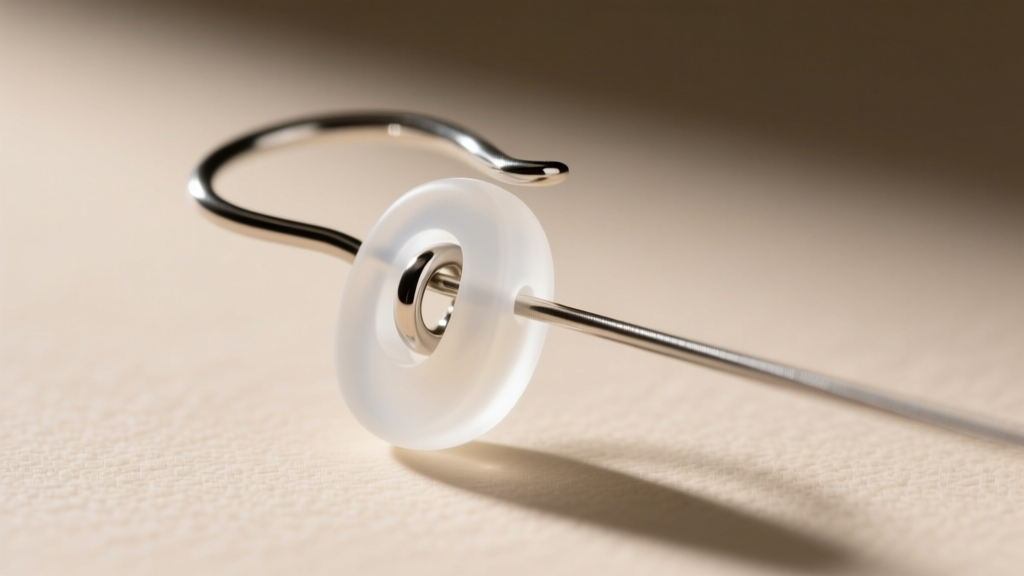
Forget the tiny, easily lost metal scrolls. High-quality silicone earring backs (often sold under brand names like Levingard) feature a wide, flat disc that grips the wire via friction. The silicone creates a high-friction barrier against the back of the earlobe, making it nearly impossible for the wire to slide forward. They are also hypoallergenic and provide a soft cushion for heavy earrings.
2. French Wire Guards (Plastic Tubing)
For a seamless, invisible look, jewelers use tiny, medical-grade plastic tubes. You slide the tube onto the wire after the earring is in your ear, then bend the wire slightly to lock the tube in place. This method is widely used in high-end diamond drops to prevent loss during formal events.
3. The Gentle Bend Technique
If your fish hooks are sliding out, the curve of the wire may be too wide for your specific earlobe thickness. Using clean, nylon-jaw jewelry pliers, you can gently squeeze the bend of the hook to make it slightly tighter. Warning: Never bend the wire with bare fingers or metal pliers, as this will weaken the structural integrity of the metal and cause it to snap.
4. Locking Scroll Backs
Some modern fish hooks are designed with a tiny notch near the end of the wire. These are meant to be paired with specialized locking metal clutches that snap into the notch, providing a mechanical lock similar to a safety pin.

Styling Tips for Different Ear Anatomies
The way a fish hook earring sits on your ear depends heavily on your earlobe anatomy. If you have attached earlobes (where the lobe blends directly into the side of the face without a distinct free-hanging edge), the bend of the fish hook may press uncomfortably against your neck or jawline.
For attached lobes, opt for fish hooks with a shorter wire length between the bend and the loop. This prevents the metal from digging into the side of your neck. Conversely, if you have very thick or elongated earlobes, a standard 20G hook might sit too high, causing the dangle to bunch up against the bottom of your lobe. In this case, seek out custom or extended-length French wires to allow the drop to hang freely and swing properly.
Expert Styling Tip: To maintain visual symmetry, always check your earrings in a mirror from a side profile. The dangle should hang perfectly perpendicular to the floor. If it tilts forward, your center of gravity is off; if it tilts backward, the wire bend is too tight for your lobe.
Troubleshooting Common Fish Hook Problems
Even with the right materials and security methods, you may encounter a few common issues. Here is how to troubleshoot them like a professional jeweler.
Problem: The earring constantly spins sideways.
The Fix: This is almost always a center-of-gravity issue. The loop at the bottom of the fish hook is likely too large or the jump ring connecting the dangle is too loose. Use chain-nose pliers to gently close the jump ring so the dangle sits flush and faces forward.
Problem: The wire is stretching out of shape.
The Fix: You are likely wearing a heavy gemstone or metal drop on a 22G or 20G wire. The weight is permanently warping the metal. You must either transfer the dangle to an 18G fish hook or have a jeweler solder a supporting jump ring to distribute the weight more evenly.
Problem: Sterling silver hooks are turning my ears black.
The Fix: Sterling silver (925) contains 7.5% copper, which oxidizes and tarnishes when exposed to the sulfur and moisture naturally present in human skin. While the Gemological Institute of America (GIA) notes that silver tarnish is a natural chemical reaction, it is highly undesirable in piercing canals. Switch to rhodium-plated sterling silver or solid 14k gold to eliminate the oxidation transfer.
Final Thoughts on French Wire Security
Mastering the fish hook earring back is a rite of passage for any jewelry lover. By understanding the relationship between wire gauge, metal purity, and the physics of the drop, you can confidently wear everything from delicate pearl dangles to heavy gemstone chandeliers. Invest in a pack of high-quality silicone clutches, respect the gauge limits of your jewelry, and you will never have to panic about losing a cherished earring again.


