Fixing Green Skin & Allergies From Gold Earrings Studs
Discover why your gold earrings studs cause green skin or allergies. Learn expert troubleshooting for karat grades, post metals, and safe cleaning fixes.

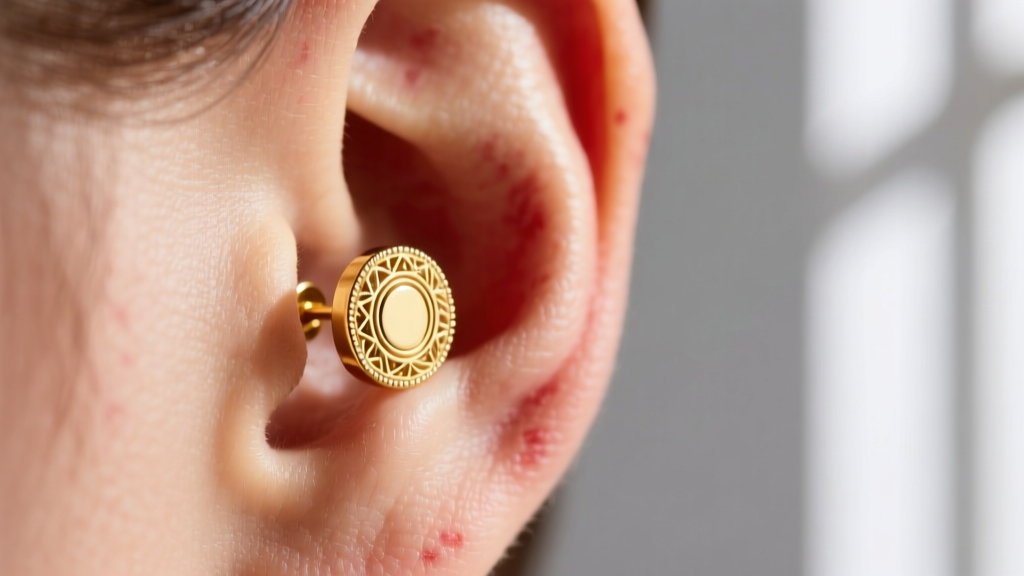
There are few things more frustrating than investing in beautiful gold earrings studs, only to end up with itchy, swollen, or green-stained earlobes. While pure gold is entirely hypoallergenic, the reality of jewelry manufacturing means that the pieces sitting in your jewelry box are rarely pure. Whether you are dealing with a stubborn contact dermatitis flare-up or the dreaded green skin stain, troubleshooting the root cause requires a deep dive into metallurgy, manufacturing shortcuts, and piercing aftercare.
In this 2026 troubleshooting guide, we break down exactly why your favorite studs are causing reactions, the specific alloys to blame, and the professional-grade fixes you can apply to save your jewelry and your skin.
The Metallurgy Behind Earlobe Irritation
Pure 24-karat gold is completely biocompatible. However, it is also incredibly soft. A 20-gauge (0.81mm) post made of 24k gold would bend under the slight pressure of a butterfly backing, rendering it unwearable. To achieve structural integrity, gold is alloyed with other metals. It is these secondary metals—not the gold itself—that trigger adverse skin reactions.
Understanding the Karat Breakdown
The karat system dictates the ratio of pure gold to alloy metals. As the karat drops, the concentration of reactive base metals increases. According to the Gemological Institute of America (GIA), the most common alloying metals are copper, silver, zinc, and nickel. Each serves a purpose: copper adds warmth and durability, silver adds malleability, and nickel provides a bright white color and extreme hardness.
| Karat | Gold Purity | Common Alloys | Primary Irritation Risk | Best Use Case |
|---|---|---|---|---|
| 24k | 99.9% | None | None (but structurally weak) | Investment pieces, not daily wear |
| 18k | 75.0% | Silver, Copper, Zinc | Low (Copper oxidation) | High-end daily wear, sensitive ears |
| 14k | 58.3% | Copper, Silver, Nickel | Medium (Nickel/Copper) | Standard fine jewelry |
| 10k | 41.7% | Copper, Nickel, Zinc | High (Nickel dermatitis) | Budget jewelry, high-durability needs |
The Green Stain vs. The Allergic Reaction
It is vital to distinguish between oxidation and allergy. If your skin turns green, you are experiencing a chemical reaction. Copper in the gold alloy reacts with the chlorides and fatty acids in your sweat to form copper chloride, a green salt that transfers to the skin. This is harmless but unsightly.
Conversely, if your earlobe is red, swollen, itchy, or weeping fluid, you are experiencing a Type IV delayed hypersensitivity reaction (contact dermatitis), almost always triggered by nickel. The American Academy of Dermatology (AAD) notes that nickel allergies are cumulative; you may wear 14k gold for years without issue, only to suddenly develop a severe allergy later in life.
Troubleshooting Post and Backing Materials
A common misconception is that if the front of your stud is stamped "14k," the entire earring is 14k gold. In mass-manufactured gold earrings studs, the post and backing are often the primary culprits for irritation due to manufacturing realities.
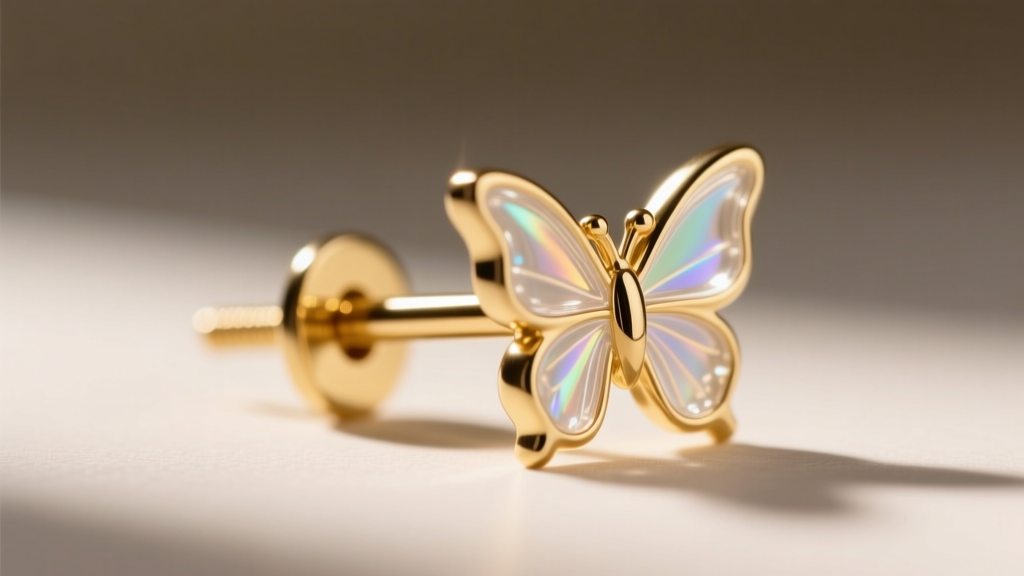
The Solder Joint Problem
To attach a thin gold post to the base of the stud, jewelers use solder. Solder must have a lower melting point than the surrounding metal to avoid melting the entire piece. Historically, and still in many overseas manufacturing hubs, easy-flow solders contain high levels of nickel or cadmium. Even if the post itself is nickel-free, the microscopic solder joint resting against your fistula (the piercing hole) can leach nickel directly into the skin.
Gauge Sizes and Micro-Abrasions
Standard earring posts are typically 20-gauge (0.81mm) or 18-gauge (1.02mm). If you wear heavy diamond or gemstone studs on a thin 20-gauge post, the leverage causes the post to bend slightly during insertion. This bent metal creates micro-abrasions inside the piercing channel. These tiny wounds bypass the skin's outer barrier, allowing alloy metals to enter the bloodstream and trigger an aggressive immune response. Upgrading heavy studs to a 16-gauge (1.29mm) or 14-gauge (1.63mm) post provides the rigidity needed to prevent internal tissue damage.
Step-by-Step Fixes for Reactive Earlobes
If you have a pair of gold earrings studs that you love but can no longer wear comfortably, do not throw them away. Use this tiered troubleshooting framework to neutralize the irritation.
Tier 1: The Polymer Barrier (Temporary Fix)
For immediate relief, coat the post and the front of the butterfly backing with a specialized jewelry guard or a high-quality clear nail polish. This creates a physical polymer barrier between the reactive alloys and your skin. Pro Tip: Do not use cheap polish, as it chips easily and can leave sharp edges that tear the fistula. Reapply this coating every 10 to 14 days, as the friction of insertion will eventually wear it down.
Tier 2: Rhodium Plating (Semi-Permanent Fix)
Take your studs to a local bench jeweler and request a rhodium dip for the posts and backings. Rhodium is a platinum-group metal that is completely hypoallergenic, incredibly hard, and highly resistant to tarnish. Cost: Typically $30 to $50 per pair. Longevity: 6 to 12 months of daily wear before the rhodium wears off at the friction points and requires re-plating.
Tier 3: Laser Welding a Titanium Post (Permanent Fix)
As of 2026, laser welding technology has become highly accessible in retail jewelry. A skilled jeweler can snip off the reactive gold post and laser-weld an implant-grade titanium (ASTM F136) post in its place. Titanium is the gold standard for biocompatibility and will never cause a nickel allergy or copper oxidation. Cost: $75 to $120. Longevity: Permanent.
Cleaning Protocols to Remove Oxidation Build-up
Sometimes, the irritation is not caused by the metal itself, but by the acidic build-up of sebum, dead skin cells, and cosmetic lotions trapped on the post. This bio-film creates a highly acidic micro-environment that aggressively accelerates copper oxidation and harbors bacteria.
What to Avoid
Warning: Never use toothpaste, baking soda, or abrasive polishing cloths on gold earrings studs. These materials are harder than the alloy metals in 14k and 18k gold and will create microscopic scratches on the post. These scratches become permanent traps for bacteria and sebum, worsening future irritation.
The Proper Cleaning Routine
- Daily Maintenance: When you remove your studs at night, wipe the posts with an alcohol prep pad (70% isopropyl). This dissolves sebum and kills surface bacteria without damaging the gold alloy.
- Monthly Deep Clean: Fill a small bowl with warm water and a few drops of mild, phosphate-free dish soap (like Dawn). Let the earrings soak for 15 minutes.
- Agitation: Use a brand-new, ultra-soft baby toothbrush to gently scrub the post and the crevices of the butterfly backing. Rinse thoroughly with distilled water to prevent hard water spot deposits.
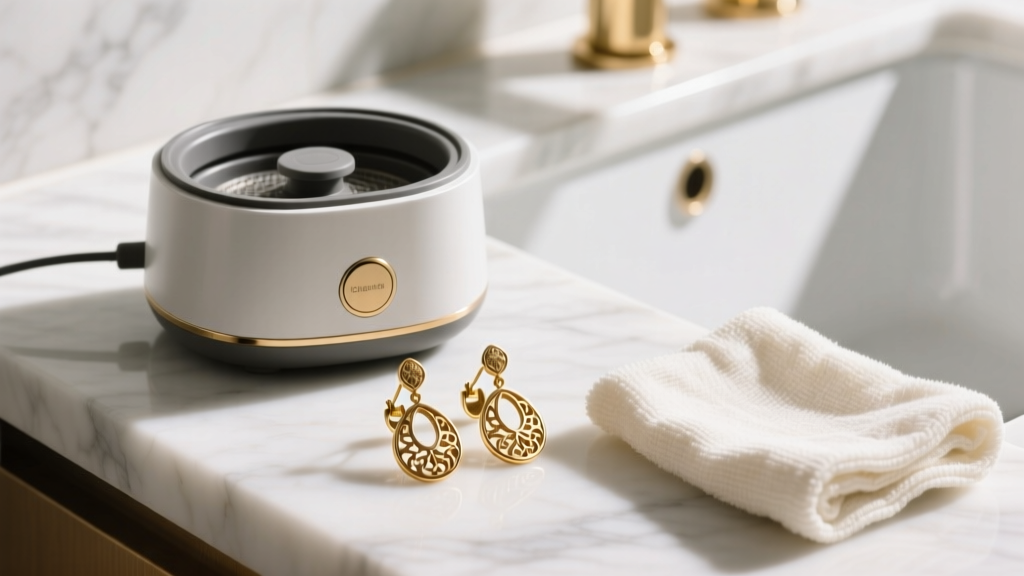
- Ultrasonic Option: If you have an ultrasonic jewelry cleaner, run the studs at a 35-40 kHz frequency for exactly 3 minutes. This will safely cavitate and dislodge microscopic debris from the tension coils of the backing.
When to Replace vs. Repair
Not all gold earrings studs are worth saving. If your earrings are "gold vermeil" (sterling silver base) or "gold plated" (brass or copper base), the gold layer on the post is usually less than 2.5 microns thick. The friction of daily insertion will wear this plating away within a few months, exposing the highly reactive base metal underneath.
The Decision Framework:
- Solid 10k, 14k, or 18k Gold: Repair via rhodium plating or titanium laser welding. The intrinsic value of the gold justifies the bench jeweler's fees.
- Gold Plated / Gold Filled / Vermeil: Replace immediately. Once the plating fails on the post, no amount of cleaning or coating will provide a long-term, comfortable solution. Invest in solid gold or implant-grade titanium for your next pair of daily-wear studs.
By understanding the exact metallurgy of your jewelry and implementing these targeted fixes, you can safely wear your favorite gold earrings studs without sacrificing the health and comfort of your piercings.


