Solving Common Post Earrings Problems: Bending, Allergies, and Fit
Learn how to troubleshoot common post earrings issues. Expert fixes for bent posts, metal allergies, and lost backings to keep your lobes healthy.

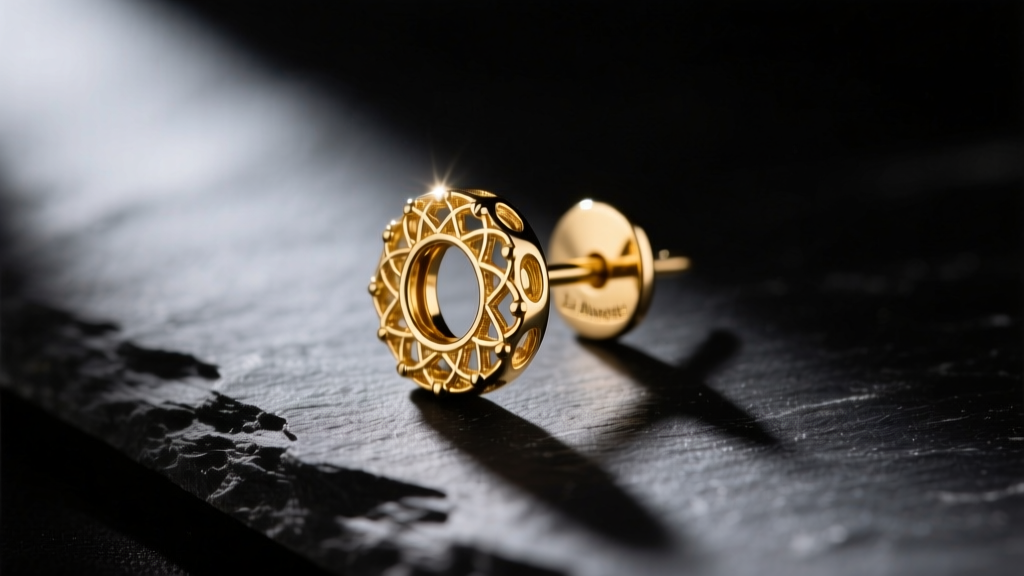
The Anatomy of a Post Earring: Where Failures Happen
Post earrings are the undisputed workhorses of the jewelry world. From simple diamond solitaires to everyday gold studs, they are designed for continuous wear. However, their seemingly simple design—a straight metal cylinder paired with a friction or threaded backing—masks a variety of mechanical and dermatological failure points. When we talk about troubleshooting post earrings, we are usually dealing with three distinct categories of failure: structural deformation (bending), contact dermatitis (allergies), and mechanical slippage (lost backings).
Before diving into solutions, it is crucial to understand the anatomy of the post itself. A standard post consists of the shaft (the straight wire), the notch or thread (where the backing secures), and the tip (which should be slightly tapered or rounded to prevent micro-tears during insertion). Failures rarely happen at random; they occur when the metallurgy or the gauge thickness is mismatched to the wearer's lifestyle. Below, we break down exactly how to diagnose and permanently fix the most frustrating issues associated with post earrings.
Troubleshooting Bent Posts: Why It Happens and How to Fix It
The most frequent complaint regarding post earrings is the bending of the shaft. This is rarely a defect in manufacturing; rather, it is a mathematical inevitability dictated by the gauge (thickness) of the metal and the leverage applied to it. If you sleep in your earrings or apply pressure while on the phone, a thin post will act as a lever, bending at the base where it meets the decorative head.
The Gauge Thickness Guide
Jewelry gauge is counterintuitive: the higher the number, the thinner the wire. Many mass-market fine jewelry brands use 22-gauge or 20-gauge posts to save on precious metal costs, which guarantees bending over time. Here is a breakdown of standard post thicknesses and their structural integrity:
| Gauge Size | Millimeter (mm) | Bend Resistance | Best Use Case |
|---|---|---|---|
| 22-Gauge | 0.64mm | Very Low | Lightweight, temporary wear only. Avoid for daily studs. |
| 20-Gauge | 0.81mm | Low to Medium | Standard commercial fine jewelry. Prone to bending if slept in. |
| 18-Gauge | 1.02mm | High | Ideal for daily wear, heavier stone settings, and active lifestyles. |
| 16-Gauge | 1.29mm | Very High | Cartilage piercings, heavy statement studs, and custom fine jewelry. |
How to Safely Straighten a Bent Post
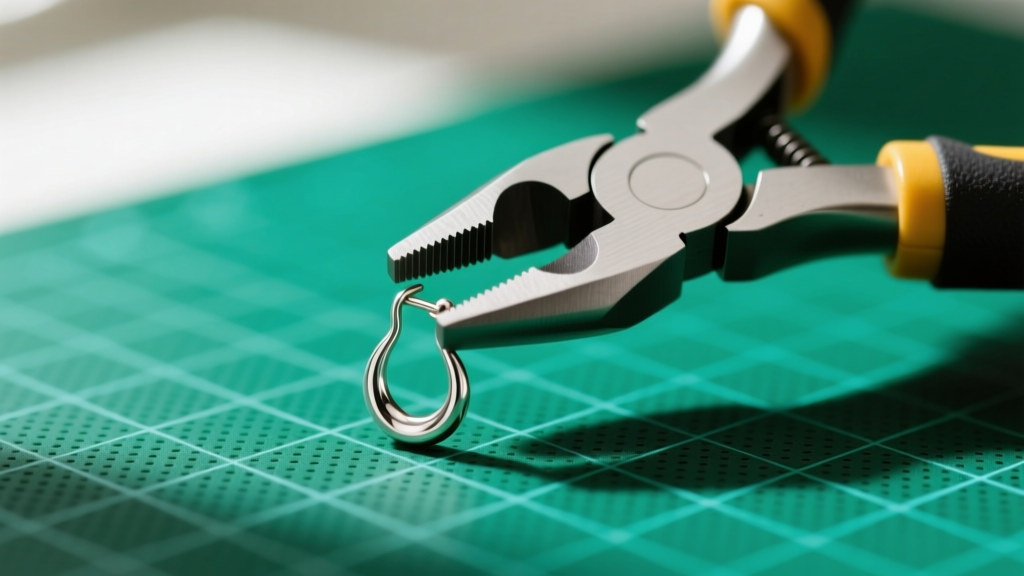
If your 18k gold or sterling silver post has bent, do not use standard steel pliers, as they will mar the soft metal and compromise any rhodium plating. Instead, follow this professional bench-jeweler method:
- Use Nylon-Jaw Pliers: These are specifically designed for jewelry making and will grip the metal without leaving teeth marks or scratches.
- The Rolling Technique: For minor bows, place the post on a perfectly flat steel bench block. Cover the post with a piece of soft leather or thick parchment paper, and gently roll a hard plastic or rawhide mallet over it to coax the metal back into alignment.
- Check the Base Joint: Inspect where the post meets the earring head under a magnifying loupe. Repeated bending causes metal fatigue. If you see a hairline crack at the solder joint, stop wearing the earring immediately and take it to a jeweler for laser welding before you lose the stone.
Solving Contact Dermatitis: Material Grades and Allergy Hacks
Itchy, flaky, or weeping earlobes are the hallmark of contact dermatitis, and post earrings are the primary culprits due to their prolonged, enclosed contact with the skin. The vast majority of these reactions are caused by nickel, an alloying metal used to harden gold and silver or to create cheap base metals.
"Nickel allergy is a common cause of allergic contact dermatitis... It's often associated with jewelry, belt buckles, and other items that come into prolonged contact with the skin." — Mayo Clinic
To solve this, you must look past marketing terms like "hypoallergenic" or "surgical steel," which are largely unregulated and often still contain enough nickel to trigger a reaction. Instead, demand specific metallurgical grades:
- ASTM F136 Titanium: This is the gold standard for sensitive skin. It is the exact grade of titanium used for surgical implants and contains zero nickel. If a brand claims their post earrings are titanium, ask if it is "commercially pure" or "implant-grade (F136)."
- Niobium: An elemental metal that is highly biocompatible and completely nickel-free. It is slightly softer than titanium, making it excellent for 18-gauge posts that need a tiny bit of flex.
- 14k or 18k Solid Gold (Nickel-Free Alloyed): Not all gold is safe. White gold, in particular, is frequently alloyed with nickel to achieve its silver color. Always verify that your white gold post earrings are alloyed with palladium instead. According to the American Academy of Allergy, Asthma & Immunology, identifying the exact metal alloy is the only way to prevent recurring flare-ups.
Pro-Tip for Vintage or Inherited Jewelry: If you cannot part with a pair of heirloom post earrings that contain nickel, you can coat the posts in a specialized jewelry barrier like Skintifique Protective Cream or a clear, medical-grade UV-cured resin. However, this is a temporary fix and will wear off with friction.
The Lost Backing Epidemic: Upgrading Your Closure System
Losing a post earring backing—or worse, losing the entire earring because the backing failed—is a mechanical issue rooted in friction and wear. The standard "butterfly" or friction clutch relies on a tiny metal spring mechanism that degrades over time, losing its grip on the post notch. Furthermore, the notches on the posts themselves can wear smooth after years of use.
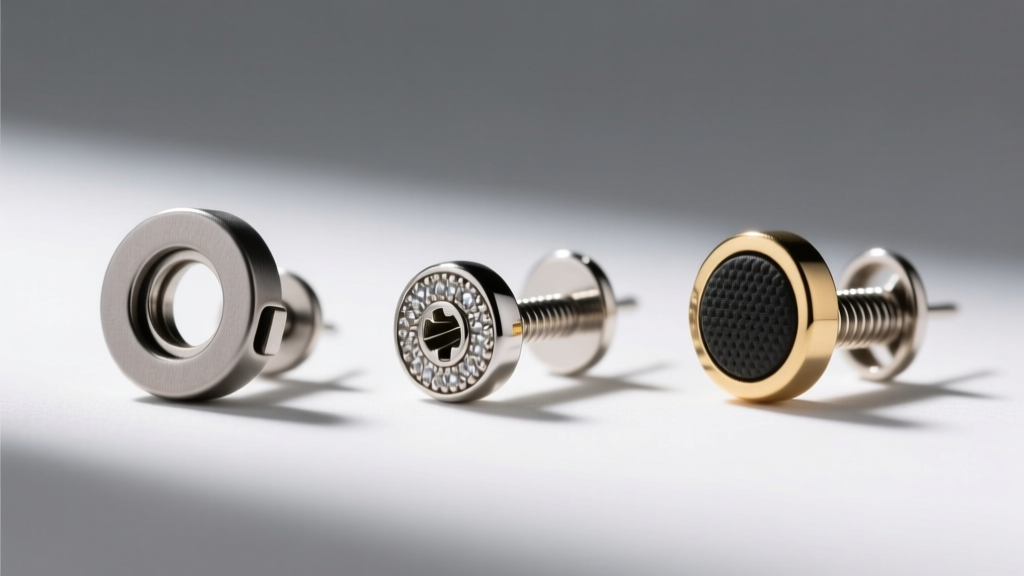
If you are constantly losing your post earrings, it is time to upgrade your closure system. Here is how the top three systems compare in real-world security:
- Standard Friction Clutch (Butterfly): Security Level: Low. Cheap to produce, but the tension springs weaken within 6-12 months of daily removal. They also trap dead skin cells and sebum inside the scrolls, leading to localized odors and infections.
- Threaded Screw-Backs: Security Level: High. The post features a machined thread (usually 0.8mm or 0.9mm pitch), and the backing screws onto it. This is the best option for active individuals and children. Troubleshooting note: Never force a screw-back. If it cross-threads, you will strip the post and ruin the earring. Always back it up slightly to catch the thread before screwing it down.
- La Pousette (Clutch with Spring Mechanism): Security Level: Very High. Originally designed in France, this backing features a heavy-duty internal spring and two small tabs. You squeeze the tabs to slide it on, and it locks securely behind the post notch. It is vastly superior to standard friction backs and is the standard for high-value diamond studs.
The Insertion Angle Problem: Preventing Micro-Tears
A frequently overlooked issue with post earrings is the trauma caused during insertion. If you routinely experience a slight sting, bleeding, or a feeling of "tightness" when putting your studs in, you are likely dealing with blunt post tips or improper insertion angles.
Mass-produced post earrings often have flat, machine-cut ends that act like tiny chisels, scraping the delicate epithelial lining of the fistula (the piercing hole). To solve this, a jeweler can use a cup bur to gently round the tip of the post. Additionally, always insert post earrings at the exact angle the piercing healed. Forcing a post at a lateral angle creates micro-tears, which invite bacteria and cause the lobe to swell, making the earring feel "stuck." If an earring feels stuck due to swelling, never pull it out forcefully; apply a warm saline compress to reduce the tissue inflammation first.
When to Retire Your Post Earrings (Damage Checklist)
Not all jewelry can be saved. While bending and lost backings are easily remedied, certain types of damage pose a direct risk to your health and the integrity of the piercing. Run your post earrings through this final checklist. If they fail any of these points, it is time to recycle the metal and replace the pair:
- Deep Pitting or Scratches: If the post has deep grooves that cannot be buffed out by a jeweler, these scratches will harbor staphylococcus bacteria and biofilm, leading to chronic, low-grade infections.
- Stripped Threads: If your screw-back earrings no longer catch and spin endlessly, the threads are stripped. While a jeweler can sometimes re-cut the threads, doing so reduces the gauge thickness, weakening the post.
- Plating Flaking: If you wear gold-plated or rhodium-plated base metal earrings and notice the silver or brass color showing through near the notch, discard them. Exposed base metals in an enclosed piercing channel will rapidly trigger contact dermatitis.
By understanding the metallurgy, gauge requirements, and mechanical realities of post earrings, you can transition from constantly replacing lost or broken studs to investing in a secure, comfortable, and lifelong jewelry wardrobe.


