Fix & Style Drooping Dragonfly Stud Earrings Guide
Fix drooping dragonfly stud earrings with our expert troubleshooting guide. Learn to balance asymmetrical posts, prevent bent wings, and secure backs.

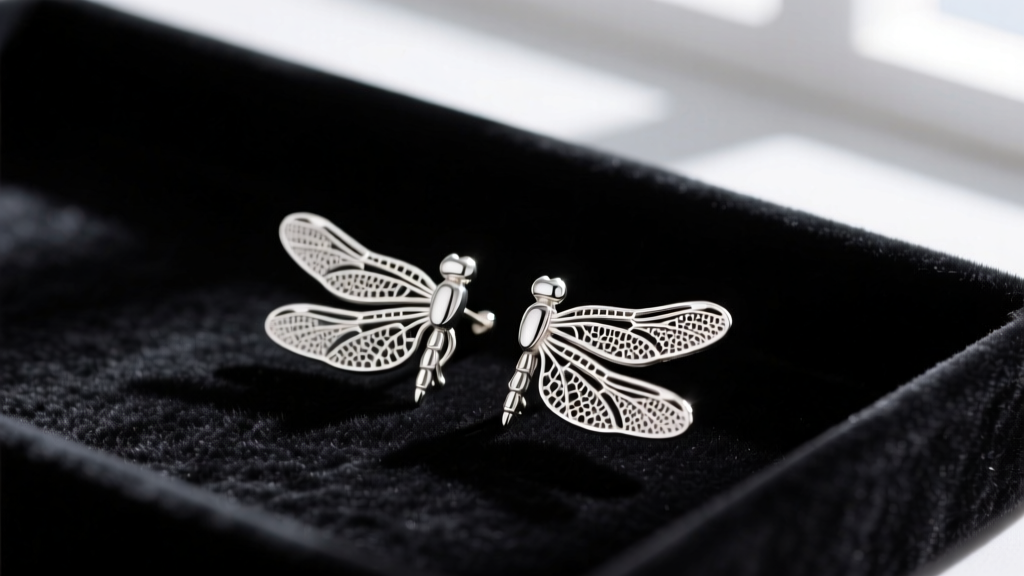
The Center of Gravity Problem: Why Your Dragonfly Sits Crooked
Dragonfly stud earrings are a beloved staple of nature-inspired jewelry, but their unique anatomy creates a persistent structural flaw: drooping. Unlike geometric studs, a dragonfly features an elongated abdomen and a top-heavy thorax. When mass-produced, manufacturers often solder the earring post at the exact geometric center of the wingspan. Because the tail is longer and denser, the center of mass shifts downward, causing the earring to rotate on the earlobe and point toward the floor.
Troubleshooting Post Placement
If your dragonfly stud earrings refuse to sit horizontally, you have two primary solutions. The first is a non-destructive fix using silicone O-ring stoppers. By pushing a thick silicone backing tightly against the earlobe, you create enough friction to counteract the rotational pull of the heavy tail. The second, permanent solution requires a bench jeweler. A jeweler can use a laser welder to remove the post and re-solder it 1.5mm to 2mm higher, closer to the dragonfly's head. Laser welding is mandatory here; traditional torch soldering will easily melt delicate wing filigree or shatter any pave-set cubic zirconia stones. Expect to pay between $35 and $65 for this precision relocation.
Metallurgy & Material Fatigue: Fixing Bent Wings
Because dragonfly wings feature intricate, lace-like cutouts, they are highly susceptible to bending when snagged on hair or sweaters. How you troubleshoot a bent wing depends entirely on the base metal. Attempting to bend back a cheap zinc alloy earring will result in an immediate snap, while silver requires careful handling to avoid work-hardening.
| Material Grade | Mohs Hardness | Failure Mode | Repair Strategy |
|---|---|---|---|
| Zamak (Zinc Alloy) | 2.5 - 3.0 | Brittle snapping under pressure | Cannot be bent; requires superglue or replacement |
| 925 Sterling Silver | 2.5 - 3.0 | Work-hardening and eventual cracking | Bend slowly with nylon-jaw pliers; anneal if stiff |
| ASTM F-136 Titanium | 6.0 (Vickers) | Virtually unbendable, high tension | Requires professional jeweler with heavy-duty tools |
| 14K Solid Gold | 3.5 - 4.0 | Malleable bending, holds shape well | Gentle manual manipulation with padded pliers |
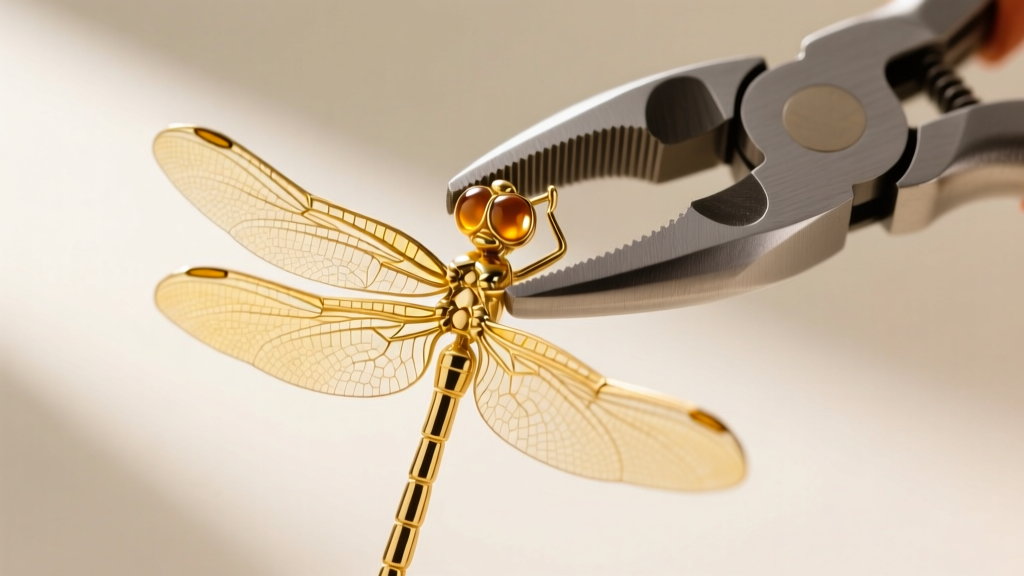
When straightening sterling silver or gold wings, never use standard steel jewelry pliers. The steel teeth will gouge the soft precious metal, leaving permanent scarring. Always use nylon-jaw pliers and apply pressure in micro-increments. If the silver feels stiff and resistant, stop immediately; forcing it will cause a stress fracture. A jeweler can anneal (heat-treat) the silver to soften the crystalline structure before reshaping it.
The Snag Factor and Skin Irritation Dilemmas
The sharp, tapered tips of dragonfly wings are notorious for catching on loose knits and hair. If you frequently experience snags, a jeweler can perform a "micro-bezel" or simply file and polish the wing tips into a softer, rounded teardrop shape. This removes less than a millimeter of metal but drastically reduces the catching radius.
More concerning is skin irritation. Many fashion-grade dragonfly studs utilize brass or nickel-silver posts. According to the Federal Trade Commission Jewelry Guides, nickel release must be strictly limited, yet imported novelty earrings frequently violate these thresholds, resulting in itchy, weeping earlobes. Do not rely on painting the post with clear nail polish; this creates a porous trap for bacteria and chips within days. Instead, take the earring to a professional piercer or jeweler to have the post snipped off and replaced with an implant-grade titanium (ASTM F-136) post, which is entirely biocompatible and nickel-free.
Securing the Backing: Preventing Loss of Intricate Studs
Standard 20-gauge (0.81mm) friction butterfly backs are notoriously unreliable for elongated, top-heavy studs like dragonflies. The thin post can easily bend, loosening the grip of the metal scroll backing. When a butterfly back slides off, you lose not just the earring, but often the custom silicone stopper as well.
Upgrading to Flat Back Labrets
If your ear piercings are fully healed and can accommodate a slightly thicker gauge, the ultimate troubleshooting fix is converting your dragonfly fronts to accept 18-gauge (1.02mm) or 16-gauge (1.29mm) flat back labret posts. As recommended by the Association of Professional Piercers (APP), internally threaded or threadless (push-pin) flat backs provide a secure, flush fit against the ear. The wide, flat disc of the labret back distributes the weight of the dragonfly evenly across the back of the earlobe, entirely eliminating the drooping and spinning issues while making it nearly impossible for the earring to fall off unnoticed.
Expert Maintenance: Cleaning Enamel and Tiny Stones
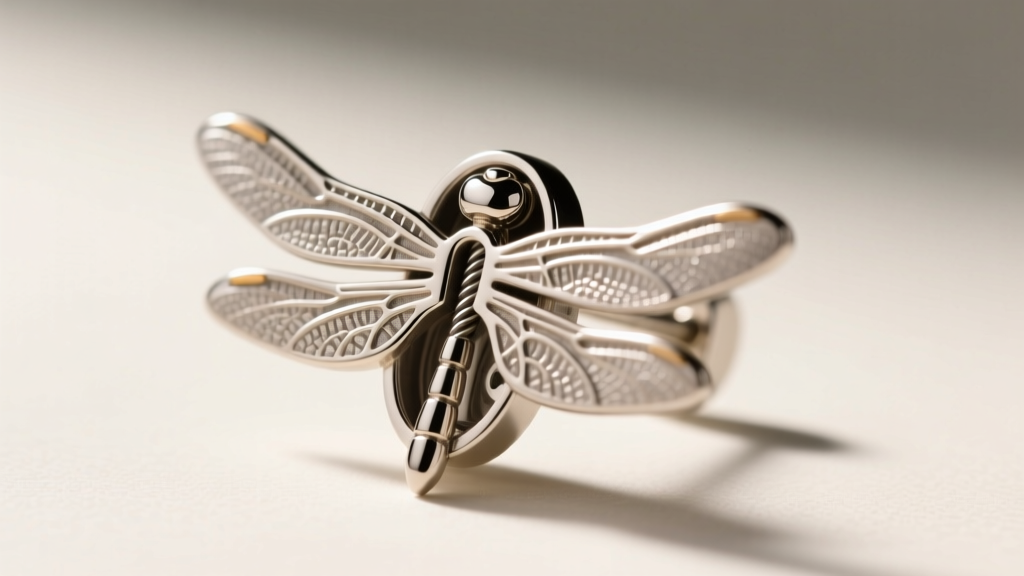
High-quality dragonfly stud earrings often feature plique-à-jour or champlevé enamel to mimic the iridescent colors of real insect wings. This enamel is essentially finely ground glass fused into metal cells.
"Never place enameled insect jewelry in an ultrasonic cleaner. The high-frequency vibrations will shatter the glass enamel cells and loosen the adhesive holding microscopic pave stones in the thorax." — Master Bench Jeweler
To safely maintain the brilliance of your dragonfly studs without causing structural failure, follow this protocol:
- Prepare a mild bath: Mix warm distilled water with a single drop of phosphate-free dish soap.
- Use the right brush: Dip an ultra-soft baby toothbrush into the solution. Never use hard-bristled jewelry brushes, which will scratch soft gold and silver wings.
- Gentle agitation: Lightly sweep the bristles along the grain of the metal filigree. Avoid pressing directly into the enamel cells.
- Drying: Pat dry with a lint-free microfiber cloth. Do not use a hair dryer or compressed air, as the heat can crack the enamel and the air pressure can dislodge loose stones.
By understanding the specific physics and metallurgy of nature-inspired jewelry, you can transform a frustrating, drooping accessory into a perfectly balanced, secure, and long-lasting staple in your daily rotation.


