Fix Drooping Lobes and Lost Backs Using Patented Earrings
Discover how patented earrings and locking hardware solve heavy lobe droop, lost diamond backs, and sleep discomfort with engineering precision.

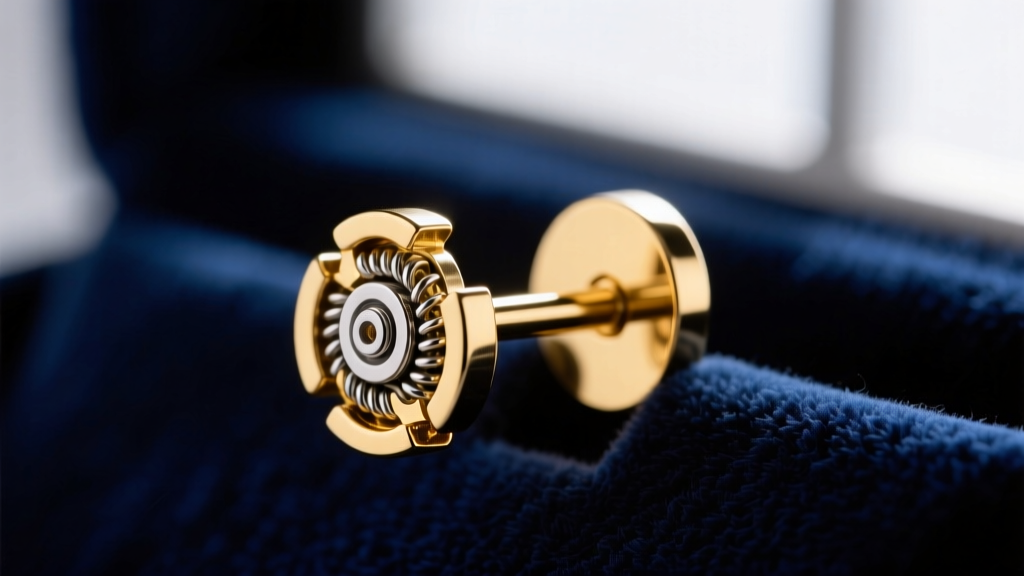
The Mechanical Failures of Standard Earring Designs
For decades, the jewelry industry has relied on the standard "butterfly" friction back to secure billions of dollars worth of precious metals and gemstones. From a mechanical engineering standpoint, this is a catastrophic failure point. A standard 20-gauge (0.81mm) earring post features a machined groove with a depth of merely 0.15mm. The butterfly clutch relies on the tension of two stamped metal loops gripping this microscopic groove. Over 18 to 24 months of daily wear, metal fatigue and repetitive stress cause these loops to expand, reducing the grip force by up to 60%. When you pair this degraded hardware with a 4-carat diamond stud weighing roughly 3.5 grams, the statistical probability of losing the earring increases exponentially.
Furthermore, heavy statement earrings and diamond drops create a localized downward vector force on the earlobe. This triggers the "cheese-cutter effect," where the thin 20G post slowly migrates downward through the tissue, stretching the piercing channel and causing permanent lobe droop. As of 2026, the solution to these structural vulnerabilities lies not in thicker posts—which require painful piercing gauges—but in patented earrings and proprietary locking hardware that redistribute weight and secure the post with micro-machined precision.
Troubleshooting Lobe Droop: Patented Support Systems
If your diamond drops or heavy gold hoops are pulling your earlobes forward, the issue is a lack of surface area distribution. The human earlobe consists of adipose tissue and collagen without a rigid cartilage framework to support concentrated loads exceeding 5 grams.
Polyurethane Adhesive Patches vs. Silicone Sliders
To troubleshoot this without giving up your favorite heavy earrings, you must increase the load-bearing surface area behind the lobe. Patented earring support patches, such as the Lobe Wonder system, utilize a medical-grade, hypoallergenic polyurethane film. Unlike generic silicone sliders that simply add bulk and can slip off the post, these patented adhesive patches bond temporarily to the skin. The tensile strength of the polyurethane film distributes the downward shear force of a 15-gram earring across a 15mm diameter circle, effectively neutralizing the cheese-cutter effect.
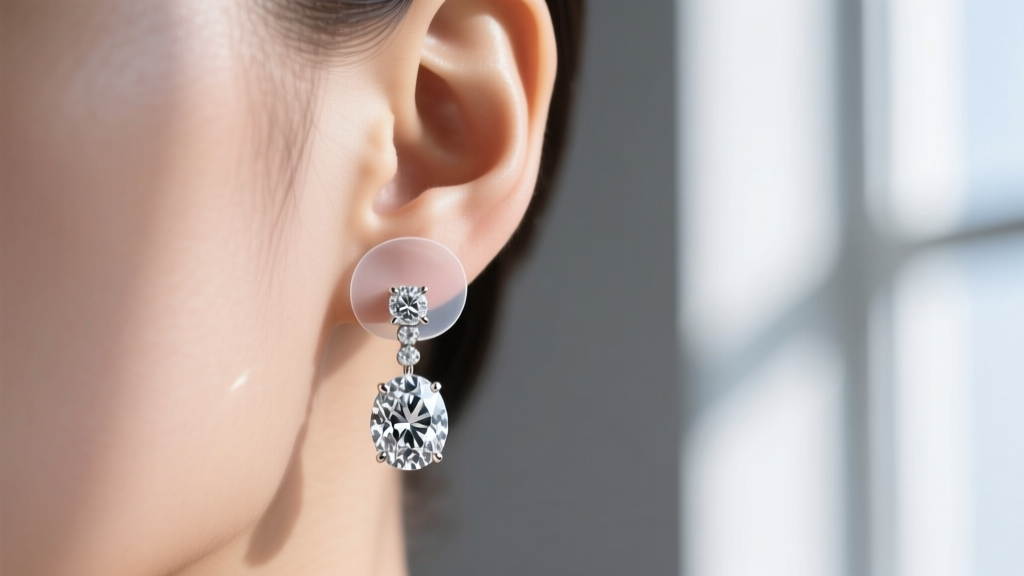
Application Protocol: Cleanse the posterior lobe with 70% isopropyl alcohol to remove sebum and lotion residue. Allow it to dry completely. Apply the patented patch, pierce through the pre-scored center with the earring post, and secure with a standard back. The patch will support up to 25 grams of weight for 12-16 hours before the adhesive hydrolyzes from natural skin moisture.
Solving the "Lost Back" Crisis with Micro-Clutch Patents
Losing a earring back is a minor annoyance; losing the $8,000 diamond stud it was holding is a financial disaster. Standard screw-backs were introduced to solve this, but they suffer from cross-threading and are notoriously difficult to align for individuals with limited dexterity or long acrylic nails. The modern troubleshooting standard is the patented micro-clutch mechanism.
- Internal Architecture: Patented designs (like the Chrysmela or La Poussiere systems) house three 304 stainless steel micro-ball bearings inside a 14k gold or platinum casing.
- Grip Mechanics: As the earring post is inserted, the ball bearings are forced up a tapered internal cone, locking onto the post. The grip force is measured at over 3 pounds of lateral resistance—nearly impossible to pull off accidentally.
- Release Mechanism: To remove the earring, you must pull the outer casing down while simultaneously pulling the post, disengaging the tapered cone and releasing the bearings.
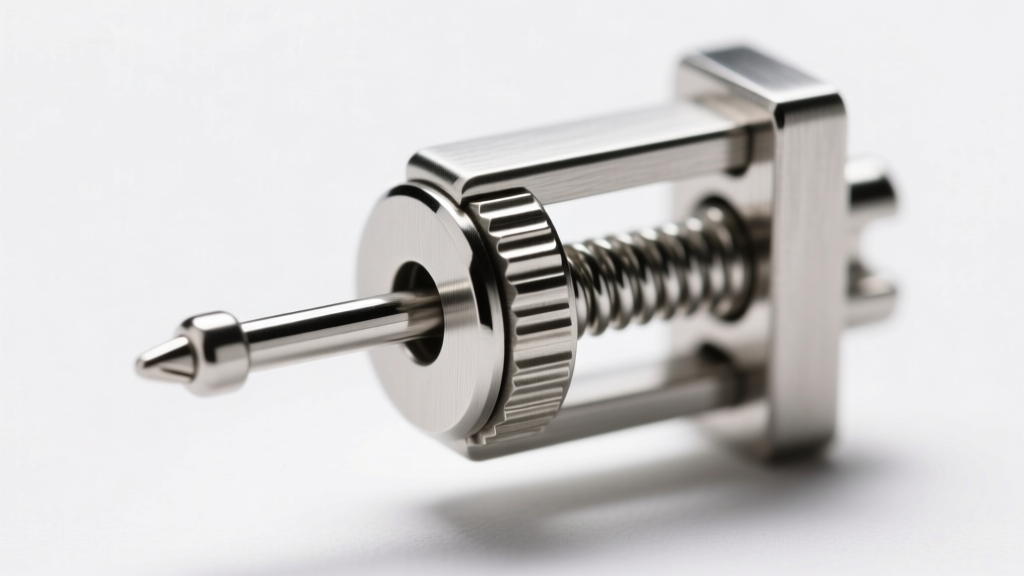
According to the Gemological Institute of America (GIA), regular inspection of earring backs is critical for maintaining the security of high-value gemstones. Upgrading to a patented micro-clutch eliminates the need for monthly tension checks required by standard friction backs, providing a permanent, fail-safe lock for 18G and 20G posts.
Ergonomic Sleep Solutions: Hollow-Post and Flat-Back Patents
Sleeping in standard earrings often results in the posterior post poking the cervical spine or neck, causing micro-abrasions and disrupted sleep. More critically, the trapped moisture between a solid metal post, a friction back, and the skin creates an ideal environment for contact dermatitis. The American Academy of Dermatology (AAD) notes that prolonged moisture and friction can exacerbate metal sensitivities, even in low-nickel alloys.
Patented hollow-post earrings, such as the Comfy Earrings line, troubleshoot this by replacing the solid metal wire with a seamless, hollow 14k gold tube. This design achieves three things:
- Weight Reduction: The hollow core reduces the overall weight of the earring assembly by 30%, minimizing pressure on the piercing channel during side-sleeping.
- Thermal and Airflow Regulation: The open tube allows ambient air to circulate through the piercing fistula, preventing the anaerobic, moisture-rich environment that leads to "ear cheese" (sebum and dead skin buildup) and localized irritation.
- Blunt-End Ergonomics: The posterior end of the hollow post is capped with a smooth, rounded, wide-surface dome that sits flush against the neck, eliminating the puncture hazard of a sharp 20G wire.
Comparison Matrix: Standard vs. Patented Earring Hardware
| Feature | Standard Butterfly Back | Screw-Back Assembly | Patented Micro-Clutch | Patented Support Patch |
|---|---|---|---|---|
| Primary Failure Mode | Metal fatigue / Loop expansion | Cross-threading / Stripped grooves | Sebum buildup in bearings | Adhesive hydrolysis (sweat) |
| Weight Support Capacity | Low (Best for < 3g studs) | Medium (Up to 8g) | High (Up to 15g securely) | Extreme (Up to 25g with lobe support) |
| Average 2026 Pricing | $0 - $5 (Included) | $25 - $45 per pair | $50 - $85 per pair | $12 for 60 single-use patches |
| Maintenance Required | Replace every 12 months | Weekly thread cleaning | Monthly ultrasonic cleaning | Daily replacement |
Expert Maintenance for Patented Earring Mechanisms
While patented earrings and hardware offer superior security, their complex internal geometries require specific maintenance protocols to prevent mechanical seizure. The micro-ball bearings in a clutch mechanism are separated by tolerances of less than 0.05mm. If cosmetic lotions, hairspray, or sebum infiltrate this chamber, the bearings will lock, rendering the clutch immovable.
The Ultrasonic Troubleshooting Protocol
Do not attempt to dig debris out of a patented micro-clutch with a needle or pin; you will permanently misalign the internal spring. Instead, utilize a targeted solvent bath. Submerge the locking mechanism in a small glass beaker filled with 99% isopropyl alcohol or a specialized jewelry degreaser. Place the beaker inside an ultrasonic cleaner operating at 40 kHz for exactly 120 seconds. The cavitation bubbles will penetrate the microscopic gaps around the ball bearings, dislodging trapped lipids and cosmetic polymers. Remove with non-magnetic tweezers, blast with compressed air, and apply a microscopic drop of synthetic watch oil to the post before insertion to ensure smooth bearing travel.
Final Verdict on Upgrading Your Ear Hardware
The transition from generic friction backs to engineered, patented earrings is not merely a luxury upgrade; it is a necessary troubleshooting step for anyone wearing high-value gemstones or heavy statement pieces. By addressing the fundamental physics of lobe droop with polyurethane support patches, and eliminating the mechanical vulnerabilities of standard clasps with micro-ball bearing clutches, you effectively future-proof your jewelry collection. Investing $50 to $100 in patented hardware is a fractional insurance premium that guarantees your diamonds remain exactly where they belong: securely on your ears.


