How to Fix Earring Hole Damage: Lobe Repair Guide
Learn how to fix earring hole damage with our step-by-step lobe repair guide. Discover taping methods, surgery costs, and safe re-piercing timelines.

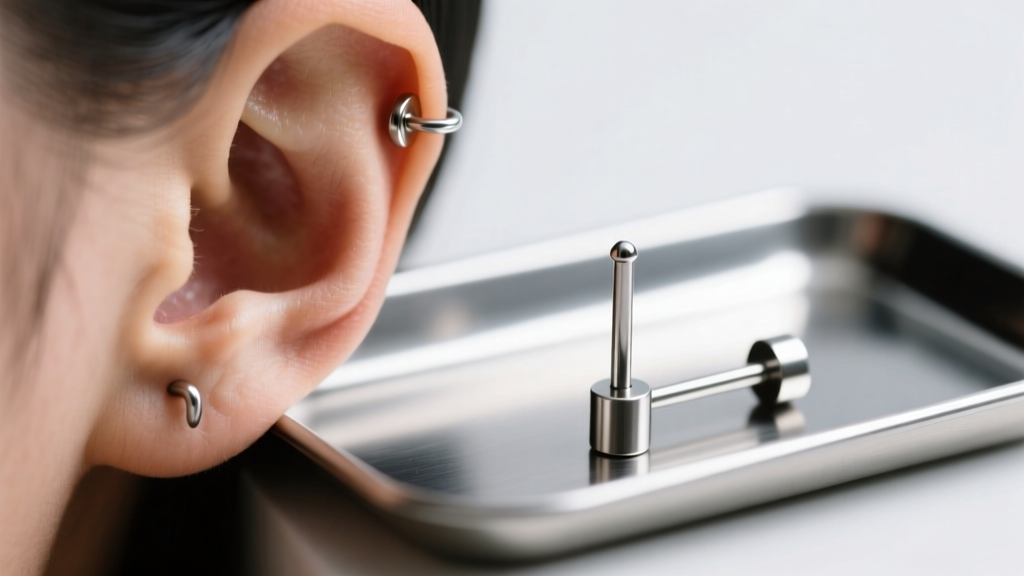
Whether caused by years of wearing heavy statement hoops, accidental snagging, or gradual stretching, a damaged earlobe piercing can be both physically uncomfortable and aesthetically frustrating. The medical term for a piercing channel is a fistula—a tube of epithelial tissue that forms around your jewelry. When this tissue is subjected to excessive weight or trauma, the collagen matrix degrades, leading to stretching, micro-tears, or complete lobe splits.
If you are searching for how to fix earring hole damage, you are not alone. According to the American Academy of Dermatology, improper jewelry weight and traumatic tearing are the leading causes of fistula degradation. This comprehensive guide will walk you through the exact biology of lobe damage, at-home taping protocols for minor stretching, and professional surgical options for severe tears.
The Anatomy of Earring Hole Damage
Before attempting any repair, it is crucial to categorize the type of damage your fistula has sustained. Not all stretching requires surgery, and not all tears can be fixed at home.
- Micro-Tears (Slitting): The bottom of the hole thins out, creating a vertical slit rather than a perfect circle. This is usually caused by wearing earrings heavier than 15 grams for extended periods.
- Fistula Stretching (Migration): The piercing slowly migrates downward toward the edge of the lobe due to constant gravitational pull. The tissue remains intact but elongated.
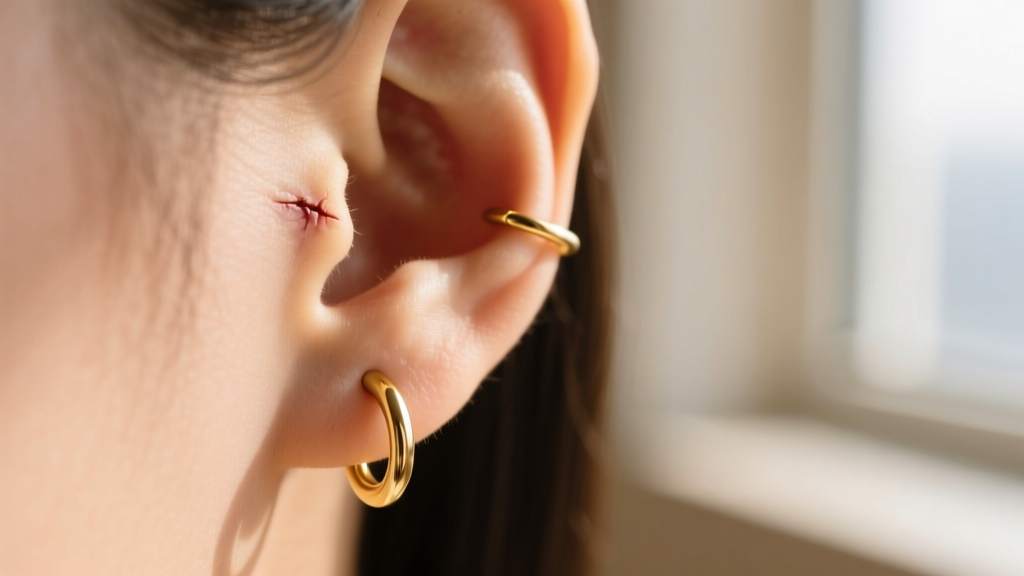
- Complete Blowout / Split Lobe: The tissue gives way entirely, separating the lobe into two distinct pieces. This often happens when a heavy hoop is snagged on clothing or hair.
- Contact Dermatitis Weakening: Allergic reactions to nickel or low-grade 'surgical steel' cause chronic inflammation, weakening the cellular walls of the fistula and making it prone to tearing.
Non-Surgical Methods: How to Fix Earring Hole Stretching at Home
If your piercing is stretched or slitted but has not completely split through the edge of the lobe, conservative at-home methods can encourage tissue retraction and collagen rebuilding.
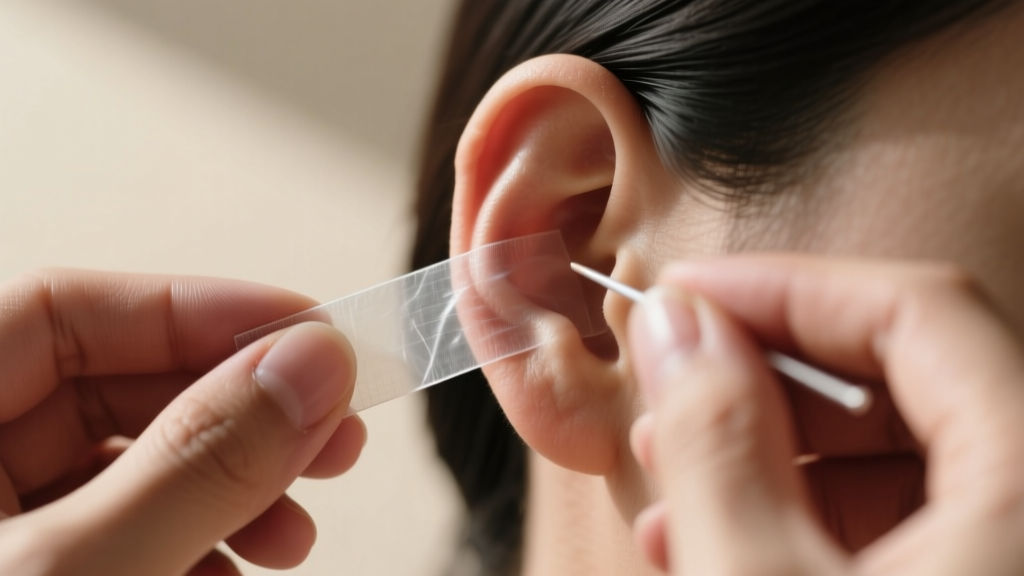
Step-by-Step Lobe Taping Technique
The taping method provides structural support to the weakened base of the fistula, relieving downward pressure and allowing the skin's elasticity to slowly pull the hole back into a circular shape.
- Cleanse the Area: Spray the front and back of the lobe with a sterile 0.9% sodium chloride (NaCl) wound wash. Pat completely dry with a non-woven gauze pad. Moisture trapped under tape will cause maceration.
- Select the Right Tape: Use 3M Micropore surgical tape or Nexcare waterproof tape. Avoid standard duct or scotch tape, which contains irritating adhesives.
- Apply the Support: Cut a small piece of tape (about 1/2 inch). Apply it horizontally directly beneath the earring hole on the back of the lobe, gently lifting the tissue upward as you press it down.
- Insert Proper Jewelry: Replace heavy hooks or hoops with a lightweight, flat-back labret stud. An 18-gauge (1.0mm) or 16-gauge (1.2mm) implant-grade titanium post is ideal.
- Wear Time: Keep the tape on for 12-16 hours a day, removing it to shower and cleanse. Expect to see visible retraction within 4 to 8 weeks of consistent use.
Tissue Massage and Elasticity Training
To complement the taping method, daily massage can improve blood flow and break down rigid scar tissue inside the fistula. Apply one drop of pure, cold-pressed jojoba oil or vitamin E oil to your fingertips. Gently massage the lobe in circular motions for 60 seconds twice a day. This promotes cellular turnover and restores the elastin fibers required for the hole to shrink back to its original gauge.
Surgical Interventions: When to See a Professional
If your earring hole has completely split, or if the tissue at the base of the lobe has become paper-thin, at-home methods will not suffice. You will need to consult a board-certified plastic surgeon or a specialized dermatologic surgeon for a structural repair.
Lobuloplasty (Earlobe Reconstruction)
Lobuloplasty is the gold standard for fixing a split earlobe. According to the American Society of Plastic Surgeons, this is a quick, in-office procedure performed under local anesthesia (typically 1% or 2% lidocaine with epinephrine to minimize bleeding).
The surgeon will excise (cut away) the epithelialized skin lining the inside of the torn fistula. If this lining is not completely removed, the two sides of the lobe will not fuse back together. Advanced surgeons often employ a Z-plasty technique, which creates interlocking zig-zag flaps rather than a straight linear scar. This prevents scar contracture and eliminates the unsightly 'notch' that can form at the bottom edge of the lobe as it heals. The lobe is then closed using ultra-fine 5-0 or 6-0 nylon sutures.
Dermal Fillers for Thinning Lobes
If your earlobes are not split but have lost volume and appear crepey or elongated due to aging and heavy jewelry, hyaluronic acid (HA) dermal fillers (such as Restylane or Juvéderm) can be injected into the lobe. This plumps the tissue, providing a thicker, more supportive base for your earrings to rest against. While not a permanent fix, fillers can instantly improve the aesthetic of stretched holes.
Cost and Recovery Comparison Matrix
Choosing the right repair method depends on the severity of the damage, your budget, and your timeline for re-piercing. Below is a detailed comparison of the most common repair routes.
| Repair Method | Best Suited For | Average Cost (Per Lobe) | Downtime & Re-piercing Wait |
|---|---|---|---|
| Lobe Taping | Minor stretching, slitting, migration | $5 - $15 (Tape) | No downtime; wear jewelry immediately |
| Lobuloplasty | Complete splits, severe blowouts | $250 - $600 | Suture removal at 7 days; wait 3-6 months to re-pierce |
| Dermal Fillers | Volume loss, thinning, crepey skin | $400 - $800 | 24 hours; re-pierce only after HA fully settles (4 weeks) |
| Cauterization | Small, stretched fistulas (rarely used) | $150 - $300 | 2 weeks scabbing; wait 4 months to re-pierce |
Re-Piercing Protocols: Gauges, Materials, and Timelines
Successfully repairing an earring hole is only half the battle; re-piercing it safely is the other. If you undergo a surgical lobuloplasty, you must wait a minimum of 12 to 16 weeks before re-piercing, though many surgeons recommend waiting a full 6 months to ensure the scar tissue has reached maximum tensile strength.
Choosing the Correct Gauge Size
Standard ear piercings are usually done at 20-gauge (0.8mm) or 18-gauge (1.0mm). However, when re-piercing a surgically repaired lobe, it is highly recommended to opt for a 16-gauge (1.2mm) or 14-gauge (1.6mm) needle. A thicker post provides a wider surface area to distribute the weight of your earrings, drastically reducing the downward pressure on the delicate new fistula and preventing future migration.
Mandatory Material Grades
Re-pierced tissue is highly reactive. You must avoid 'surgical steel' or 'stainless steel,' which are unregulated terms and frequently contain 8% to 12% nickel. Nickel exposure causes contact dermatitis, which triggers swelling and weakens the newly formed fistula. Your initial jewelry must be:
- Implant-Grade Titanium (ASTM F136): The absolute best choice for fresh piercings. It is completely nickel-free, biocompatible, and lightweight.
- Niobium: Another highly reactive, hypoallergenic elemental metal.
- Solid 14k or 18k Gold: Must be alloyed for body safety (avoid gold-plated or gold-filled jewelry, which can wear down and expose base metals).
Expert Warning: Never use a piercing gun to re-pierce a repaired earlobe. Piercing guns utilize blunt force trauma to push a thick stud through the tissue, which can shatter the delicate scar matrix created during your lobuloplasty, leading to immediate re-tearing and severe blowouts. Always seek a professional piercer who uses single-use, hollow bevel needles.
Preventative Jewelry Selection
Once your earring hole is fixed and safely re-pierced, implementing strict weight limits is vital for long-term preservation. For daily wear, your earrings should weigh under 15 grams per lobe. If you wish to wear heavy statement hoops or chandelier earrings (which can easily exceed 25-30 grams), utilize specialized support accessories like silicone earring backings, invisible lobe support patches, or ear-wires designed to distribute weight across the upper cartilage rather than the lower lobe. By combining mindful jewelry selection with proper initial repair, you can maintain healthy, structurally sound piercings for a lifetime.


