How to Fix a Flipping Dangle Diamond Earring: 5 Expert Fixes
Is your dangle diamond earring constantly flipping forward or tangling? Discover 5 expert mechanical fixes, backing upgrades, and lobe support tricks.

The Physics of the Flip: Why Dangle Diamond Earrings Fail
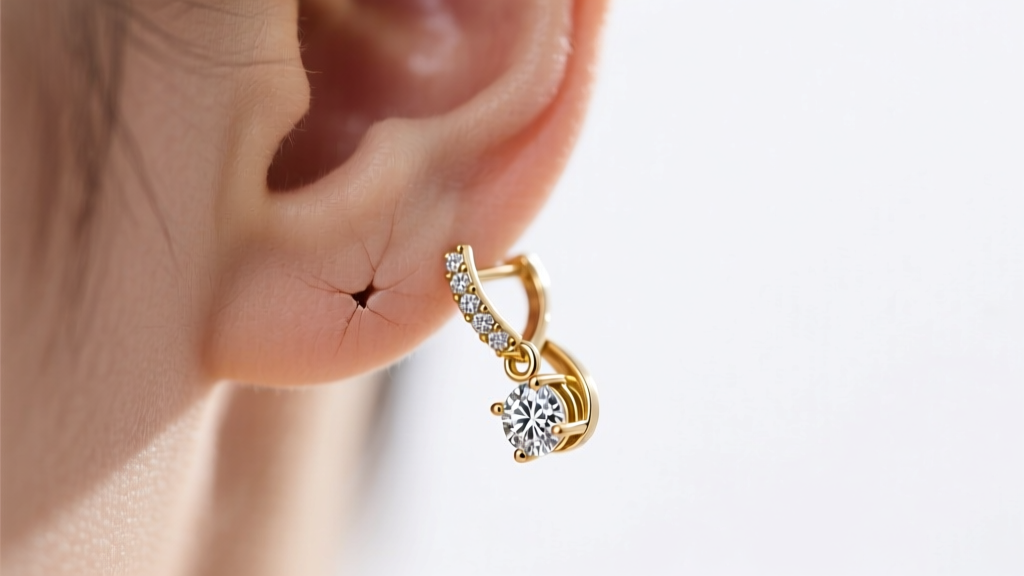
There are few jewelry frustrations more aggravating than investing in a stunning, high-carat dangle diamond earring, only to find it perpetually facing the floor. This mechanical failure is rarely a defect in the jewelry itself; rather, it is a clash between physics and human anatomy. To troubleshoot the issue, we must first understand the center of gravity. In a drop or dangle design, the bulk of the carat weight sits below the piercing axis. When the earlobe lacks the structural density to hold the post at a strict 90-degree angle to the ground, gravity pulls the heavy diamond drop downward and forward.
This problem is exacerbated by standard friction backs (often called butterfly backs). Most diamond earrings feature a 20-gauge (0.81mm) post. However, adult earlobe piercings naturally stretch over time, often expanding to 18-gauge (1.02mm) or even 16-gauge (1.29mm). This creates a microscopic "wobble room" of up to 0.48mm. That tiny gap is all the leverage gravity needs to tilt your dangle diamond earring forward, hiding the brilliance of the stones against your neck. According to the Jewelers of America, improper backing tension and post-to-piercing gauge mismatches are the leading causes of customer complaints regarding drop earring mechanics.
Troubleshooting Forward-Facing Dangles
If your dangle diamond earring refuses to sit flush and perpendicular to your lobe, you must eliminate the wobble room and shift the center of gravity. Here are the most effective mechanical interventions.
1. Upgrade to La Pousette Locking Backs
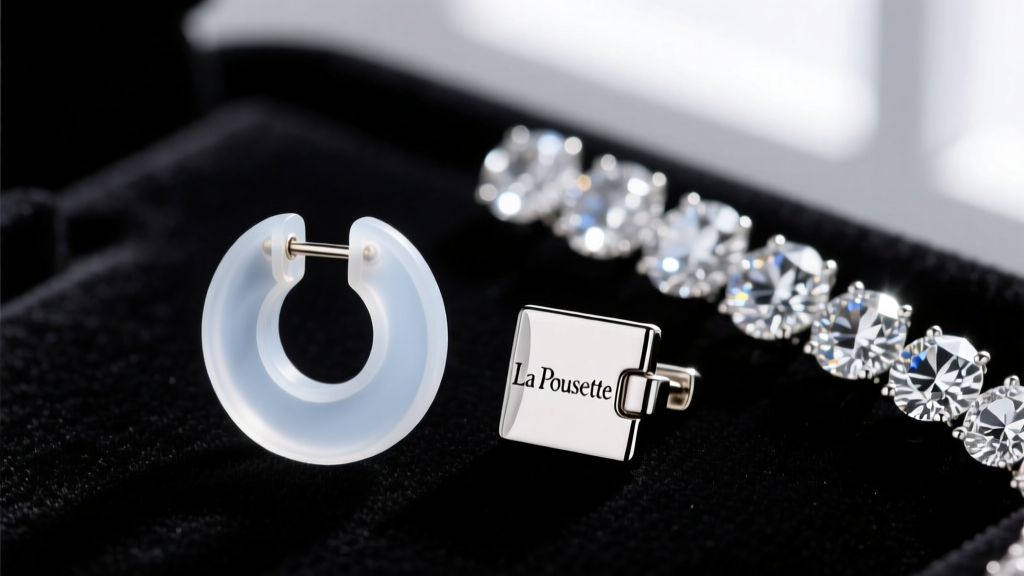
Standard push-backs rely on friction, which degrades as the metal notches wear down. La Pousette backs utilize a spring-loaded, dual-clutch mechanism that grips the post groove with exact, unyielding pressure. By locking the backing tightly against the rear of the earlobe, you create a rigid fulcrum that prevents the post from tilting downward. This is the industry-standard fix for heavy diamond drops.
2. The 5-Degree Post Bend
This is a classic bench jeweler trick. Using nylon-jaw pliers to prevent marring the precious metal, a jeweler can bend the earring post upward at a precise 5-to-7-degree angle relative to the dangle's hanging loop. When the earring is worn, the natural droop of the earlobe pulls the bent post into a perfectly straight, horizontal alignment, forcing the diamond drop to face forward. Note: This works best on 14k gold, which has higher tensile strength due to its alloy mix. Pure 24k or high-karat 22k gold posts are too soft and will bend back under the weight of the diamonds.
3. Silicone Lobe Lifters (O-Rings)
If you cannot replace the backing, silicone earring lifters are a highly effective, low-cost workaround. These small, concave discs slide onto the post behind the earlobe. They serve two purposes: they widen the surface area of the backing to distribute weight, and they push the earlobe tissue slightly upward, acting as a physical wedge that forces the dangle diamond earring to tilt forward into the correct viewing angle.
Solving Hair Tangling and Snagging Disasters
A secondary, equally frustrating issue with dangling diamond jewelry is the tendency for the settings to act as grappling hooks for your hair. This is almost entirely dependent on the prong configuration and the setting architecture.
- The Martini Setting (3-Prong): While elegant and allowing maximum light return from the bottom of the diamond, the three-prong martini setting creates deep, V-shaped channels between the prongs. These channels are the exact width of a human hair strand, leading to relentless tangling.
- The Basket Setting (4-Prong): A four-prong basket setting with a horizontal wire gallery near the base offers slightly better protection, but the top prong tips remain a snag hazard if they are not perfectly polished and rounded.
- The Bezel or Semi-Bezel Solution: If hair tangling is ruining your experience, the ultimate troubleshooting step is having a jeweler convert the primary diamond drop from a prong setting to a smooth bezel setting. According to the Gemological Institute of America (GIA), bezel settings not only eliminate snag points but also offer superior protection against girdle chipping for active wearers.
Preventing Lobe Stretch and Tearing
The weight of a dangle diamond earring exerts continuous kinetic stress on the piercing fistula (the skin tube of the piercing). Over time, this causes micro-tears, thinning of the lower lobe tissue, and eventual irreversible stretching. To troubleshoot and prevent this, you must manage the "lobe load."
| Total Carat Weight (CTW) | Estimated Drop Weight | Minimum Post Gauge | Required Backing / Support |
|---|---|---|---|
| 0.50 - 1.00 CTW | 0.1 - 0.2 grams | 20-Gauge (0.81mm) | Standard Friction Back or Silicone O-Ring |
| 1.50 - 2.50 CTW | 0.3 - 0.5 grams | 18-Gauge (1.02mm) | La Pousette Locking Back + Jumbo Disc |
| 3.00 - 5.00+ CTW | 0.6 - 1.0+ grams | 16-Gauge (1.29mm) | Locking Back + Adhesive Lobe Support Patch |
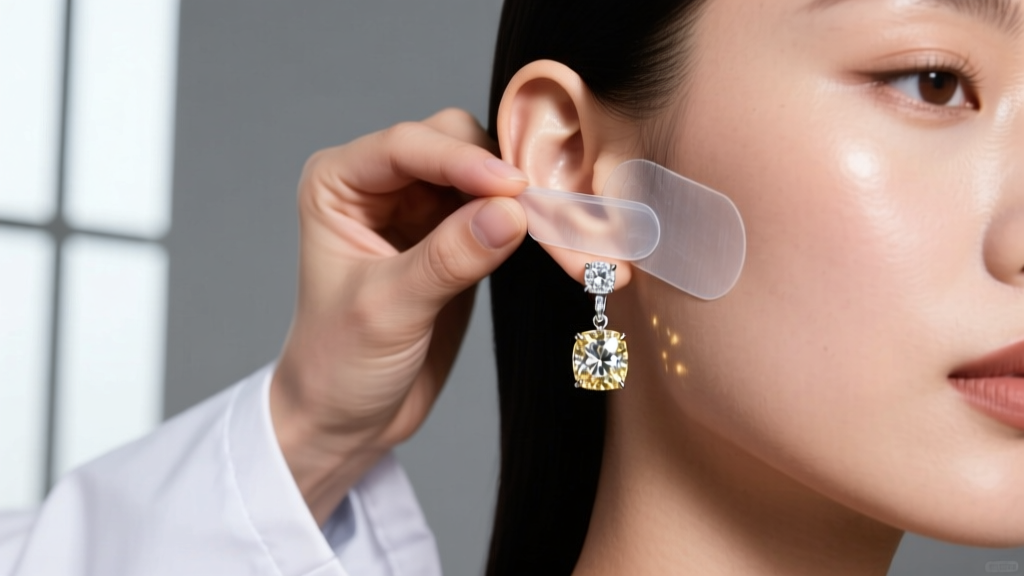
For dangle diamond earrings exceeding 3.00 CTW, mechanical backings are not enough. You must use invisible, medical-grade adhesive lobe support patches (such as BlingDots or LobeWonder). These patches adhere to the back of the earlobe and feature a reinforced slit for the post. They transfer the kinetic load of the heavy diamonds away from the delicate piercing fistula and distribute it across the broader, structurally sound cartilage and skin of the upper lobe.
Maintenance and Hardware Upgrades
Articulated dangle diamond earrings—those featuring hinges or jump rings connecting the stud top to the diamond drop—are prone to mechanical stiffness. If the hinge is calcified with lotion, dead skin cells, or environmental dust, the earring will not swing freely, causing it to sit at an awkward, static angle.
Troubleshooting Hinge Stiffness: Do not use harsh chemicals or ultrasonic cleaners if your diamonds are fracture-filled or clarity-enhanced, as the high-frequency vibrations and heat can shatter the stones or melt the glass-like fillers. Instead, use a soft-bristled baby toothbrush dipped in a solution of warm distilled water and a single drop of mild, phosphate-free dish soap. Gently agitate the hinge mechanism, rinse with distilled water, and dry with a microfiber cloth. Apply a microscopic drop of synthetic watch oil to the hinge pin using a toothpick to restore fluid articulation.
When to See a Professional Jeweler
If you have tried locking backs, silicone lifters, and post-bending, and your dangle diamond earring still refuses to cooperate, the issue may lie in the earring's foundational architecture. Some poorly manufactured drop earrings feature a base plate (the part that rests against the front of the earlobe) that is too small or domed, providing zero lateral stability.
A master bench jeweler can troubleshoot this by soldering a custom, flat 18k gold "washer" or larger base plate to the front of the setting. This increases the surface area resting against the lobe, acting like the wide base of a kickstand, effectively neutralizing the forward pull of the heavy diamond drop. While this repair typically costs between $75 and $150 depending on the metal weight and complexity, it is a permanent structural upgrade that will salvage an otherwise unwearable piece of fine jewelry.