Cheese Earrings Troubleshooting: Fix Heavy Novelty Lobe Damage
Troubleshoot heavy cheese earrings with our expert guide. Learn to prevent lobe tearing, fix nickel allergies, and stabilize novelty jewelry posts.

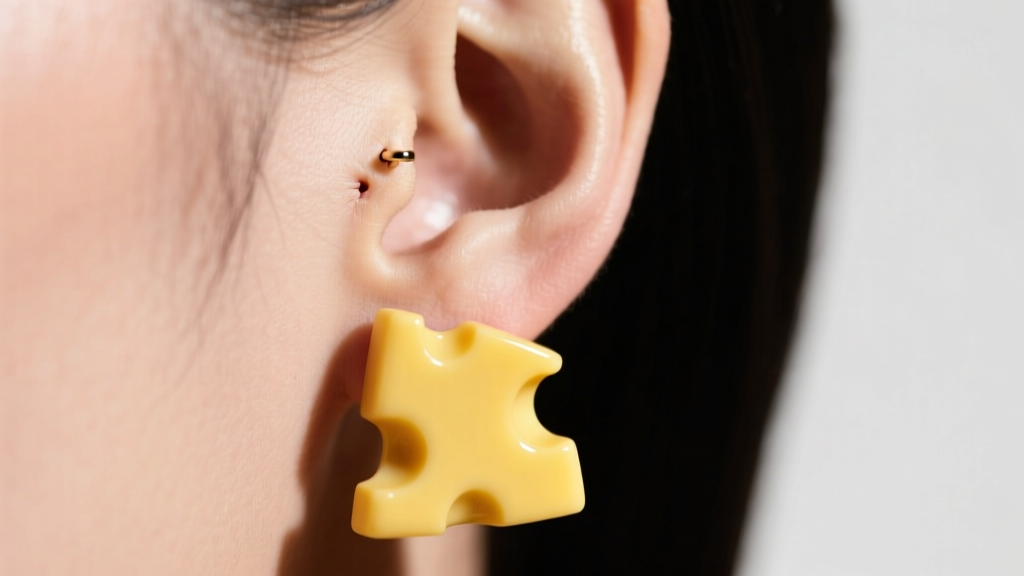
Novelty food jewelry has dominated alternative fashion and pop-culture styling trends throughout 2026, with whimsical, hyper-realistic food shapes becoming a staple in curated ear stacks. However, among the various novelty designs, cheese earrings—ranging from heavy resin Swiss cheese wedges to enameled metal cheese slices—present a unique set of structural and dermatological challenges. Because of their asymmetrical weight distribution and the cheap base metals often used in novelty manufacturing, these pieces frequently lead to lobe migration, post bending, and severe contact dermatitis.
As jewelry specialists, we see the aftermath of unsupported novelty jewelry daily. This comprehensive troubleshooting guide will help you salvage your favorite cheese earrings, upgrade their structural integrity, and protect your earlobes from permanent damage.
The Physics of the 'Cheese Cutter' Effect
The primary issue with cheese earrings, particularly the popular 2-inch resin wedge styles, is their off-center center of gravity. Unlike a balanced hoop or a symmetrical stud, a cheese wedge hangs heavily at the bottom. This creates a pendulum effect that exerts continuous sheer force on the piercing fistula (the healed skin tube inside your earlobe).
Standard novelty earrings are typically manufactured with 20-gauge (0.81mm) or 22-gauge (0.64mm) posts. When a 10-gram resin cheese wedge swings on a flimsy 22-gauge wire, it acts exactly like a cheese cutter wire slicing through block cheese. Over time, this downward drag causes the piercing hole to elongate, migrate toward the edge of the lobe, and eventually tear. A healthy, standard earlobe can comfortably support 3 to 5 grams of continuous weight; most solid resin or metal cheese earrings exceed 8 to 14 grams per ear.
Troubleshooting Allergic Contact Dermatitis
Beyond the physical weight, the metallurgy of novelty jewelry is notoriously poor. To keep costs low, manufacturers frequently cast cheese earrings from Zamak (a zinc alloy) or brass, finishing them with a thin flash-plating that often contains high levels of nickel. According to the American Academy of Dermatology, nickel is the leading cause of allergic contact dermatitis, resulting in weeping, itching, and crusting around the piercing site.
The Clear Nail Polish Myth
A common internet hack suggests painting the earring post with clear nail polish to create a barrier between the nickel and your skin. Do not do this. Nail polish is not biocompatible. It chips rapidly inside the warm, moist environment of a piercing fistula, trapping bacteria and creating micro-abrasions that lead to localized infections. Furthermore, the solvents in the polish can cause chemical burns on compromised skin.
| Base Material | Nickel Risk | Troubleshooting Fix |
|---|---|---|
| Zamak (Zinc Alloy) | High | Swap to a threadless titanium converter post. |
| Brass with Gold Flash | Medium-High | Use silicone O-rings to prevent metal-to-skin contact on the back. |
| Surgical Steel (316L) | Low-Medium | Acceptable for healed lobes only; monitor for itching. |
| ASTM F136 Titanium | None | Industry standard; no troubleshooting required. |
Step-by-Step Lobe Stabilization Framework
If your earlobes are already feeling tender, or if your cheese earrings are drooping uncomfortably, you must intervene before the tissue thins permanently. Follow this stabilization framework to redistribute the weight and reinforce the piercing.
- Deploy Silicone Support Discs: Standard earring backs (butterfly clutches) concentrate all the pulling force onto a 2mm point on the back of your lobe. Replace them with 6mm to 8mm medical-grade silicone support discs (often sold as 'Ear Armor' or 'Lobe Wonder' patches). These wide discs distribute the 12-gram weight of a resin cheese wedge across a broader surface area, halting the downward drag.
- Double O-Ring Locking: If the earring post is too short to accommodate a wide silicone disc, use two 1mm thick silicone O-rings stacked behind the lobe. This provides grip and prevents the heavy cheese wedge from spinning and twisting the fistula.
- Limit Wear Time: Treat heavy novelty earrings like high heels. Restrict wear to 4-6 hours for events or photoshoots, then immediately swap to lightweight, implant-grade titanium huggies or studs to allow the lobe tissue to recover and restore blood flow.
Upgrading to Threadless Titanium Systems
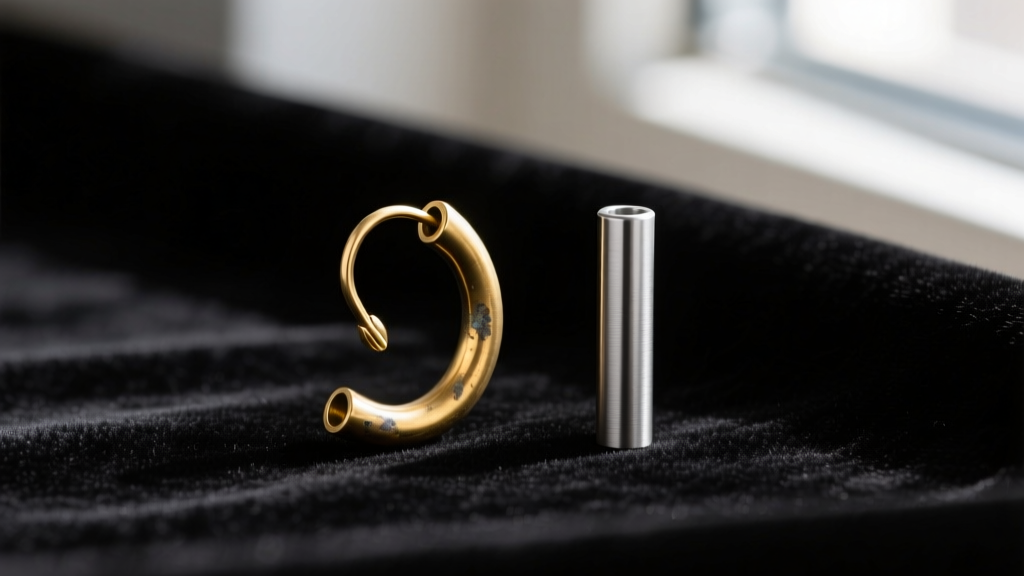
The ultimate fix for a heavy cheese earring with a flimsy post is a jeweler conversion. Take your novelty earrings to a professional piercer or jeweler and ask them to laser-weld or solder a 16-gauge (1.2mm) ASTM F136 implant-grade titanium threadless pin to the back of the cheese charm. As noted by the Association of Professional Piercers, implant-grade titanium is entirely biocompatible and rigid enough to support heavy novelty charms without bending or snapping inside the lobe.
Material & Weight Comparison Chart
Not all cheese earrings are created equal. When shopping for novelty pieces, use this chart to anticipate the structural challenges based on the manufacturing material.
| Material Type | Average Weight (per ear) | Structural Risk | Best Use Case |
|---|---|---|---|
| Hollow Acrylic | 2 - 4 grams | Low (Prone to cracking if dropped) | All-day wear, fresh healed lobes. |
| Poured UV Resin | 8 - 14 grams | High (Causes severe lobe droop) | Short-term wear with silicone discs. |
| Enameled Brass | 5 - 7 grams | Medium (Nickel allergy risk) | Occasional wear, monitor skin. |
| Solid Sterling Silver | 6 - 9 grams | Medium (Tarnish and oxidation risk) | Evening wear, requires polishing. |
When to Retire the Novelty: Signs of Permanent Migration
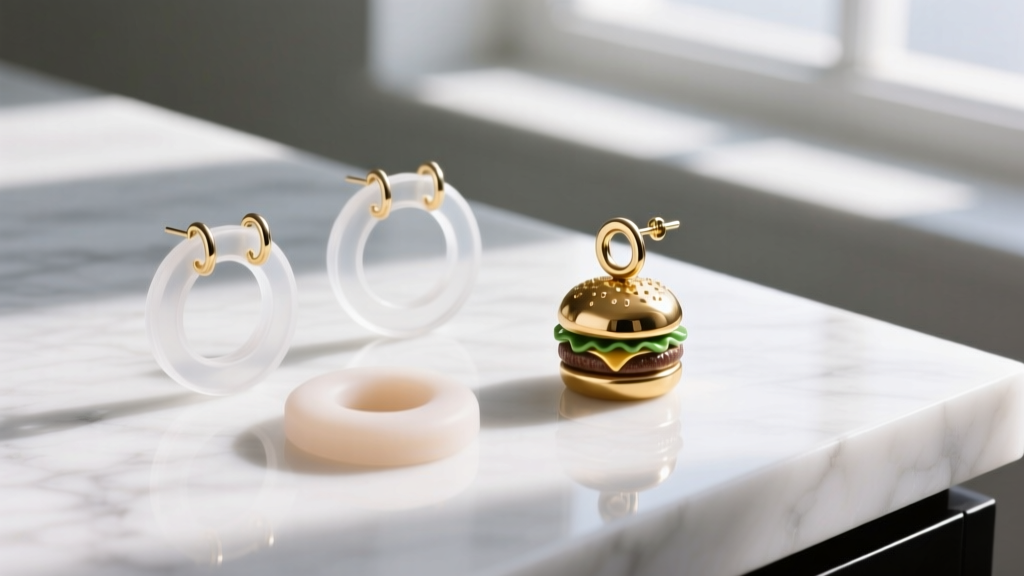
Sometimes, the damage is already done, and continuing to troubleshoot a heavy earring will only result in a completely torn lobe. You must immediately retire your heavy cheese earrings and switch to lightweight, 14k gold or titanium studs if you observe any of the following failure modes:
- The 'Slit' Appearance: If the piercing hole no longer looks like a perfect circle but resembles a vertical slit, the tissue matrix has been compromised.
- Thinning Tissue Margin: Measure the distance between the bottom of the piercing hole and the edge of your earlobe. If this margin is less than 3 millimeters, the lobe is at imminent risk of splitting.
- Chronic Redness and Flaking: If the skin inside the fistula remains red, shiny, and flaky even after removing the jewelry for 48 hours, you are experiencing chronic contact dermatitis or early-stage rejection.
By understanding the biomechanics of heavy novelty jewelry and implementing these professional stabilization techniques, you can safely enjoy the playful aesthetic of cheese earrings without sacrificing the long-term health and structural integrity of your earlobes.


