Fixing Heavy Rapper Earrings: Sagging Lobes & Tear Prevention
Learn how to fix sagging lobes and prevent tearing from heavy rapper earrings. Expert troubleshooting for iced-out studs, gauges, and backings.

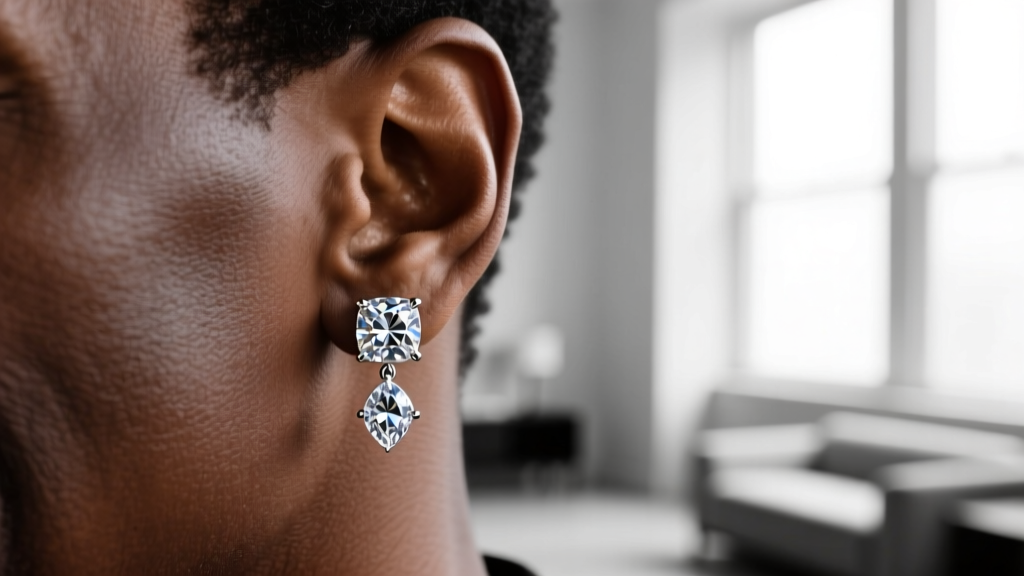
Hip-hop jewelry culture has always pushed the boundaries of scale, brilliance, and custom design. However, the physical reality of wearing heavy, iced-out pieces often leads to significant tissue damage. Standard jewelry hardware was simply never engineered to support the 15-to-30-gram weight of custom rapper earrings. When you combine dense precious metals with the concentrated mass of VS/VVS diamonds or moissanite, the earlobe bears a disproportionate mechanical load. This results in forward drooping, stretched fistulas, and in severe cases, complete lobe tearing.
As a jewelry specialist, I see countless clients attempting to wear statement hip-hop pieces on standard 20-gauge friction posts. This guide provides a definitive, technical troubleshooting framework for diagnosing hardware failures, upgrading your post mechanics, and rehabilitating damaged tissue so you can wear your heavy pieces safely and comfortably.
The Physics of Iced-Out: Why Heavy Rapper Earrings Cause Lobe Damage
The core issue with heavy hip-hop earrings is the mismatch between the jewelry's center of gravity and the earlobe's tensile strength. A standard 1-carat diamond stud weighs roughly 0.2 grams. In contrast, a custom 10-millimeter iced-out floater crafted in 14k solid gold with a full pavé diamond face can easily exceed 18 grams.
When this weight is suspended on a standard 0.8mm (20-gauge) wire, the pressure per square millimeter on the fistula (the piercing hole) mimics the mechanics of a cheese cutter. Over time, this continuous downward shear force elongates the piercing channel, migrating it toward the edge of the lobe. Furthermore, the top-heavy nature of large square or round stud faces causes the earring to pivot forward, creating an awkward, drooping profile that ruins the visual impact of the piece.
Troubleshooting the 4 Most Common Rapper Earring Failures
1. The Forward Sag and Droop
The Problem: The heavy face of the earring pulls the top of the post downward, causing the diamond grid to point at the floor rather than straight ahead.
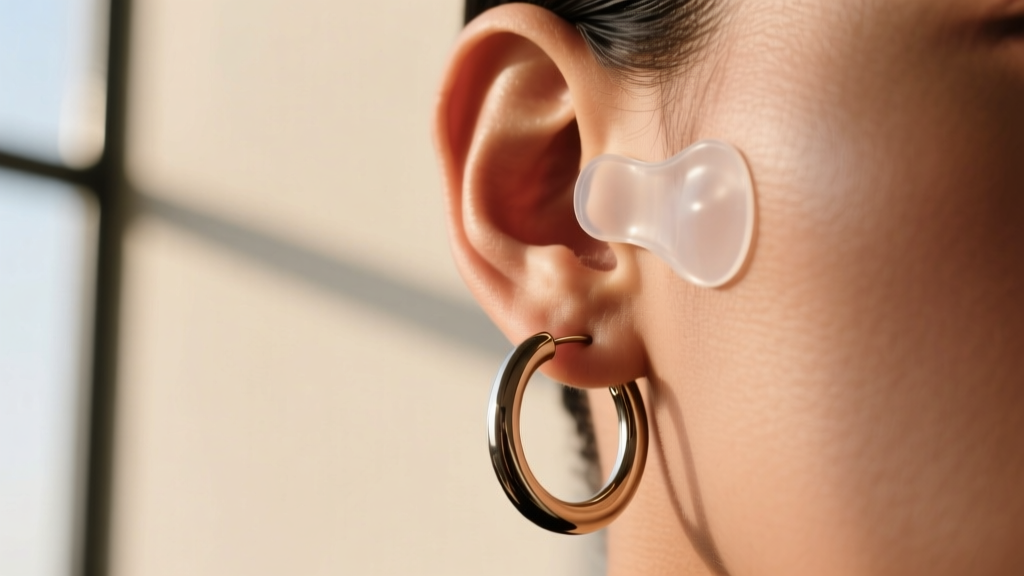
The Fix: Ditch standard butterfly backs. You must transition to a flat-back labret post. A flat-back disc (typically 10mm to 12mm in diameter) rests flush against the back of the earlobe, distributing the rearward pressure across a wider surface area. This creates a rigid, shelf-like support system that counteracts the forward tilt of the heavy face. For extreme cases, apply medical-grade silicone earring support patches (like Lobe Wonder) behind the earlobe to artificially stiffen the tissue.
2. The Butterfly Back Slip-Out
The Problem: Heavy pieces generate kinetic momentum when you move your head or wear hoodies. Standard friction backs lose their grip, leading to lost earrings and damaged prongs from impact.
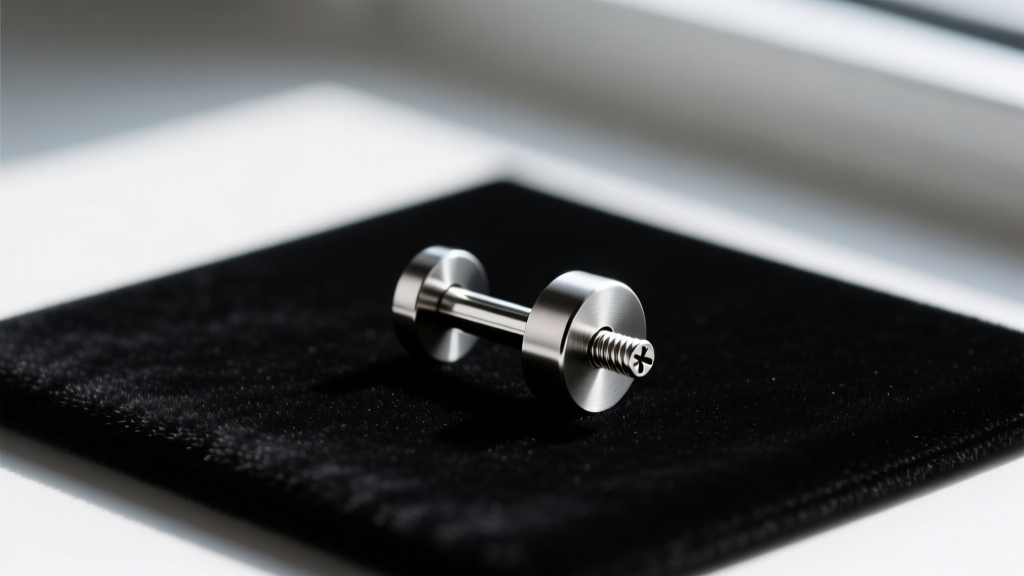
The Fix: Upgrade to internally threaded screw-on backs or La Poussière secure lock systems. If your jeweler has already manufactured the piece with a smooth, unthreaded post, you can salvage it by adding 1.5mm thickness silicone O-rings over the post before securing the butterfly back. The silicone creates high-friction resistance that prevents the backing from sliding off under dynamic movement.
3. Contact Dermatitis from 'Mystery Metals'
The Problem: Many budget-friendly or poorly sourced custom pieces use brass or copper base metals coated in a thin layer of rhodium or gold plating. The heavy weight of the earring causes increased friction and micro-tears in the fistula, allowing nickel and copper to enter the bloodstream, triggering severe allergic contact dermatitis.
The Fix: According to the Association of Professional Piercers, any heavy jewelry worn in unhealed or stressed tissue must utilize ASTM F-136 implant-grade titanium or solid 14k/18k gold. If you are commissioning a custom piece, demand that the post and backing be cast in solid gold or titanium, never plated base metal.
4. The Cheese-Cutter Effect (Tearing)
The Problem: The post is too thin for the weight of the earring, slowly slicing through the bottom of the earlobe.
The Fix: You must increase the gauge (thickness) of the post. Standard earrings are 20-gauge (0.81mm) or 18-gauge (1.02mm). Heavy rapper earrings require a minimum of 14-gauge (1.63mm) or ideally 12-gauge (2.05mm). A thicker post drastically reduces the pounds-per-square-inch (PSI) pressure exerted on the bottom of the fistula.
The Ultimate Hardware Upgrade Chart for Heavy Studs
When taking your custom pieces to a jeweler or piercer for a hardware retrofit, use this chart to select the correct post mechanics based on the total gram weight of your earring.
| Post Type | Gauge Thickness | Max Safe Weight | Best Application |
|---|---|---|---|
| Standard Friction Post | 20g - 18g (0.8-1.0mm) | Up to 3g | Lightweight, single-stone studs |
| Threadless Push-Pin | 16g - 14g (1.2-1.6mm) | Up to 8g | Medium iced-out pieces, everyday wear |
| Flat-Back Labret (Threaded) | 14g (1.6mm) | Up to 15g | Heavy custom rapper earrings, large floats |
| Heavy-Duty Screw Post | 12g (2.0mm) | Up to 25g+ | Massive statement pieces, hoop-to-stud converters |
Step-by-Step Lobe Rehabilitation Protocol
If your heavy rapper earrings have already caused elongation, thinning, or micro-tearing of the lobe, you must intervene immediately to prevent a complete blowout. Follow this 4-week rehabilitation protocol:
- Week 1: Complete Unloading. Remove all heavy jewelry. Wear only lightweight, 14-gauge implant-grade titanium flat-back labrets to keep the fistula open without applying downward pressure. Apply a cold compress for 10 minutes twice daily to reduce localized edema (swelling).
- Week 2: Tissue Massage. Begin massaging the earlobe daily with pure, unrefined Vitamin E oil or jojoba oil. This promotes collagen synthesis and improves tissue elasticity. Gently massage in a circular motion to break down any early scar tissue forming around the elongated channel.
- Week 3: Support Patch Training. Reintroduce medium-weight pieces (5-8 grams) but only while using adhesive silicone lobe support patches. This trains you to recognize the physical sensation of proper weight distribution.
- Week 4: Hardware Retrofit. Take your heaviest custom pieces to a professional jeweler to have the posts cut off and replaced with 14-gauge or 12-gauge internally threaded flat-back systems. Do not attempt to wear heavy pieces on the original thin wire posts.
Sourcing Custom Hip-Hop Jewelry Safely in 2026
The landscape of custom hip-hop jewelry has evolved significantly. In 2026, top-tier jewelers utilize advanced CAD (Computer-Aided Design) software not just for visual rendering, but for precise weight estimation. Before you authorize the casting of a new pair of custom rapper earrings, demand a CAD Weight Report.
This report will tell you the exact gram weight of the gold and the estimated carat weight of the stones. Pro-Tip: If you are opting for moissanite instead of natural or lab-grown diamonds to save on costs, be aware that moissanite is approximately 10% heavier than a diamond of the exact same millimeter dimensions. A massive 15mm moissanite-encrusted pendant or stud will exert noticeably more downward force on your lobes than its diamond counterpart. Factor this density into your hardware choices.
Furthermore, always verify the metal purity. The Gemological Institute of America (GIA) notes that 14k gold offers a superior balance of brilliance and structural rigidity compared to 18k or 22k gold. For heavy, iced-out pieces that endure high mechanical stress, 14k solid gold is actually the superior metallurgical choice, as the higher alloy content makes the prongs and posts less prone to bending under the weight of the stones.
Final Word on Heavy Metal
Wearing heavy rapper earrings is a statement of culture, success, and personal style, but it should not come at the cost of permanent tissue damage. By understanding the physics of weight distribution, upgrading to thick-gauge flat-back hardware, and respecting the limits of your anatomy, you can rock massive, iced-out pieces with perfect posture and zero pain. Treat your lobes like the premium real estate they are, and invest in the structural engineering required to support your collection.


