Troubleshooting Gold Moti Earrings: Fix Loose Pearls & Tarnish
Learn how to troubleshoot common gold moti earrings issues. Discover expert fixes for loose pearls, tarnished gold, and bent posts in this detailed guide.

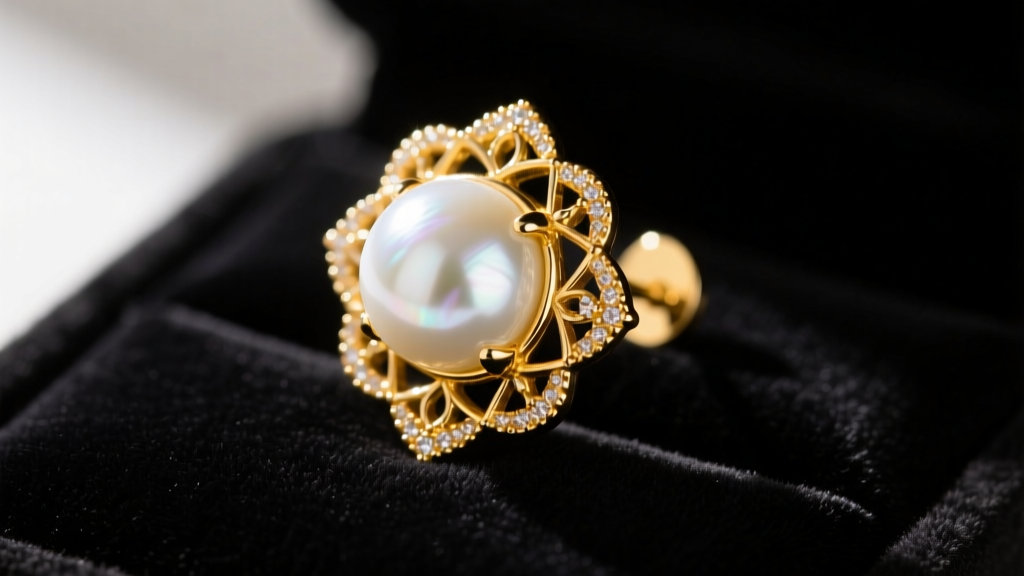
The Anatomy of Failure in Gold Moti Earrings
Gold moti earrings—the timeless pairing of gold and pearls (moti)—are a cornerstone of both South Asian heritage jewelry and contemporary minimalist wardrobes. However, combining a soft, alloyed metal with a delicate organic gemstone creates unique structural vulnerabilities. Pearls are composed of calcium carbonate and rank a mere 2.5 to 3.0 on the Mohs hardness scale, while gold settings are subject to mechanical stress and chemical reactions. Whether you are dealing with a pearl that has mysteriously vanished from its setting, a blackening gold post, or a stretched earlobe, this troubleshooting guide provides actionable, expert-level solutions to restore your jewelry.
Troubleshooting Loose Pearls: Adhesive vs. Prong Settings
The most frequent point of failure in gold moti earrings is the junction where the pearl meets the metal. Depending on the design, your pearls are either flat-backed and glued into a cup, or half-drilled and mounted on a gold peg. As of 2026, while master jewelers increasingly use UV-cured optical adhesives for high-end settings, traditional two-part epoxies remain the standard for both manufacturing and at-home repairs.
How to Re-Glue a Flat-Back or Pegged Pearl
If your moti has detached, do not immediately reach for household super glue. Cyanoacrylate (Super Glue) crystallizes upon curing, creating a permanent white haze that ruins the pearl's nacre. Furthermore, the chemical heat generated during its rapid curing process can fracture the pearl.
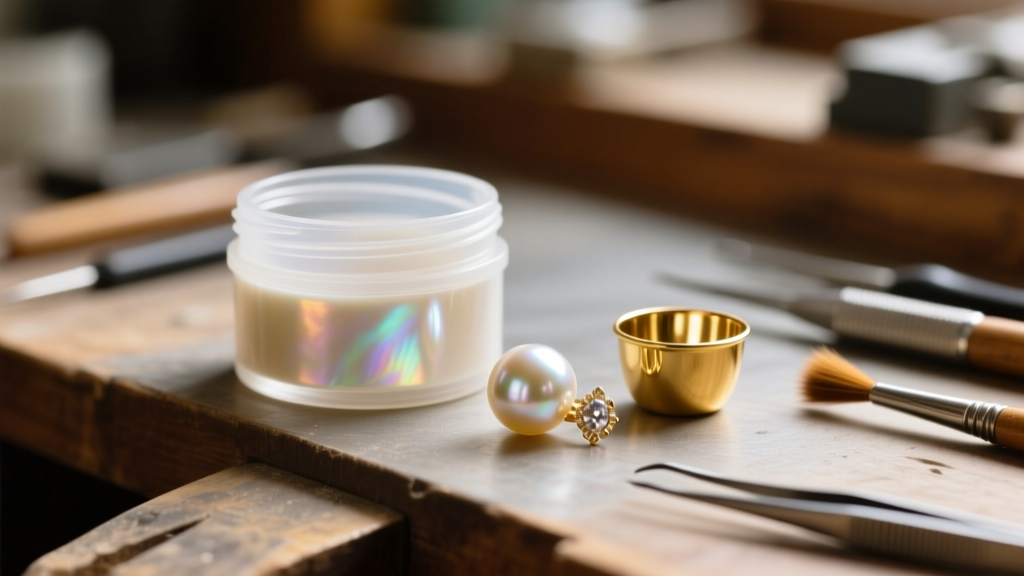
- Prep the Surface: Use a wooden toothpick to gently scrape away old, cloudy adhesive from both the gold cup and the pearl base. Wipe with a lint-free cloth dampened with isopropyl alcohol.
- Select the Right Adhesive: For small freshwater moti, use a flexible jeweler's cement like G-S Hypo Cement. For larger, heavier South Sea or Akoya pearls, use a two-part clear jeweler's epoxy (such as Devcon 5-Minute Epoxy).
- Application: Apply a microscopic bead of epoxy to the center of the gold cup or peg. Press the pearl down firmly, ensuring it sits flush without glue squeezing out the sides. Secure it with painter's tape for 24 hours to allow a full cure.
Tightening Snagged Prong Settings
If your gold moti earrings feature prongs rather than a glued cup, the gold prongs can easily catch on knitwear or hair, pulling them away from the pearl. Because gold is malleable, you can often push the prongs back into place using a nylon-tipped bezel roller or the smooth plastic handle of a toothbrush. If a prong has thinned or broken, the earring requires laser welding by a professional bench jeweler.
Solving Gold Tarnish and Discoloration
Pure 24-karat gold does not tarnish, but it is far too soft to securely hold a pearl post or setting. Therefore, gold moti earrings are crafted from alloys. The copper, silver, and zinc mixed into the gold react with sulfur compounds in the air, sweat, and cosmetics, leading to dark, tarnished posts or dull settings.
| Gold Karat | Purity | Tarnish Risk | Best Use Case for Moti |
|---|---|---|---|
| 22k (91.6%) | High | Very Low | Traditional lightweight studs; poor for heavy prongs |
| 18k (75.0%) | Medium | Low | High-end fine jewelry; excellent balance of luster and strength |
| 14k (58.3%) | Lower | Moderate | Everyday wear; highly durable posts and secure prongs |
| Gold Plated | Trace | High | Fashion jewelry; prone to flaking near pearl adhesives |
The Fix: To remove tarnish from the gold settings without harming the pearl, use a specialized, ammonia-free gold polishing cloth. Never dip the entire earring into liquid silver or gold dips, as the harsh thiourea chemicals will instantly strip the pearl's orient and luster. For heavy tarnish on the post itself, a jeweler can use a localized electrolytic pen to clean the metal without touching the gemstone.
Fixing Bent Posts and Earlobe Droop
A common structural issue with gold moti earrings—particularly those featuring large, heavy pearls—is the bending of the earring post and the subsequent stretching of the earlobe piercing. Standard earring posts are manufactured at 20-gauge (0.81mm thick). When supporting a dense 10mm South Sea moti, a 20-gauge post will inevitably bend under the leveraged weight, causing the earring to droop forward uncomfortably.
Expert Insight: If your heavy pearl earrings constantly point toward the floor, the issue is rarely the gold alloy's softness, but rather the gauge thickness of the post relative to the pearl's center of gravity.
The Fix: Take the earrings to a jeweler to have the 20-gauge posts snipped off and replaced with thicker 18-gauge (1.02mm) or even 16-gauge (1.29mm) posts. If you cannot alter the posts, purchase silicone earring support backs (often called 'Bling Guards' or 'earring stabilizers'). These wide, flat silicone discs distribute the weight of the pearl across a larger surface area of the earlobe, preventing both droop and piercing stretch.
Identifying Plating Failure and 'Fake' Moti
If your gold moti earrings are turning your skin green or the gold color is flaking specifically around the base of the pearl, you likely own gold-plated or gold-vermeil earrings. The solvents in pearl adhesives can seep into micro-abrasions in the gold plating, causing the underlying brass or copper base metal to oxidize and lift the plating. Additionally, if the 'moti' feels unusually heavy, cold to the touch, or perfectly flawless, it may be a glass or shell-bead imitation. According to the Gemological Institute of America (GIA), real pearls will feel slightly gritty when rubbed gently against the biting edge of your front teeth, whereas glass imitations will feel perfectly smooth.
Safe Cleaning Protocols for Gold and Pearl
Because you are dealing with two vastly different materials, cleaning gold moti earrings requires a careful, dual-material approach. Ultrasonic cleaners, which use high-frequency sound waves to cavitate dirt, will shatter pearls or cause their nacre to peel. Steam cleaners will cook the organic proteins inside the pearl, resulting in irreversible yellowing.
Step-by-Step Safe Cleaning:
- Mix a few drops of pH-neutral liquid Castile soap into a bowl of lukewarm distilled water.
- Dip a soft, clean makeup brush (like a squirrel-hair eyeshadow brush) into the solution and gently agitate the dirt around the gold setting and the base of the pearl.
- Rinse the brush in plain distilled water and wipe away the soap suds. Avoid submerging the earrings, especially if the pearls are glued, as prolonged moisture weakens the epoxy bond.
- Pat dry immediately with a lint-free microfiber cloth.
When to Consult a Master Jeweler
While re-gluing and polishing can be done at home, certain issues require professional intervention. If the gold cup holding the pearl has cracked, if the post has snapped flush with the earring back, or if your pearl requires re-drilling to fit a new peg, visit a certified bench jeweler. As noted by Jewelers of America, professional jewelers possess specialized laser welders that can repair gold settings without transferring destructive heat to the adjacent organic gemstone, ensuring your gold moti earrings remain a lasting part of your collection.


