Troubleshooting Big Knot Earrings: Fix Sagging, Snags & Breakage
Learn how to troubleshoot big knot earrings. Fix sagging lobes, prevent post bending, and stop hair snags with expert jewelry repair and styling tips.


The Hidden Toll of Heavy Statement Knots
Oversized, sculptural jewelry has dominated ear styling trends, but wearing big knot earrings comes with a unique set of structural and dermatological challenges. A standard 25mm solid gold twisted knot earring can weigh between 8 to 12 grams per piece. By contrast, the average human earlobe is only biomechanically equipped to support 3 to 5 grams of continuous weight before the fistula (the piercing channel) begins to experience micro-trauma. Over time, this gravitational drag leads to lobe sagging, post bending, and clasp failure. In 2026, as statement knots remain a staple in both fine jewelry and fashion alloy markets, understanding the mechanics of weight distribution is essential for preserving both your ear health and your investment.
Troubleshooting Lobe Sagging and Tearing
The most frequent complaint regarding heavy knot earrings is the downward tilt that exposes the back of the earlobe and stretches the piercing hole. If left unaddressed, this stretching can become permanent, requiring surgical repair or dermal fillers to correct. Fortunately, you can troubleshoot this issue without sacrificing your favorite statement pieces.
Support Patches and Hidden Guards
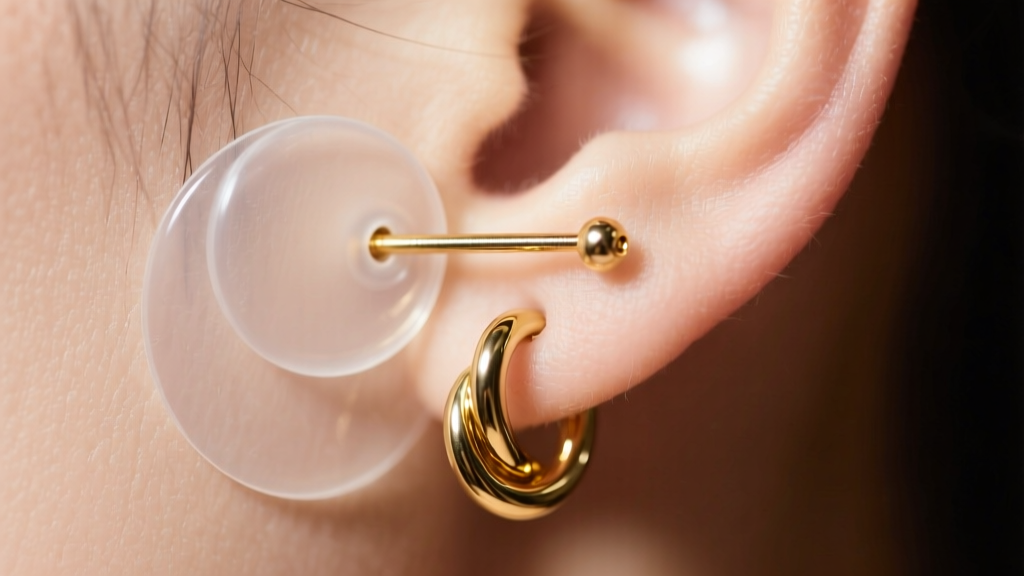
Polyurethane earlobe support patches (often sold under brand names like LobeWonder) are an immediate, non-invasive fix. These 0.2mm thick adhesive discs distribute the earring's weight across a wider surface area of the lobe's posterior. To apply correctly, clean the back of your lobe with isopropyl alcohol to remove sebum and lotion, apply the patch, and use a sterilized needle to pierce through the center guide mark. For a more permanent jewelry modification, a master jeweler can solder a lightweight, flat titanium "guard" or "earring jacket" directly onto the post. This guard sits flush against the back of the lobe, acting as a wide-base anchor that prevents the heavy knot from pivoting forward.
Gauge Thickness and Post Upgrades
Standard earrings are manufactured with 20-gauge (0.8mm) posts, which act like thin wires bending under the leverage of a heavy knot. Upgrading the post to an 18-gauge (1.0mm) or 16-gauge (1.2mm) wire significantly increases the tensile strength of the earring. According to guidelines from the Association of Professional Piercers (APP), while 16-gauge is standard for many cartilage piercings, forcing a thick post into a tight, unhealed, or historically stretched lobe can cause tissue tearing. Always have a jeweler measure your current fistula diameter before upgrading the post thickness.
Fixing Clasp Failures and Post Bending
When big knot earrings lean forward, the friction back (butterfly clutch) is subjected to lateral torque. The microscopic grooves inside the clutch wear down, leading to lost earrings. If you are constantly pushing the back tighter or replacing lost clutches, the structural integrity of your backing system has failed.
| Clasp/Back Type | Weight Capacity | Security Level | Upgrade Cost (per pair) |
|---|---|---|---|
| Standard Friction Back | Up to 4g | Low | $0 (Included) |
| Screw Back (Threaded) | Up to 12g | High | $45 - $85 |
| Leverback (French Wire) | Up to 8g | Medium-High | $30 - $60 |
| La Pousette (Locking) | Up to 15g+ | Very High | $90 - $150 |
The Professional Fix: For heavy knot studs, upgrading to La Pousette locking backs is the gold standard. These backs feature a spring-loaded internal mechanism that snaps into a deep groove on the post, completely eliminating lateral slippage. If your knot earrings are on a wire rather than a post, having a jeweler swap standard fishhooks for heavy-duty leverbacks with a locking latch will prevent the wire from slipping out when the heavy knot swings.
Solving the Hair Snag and Tarnish Trap
The intricate overlapping wires of a knot design create a magnet for loose hair and cosmetic buildup. Snagging doesn't just ruin your hairstyle; a sudden yank can instantly tear the earlobe or rip the solder joint holding the knot to the post.
Laser Welding for Seamless Overlaps
Many mass-produced knot earrings are simply wire wrapped and glued, or poorly soldered at the junctions, leaving microscopic burrs that catch hair. A professional jeweler can use a laser welder to fuse these overlapping wire junctions seamlessly. Laser welding is highly precise and won't melt the surrounding patina or damage nearby gemstones. In 2026, the average cost for laser-fusing the primary junctions on a pair of knot earrings ranges from $40 to $75, a worthwhile investment to prevent catastrophic lobe tears.
Ultrasonic Cleaning for Complex Crevices
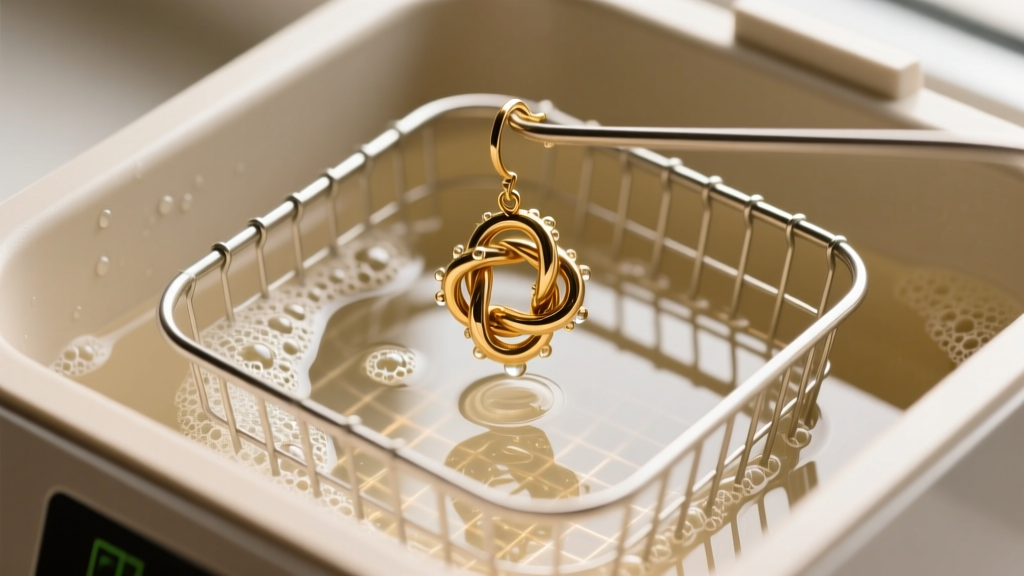
Sebum, dead skin cells, and lotions accumulate deep within the tight crevices of knot earrings, leading to a foul odor and accelerated metal tarnishing. Traditional polishing cloths cannot reach these gaps. An ultrasonic jewelry cleaner operating at 42kHz to 45kHz uses cavitation bubbles to blast debris out of the tightest wire wraps. However, the Gemological Institute of America (GIA) strictly warns against using ultrasonic cleaners on jewelry featuring porous stones (like turquoise or pearls) or fracture-filled gems, as the high-frequency vibrations can shatter the stones or dissolve the adhesive. For solid gold or platinum knots without delicate inclusions, a 3-minute ultrasonic bath in warm water with a drop of mild dish soap will restore the original luster.
Material Weight vs. Visual Impact: A Buyer's Guide
If you are in the market for big knot earrings and want to avoid these troubleshooting steps entirely, the solution lies in material selection. The visual volume of a knot does not have to dictate its physical weight.
- Solid 14k/18k Gold: Expect a 25mm knot to weigh 8-12g and cost between $400 and $900. Requires support patches for all-day wear.
- Electroformed Hollow Gold: This manufacturing process creates a thick shell of gold over a wax core that is later melted away. A 30mm hollow knot can weigh under 3 grams while maintaining the exact visual footprint of a solid piece. Prices typically range from $150 to $300. Troubleshooting note: Hollow earrings cannot be easily resized or laser-welded if crushed, so they require careful storage.
- Titanium or Niobium Alloys: Often used in contemporary or avant-garde knot designs, these metals offer high tensile strength at a fraction of the weight of gold. They are also hypoallergenic, making them ideal for sensitive lobes bearing heavy loads.
When to See a Professional Jeweler
Do not attempt to bend a warped knot earring back into shape with pliers at home. Work-hardened metals, especially sterling silver and certain gold alloys, will snap if bent back and forth. If your knot has lost its symmetrical tension, or if the post is bending at a 45-degree angle, take it to a bench jeweler. They can anneal the metal (heating it to relieve internal stress), reshape it on a steel mandrel, and re-harden it properly. By addressing the structural weak points of your big knot earrings early, you can enjoy their bold aesthetic without compromising the long-term health of your piercings.


