Azabache Earrings Care: Troubleshooting Scratches & Fading
Learn how to troubleshoot common azabache earrings issues. Expert solutions for scratches, lobe stretching, cleaning damage, and spotting fake jet.

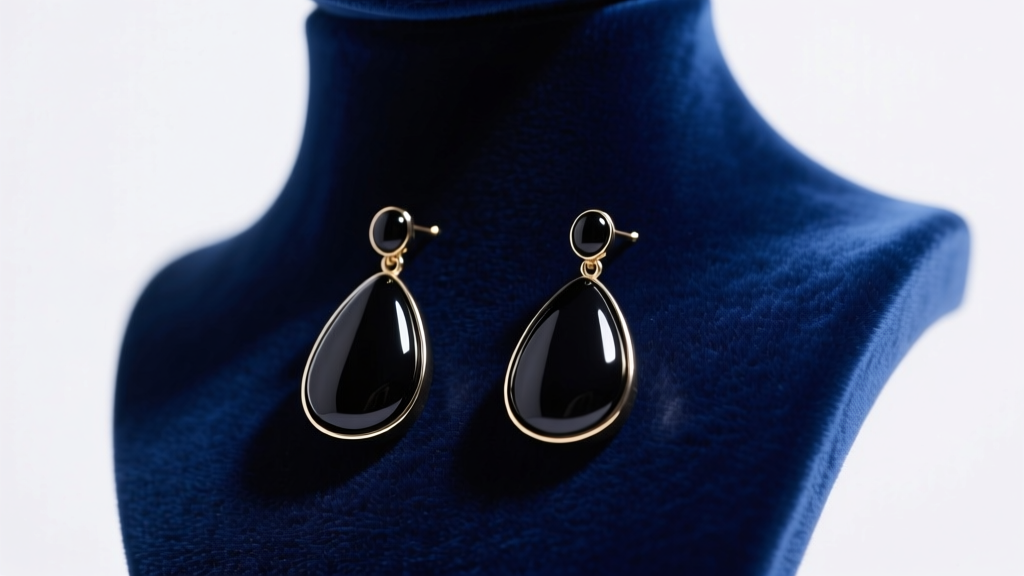
Azabache, commonly known in gemology as jet, is a stunning organic gemstone formed from the fossilized wood of the ancient Araucaria tree. Prized for its deep, velvety black luster and its rich cultural significance as a protective talisman in Latin American and Caribbean traditions, azabache presents a unique set of challenges in jewelry design and daily wear. Unlike crystalline stones such as sapphire or quartz, azabache is porous, relatively soft, and highly sensitive to its environment. When crafted into earrings, these material properties frequently lead to specific failure modes, from surface scratching and chemical fading to earlobe stretching caused by the stone's surprising density.
If your favorite azabache earrings are looking dull, feeling heavy, or showing signs of wear, this comprehensive troubleshooting guide will help you diagnose the problem and restore your jewelry to its original glory. We will explore the exact material science behind jet, provide actionable repair strategies, and share expert techniques for preserving organic gemstones for generations.
Understanding Azabache: The Mohs Hardness Factor
To effectively troubleshoot damaged azabache earrings, you must first understand the physical limitations of the material. According to the Gemological Institute of America (GIA), jet ranks between 2.5 and 4 on the Mohs scale of mineral hardness. To put this into perspective, a diamond is a 10, quartz is a 7, and a copper penny is about a 3.5. This means that everyday environmental dust, which contains microscopic particles of quartz (hardness 7), is significantly harder than your azabache earrings. Simply wiping your earrings with a dry, coarse cloth can introduce micro-scratches that, over time, dull the stone's signature polished luster.
Furthermore, because jet is an organic gemstone, it lacks the cleavage planes of crystalline minerals. Instead of shattering cleanly, it tends to chip, abrade, or develop a chalky texture when subjected to friction or impact. Understanding this baseline vulnerability is the first step in diagnosing why your earrings may be losing their shine or developing surface imperfections.
Troubleshooting Matrix: Common Azabache Earring Problems
Below is a diagnostic matrix detailing the most frequent issues encountered with jet jewelry, alongside their root causes and professional-grade solutions.
| Problem | Root Cause | Expert Solution |
|---|---|---|
| Surface Micro-Scratches | Friction from clothing, dust, or improper storage. | Professional buffing using a soft muslin wheel and cerium oxide or specialized organic gem polish. |
| Chalky White Residue | Exposure to alcohols, perfumes, or harsh desiccants. | Rehydration therapy using food-grade mineral oil applied with a microfiber cloth. |
| Bent Earring Posts | High specific gravity of solid jet overwhelming thin metal. | Upgrade posts to 16-gauge (1.29mm) or 14-gauge (1.63mm) surgical steel or titanium. |
| Earlobe Stretching | Fulcrum weight of heavy drop styles pulling on the piercing. | Utilize silicone O-ring backs or adhesive earlobe support patches to distribute weight. |
| Internal Fractures | Ultrasonic cleaning vibrations or sudden thermal shock. | Irreversible; prevent by strictly avoiding ultrasonic cleaners and extreme temperature changes. |
The Heavy Stone Dilemma: Preventing Earlobe Stretching
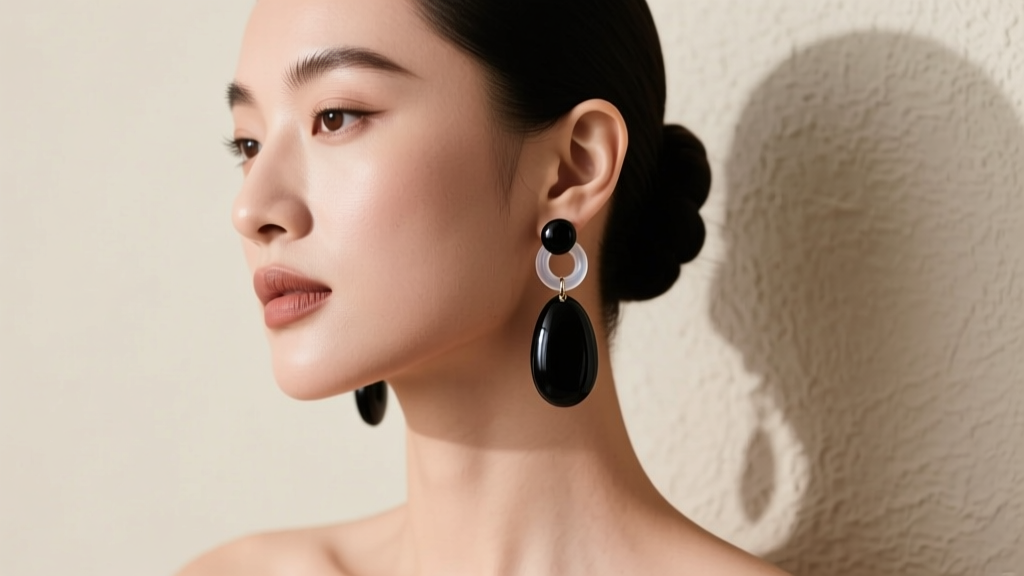
One of the most common complaints regarding azabache earrings is their weight. While jet is lightweight compared to metallic ores, it is remarkably dense for an organic material, possessing a specific gravity of approximately 1.30 to 1.40. A solid, 20-millimeter carved azabache teardrop or a traditional 'figa' (fist) amulet earring can easily weigh between 4 and 8 grams per piece. When this weight is suspended from a standard earring post, it creates a severe fulcrum effect that pulls downward on the earlobe piercing.
Upgrading Your Hardware and Backings
Standard earring posts are typically 20-gauge (0.81mm) or 18-gauge (1.02mm). Under the continuous downward drag of heavy jet, these thin posts will inevitably bend, warp, or snap at the solder joint. If you are commissioning custom azabache earrings or repairing a bent pair, insist on 16-gauge (1.29mm) or even 14-gauge (1.63mm) posts made from rigid metals like 316L surgical steel or Grade 23 titanium.
Equally important is the earring backing. Standard butterfly friction backs offer a very small surface area, which concentrates the heavy weight of the stone onto a tiny point on the back of your earlobe, leading to pain and gradual stretching. To solve this, replace butterfly backs with flat disc friction backs (at least 8mm in diameter) or La Pousette lock backs, which feature a wider, more secure grip. For drop earrings, sliding a clear silicone O-ring over the post before securing the backing provides an excellent shock-absorbing cushion that distributes the weight evenly across the earlobe tissue.
Cleaning Disasters: What to Avoid and How to Recover
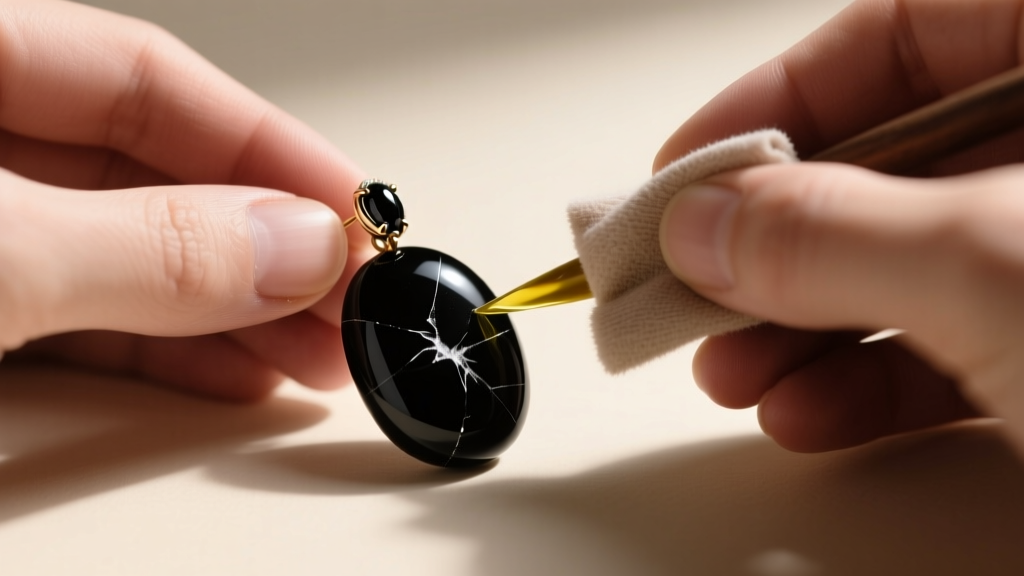
Because azabache is fossilized wood, it retains microscopic pores and trace amounts of natural moisture. This makes it exceptionally vulnerable to chemical damage. The most frequent troubleshooting issue we see is 'chalking'—a condition where the jet turns a dull, powdery gray or white. This is almost always caused by exposure to isopropyl alcohol, ammonia-based glass cleaners, or commercial silver dip solutions.
Alcohols and harsh solvents act as aggressive desiccants. They penetrate the porous surface of the jet and rapidly strip away the essential oils and moisture trapped within the fossilized wood structure. Once the moisture is gone, the surface degrades into a chalky residue. Furthermore, you must never place azabache earrings in an ultrasonic jewelry cleaner. The high-frequency acoustic cavitation creates microscopic shockwaves that will exploit natural fissures in the organic material, causing the stone to crack or shatter entirely.
The Mineral Oil Recovery Method
If your azabache earrings have already suffered from mild chemical drying or chalking, you can often reverse the damage using a rehydration technique. Apply a single drop of food-grade mineral oil or pure jojoba oil to a clean, lint-free microfiber cloth. Gently massage the oil into the surface of the jet, ensuring complete coverage. Allow the earrings to sit in a cool, dry place for 12 to 24 hours so the organic material can absorb the lipids. Finally, buff the stone vigorously with a dry section of the microfiber cloth to remove excess oil and restore the deep black luster. Repeat this process every six months to maintain the stone's structural integrity.
Spotting Fakes: Glass, Resin, and Plastic vs. Genuine Azabache
The market is flooded with azabache imitations, particularly in tourist regions where the stone is culturally prominent. Troubleshooting a 'damaged' earring often reveals that the piece was never genuine jet to begin with. According to mineralogical data from Mindat.org, true jet has distinct physical properties that separate it from 'French Jet' (black glass), Bakelite (early plastic), and modern epoxy resins.
Non-Destructive Testing Methods
To verify your earrings without damaging them, rely on thermal conductivity and visual inspection. Genuine azabache is an excellent thermal insulator. When you press a real jet earring against your cheek or lips, it will feel remarkably warm and will quickly match your body temperature. Glass imitations, conversely, will feel noticeably cold to the touch and will take much longer to warm up. Additionally, examine the surface under a 10x jeweler's loupe. Real jet often contains tiny, natural inclusions, micro-cracks, or subtle wood-grain patterns, whereas glass will appear perfectly uniform and may contain perfectly spherical air bubbles trapped during the casting process.
While the traditional 'streak test' (rubbing the stone on unglazed porcelain to see if it leaves a brown mark) or the 'hot pin test' (touching a heated needle to an inconspicuous area to smell for burning coal) are definitive ways to identify jet, these are destructive methods. We strongly advise against performing them on finished, polished azabache earrings, as they will permanently scar the jewelry. Stick to the thermal touch test and loupe inspection to verify authenticity safely.
Final Thoughts on Preserving Organic Gemstones
Azabache earrings are more than just accessories; they are historical artifacts and cultural heirlooms that require a specialized approach to maintenance. By respecting the low Mohs hardness of the stone, upgrading your earring hardware to support its dense weight, and strictly avoiding chemical desiccants, you can troubleshoot existing damage and prevent future degradation. Treat your jet jewelry with the care demanded by its organic origins, and it will retain its protective, velvety black beauty for a lifetime.


