Fixing Simple Seed Bead Earrings: Tension, Thread, and Post Issues
Discover expert troubleshooting for simple seed bead earrings. Fix thread tension, prevent post detachment, and choose the right materials for lasting wear.

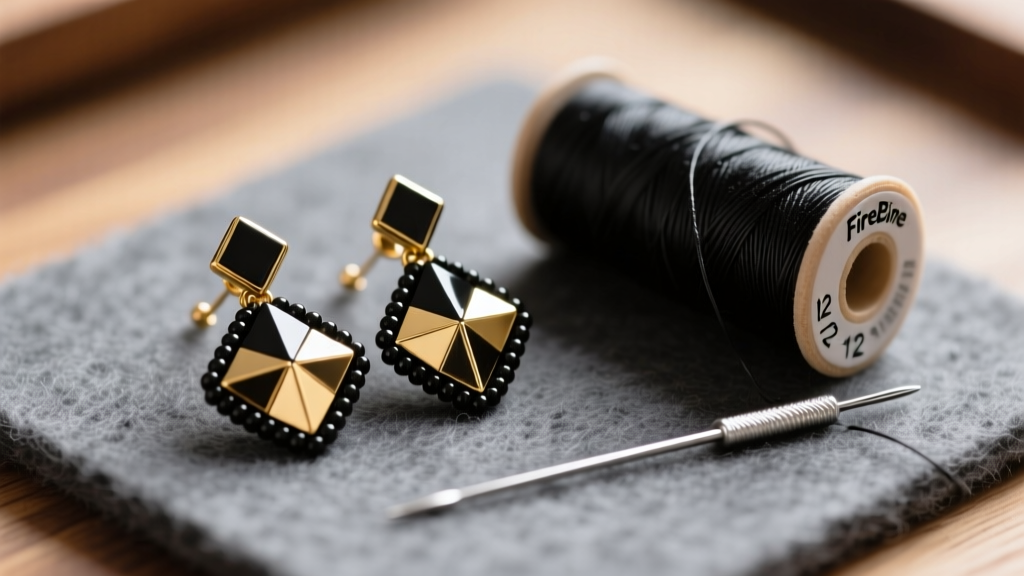
Creating simple seed bead earrings is a beloved entry point into beadweaving, but the transition from a static beading mat to the dynamic environment of the human ear introduces unexpected structural challenges. Friction, gravity, and accidental snags can quickly turn a beautiful pair of handmade dangles or studs into a tangled mess. As beading techniques have evolved through 2026, so too have the materials available to artisan jewelers. Yet, many crafters still rely on outdated troubleshooting methods that compromise the longevity of their work.
Whether you are working with intricate peyote stitch, loom-woven panels, or simple strung dangles, understanding the physics of your materials is non-negotiable. This guide dives deep into the specific failure modes of seed bead earrings and provides actionable, expert-level solutions to ensure your creations survive daily wear.
The Most Common Failure Points in Seed Bead Earrings
Before we can fix a problem, we must isolate the exact point of failure. In our experience analyzing hundreds of broken artisan pieces, structural compromises in simple seed bead earrings almost always fall into three categories:
- Thread Degradation: The internal friction of glass beads slicing through nylon or polyester fibers over time.
- Tension Imbalances: Puckering caused by high-stretch threads, or sagging caused by threads that lack the necessary drape for the specific stitch pattern.
- Post Detachment: The catastrophic failure of the earring post tearing away from the beadwork due to improper adhesive selection or lack of mechanical anchoring.
According to Interweave's beading experts, addressing these issues requires a fundamental shift from treating beadwork as mere crafts to treating it as structural textile engineering. Let us break down the solutions for each of these critical failure points.
Thread Tension Troubleshooting: Puckering vs. Sagging
Thread tension is the invisible skeleton of your beadwork. If your simple seed bead earrings are puckering (pulling inward and warping the pattern) or sagging (lacking the rigidity to hold a geometric shape), you are likely using the wrong thread class for your specific stitch.
The Physics of Thread Stretch
Nylon threads, such as Nymo or Silamide, possess a natural stretch factor of up to 15% under load. This stretch is highly desirable for loom weaving or herringbone stitch, where the beadwork needs to drape like fabric. However, if you use Nymo for a rigid right-angle weave or a flat peyote stitch earring panel, the thread will stretch as you pull it taut, and then contract once the tension is released. This contraction pulls the beads out of alignment, causing severe puckering.
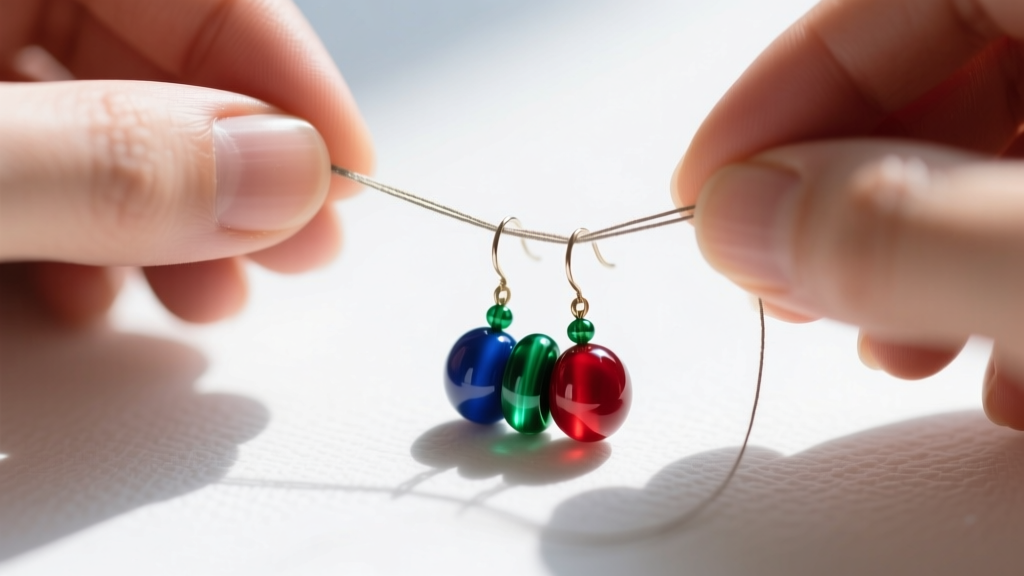
Conversely, gel-spun polyethylene threads like Fireline have a stretch factor of less than 1%. They provide immense structural rigidity, making them ideal for 3D beadweaving and geometric studs. However, using Fireline for long, fringed dangles will result in a stiff, lifeless movement that lacks the elegant sway expected from drop earrings.
| Thread Brand | Material Composition | Stretch Factor | Best Application | Primary Weakness |
|---|---|---|---|---|
| Fireline (6lb) | Gel-spun Polyethylene | < 1% | Peyote, Right-Angle Weave, 3D structures | Stiff drape; can be cut by sharp bead edges |
| Nymo (Size D) | Nylon | Up to 15% | Loom weaving, Herringbone, Fringe | Causes puckering in rigid geometric patterns |
| K.O. Beading | Pre-waxed Nylon | ~ 5% | Tubular peyote, multi-pass stitches | Wax coating can build up and stiffen over time |
| Wildfire | Thermally Fused Polyethylene | < 2% | Heavy structural pieces, large seed beads | Thick diameter limits passes through 15/0 beads |
Solving Earring Post Adhesion Failures
Nothing is more frustrating than a beautifully woven pair of simple seed bead earrings losing its post after a single wear. The most common mistake crafters make is relying solely on cyanoacrylate (Super Glue) or solvent-based adhesives like E6000 to bond a metal post pad directly to the porous, uneven surface of beadwork.
Why Standard Adhesives Fail on Beadwork
E6000 is a fantastic adhesive for non-porous surfaces like glass or metal, boasting a tensile strength of roughly 3,500 PSI. However, when applied to seed beadwork, the solvents in the glue seep into the microscopic gaps between the beads. As it cures, it creates a hard, brittle lump that lacks shear strength. When the earring is bumped, the lever-action torque applied to the post easily snaps this brittle bond.
Furthermore, the chemical solvents in E6000 can permanently strip delicate bead finishes, such as Picasso, galvanized, or matte coatings. Resources at the Beadaholique Learning Center frequently warn against using solvent-heavy glues on finished artisan beadwork.
The Mechanical Anchor and Epoxy Method
To permanently secure an earring post to simple seed bead earrings, you must combine a flexible, high-shear adhesive with a mechanical backing.
- Prepare the Pad: Use a 6mm or 8mm brass or stainless steel earring pad. Score the flat surface of the pad with 220-grit sandpaper to create microscopic grooves.
- Create a Backing: Cut a piece of Ultrasuede or Luminex slightly larger than the earring pad. This acts as a flexible membrane between the rigid metal and the uneven beadwork.
- Apply Two-Part Epoxy: Mix a jewelry-grade two-part epoxy (such as Devcon 5-Minute Epoxy, which offers 1,500 PSI shear strength and retains slight flexibility). Apply a thin layer to the scored metal pad, press it onto the Ultrasuede backing, and let it cure.
- Attach to Beadwork: Once the pad-and-backing assembly is cured, use a flexible fabric glue or a thin layer of GS Hypo Cement to attach the Ultrasuede side to the back of your beadwork. The suede grips the thread and beads without seeping through to the front.
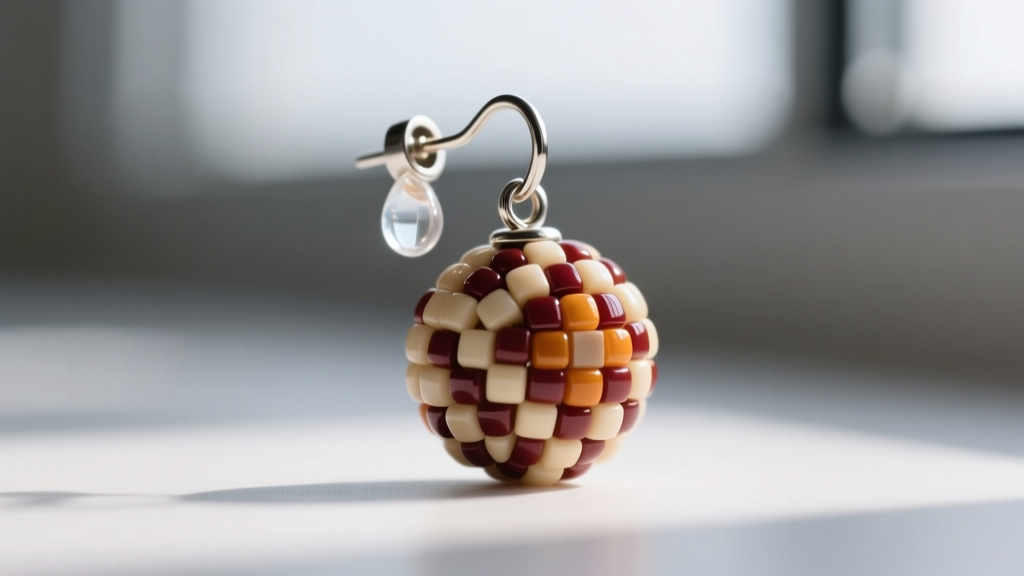
For advanced jewelers, a purely mechanical approach involves using 24-gauge or 26-gauge dead-soft sterling silver wire to create a harness that wraps around the perimeter of the beadwork, physically locking the post in place without a single drop of glue.
Bead Variance and Edge Fraying Fixes
Glass seed beads have a Mohs hardness of approximately 5.5. While this makes them durable against scratches, it also means the inner edges of the bead holes act like microscopic knives against your thread. In simple seed bead earrings that feature long dangles or heavy fringe, the constant swinging motion accelerates this internal cutting action, leading to sudden thread snap.
To troubleshoot and prevent edge fraying, implement the following protocols:
- Thread Conditioning: Always run your nylon thread through a microcrystalline wax or a specialized conditioner like Thread Heaven before weaving. This coats the fibers, reducing friction and adding a slight electrostatic charge that prevents tangling.
- Needle Sizing: Using a needle that is too large for your bead forces the thread to bunch up inside the hole, increasing internal friction. For 11/0 Miyuki Delicas, a Size 12 English beading needle is standard. If your pattern requires three or more passes through the same bead, step down to a Size 13 or 15 needle to preserve the thread's integrity.
- Bead Selection: Cylinder beads (like Miyuki Delicas or Toho Treasures) have smoother, more uniform holes compared to standard round seed beads. For high-stress structural points in your earrings, always opt for precision-milled cylinders.
Summary Checklist for Long-Lasting Wear
Troubleshooting simple seed bead earrings is ultimately about respecting the physical properties of your materials. Before you finalize your next pair, run through this expert checklist:
- Did I match the thread stretch factor to the specific stitch pattern?
- Is my thread conditioned to withstand the internal friction of glass beads?
- Have I avoided solvent-based adhesives that could degrade my bead coatings?
- Is my earring post secured using a flexible membrane or mechanical anchor rather than a brittle glue blob?
By applying these targeted solutions, you elevate your beadwork from fragile crafts to durable, heirloom-quality jewelry capable of withstanding the rigors of everyday wear.


