Troubleshooting Snags and Grime in Box Diamond Earrings
Learn how to solve common problems with box diamond earrings, from sharp corner snagging and grime buildup to box chain kinking and heavy stud droop.

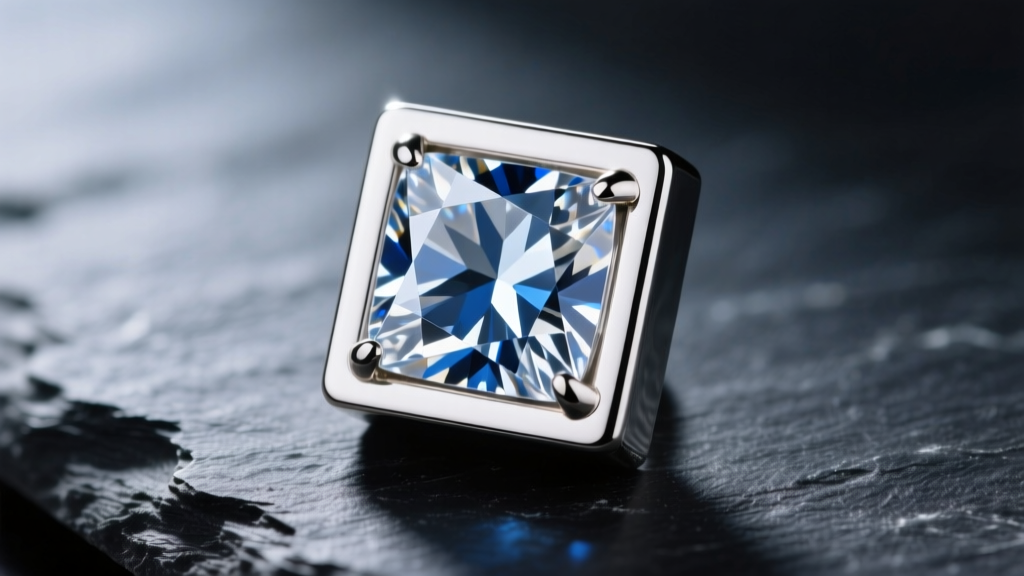
Box diamond earrings—characterized by their striking square bezel settings or their suspension from geometric box chains—offer a modern, architectural alternative to traditional round brilliant studs. Whether you are wearing a princess-cut diamond encased in a sharp 14k white gold box bezel or a pair of diamond-accented box chain drops, these designs make a bold statement. However, their distinct 90-degree angles and rigid geometric structures introduce a unique set of wear-and-tear challenges that round or oval settings simply do not face.
As jewelry trends in 2026 continue to favor clean lines and geometric minimalism, the popularity of box settings has surged. Yet, many wearers find themselves frustrated by snagged sweaters, trapped grime, and bent chains. This comprehensive troubleshooting guide dives deep into the structural realities of box diamond earrings, providing actionable, bench-jeweler-approved solutions to the most common problems.
The Unique Anatomy of Box Diamond Earrings
Before troubleshooting, it is crucial to understand what defines a "box" earring in the gemological and jewelry-making trade. The term generally refers to two distinct design elements:
- The Box Bezel Setting: A square or rectangular metal rim that completely encircles the girdle of a diamond (typically a Princess, Asscher, or Cushion cut). Unlike prong settings, the metal forms a continuous 90-degree wall around the stone.
- The Box Chain: Often used in drop or dangle diamond earrings, this chain style is constructed from interlocking square links that mimic the look of a tiny metal box.
Both variations prioritize structural security and geometric aesthetics, but the sharp corners and rigid links are precisely where mechanical failures and maintenance headaches originate.
Problem 1: The Corner Snag (And How to Fix It)
The most frequent complaint regarding box bezel diamond studs is snagging. The sharp, outer 90-degree corners of the metal bezel act like microscopic hooks. They easily catch on cashmere, silk blouses, lace, and even fine hair. Over time, this repeated snagging can stretch the earlobe piercing or pull the earring out of the ear entirely.
Solution: Micro-Rounding the Bezel Corners
You do not need to abandon your favorite earrings to stop the snagging. A professional bench jeweler can perform a process called "corner softening" or "micro-rounding." Using a #6 cut needle file followed by a silicone polishing wheel infused with jeweler's rouge, the jeweler will gently round the outermost millimeter of the bezel's corners.
Cost & Risk: This service typically costs between $45 and $90. It is entirely safe for the diamond, provided the jeweler does not file past the stone's girdle. The visual difference is nearly imperceptible to the naked eye, but the tactile difference is immediate—the earring will glide smoothly through fabrics without catching.
Problem 2: Grime Trapped in 90-Degree Angles
Round bezels allow for easy wiping, but the inner corners of a box bezel are notorious traps for sebum, dead skin cells, hand lotions, and makeup. Because the metal meets the diamond at a strict right angle, standard wiping with a jewelry cloth leaves a visible, cloudy film of impacted grime in the corners, severely dulling the diamond's brilliance.
Data Table: Cleaning Efficacy for Box Setting Crevices
| Cleaning Method | Efficacy for Box Corners | Risk Level | Best Use Case |
|---|---|---|---|
| Microfiber Cloth Wipe | Low (20%) | None | Daily surface dust removal |
| Soft Baby Toothbrush + Dish Soap | Medium (60%) | Low | Weekly maintenance of open-back settings |
| 40kHz Ultrasonic Cleaner | High (95%) | Medium (if stone has fractures) | Deep monthly cleaning of impacted corner grime |
| Steam Cleaner (100 PSI) | Very High (100%) | High (can loosen adhesive/solder) | Professional bench use only |
For at-home deep cleaning, the Gemological Institute of America (GIA) recommends a 40kHz ultrasonic cleaner with a mild degreasing solution. The 40kHz frequency creates cavitation bubbles small enough to penetrate the microscopic 90-degree gap between the diamond girdle and the box bezel wall, blasting out hardened lotions without scratching the metal. Avoid using wooden toothpicks to dig out grime, as the pressure can inadvertently chip the diamond's delicate corners if it is a princess cut.
Problem 3: Box Chain Kinking in Drop Styles
If your diamond earrings feature a box chain drop, you have likely experienced the dreaded "kink." Box chains (also known as briolette chains) are beautiful but structurally vulnerable. Because the links are square and interlock tightly, they do not have the lateral flexibility of a cable or rope chain. If a box chain is bent sharply backward (past a 45-degree angle), the square links fold inward, creasing the metal. Once the metal work-hardens at the crease, it becomes brittle and will eventually snap.
Troubleshooting a Kinked Box Chain
Jeweler's Rule of Thumb: Never attempt to pull a kinked box chain taut to 'straighten' it. This will instantly snap the work-hardened links. Always manipulate the chain while it is lying completely flat on a hard surface.
To fix a minor kink, lay the earring flat on a glass or steel bench block. Take a smooth, polished agate burnisher or the smooth metal handle of a jewelry brush, and gently roll it back and forth over the kinked area. This applies even, downward pressure that coaxes the square links back into their flat plane without stressing the solder joints. If the chain has already snapped or the links are severely crushed, a jeweler must laser-weld the broken links or replace the damaged segment, which generally costs between $35 and $75 depending on the karat weight of the gold.
Problem 4: Lobe Droop from Heavy Square Settings
Square and rectangular diamonds (like the Asscher or Princess cut) combined with a solid box bezel setting require significantly more metal than a round brilliant of the same carat weight. Furthermore, the geometric footprint of a box setting sits higher and wider on the earlobe. A 1.00-carat princess cut in a solid 18k gold box bezel can easily weigh upwards of 3.5 to 4.0 grams.
Standard "butterfly" friction backs (which weigh less than 0.5 grams and have a tiny surface area) cannot counterbalance this weight. The result is the "forward droop," where the diamond faces the floor instead of looking straight ahead.
Upgrading Your Earring Backings
To solve lobe droop, you must increase the surface area and counterweight of the earring back. Consider these three professional upgrades:
- Jumbo Friction Backs: These feature a wide, 8mm to 10mm flat disc that distributes the weight across a larger area of the earlobe. They also provide a heavier counterweight to keep the stud upright.
- La Pousette (Locking) Backs: Originally designed for high-value diamond studs, these backs feature a mechanical locking mechanism that grips the post securely. They are bulkier and heavier than standard backs, providing excellent support for heavy box settings.
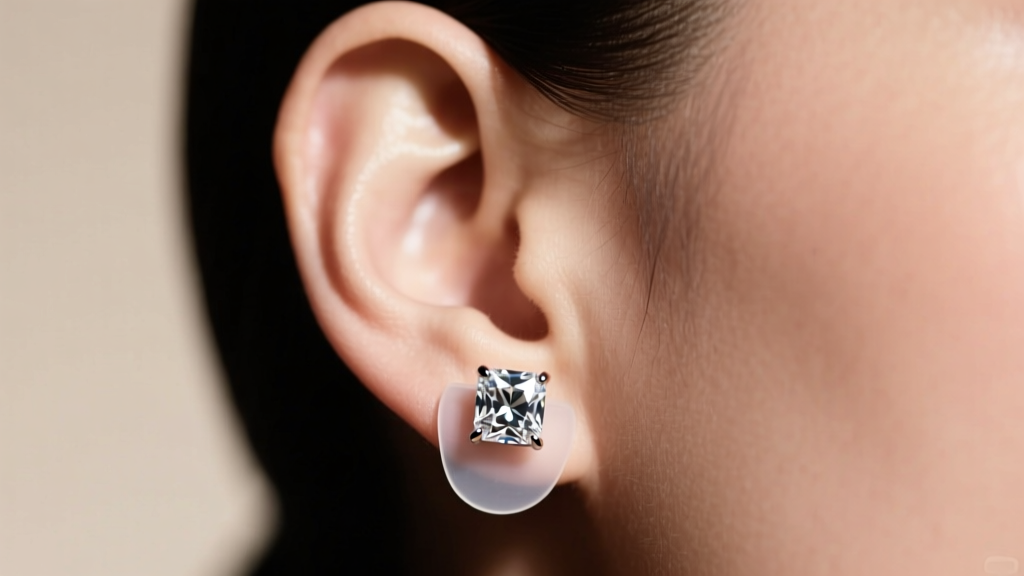
- Silicone Lobe Patches: For an immediate, non-jewelry-modification fix, adhesive silicone patches (like the brand Lobe Wonder) stick to the back of the earlobe. They provide a rigid, reinforced surface that prevents the heavy box earring post from tearing through the piercing hole or drooping forward.
When to See a Professional Jeweler
While ultrasonic cleaning and careful chain rolling can be done at home, certain issues require professional intervention. According to Jewelers of America, you should bring your box diamond earrings to a certified bench jeweler if you notice any of the following:
- Bezel Lifting: If you can slide a piece of printer paper between the diamond and the top edge of the box bezel, the metal has stretched or worn down. The stone is at risk of falling out and requires immediate re-burnishing.
- Post Wobbling: Heavy box settings put immense lateral stress on the earring post. If the post wiggles at the base, the laser weld is failing. A jeweler can re-solder the post or upgrade it to a thicker 16-gauge wire for better structural integrity.
- Deep Chain Creases: If a box chain link is folded entirely flat against itself, do not try to pry it open with pliers. The metal is compromised and requires professional laser welding.
Box diamond earrings are an investment in striking, architectural style. By understanding the mechanical realities of their sharp angles and rigid chains, and by employing the correct cleaning tools and backing supports, you can ensure your geometric diamonds remain secure, brilliant, and comfortable for decades to come.


