Snow Globe Earrings Troubleshooting: Fix Leaks & Clouding
Troubleshoot common snow globe earring problems. Learn how to fix leaks, clear cloudy resin, and prevent earlobe stretching with expert jewelry repair tips.

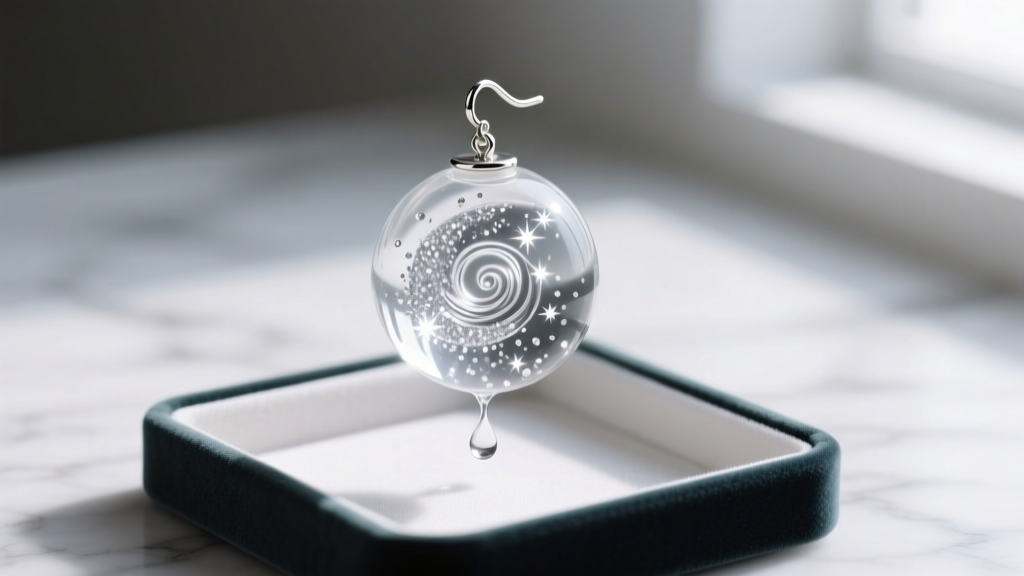
Snow globe earrings are a whimsical, nostalgic staple in novelty and indie jewelry design. Whether featuring tiny winter cabins, floating pearls, or suspended glitter, these liquid-filled domes capture the eye. However, from a structural and material standpoint, they are a jeweler's nightmare. The combination of liquid dynamics, temperature fluctuations, and heavy glass or resin domes creates a perfect storm for jewelry failure.
If you are dealing with a leaking seal, a cloudy dome, or an earring post that is slowly tearing through your earlobe, you are not alone. In this comprehensive 2026 troubleshooting guide, we break down the exact failure modes of snow globe earrings and provide actionable, professional-grade solutions to salvage your favorite pieces.
The Anatomy of a Snow Globe Earring (and Why They Fail)
To troubleshoot effectively, you must understand how these earrings are constructed. A standard snow globe earring consists of three main components:
- The Dome: Made from either borosilicate glass or UV-cured epoxy resin. Glass is heavier and more scratch-resistant but shatters upon impact. Resin is lightweight and shatterproof but highly susceptible to micro-scratches and UV yellowing.
- The Cavity and Fluid: The hollow center is filled with a liquid medium (usually distilled water mixed with glycerin, or light mineral oil) and suspended particulates (glitter, metal charms).
- The Base and Seal: The dome is glued into a metal or acrylic base. This adhesive joint is the primary point of failure.
Because the internal fluid expands and contracts with ambient temperature changes, the adhesive seal undergoes constant microscopic stress. Over time, this leads to the most common issue: leakage.
Troubleshooting Issue 1: Leaking Fluid and Seal Failure
A leak usually manifests as a sticky residue on the earring post or a noticeable drop in the fluid level inside the dome, leaving an air bubble. If left untreated, the leaking fluid will corrode the metal post and irritate your skin.
How to Patch a Micro-Leak
Do not attempt to seal a leaking earring while it is still wet. The patch will fail. Follow this professional repair protocol:
- Drain and Dry: Use a sterile syringe with a fine-gauge needle to extract the remaining fluid through the leak point. Leave the earring in a low-humidity environment with a desiccant pack for 48 hours to ensure the internal cavity is bone dry.
- Prepare the Seal: Clean the exterior base joint with 90% isopropyl alcohol to remove skin oils and old adhesive residue.
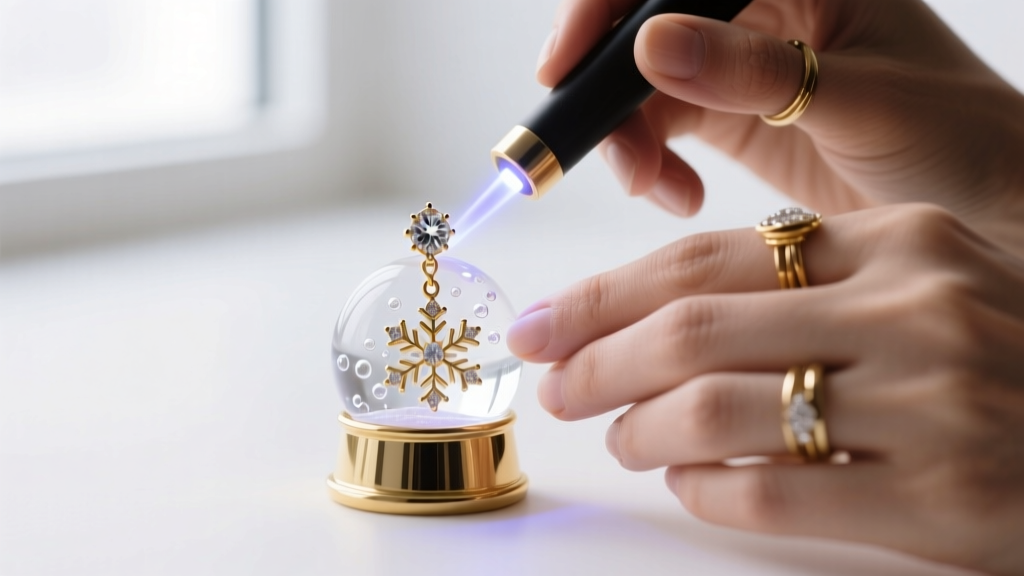
- Apply the Correct Adhesive: According to jewelry supply experts at Rio Grande, you should avoid cyanoacrylate (Super Glue). Cyanoacrylate releases fumes as it cures, which will cause a permanent white "frosting" effect on the inside of your clear dome. Instead, use a two-part clear jewelry epoxy or a high-viscosity UV resin.
- Cure and Refill: Once the external seal is cured, inject a replacement fluid. Crucial Tip: Use light mineral oil rather than water. Mineral oil will not evaporate, will not breed bacteria, and will not rust internal base-metal charms.
Troubleshooting Issue 2: Cloudy Resin and Tarnished Charms
Cloudiness in snow globe earrings usually stems from one of two distinct problems: external micro-scratching/UV yellowing of the resin, or internal tarnishing of the suspended charms.
Fixing External Resin Clouding
If your earrings are made of epoxy resin, prolonged exposure to sunlight will cause photodegradation, resulting in a yellow, cloudy tint. While you cannot reverse internal UV yellowing, you can fix external clouding caused by micro-scratches from daily wear.
Use a multi-step plastic polish system, such as Novus Plastic Polish. Start with Novus #3 (Heavy Scratch Remover) using a microfiber cloth, buffing in tight circular motions for 60 seconds. Follow up with Novus #2 (Fine Scratch Remover) to restore optical clarity. The Gemological Institute of America (GIA) notes that while glass gems resist scratching, polymer and resin jewelry requires these specialized non-abrasive polishes to maintain light refraction without stripping the material.
The Unfixable Internal Tarnish
If the cloudiness is inside the dome, or if the internal glitter has turned black or green, the manufacturer likely used tap water or a water-glycerin mix instead of an inert oil. The dissolved oxygen and minerals in the water have oxidized the internal metal flakes. Unfortunately, without breaking the dome, cutting it open, replacing the charms, and re-sealing it, internal tarnish is permanent. If this occurs, it is time to retire the piece.
Troubleshooting Issue 3: Lobe Sagging and Post Snapping
Snow globe earrings are disproportionately heavy. A standard glass dome earring can weigh between 15 and 25 grams. For context, a standard diamond stud weighs less than 2 grams. This excessive weight causes two mechanical failures: the earring post snaps at the solder joint, or the wearer's earlobe stretches and eventually tears.
Upgrading the Hardware and Support
If your snow globe earrings feature a standard 20-gauge (0.81mm) post, they are structurally compromised for their weight. You must take the earring to a jeweler to have the post upgraded to an 18-gauge (1.02mm) or even 16-gauge (1.29mm) wire, soldered with a larger pad for surface-area distribution.
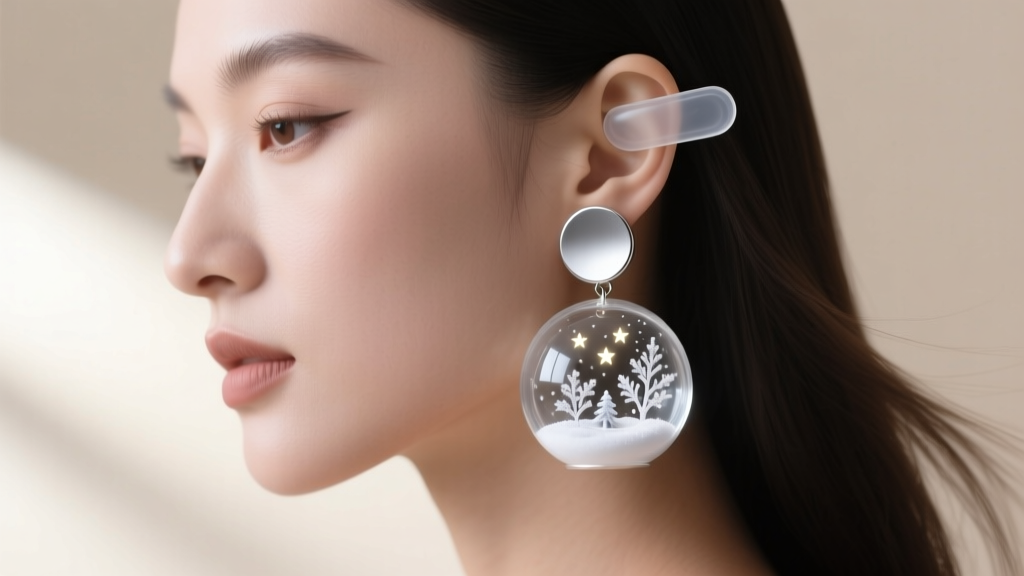
Furthermore, standard butterfly friction backs are useless for heavy novelty earrings. They will slide down the post, causing the earring to droop forward and put sheer stress on the piercing hole. Implement the following support matrix based on your earring's weight:
| Earring Weight | Post Gauge Required | Backing Mechanism | Lobe Support Add-on |
|---|---|---|---|
| Under 10g | 20g (0.81mm) | Silicone friction backs | None required |
| 10g - 18g | 18g (1.02mm) | Wide disc screw-backs | Clear silicone O-rings |
| 18g - 25g+ | 16g (1.29mm) | Locking lever-backs or wide discs | Adhesive earlobe support patches (e.g., Bling Guards) |
Preventative Maintenance for Liquid-Filled Jewelry
Preventing failure is always easier than executing a micro-repair. To extend the lifespan of your snow globe earrings, adopt these storage and handling habits:
- Temperature Control: Never leave these earrings in a car during winter or summer. Extreme cold causes the fluid to contract, breaking the adhesive seal. Extreme heat causes the fluid to expand, which can literally blow the dome off the base.
- Upright Storage: Store snow globe earrings upright in a padded jewelry box. Laying them flat for months allows the internal fluid to rest against the side seal, accelerating adhesive degradation.
- Chemical Avoidance: Remove them before applying hairspray, perfume, or lotions. Alcohol-based cosmetics will eat away at the exterior polish of resin domes and degrade the external epoxy seal.
When to Retire Your Snow Globe Earrings
While jewelry repair is a noble pursuit, there is a point of diminishing returns. You should safely dispose of your snow globe earrings if:
- The glass dome has a visible hairline fracture (it will eventually shatter on your face).
- The internal fluid has developed a fungal bloom (looks like white, stringy webs inside the dome).
- The metal base has developed deep verdigris (green corrosion) near the post, indicating the internal fluid has compromised the structural integrity of the earring post solder.
By understanding the material science and mechanical stresses inherent in novelty jewelry, you can keep your snow globe earrings sparkling, sealed, and safely supported for years to come.


