How to Fix a Sore Earring Hole: Expert Troubleshooting Guide
Discover why your piercing hurts and how to fix a sore earring hole fast. Expert troubleshooting on metals, gauge sizes, and aftercare routines.

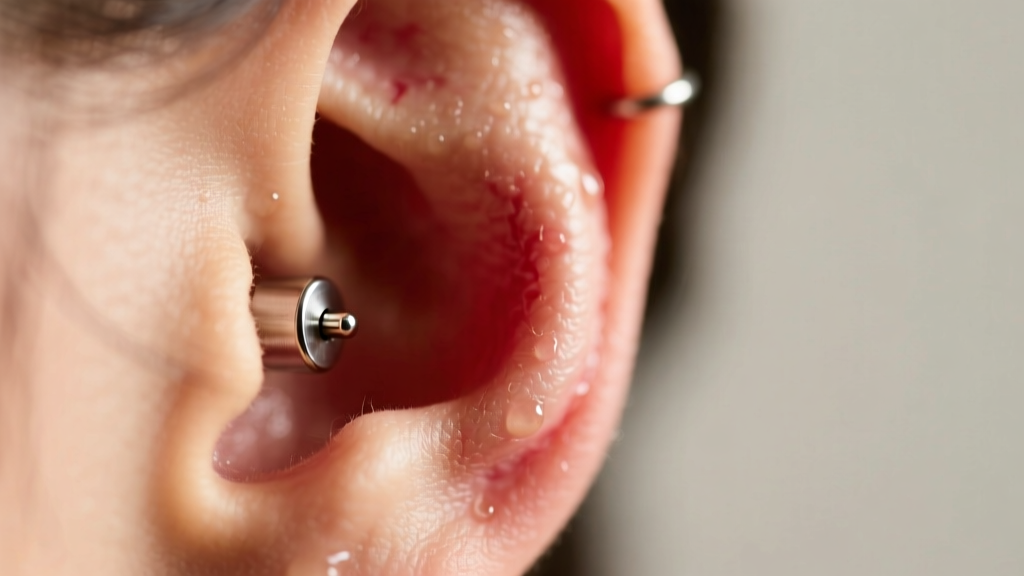
A sore earring hole is more than a minor annoyance; it is a biological warning signal from your body. Whether you are dealing with a fresh piercing that refuses to settle or a decades-old lobe piercing that suddenly became inflamed, ignoring the pain can lead to migration, scarring, or embedded jewelry. To effectively fix a sore earring hole, you must move beyond generic advice and diagnose the exact mechanical or chemical failure causing the irritation.
In this comprehensive troubleshooting guide, we break down the metallurgy, physics, and dermatological science behind piercing pain, providing you with an actionable recovery protocol to restore your ear health.
The Anatomy of a Sore Earring Hole: Why It Happens
When tissue becomes inflamed, it is typically reacting to one of three distinct stressors: allergic contact dermatitis (ACD), mechanical trauma, or localized bacterial disruption. Understanding which variable is failing is the first step in resolving the issue.
Allergic contact dermatitis is frequently misidentified as an infection. If your earlobe is itchy, flaky, and weeping clear fluid, you are likely reacting to nickel or copper alloys leaching from your jewelry. Mechanical trauma, on the other hand, presents as a sharp, localized ache, often caused by heavy earrings pulling on a thin fistula (the piercing channel). Finally, bacterial issues present with heat, localized swelling, and yellowish or greenish exudate.
Troubleshooting Matrix: Identifying Your Specific Issue
Use the diagnostic table below to pinpoint the exact cause of your sore earring hole and apply the corresponding immediate intervention.
| Primary Symptom | Probable Cause | Immediate Action Required |
|---|---|---|
| Itchiness, flaking skin, clear weeping | Nickel/Copper Allergy (ACD) | Remove jewelry; switch to ASTM F136 Titanium |
| Sharp pain when moving, thinning skin | Mechanical Stress (Cheese-Cutter Effect) | Upsize jewelry gauge; remove heavy dangles |
| Heat, throbbing, yellow/green crust | Localized Bacterial Imbalance | Sterile saline compress; do not remove jewelry |
| Pain only when sleeping or wearing headphones | Compression Trauma / Angle Irritation | Switch to flat-back labrets; use a travel pillow |
Material Matters: Upgrading Your Jewelry to Stop the Pain
If your sore earring hole is the result of an allergic reaction, no amount of topical cream will solve the problem until the offending metal is removed. The jewelry industry frequently uses the term "surgical steel," but this is a marketing buzzword, not a regulated metallurgical standard. Many commercial "surgical steel" earrings contain up to 10% nickel, which is more than enough to trigger severe contact dermatitis in sensitive individuals.
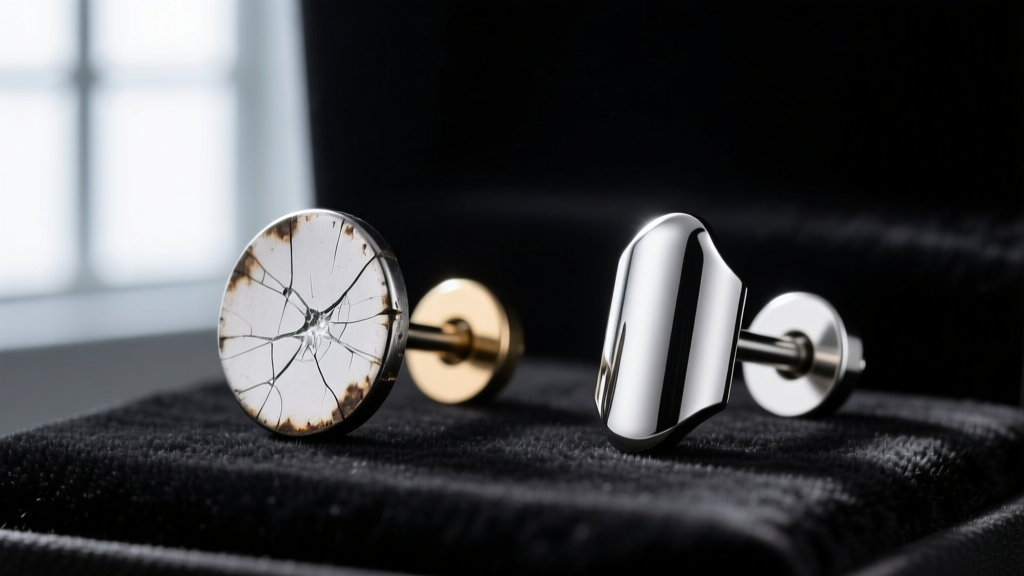
To permanently resolve metal-induced soreness, you must upgrade to implant-grade materials. According to the Association of Professional Piercers (APP), the only acceptable metals for healing or irritated piercings are:
- ASTM F136 Implant-Grade Titanium: Contains zero nickel. It is lightweight, highly biocompatible, and can be anodized to different colors without using surface coatings that might chip.
- Niobium (99.99% Pure): A highly reactive metal that forms a safe, inert oxide layer. It is slightly heavier than titanium but completely nickel-free.
- 14k or 18k Solid Gold (Nickel-Free): Must be alloyed with silver, copper, or palladium. Avoid white gold, as it is frequently alloyed with nickel to achieve its color.
For context, the EU Nickel Directive restricts nickel release from post-assembly jewelry to less than 0.2 micrograms per square centimeter per week. Implant-grade titanium easily passes this benchmark, releasing virtually zero heavy metals into your fistula.
Gauge and Weight: The Hidden Culprits of Lobe Fatigue
A frequently overlooked cause of a sore earring hole is the physics of gauge thickness versus jewelry weight. Standard commercial earrings are typically manufactured at 20-gauge (0.81mm) or 18-gauge (1.02mm). While these thin posts are fine for lightweight studs, they become dangerous when paired with heavy statement hoops or gemstone dangles.
When a heavy earring rests on a thin 20G wire, the downward force is concentrated on a microscopic surface area of tissue. Over time, this creates the "cheese-cutter effect," where the wire slowly slices downward through the earlobe. This causes chronic soreness, elongation of the piercing hole, and eventual migration.
The Solution: If you prefer heavy or oversized earrings, have a professional piercer stretch your lobes to 16-gauge (1.29mm) or 14-gauge (1.6mm). The thicker post distributes the weight over a wider surface area, drastically reducing mechanical fatigue and eliminating the soreness associated with lobe drag.
Step-by-Step Recovery Protocol for Irritated Piercings
Once you have identified the root cause and swapped to appropriate jewelry, you must implement a strict, minimalist aftercare routine to allow the fistula to rebuild its cellular matrix. The American Academy of Dermatology (AAD) advises against harsh chemicals that destroy healing tissue.
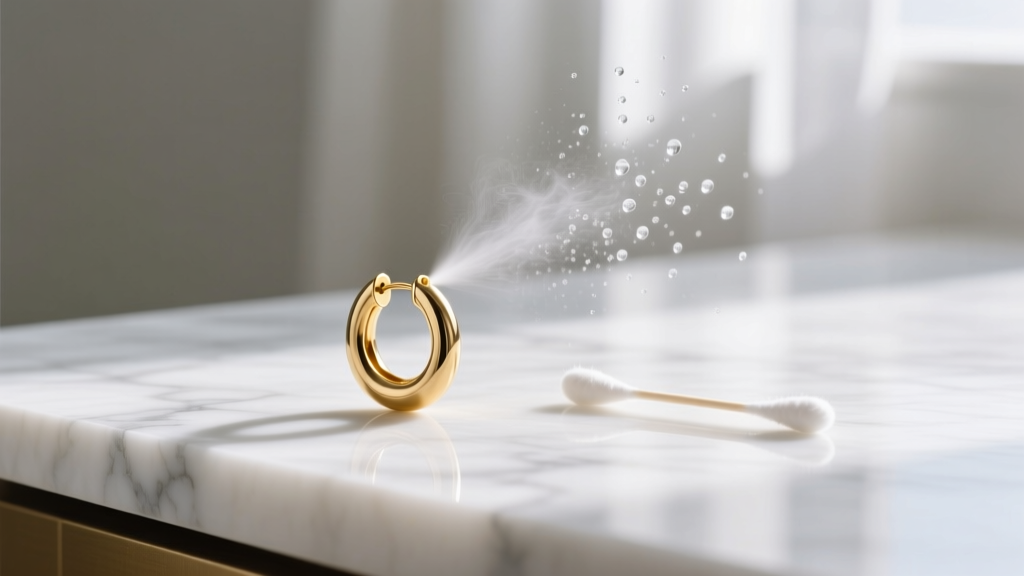
Follow this exact 14-day recovery protocol:
- Cleanse with Sterile Saline: Use a sterile, pressurized 0.9% sodium chloride wound wash (ensure the only ingredients are water and salt). Spray directly onto the piercing twice daily.
- Warm Compresses for Drainage: If the hole is weeping or crusting, soak a non-woven gauze pad in warm saline and hold it against the earlobe for 5 minutes. This softens lymphatic crusties without tearing the delicate new skin.
- Ban the "Holy Trinity" of Irritants: Never apply rubbing alcohol, hydrogen peroxide, or tea tree oil to a sore earring hole. These substances cause chemical burns, dry out the mucosal lining, and delay cellular regeneration.
- Avoid Petroleum Ointments: Do not use Neosporin or Vaseline. Petroleum-based ointments block oxygen flow to the fistula and trap bacteria inside the piercing channel.
When to See a Professional Piercer or Dermatologist
While most cases of a sore earring hole can be resolved at home through material upgrades and proper hygiene, certain red flags require immediate professional intervention. If you notice the jewelry sinking into the skin (embedding), a hard, raised bump forming on the back of the lobe (potential keloid or hypertrophic scarring), or red streaks radiating outward accompanied by a fever, seek medical attention immediately.
For structural issues like severe angle rejections or cheese-cutter migrations, consult an APP-certified professional piercer. They can assess the angle of your fistula, downsize your jewelry to reduce pressure, or recommend retiring the piercing to allow the tissue to heal flat before attempting a re-pierce in the future.


