How to Repair and Clean Delicate Scroll and Vine Earrings
Learn how to troubleshoot common issues with scroll and vine earrings, from fixing bent filigree wire to cleaning deep tarnish and preventing snags.

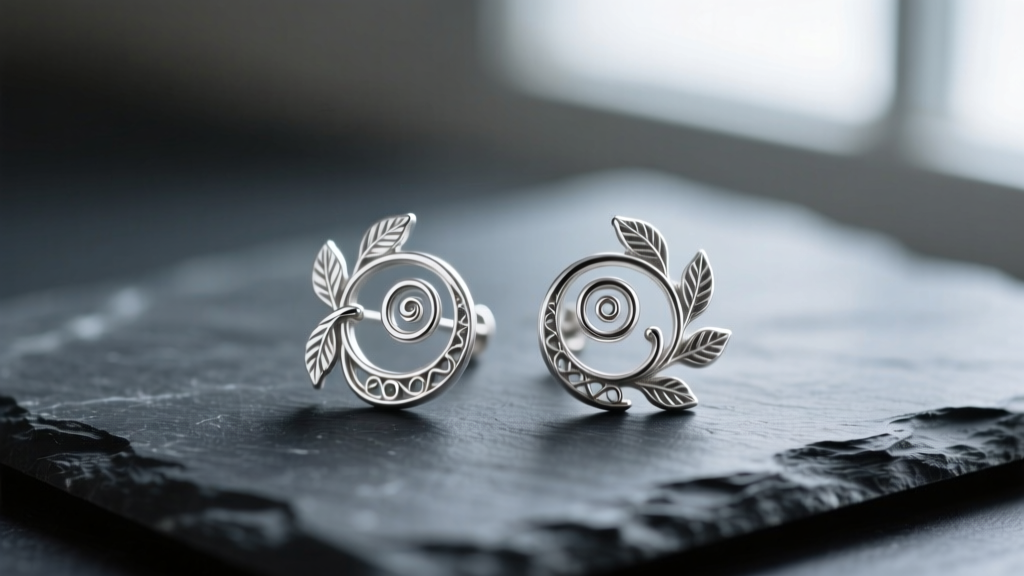
Scroll and vine earrings are a staple of nature-inspired and Celtic jewelry design, characterized by their intricate filigree, spiraling tendrils, and delicate leaf motifs. However, the very features that make these earrings visually stunning also make them highly susceptible to damage. The complex wirework creates structural vulnerabilities, traps tarnish-causing oils, and frequently snags on hair and clothing.
As a jewelry specialist, I see countless nature-inspired pieces ruined by improper maintenance or clumsy repair attempts. Whether you are dealing with a warped 925 sterling silver stem or a brass vine choked with green oxidation, this comprehensive troubleshooting guide will help you restore your scroll and vine earrings to their original glory.
The Structural Vulnerabilities of Filigree Wirework
To effectively troubleshoot scroll and vine earrings, you must first understand their metallurgical construction. High-quality vine earrings typically utilize a multi-gauge wire approach. The main structural stems are usually crafted from 18-gauge to 20-gauge wire, providing a rigid backbone. However, the decorative scrolls, leaf veins, and spiraling tendrils are often drawn from 22-gauge to 26-gauge wire to achieve a lace-like delicacy.
This disparity in thickness creates high-stress fulcrum points. When a 24-gauge tendril is subjected to lateral pressure—such as being dropped on a hard floor or pressed against a pillow—the thinner wire will yield and bend long before the thicker stem does. Furthermore, metals like sterling silver and brass work-harden rapidly when bent. Repeatedly bending a thin scroll back and forth without proper annealing will cause the metal to fatigue and snap cleanly at the joint.
Troubleshooting Bent Vines and Warped Scrolls
If your vine earring has been crushed or bent out of its original spiral shape, avoid the temptation to use your fingers or standard metal pliers to force it back. Standard steel pliers will mar the soft metal, leaving deep, irreversible gouges on the delicate scrolls.
The Reshaping Protocol
- Inspect the Damage: Use a 10x jeweler's loupe to examine the bend. Look for micro-fractures or white stress lines in the metal. If the wire is cracked, stop immediately; it requires professional laser welding.
- Use Nylon-Jaw Pliers: Invest in a pair of EuroTool or Tronex nylon-jaw pliers. The soft polymer jaws grip the metal securely without scratching the finish.
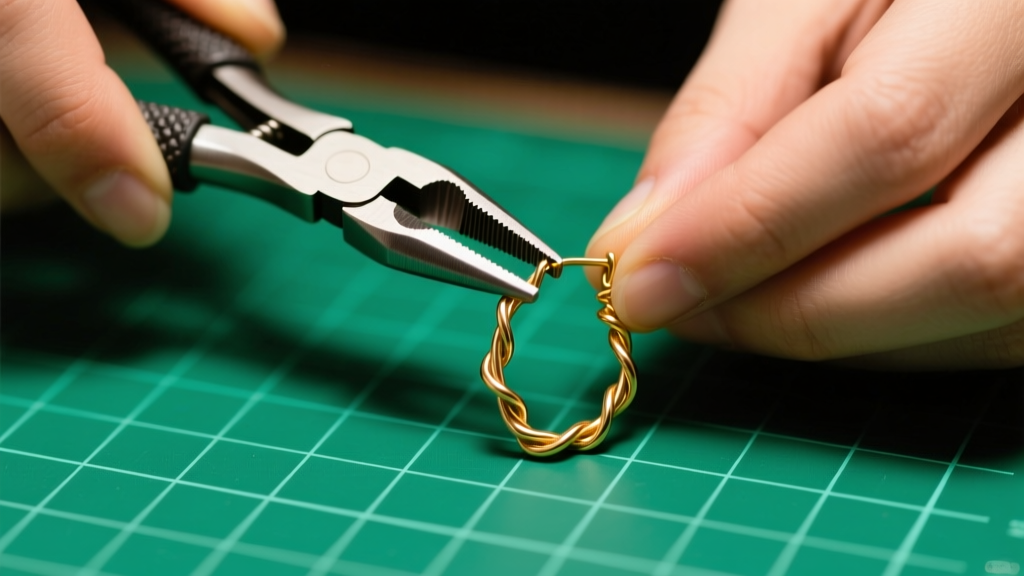
- Apply Gradual Pressure: Support the thicker 18-gauge stem with one hand while applying gentle, sweeping pressure to the bent 22-gauge scroll with the nylon pliers. Work in millimeter increments.
- Address Work-Hardening: If the sterling silver becomes stiff and resistant, do not force it. The metal has work-hardened. A professional jeweler will use a micro-torch to anneal (heat and soften) the specific joint, but this must be done with extreme caution if the earring contains heat-sensitive gemstones like opals or turquoise.
Deep Cleaning Tarnish in Intricate Crevices
The sprawling surface area and overlapping wire joints of scroll and vine earrings make them magnets for tarnish. Silver sulfide (black tarnish) and copper oxide (green tarnish) aggressively build up in the microscopic gaps where the vines intersect. Standard polishing cloths cannot reach these recessed areas.
Expert Warning: Never use liquid thiourea-based silver dips on antique or intentionally oxidized scroll earrings. These harsh chemical baths will strip the dark patina from the crevices, leaving the earring looking flat, stark white, and completely devoid of its three-dimensional depth.
Comparison of Deep-Cleaning Methods
| Cleaning Method | Best Used For | Risk Level | Estimated Cost |
|---|---|---|---|
| Aluminum Foil & Baking Soda Bath | Solid silver without glued gemstones | Low (Chemical ion transfer) | $2 (Pantry items) |
| Ultrasonic Cleaner (with mild surfactant) | Diamonds, sapphires, and bare metals | Medium (Can shake loose prongs) | $40 - $90 (Machine) |
| Interdental Brushes & Polishing Paste | Oxidized silver and intricate scrolls | Very Low (High control) | $15 (Brushes & Zam compound) |
| Steam Cleaning | Removing trapped skin oils and lotions | High (Heat can fracture stones) | $100+ (Machine) |
For the safest and most effective home cleaning of detailed vine work, use soft interdental brushes (the kind used for braces) dipped in a mild jewelry polishing paste like Zam. The tiny bristles easily navigate the 1mm gaps between overlapping silver leaves, physically lifting the tarnish without stripping the intentional antiquing.
Solving the Snagging and Hair-Tangling Nightmare
There is nothing more frustrating than an earring that constantly catches on your sweaters or tangles in your hair. In scroll and vine designs, snagging is usually caused by one of two issues: a micro-burr left over from the manufacturing process, or a slightly opened jump ring where a vine loop connects to the main stem.
To diagnose the snag, run a piece of sheer nylon stocking or a cotton ball lightly over the surface of the earring. The fabric will catch exactly where the microscopic burr or open gap is located. Once identified, you can resolve the issue using a few targeted techniques:
- For Micro-Burrs: Use a fine-grit polishing pin or a folded piece of 600-grit wet/dry sandpaper to gently buff the sharp edge until it is smooth to the touch.
- For Open Jump Rings: If a decorative loop has pulled slightly apart, use two pairs of flat-nose pliers to twist the ring closed. Never pull the ends apart laterally; always twist them in a overlapping motion to maintain the perfect circle.
- The Clear Enamel Trick: If a specific leaf tip is inherently sharp by design, apply a microscopic dot of clear jewelry guard or hard clear nail polish to the tip. This creates a smooth, invisible polymer dome that eliminates the snag point entirely.
Supporting Heavy Earlobes and Preventing Stretching
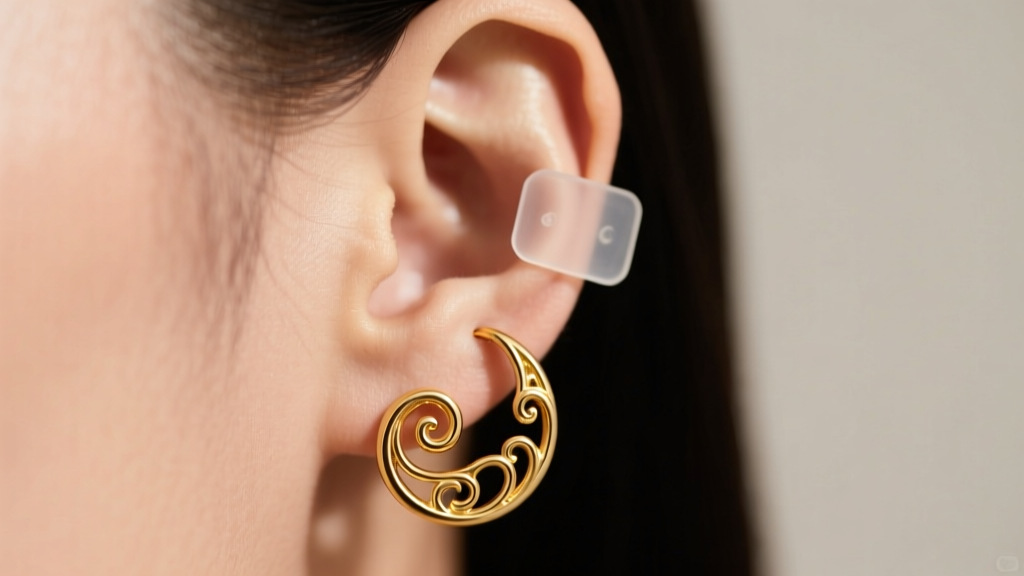
Elaborate vine earrings, particularly those cast in solid brass or featuring heavy gemstone clusters integrated into the scrolls, can be incredibly front-heavy. Over time, this continuous downward leverage will stretch the earlobe piercing, leading to a drooping appearance and potential tissue thinning.
According to guidelines from the Gemological Institute of America (GIA), proper jewelry wear and support are essential for maintaining both the integrity of the piece and the health of the piercing. To troubleshoot heavy scroll earrings, implement the following support systems:
- Silicone Earlobe Patches: Products like Lobe Wonder provide a self-adhesive, clear silicone shield that sits behind the earlobe. The earring post passes through the patch, distributing the weight of the heavy vine across a wider surface area of tissue.
- French Wire Coil Supports: If your earrings use fishhook wires, slide a small plastic or silicone coil onto the wire before inserting it into the ear. This coil rests inside the piercing channel, providing friction and support to keep the heavy scroll facing forward rather than drooping downward.
- Oversized Silicone Backers: Ditch the standard metal butterfly backs. Use wide, disc-style silicone friction backs that grip the post securely and provide a broader base of support against the back of the ear.
When to Seek Professional Jeweler Intervention
While home troubleshooting can resolve bends, tarnish, and snags, certain failures require the expertise of a master jeweler. If a 24-gauge vine tendril has completely snapped, do not attempt to glue it. Cyanoacrylate (super glue) will leave a cloudy, brittle residue that ruins the metal and fails under minimal stress.
Instead, take the piece to a jeweler equipped with a laser welder. Unlike traditional torch soldering, which requires heating the entire earring and risking damage to nearby stones or melting delicate adjacent scrolls, laser welding uses a concentrated pulse of light to fuse the broken wire at a microscopic level. According to technical resources from Rio Grande Jewelry Supply, laser welding is the industry standard for repairing complex filigree and wirework. Expect to pay between $45 and $85 for a single laser weld on a delicate scroll, a worthy investment to save a cherished piece of wearable art.


