Troubleshooting Tarnished Green Flower Earrings: A Fix Guide
Discover expert troubleshooting for green flower earrings. Learn how to fix chipped enamel, yellowed resin, loose stones, and toxic verdigris.

The Anatomy of Botanical Jewelry Failures
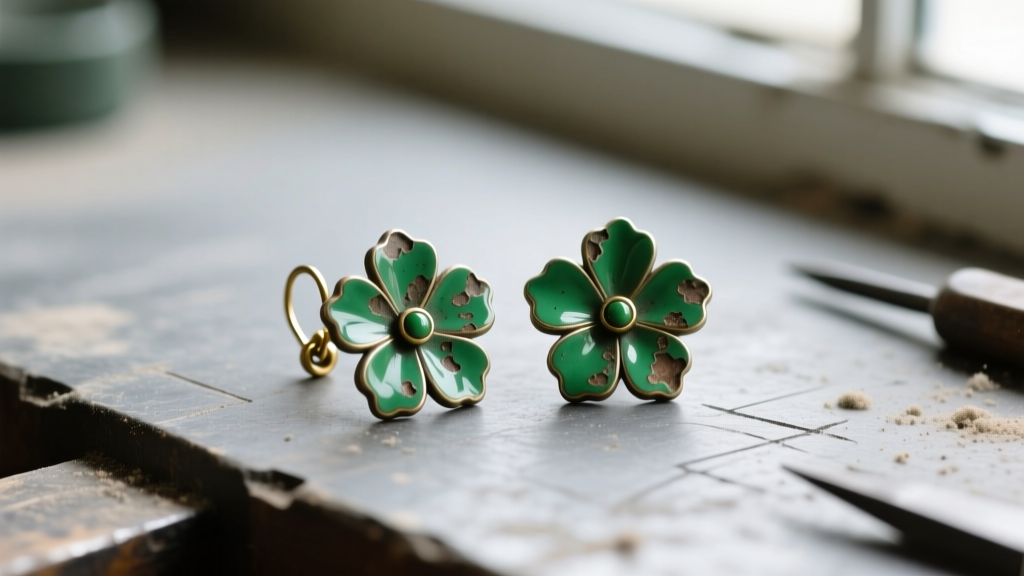
Green flower earrings remain a staple in botanical jewelry collections, but their intricate designs make them uniquely susceptible to damage. Whether you are wearing vintage Art Nouveau pieces with guilloché enamel or modern 2026 bio-resin botanicals, the intersection of organic shapes and mixed materials creates specific failure points. Unlike simple geometric studs, floral earrings feature recessed petal crevices that trap cosmetic oils, delicate prong settings for center gemstones, and mixed-metal stems that react poorly to humidity. Troubleshooting these issues requires a precise understanding of material science. In this comprehensive guide, we will diagnose the most common structural and aesthetic failures in green flower earrings and provide professional-grade solutions to restore them to their original brilliance.
Diagnosing Petal Damage: Enamel vs. Resin vs. Polymer
The 'green' in floral earrings is rarely solid metal; it is typically achieved through vitreous enamel, cold enamel (epoxy resin), or polymer clay. Each material degrades differently and requires a distinct troubleshooting approach. Vitreous enamel, which is essentially fused glass fired at over 1400°F, is highly resistant to UV fading but will shatter or chip upon impact. Cold enamel, a two-part epoxy resin popular in contemporary affordable jewelry, will not shatter but is notorious for UV-induced yellowing and surface scratching. Polymer clay, while lightweight, is porous and easily stained by foundation makeup and hair oils.
| Material Type | Common Failure Mode | Repair Difficulty | Estimated Repair Cost |
|---|---|---|---|
| Vitreous Enamel | Chipping, cracking, crazing | High (Requires kiln firing) | $85 - $250+ |
| Cold Enamel (Resin) | UV yellowing, sticky degradation | Medium (Sanding and recoating) | $30 - $75 |
| Polymer Clay | Oil staining, structural snapping | Low (Surface cleaning, gluing) | $15 - $40 |
Restoring Yellowed Resin Petals
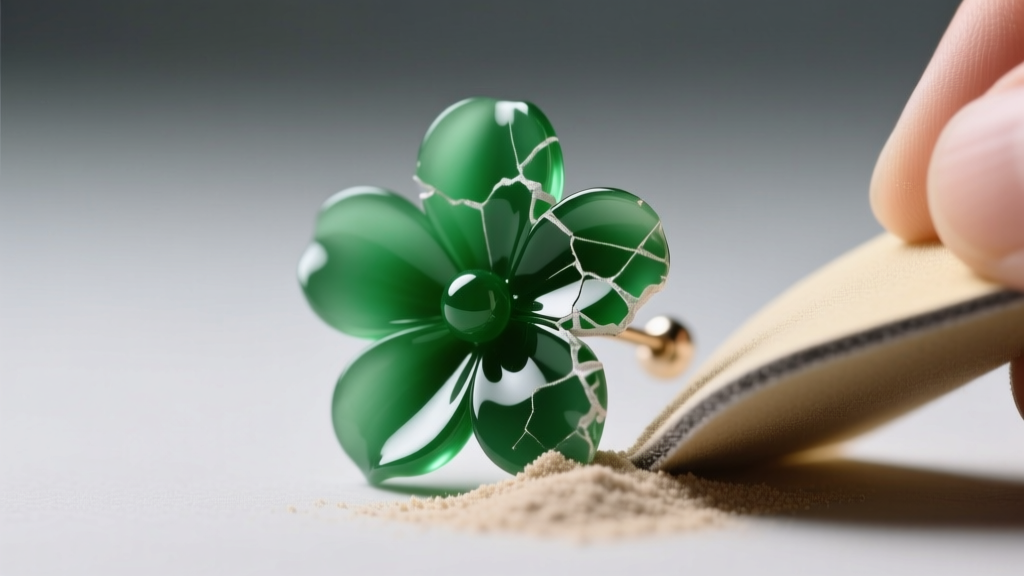
If your green resin flower earrings have developed a sickly yellowish-brown tint, the epoxy matrix is undergoing photo-oxidation. While you cannot reverse deep chemical yellowing, you can remove the degraded surface layer. Using 2000-grit wet/dry sandpaper, gently buff the surface of the resin under a steady stream of water. This removes the oxidized top layer. Once the original green color is revealed, you must seal it to prevent rapid re-yellowing. Apply a micro-thin coat of UV-resistant clear polyurethane or a specialized jewelry-grade UV resin topcoat, curing it under a 36W UV lamp for exactly 60 seconds.
Troubleshooting Metal Tarnish and Toxic Verdigris
Many green flower earrings utilize copper or brass as a base metal for the stems and leaves, often plated with gold or silver. When the plating wears thin, the underlying copper reacts with moisture, oxygen, and the acids in your skin to form copper acetate—commonly known as verdigris. This crusty green buildup is not just unsightly; it is mildly toxic and can cause severe contact dermatitis. According to the Jewelers of America, aggressive chemical dips should never be used on mixed-metal botanical pieces, as they can strip the remaining plating and dissolve enamel pigments.
The Aluminum Foil Electrochemical Bath
For sterling silver (925) floral settings suffering from black silver sulfide tarnish, an electrochemical bath is the safest method. Line a glass bowl with aluminum foil, shiny side up. Add one tablespoon of baking soda and one tablespoon of non-iodized salt. Pour in boiling water to activate the solution. Using a wooden or plastic tweezer (never metal, which will disrupt the ion exchange), submerge the silver flower earrings for exactly 90 seconds. The sulfur atoms will transfer from the silver to the aluminum. Rinse immediately in distilled water and dry with a microfiber cloth. Warning: Never use this method if your green flower earrings feature glued-in gemstones or cold enamel, as the boiling water will melt the adhesive and soften the resin.
Removing Verdigris from Brass/Copper Stems
If the green buildup is crusty verdigris rather than smooth enamel, you must neutralize it. Create a paste using equal parts white vinegar and fine sea salt. Apply the paste strictly to the metal stems using a cotton swab, avoiding any enamel or gemstone centers. Let it sit for no more than three minutes, then scrub gently with a soft-bristled baby toothbrush. Neutralize the acid immediately by rinsing with a baking soda and water solution, then dry thoroughly. To prevent recurrence, coat the back of the floral stems with a micro-crystalline wax like Renaissance Wax, which creates a moisture-impermeable barrier.
Securing Loose Gemstones in Floral Centers
The center of a green flower earring often features a faceted gemstone like peridot, tsavorite garnet, or green tourmaline. These stones are typically held in place by four or six delicate prongs. Because floral earrings catch easily on hair and clothing, prongs are frequently pulled outward, leading to loose stones. Peridot (Mohs hardness 6.5-7) is particularly prone to chipping at the girdle if the prong tension is uneven. The Gemological Institute of America (GIA) recommends inspecting prong settings every six months under 10x magnification.
DIY Prong Tightening Protocol
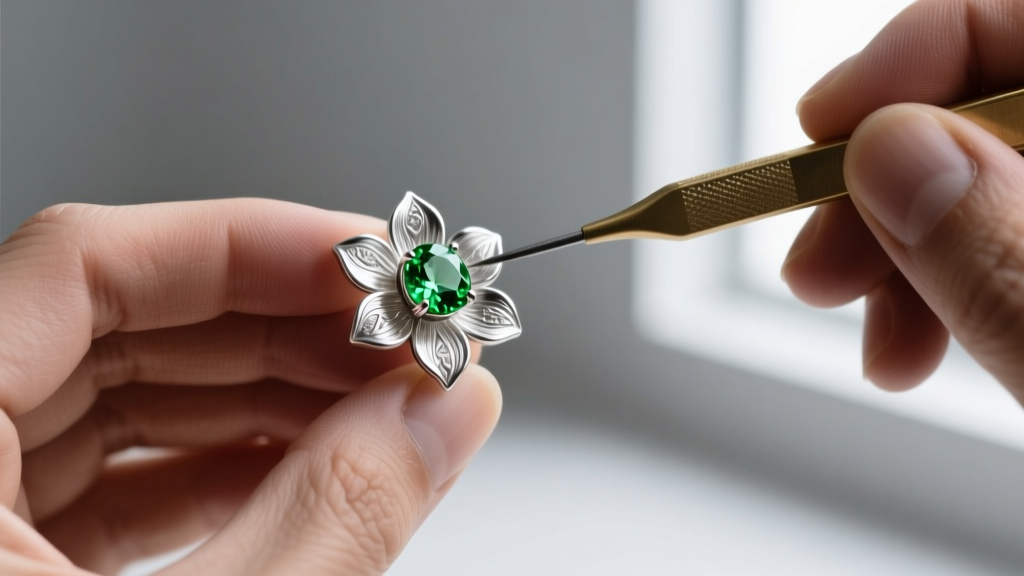
If you notice a stone rattling when you gently tap the earring, do not wear it. To temporarily secure the stone before visiting a professional, you can use a brass prong pusher. Brass is softer than silver, gold, and platinum, meaning it will not scratch your precious metal settings. Under a 10x jeweler's loupe, place the flat tip of the pusher against the outside edge of the lifted prong. Apply firm, steady pressure downward and inward toward the center of the stone. Never push from the top down, as this can snap the prong or crack the gemstone's table. If the prong is severely worn or snapped, the earring requires a laser welder to attach a new wire tip—a job strictly for a master jeweler.
Resolving Post and Clasp Irritation Issues
A frequent complaint with heavy floral drop earrings is lobe irritation and stretching. Many commercial green flower earrings utilize nickel-containing white gold or cheap brass posts. Nickel allergies manifest as weeping, itchy piercings, often mistaken for an infection. Furthermore, oversized floral designs can weigh upwards of 8 grams per earring, causing the piercing hole to elongate painfully over time.
Upgrading to Implant-Grade Titanium
The ultimate fix for metal sensitivity is replacing the earring post. A jeweler can snip off the existing post and laser-weld an implant-grade titanium (ASTM F136) post in its place. ASTM F136 titanium contains zero nickel and is the exact alloy used in medical surgical implants, guaranteeing biocompatibility. For heavy floral dangles, request that the jeweler use a 20-gauge or 18-gauge post rather than the standard 22-gauge, as the thicker metal will distribute the weight more evenly across the lobe tissue, preventing the dreaded 'cheese-cutter' effect.
Friction Backs vs. Locking Mechanisms
Standard butterfly friction backs are insufficient for heavy flower earrings, leading to lost pieces. Upgrade your earrings with silicone O-rings or specialized locking earring backs (like La Pousette or secure lever-backs). Silicone O-rings provide superior grip and cushion the back of the earlobe against the metal post, reducing pressure necrosis during all-day wear.
Preventative Maintenance for 2026 and Beyond
Preserving the integrity of your green flower earrings requires proactive storage and handling. The modern jewelry market in 2026 has seen a rise in sustainable bio-resins and lab-grown green gemstones, which, while eco-friendly, still require traditional care protocols. Always store your botanical earrings in individual anti-tarnish pouches lined with Pacific Silvercloth, which actively absorbs sulfur gases from the atmosphere. Never apply perfume, hairspray, or sunscreen while wearing resin or enamel florals, as the alcohol and chemical solvents in these cosmetics will permanently cloud the finish and degrade the epoxy bonds. By understanding the specific material vulnerabilities of your earrings and applying these targeted troubleshooting techniques, you can ensure your botanical jewelry remains vibrant and structurally sound for decades.


