White Gold Bar Earrings: Troubleshooting Tarnish, Allergies & Backs
Fix common issues with white gold bar earrings. Learn how to stop rhodium tarnish, secure heavy bar backs, and prevent nickel allergy flare-ups.

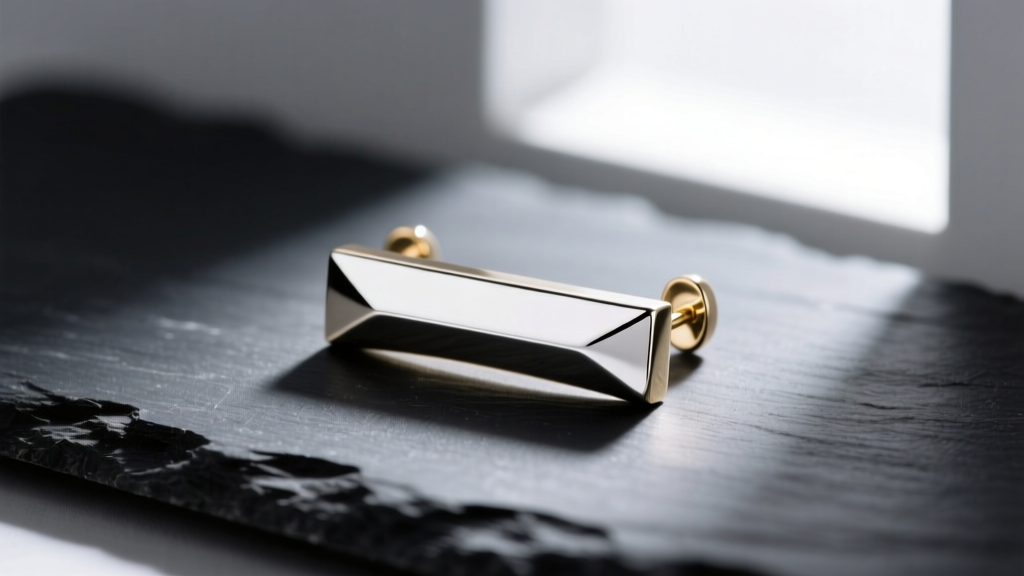
The Unique Physics of Bar Earrings: Why Backings Fail
White gold bar earrings are a staple of minimalist and geometric jewelry design, offering a sleek, modern aesthetic. However, their specific structural geometry presents unique mechanical challenges that standard stud earrings do not face. Whether you are wearing a 20mm horizontal bar or a 40mm vertical drop bar, the elongated shape fundamentally changes how the earring interacts with gravity and your earlobe. When owners report that their white gold bar earrings are constantly falling out, drooping, or causing irritation, the issue rarely lies with the gold itself, but rather with the physics of the lever effect and the metallurgy of the alloy.
The Lever Effect and Friction Back Fatigue
The most common troubleshooting ticket for bar earrings involves the backing slipping off. A standard butterfly friction back relies on a small notch on the earring post to hold it in place. However, a long bar earring acts as a lever. When you brush your hair, remove a shirt, or even sleep, the bar catches and applies rotational torque to the post. If your earrings feature a standard 20-gauge (0.81mm) or 18-gauge (1.02mm) post, this repetitive torque gradually widens the metal loops on the butterfly backing. Once the tension is lost, the earring slides out. Furthermore, the heavy weight of a solid gold bar pulls the earlobe downward, causing the post to angle sharply, which pushes the backing off the notch entirely.
Upgrading to Secure Backings
To solve the torque problem, you must abandon standard friction backs. Upgrading your backings is a non-negotiable step for preserving expensive white gold bar jewelry. Below is a breakdown of the most effective backing systems available in 2026 for heavy or elongated earrings.
| Backing Type | Security Level | Best For Bar Earrings? | Avg. Cost (2026) |
|---|---|---|---|
| Standard Friction (Butterfly) | Low | No (Fails under torque) | $2 - $5 |
| Silicone O-Rings | Medium | Yes (Good temporary fix) | $1 - $3 |
| Screw Backs | High | Yes (Requires threaded post) | $15 - $25 |
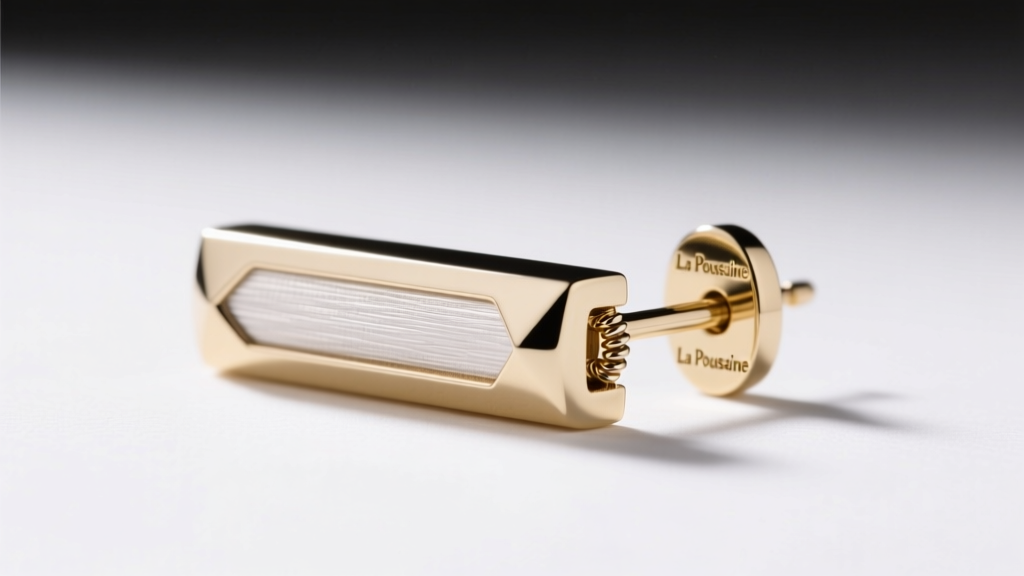
| La Poussante / Locking | Very High | Yes (Ideal for heavy bars) | $30 - $60 |
Troubleshooting Tip: If your current posts are not threaded for screw backs, a jeweler can laser-weld a new threaded post onto your white gold bar for roughly $25 to $45. Alternatively, purchasing high-tension La Poussante locking backs will grip smooth posts securely without requiring any modification to the earring itself.
The Yellowing Problem: Rhodium Plating Wear on White Gold
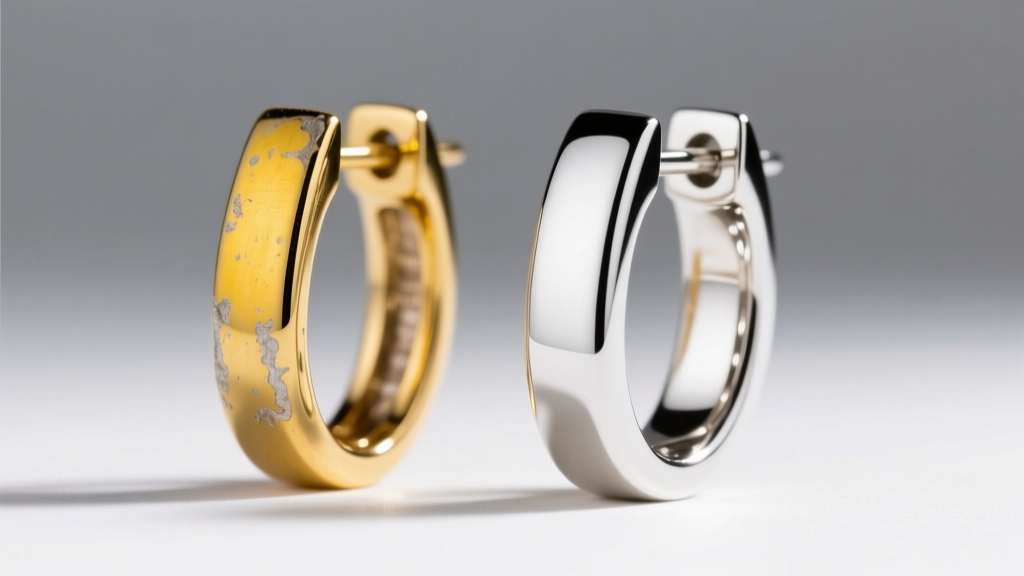
A frequent complaint among consumers is that their white gold bar earrings are "tarnishing" or turning yellow. It is crucial to understand that pure gold does not tarnish, and white gold itself does not oxidize like sterling silver. The yellowing you are seeing is actually the natural color of the underlying gold alloy revealing itself as the rhodium plating wears away.
Why 14K vs 18K White Gold Tarnishes Differently
According to the Gemological Institute of America (GIA), white gold is created by alloying pure yellow gold with white metals like nickel, palladium, or silver. Because the resulting alloy is still naturally yellowish-gray, jewelers electroplate it with rhodium—a platinum group metal—to achieve a brilliant, mirror-like white finish.
- 14K White Gold (58.5% Gold): Often alloyed with nickel and zinc. It has a naturally grayer base, meaning it holds its white appearance slightly longer as the rhodium wears thin. However, the nickel content makes it a primary culprit for allergic reactions.
- 18K White Gold (75% Gold): Usually alloyed with palladium or silver. The base metal is distinctly warmer and more yellow. When the rhodium plating (typically applied at 0.5 to 1.0 microns thick) wears off the high-friction areas of the bar, the yellowish tint becomes immediately obvious.
Safe At-Home Cleaning vs. Professional Replating
If your white gold bar earrings look dull or yellow, do not attempt to "polish" the color back. Polishing cloths are mildly abrasive and will actually strip away the remaining rhodium plating faster. Instead, wash the earrings in warm water with a few drops of mild, phosphate-free dish soap and a soft baby toothbrush. To restore the brilliant white color, you must take them to a jeweler for professional rhodium replating. As of 2026, expect to pay between $40 and $85 per pair for this service, which involves polishing out micro-scratches on the bar, ultrasonic cleaning, and electroplating a fresh layer of rhodium.
Troubleshooting Contact Dermatitis and Nickel Allergies
If your earlobes become red, itchy, or develop small blisters after wearing your white gold bar earrings, you are likely experiencing allergic contact dermatitis. The American Academy of Dermatology notes that nickel is the most common cause of jewelry allergies, and it is heavily utilized in white gold alloys to provide structural hardness and a whiter base color.
Identifying the Culprit: The Post vs. The Solder
Many people assume their earrings are hypoallergenic because they are stamped "14K" or "18K", but the stamp only guarantees the gold content, not the alloy mix. If you are reacting to your white gold bar earrings, the issue usually stems from one of two areas:
- The Post: If the post is made of standard nickel-alloyed white gold, it will cause a reaction once the rhodium plating on the post wears off from friction against the piercing channel.
- The Solder Point: The area where the post or the bar's jump ring is attached to the main body often uses a specialized jeweler's solder. These solders frequently contain nickel or cadmium to lower the melting point during manufacturing. Even if the bar itself is palladium-based, the solder point can trigger a localized allergic flare-up.
Expert Troubleshooting Fix: If you love your white gold bar earrings but suffer from nickel allergies, a master jeweler can carefully cut off the existing post and laser-weld a new post made of pure titanium or platinum. This costs roughly $30-$50 and completely eliminates the allergy risk without altering the visible front design of the bar.
Maintenance Checklist for Longevity
To keep your white gold bar earrings secure, bright, and comfortable, implement this bi-annual maintenance routine recommended by the Jewelers of America:
- Check the Post Angle: Hold the bar earring up to your eye level. If the post is bent even slightly from the torque of the bar, gently straighten it with nylon-jaw pliers to prevent the backing from slipping.
- Inspect the Rhodium: Look at the back of the bar and the post. If you see a warm, yellowish-gray tint, schedule a replating appointment before the skin acids begin to degrade the porous base metal.
- Tighten the Backings: If using silicone o-rings or locking backs, soak them in rubbing alcohol once a month to remove sebum and lotion buildup, which can degrade the silicone and reduce grip tension.
- Avoid Ultrasonic Traps: Never leave white gold earrings in an ultrasonic cleaner for more than 3 minutes. Prolonged high-frequency vibrations can cause microscopic blistering in older rhodium plating, leading to premature peeling.
By understanding the mechanical leverage of the bar shape and the chemical reality of white gold alloys, you can easily troubleshoot these common issues and ensure your minimalist jewelry remains a permanent, trouble-free fixture in your collection.


