Fixing Drooping Emerald Cut Dangle Earrings: A Guide
Learn how to fix drooping, snagging, and heavy emerald cut dangle earrings with expert troubleshooting tips on settings, gauges, and care.

The Physics of the Drop: Solving the Forward-Droop Dilemma
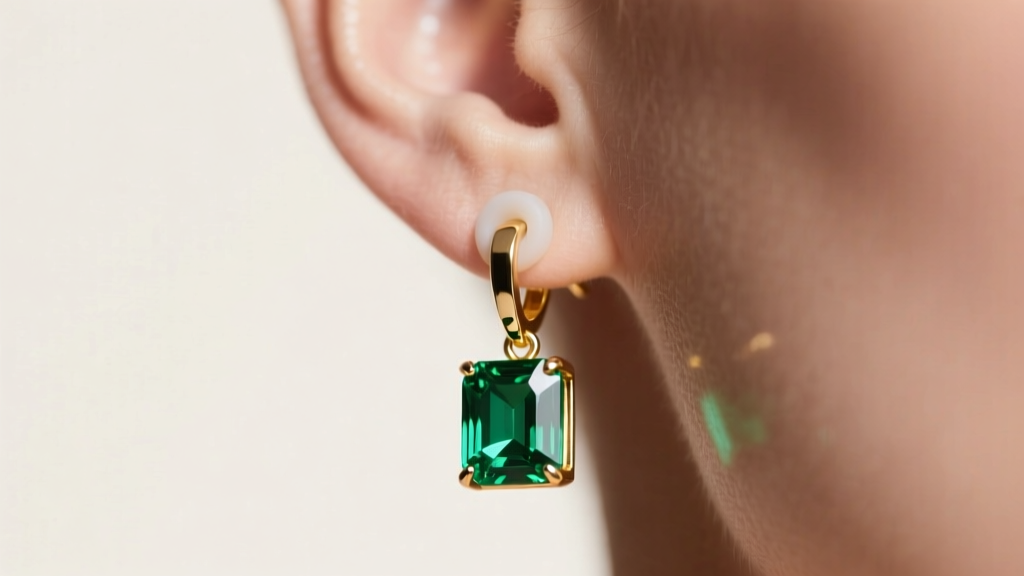
There is a distinct, architectural elegance to emerald cut dangle earrings that few other silhouettes can match. The elongated, step-cut facets create a hall-of-mirrors effect that draws the eye. However, from a structural jewelry design perspective, this specific cut presents a unique center-of-gravity problem. Because emerald cut stones (typically cut in 9x7mm or 10x8mm ratios for dangles) are heavily weighted toward the pavilion, the earring often suffers from 'forward droop.' Instead of laying flush against the earlobe and facing outward, the stone tilts downward, hiding the table facet and ruining the visual impact.
Troubleshooting the Droop
The forward droop is rarely a flaw in the stone itself; it is a failure of the backing system or the post-to-bail ratio. Standard butterfly friction backs offer a contact surface area of roughly 4mm, which is entirely insufficient for counterbalancing a 3-carat equivalent dangle. To solve this, you must increase the surface area behind the earlobe.
- Jumbo Silicone O-Rings: Upgrading to a 6mm or 8mm medical-grade silicone disc distributes the weight across a wider area of the lobe, providing the friction necessary to keep the post angled upward.
- LaPoussé Backings: These mechanical clutch backs feature a wider, flat base that physically prevents the post from pivoting downward inside the piercing channel.
- Lobe Support Patches: Adhesive supports (like BlingDots) placed behind the earlobe add a layer of structural rigidity, preventing the flesh from folding under the weight of the dangle.
Navigating Snag Hazards: Step-Cut Corners and Setting Types
The defining characteristic of the emerald cut is its cropped corners. While these cropped corners are designed to prevent the stone from chipping during the faceting process, they create distinct geometric edges that are notorious for catching on knitwear, silk blouses, and hair. When this geometry is translated into a moving dangle earring, the kinetic energy turns those corners into microscopic hooks.
V-Prong vs. Bezel: A Structural Comparison
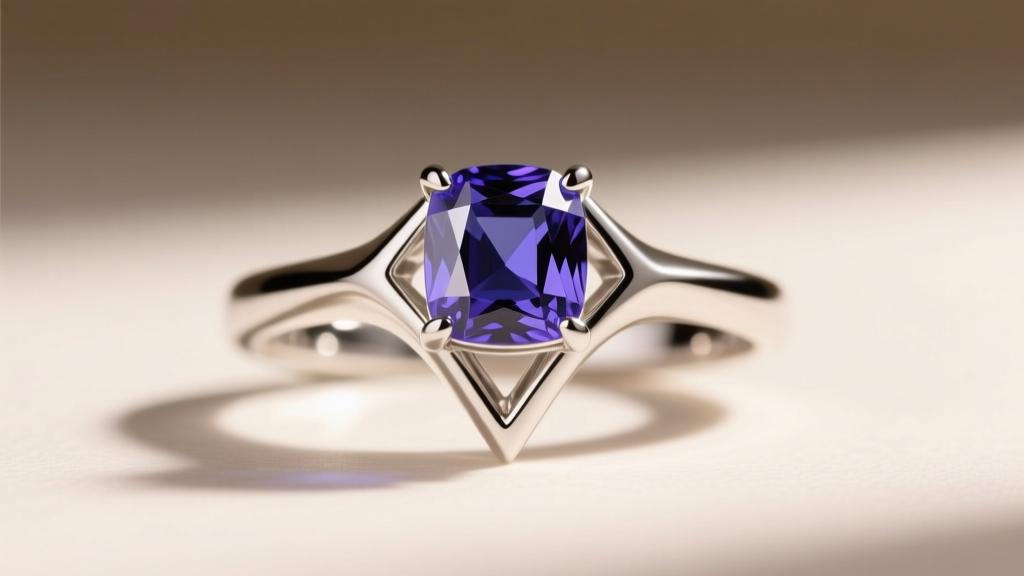
According to the Gemological Institute of America (GIA), the corners of step-cut stones are the most vulnerable points for impact damage and snagging. The setting you choose dictates the earring's daily wearability.
The V-Prong Setting: If you prefer the visibility of prongs, standard four-prong settings are a liability for dangles. You must opt for V-prongs (also known as chevron prongs), which wrap the metal securely around the cropped corner. This not only protects the stone but creates a smooth, sloped edge that allows fabrics to glide over the setting rather than catching on a sharp metal tip.
The Bezel Setting: For active lifestyles, a full bezel is the ultimate troubleshooting solution. A 14k or 18k gold bezel completely encircles the stone's perimeter, eliminating all snag points. While a bezel reduces the visible surface area of the stone by roughly 8%, it drastically reduces the failure rate of the earring catching and bending the bail.
Weight Distribution and Lobe Health: Avoiding the Cheese-Cutter Effect
A common and painful failure mode with heavy dangle earrings is the 'cheese-cutter effect.' This occurs when a thin wire post slices through the earlobe tissue over time due to the pendulum motion of the dangle combined with the stone's mass. A standard 9x7mm lab-grown diamond or sapphire can weigh between 2.5 and 3.5 carats. When set in platinum or solid gold, the total earring weight can easily exceed 4 grams.
Gauge Specifications for Heavy Dangles
Most commercial fashion jewelry uses 20-gauge (0.81mm) or even 22-gauge (0.64mm) wire for earring posts. For emerald cut dangle earrings of this size, this is structurally inadequate. The pressure exerted on a 0.81mm wire against the soft tissue of the earlobe will inevitably cause stretching, micro-tears, and contact dermatitis due to the constant friction.
The Solution: When purchasing or commissioning emerald cut dangle earrings, mandate an 18-gauge (1.02mm) or 16-gauge (1.29mm) post or French wire. The thicker gauge increases the surface area bearing the weight, reducing the pounds-per-square-inch (PSI) pressure on the piercing channel. If you are using a French wire (fishhook), ensure the wire is hardened or forged from a stiff alloy like platinum or 14k white gold, as high-karat yellow gold (18k or 22k) is too malleable and will warp under the pendulum stress.
The Smudge Factor: Maintenance for Step-Cut Facets
Unlike the brilliant cut, which uses dozens of tiny, angled facets to scatter light and hide imperfections, the emerald cut relies on broad, open, parallel step facets. The large, flat table facet acts like a mirror, making it exceptionally unforgiving when it comes to skin oils, lotions, and fingerprints. A smudged emerald cut dangle earring will look dull and lifeless within hours of being put on.
Cleaning Protocols Based on Material
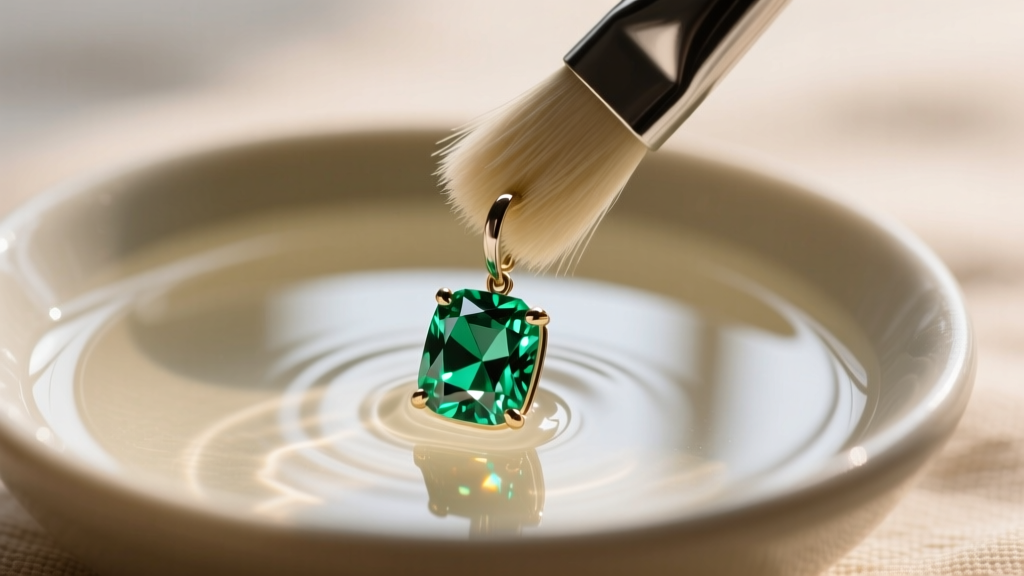
Troubleshooting the loss of sparkle requires understanding the specific material of your stone, as improper cleaning can destroy certain gems. The Jewelers of America emphasizes that cleaning methods must be tailored to the gemstone's hardness and treatment history.
- For Diamonds, Sapphires, and Rubies: These corundum and carbon stones are highly durable. Use a mild dish soap and warm water solution. Submerge the dangle earring and use a soft-bristled baby toothbrush to gently agitate the pavilion (the underside of the stone), where dust and lotion accumulate and block light return. Ultrasonic cleaners are generally safe for these stones, provided they are not heavily included or fracture-filled.
- For Natural Emeralds: True emeralds are almost always treated with oils or resins to fill surface-reaching fissures. Never use an ultrasonic cleaner or steam cleaner on a natural emerald, as the high-frequency vibrations and heat will strip the oil, leaving the stone looking cloudy and heavily fractured. Clean natural emerald dangles only with a damp, lint-free microfiber cloth and a drop of mild soap, avoiding the bristles entirely.
- For Glass or Cubic Zirconia: These materials attract static and grease rapidly. A quick wipe with a 70% isopropyl alcohol pad will instantly strip the oils from the table facet and restore the optical clarity without damaging the material.
Troubleshooting Quick-Reference Matrix
Use the following matrix to quickly diagnose and resolve the most common issues associated with wearing and maintaining these specific earrings.
| Issue | Primary Cause | Hardware Solution | Maintenance Fix |
|---|---|---|---|
| Forward Drooping | Top-heavy pavilion; small backing surface | Switch to 8mm silicone discs or LaPoussé backs | Apply adhesive lobe support patches |
| Fabric Snagging | Exposed cropped corners; sharp prong tips | Re-set stone in a full bezel or V-prong setting | Style hair up; avoid loose knits |
| Lobe Tearing/Pain | Post gauge too thin for stone weight | Upgrade post to 18g (1.02mm) or 16g (1.29mm) | Alternate with lightweight studs |
| Dull / Cloudy Stone | Sebum buildup on broad table facet | N/A | Clean pavilion with soft brush; avoid ultrasonics for natural emeralds |
| Bail Warping | Pendulum stress on soft metal loops | Replace jump ring with a soldered, fixed bail | Remove before sleeping or exercising |
'The beauty of an emerald cut lies in its geometry, but its geometry is also its greatest vulnerability in a dangle setting. Always prioritize the structural integrity of the bail and the thickness of the post over the carat weight of the stone.' — Master Bench Jeweler
By addressing the physics of the drop, reinforcing the setting against snags, and respecting the weight limitations of the earlobe, you can ensure your earrings remain a sophisticated, trouble-free staple in your rotation. Proper troubleshooting isn't just about fixing what's broken; it's about optimizing the wearability of fine jewelry for the long term.


