Flower Petal Earrings: Metal & Material Comparison
Discover the best metals and materials for flower petal earrings. Compare gold, silver, titanium, and enamel for durability, weight, and style.
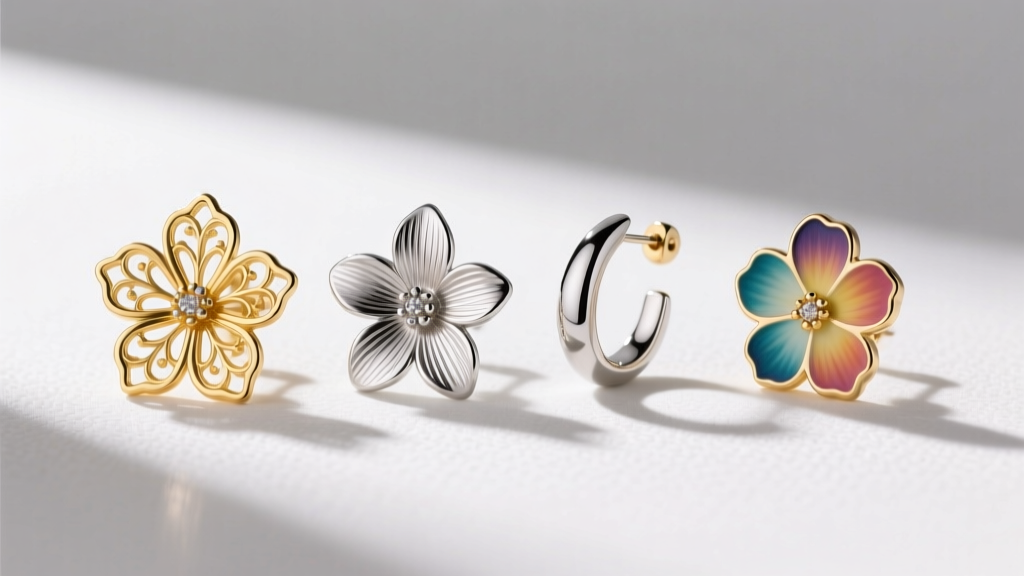
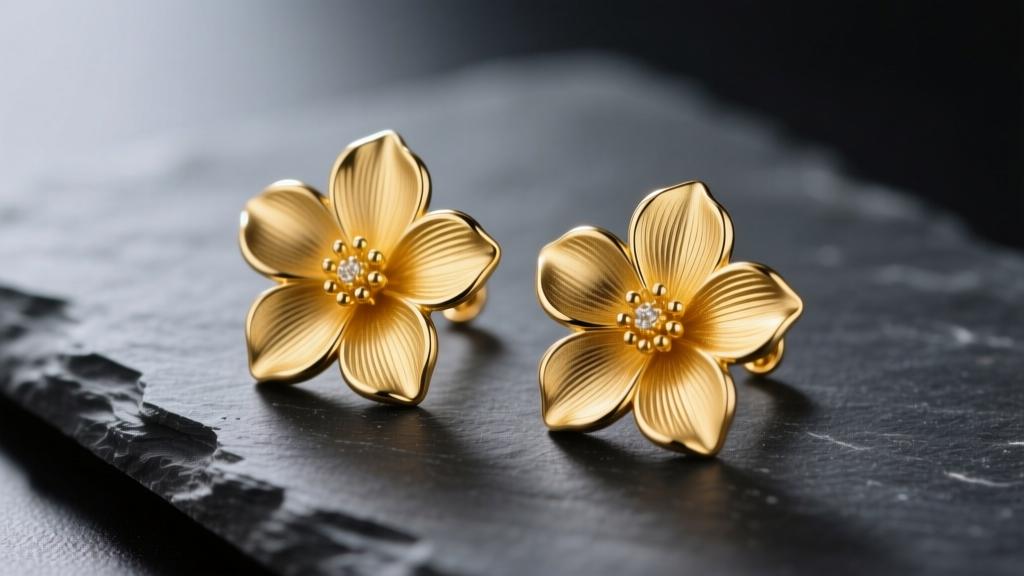
Botanical jewelry has maintained a steadfast presence in accessory trends, but the execution of floral designs relies entirely on the underlying metallurgy and material science. When shopping for flower petal earrings, the aesthetic appeal of the bloom is only half the equation. The material dictates the earring's weight, hypoallergenic properties, structural longevity, and how well it captures the delicate, organic veining of a real petal. Whether you are looking for a subtle 20-gauge lobe stud or an elaborate cartilage cuff, understanding material properties is essential for making an informed purchase.
The Structural Demands of Botanical Jewelry
Crafting realistic flower petal earrings requires a delicate balance between malleability and rigidity. Petal silhouettes often feature ultra-thin edges and sweeping, asymmetrical curves. If a metal is too soft, the petals will warp, bend, or lose their crisp definition during daily wear. If the metal is too brittle, the delicate tips of the petals are prone to snapping.
The manufacturing method also plays a critical role. Most high-end floral earrings are created via lost-wax casting, which allows for intricate, three-dimensional overlapping petals and deep organic textures. However, cast metals can sometimes be slightly more porous. Alternatively, die-stamping is used for flatter, graphic floral designs. Stamped petals possess sharper edges and higher structural density but lack the 3D volume of cast pieces. The chosen material must be compatible with the manufacturing technique to ensure the floral silhouette remains intact over years of wear.
Precious Metals: Gold and Silver Alloys
14k vs. 18k Gold
Gold is the traditional choice for fine floral jewelry, but pure 24k gold is entirely unsuitable for petal designs. With a Vickers Hardness (HV) of roughly 25, pure gold is too soft and will easily suffer from 'petal droop'—a failure mode where the flower head bends forward under its own weight.
14k Gold (58.5% pure gold) is the gold standard for structural floral earrings. Alloyed with copper, silver, and zinc, 14k gold achieves a hardness of approximately 120-150 HV. This rigidity ensures that stamped or cast petal edges remain razor-sharp. 18k Gold (75% pure gold) offers a richer, warmer yellow hue but sits at a softer ~130 HV. While beautiful, 18k gold flower petal earrings with elongated, dangling petals are more susceptible to bending if caught on clothing. Expect to pay between $150 and $400 for solid 14k gold floral studs, depending on the gram weight and casting complexity.
Sterling Silver and Oxidation Techniques
Sterling silver (925) is an alloy of 92.5% silver and 7.5% copper. The copper addition provides the necessary tensile strength for intricate floral work. Silver is particularly prized in botanical jewelry for its compatibility with oxidation. By intentionally darkening the recessed areas of the metal with liver of sulfur, jewelers can create high-contrast, deep veining details that mimic the natural capillary structures of a flower petal.
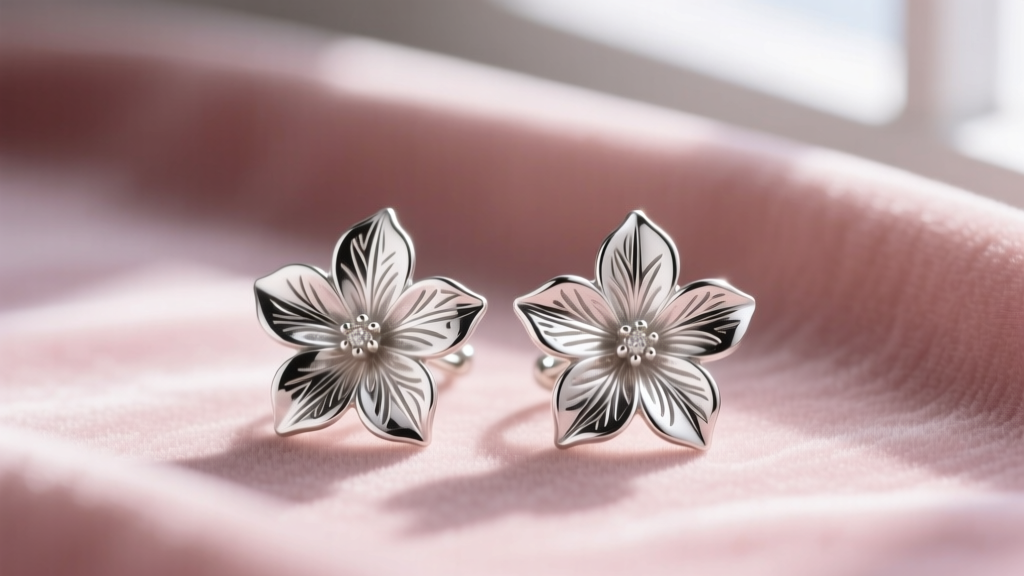
However, sterling silver requires maintenance. The copper content makes it prone to tarnishing, especially in high-humidity environments. For floral earrings with deep, oxidized crevices, traditional silver polishing cloths cannot reach the recessed petal veins, requiring specialized liquid dips or a soft-bristled jeweler's brush to maintain the contrast.
Hypoallergenic Alternatives: Titanium and Niobium
For wearers with contact dermatitis or nickel allergies, precious metals can sometimes pose a risk due to hidden alloying metals. The Association of Professional Piercers (APP) strongly recommends implant-grade materials for sensitive ears and fresh piercings.
ASTM F136 Titanium is the ultimate material for lightweight, oversized flower petal earrings. Titanium boasts a Vickers Hardness of roughly 334, making it significantly stronger than 14k gold. This immense strength allows jewelers to craft ultra-thin, large-scale floral silhouettes that remain incredibly lightweight and completely warp-resistant. Furthermore, titanium can be anodized—an electrochemical process that alters the surface oxide layer to produce vibrant, permanent colors without the use of toxic dyes or paints. An anodized titanium petal can exhibit iridescent purples, blues, and golds that shift in the light, mimicking the natural iridescence of certain orchids and hibiscus flowers. Titanium floral pieces typically range from $40 to $120, offering exceptional value for hypoallergenic jewelry.
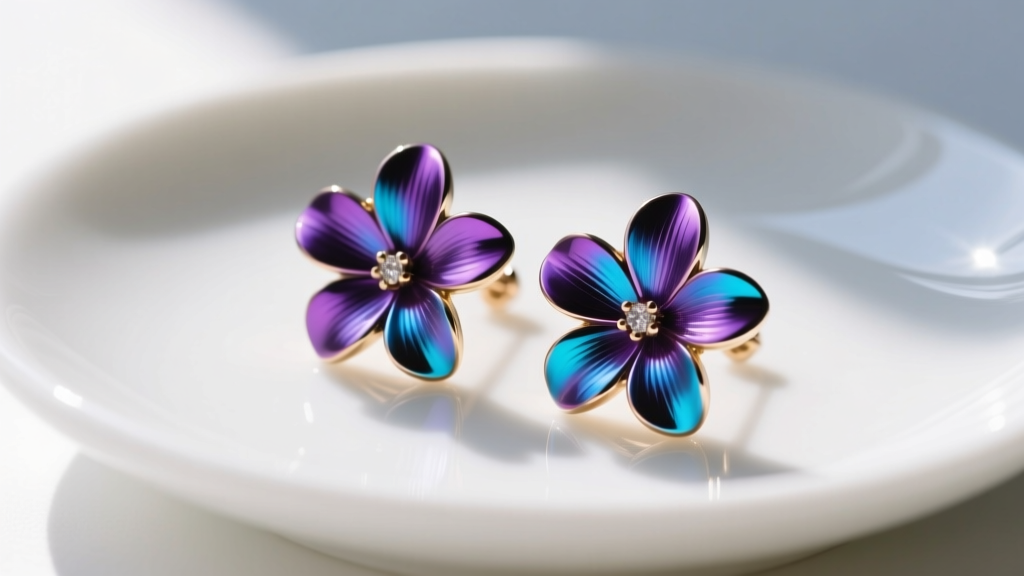
Niobium is another reactive metal that shares titanium's hypoallergenic properties and anodizing capabilities. While slightly heavier and softer than titanium, niobium is highly malleable, making it an excellent choice for floral huggies and cartilage cuffs where the metal needs to be shaped or hinged to fit the ear's anatomy securely.
Non-Metal Accents: Enamel and Resin
To achieve the vivid reds, pinks, and yellows of a garden in bloom, jewelers often turn to enamel and resin inlays.
- Vitreous Enamel: This is finely ground glass fused to a metal base (usually sterling silver or gold) at extremely high temperatures (1,380°F to 1,560°F). Vitreous enamel provides a brilliant, scratch-resistant, and permanent color that will never fade in the sun. However, it is inherently brittle. A dropped enamel flower petal earring is highly likely to suffer micro-fracturing or chipping upon impact with a hard tile floor.
- Cold Epoxy Resin: Resin is poured into metal petal cavities and cured at room temperature. It is much more forgiving upon impact and allows for complex color gradients and the suspension of real dried botanical elements (like tiny fern leaves or baby's breath) inside the petal. The trade-off is that resin is relatively soft and will accumulate micro-scratches over time, eventually losing its glass-like high-gloss finish.
Material Comparison Matrix
Use the following matrix to determine which material best suits your lifestyle, piercing placement, and aesthetic preferences.
| Material | Hardness (HV) | Weight Profile | Best Piercing Type | Price Range |
|---|---|---|---|---|
| 14k Yellow Gold | ~140 | Medium-Heavy | Standard Lobe (20g-18g) | $150 - $400+ |
| Sterling Silver (925) | ~70 | Medium | Lobe & Upper Lobe | $50 - $180 |
| Implant-Grade Titanium | ~334 | Ultra-Light | All Piercings (18g-14g) | $40 - $120 |
| Vitreous Enamel on Gold | ~550 (Glass) | Medium-Heavy | Standard Lobe (Stud/Drop) | $200 - $600+ |
Gauge Sizing and Post Mechanics
The material of the earring head must be supported by an appropriately sized post. A common failure mode in floral jewelry is post shear or severe bending, which occurs when a heavy, cast-metal flower head is attached to a thin, 22-gauge (0.64mm) wire post.
For small to medium floral studs, a 20-gauge (0.81mm) or 18-gauge (1.02mm) post is standard and provides adequate support. However, for large, overlapping 3D floral drops or heavy enamel flower petal earrings, you should insist on a 16-gauge (1.29mm) post. Additionally, heavy floral drops should utilize threaded screw-backs or secure silicone O-rings rather than standard friction butterfly backs, which easily slip off when the top-heavy flower rotates and pulls against the earlobe.
Care Protocols by Material Type
Maintaining the pristine condition of your botanical jewelry requires material-specific care routines. According to the Gemological Institute of America (GIA), improper cleaning is the leading cause of damage to textured gold jewelry.
- Solid Gold & Titanium: These can be safely cleaned using a warm water bath with a few drops of mild dish soap and a soft baby toothbrush to gently dislodge oils from the deep petal crevices. Ultrasonic cleaners are generally safe for solid gold and titanium floral pieces, provided they do not contain any gemstone inlays.
- Sterling Silver: Avoid harsh chemical dips, which will strip away the intentional oxidation used to highlight the petal veins. Instead, use a specialized silver polishing cloth only on the high points of the petals, leaving the dark crevices intact to preserve the 3D contrast.
- Enamel & Resin: Never place enamel or resin flower petal earrings in an ultrasonic cleaner. The high-frequency vibrations will cause the vitreous glass to shatter or the resin to separate from the metal housing. Clean these exclusively with a damp microfiber cloth.
Final Verdict: Choosing Your Floral Silhouette
Selecting the perfect flower petal earrings is an exercise in balancing aesthetic desires with material realities. If you prioritize heirloom quality, intricate 3D detailing, and long-term value, cast 14k gold remains the undisputed champion, offering the perfect hardness to preserve crisp petal edges. For those with hyper-sensitive skin or a desire for large, dramatic, yet feather-light floral statements, anodized implant-grade titanium provides unmatched structural integrity and vibrant color options. Finally, if you are drawn to the moody, romantic aesthetic of botanical illustration, oxidized sterling silver offers unparalleled contrast and depth. By matching the material properties to your specific piercing and lifestyle, your floral jewelry will continue to bloom flawlessly for years to come.


