Folklorico Earrings: Technical Guide to Weight, Gauge & Durability
Master the technical specs of folklorico earrings. Learn about weight distribution, locking clasps, gauge sizes, and sweat-resistant metals for dance.

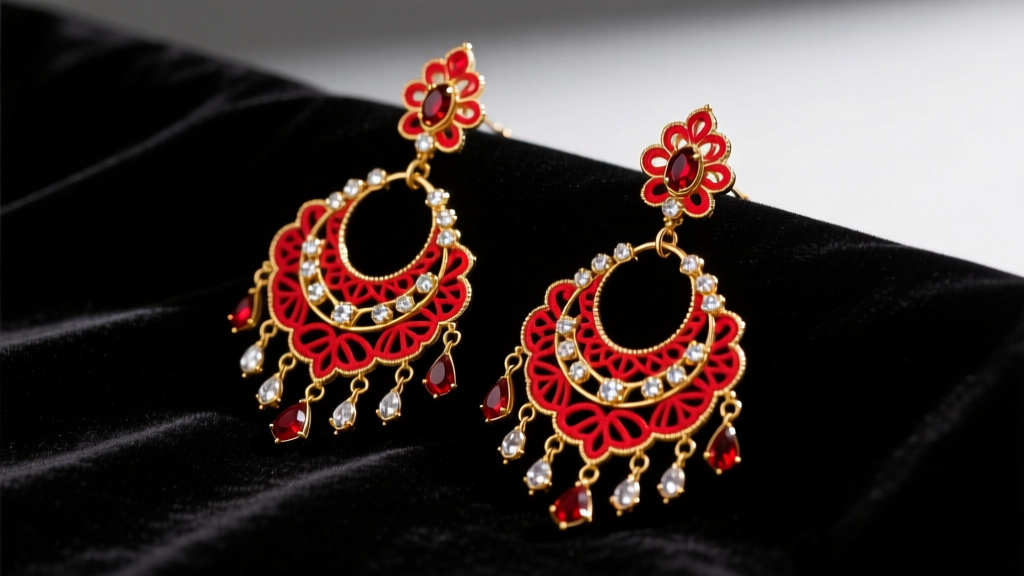
The Biomechanics of Folklórico Dance and Earring Stress
Baile Folklórico is a highly athletic and culturally significant dance form that demands rigorous physical exertion from its performers. When selecting or designing folklorico earrings, one must look beyond mere aesthetics and treat the jewelry as a dynamic weight subject to extreme kinetic forces. The traditional Baile Folklórico repertoire includes rapid zapateado (percussive footwork) and sweeping giros (spins). During a high-speed spin, a 40-gram chandelier earring can generate up to 3 Gs of centrifugal force, exerting 120 grams of sheer lateral pull on the earlobe fistula. Furthermore, the vertical shockwaves generated by stomping on wooden stages travel up the skeletal structure, causing micro-vibrations that accelerate metal fatigue at the solder joints of dangle and drop earrings. Understanding these biomechanical stressors is the first step in engineering or selecting folklorico earrings that will survive a full performance season without causing tissue damage or catastrophic jewelry failure.
Material Science: Sweat, Friction, and Metal Fatigue
The microenvironment between a heavy earring post and the earlobe during a performance is highly corrosive. Human sweat contains urea, lactic acid, and sodium chloride, with a pH ranging from 4.5 to 7.0. When trapped against the skin by the pressure of a heavy earring, this fluid creates an electrolytic cell that rapidly degrades base metals. Many traditional artisan pieces from regions like Taxco or Oaxaca are crafted from brass, copper, or low-karat gold alloys. While beautiful, these materials are prone to rapid oxidation and can cause severe contact dermatitis when subjected to prolonged friction and moisture.
Recommended Alloys for High-Impact Performance
According to the Association of Professional Piercers (APP), jewelry subjected to high friction and bodily fluids should meet strict biocompatibility standards. For the ear wires of folklorico earrings, the following materials are mandatory:
- Implant-Grade Titanium (ASTM F136): The gold standard for ear wires. It is lightweight, entirely nickel-free, and impervious to sweat corrosion, reducing the overall static weight of the earring by up to 45% compared to steel.
- Niobium: Highly malleable and hypoallergenic, niobium can be anodized to match the vibrant colors of traditional folklorico costumes without the use of toxic platings or enamels that might chip during performances.
- Solid 14k or 18k Gold: If traditional precious metals are required for authenticity, solid gold must be used. Gold-filled or gold-plated wires will wear through their microscopic outer layers within 3 to 5 high-sweat performances, exposing the reactive brass core underneath.
As noted in Gemological Institute of America (GIA) research on metal allergies, nickel exposure from degrading costume jewelry is a leading cause of lobe inflammation, which can force a dancer to tape their earrings to their skin—a dangerous practice that increases the risk of avulsion injuries.
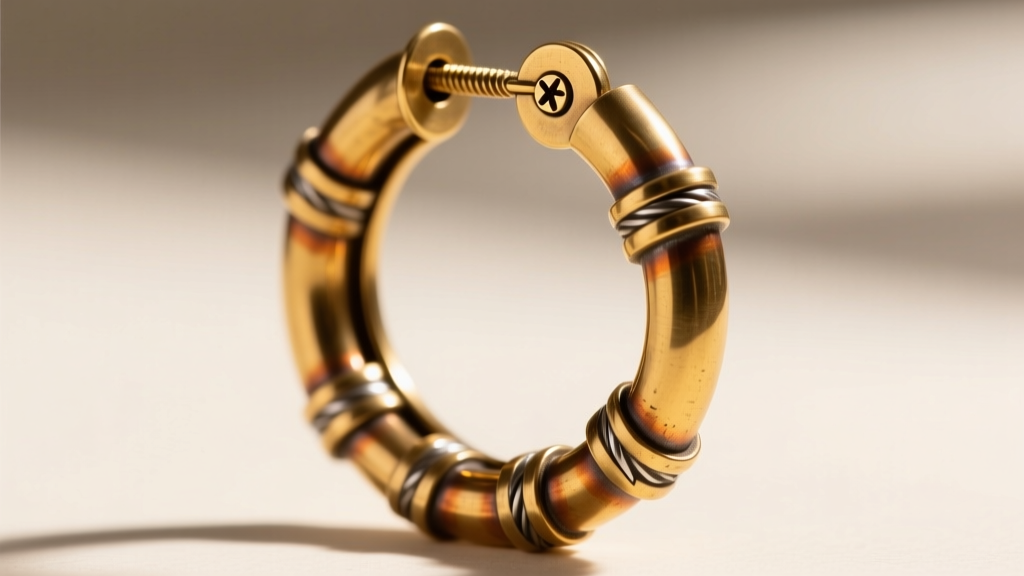
Gauge Thickness and Lobe Health Under Dynamic Loads
The most common point of failure in folklorico earrings is not the clasp, but the wire gauge slicing through the earlobe—a phenomenon known in the body modification community as the 'cheese-wire effect.' Standard fashion earrings utilize 20-gauge (0.81mm) or 22-gauge (0.64mm) wires. Under the dynamic, swinging loads of a folklórico routine, a 20-gauge wire will concentrate all the kinetic force onto a microscopic surface area of the fistula, leading to micro-tears, elongation, and eventual lobe splitting.
To mitigate this, the ear wire must be upsized to distribute the weight across a wider surface area of tissue. Below is a technical framework for matching earring static weight to the minimum required wire gauge.
| Earring Static Weight | Minimum Wire Gauge | Metric Diameter | Max Dynamic Load Tolerance |
|---|---|---|---|
| 10g - 20g | 18G | 1.02mm | 60g |
| 21g - 40g | 16G | 1.29mm | 120g |
| 41g - 60g | 14G | 1.63mm | 180g |
| 61g and above | 12G or 10G | 2.05mm+ | 250g+ |
Note: If a dancer's lobes are currently pierced at a standard 20G, they must undergo a gradual, controlled stretching process using tapers and glass plugs over several months before they can safely wear 14G or 12G folklorico pieces.
Clasp Engineering: Preventing Catastrophic Loss
Standard butterfly friction backs and open C-clasps are entirely unsuitable for folklorico dance. The inverted head movements and vigorous hair-whipping common in routines like the Jarabe Tapatío will easily dislodge these basic mechanisms. When engineering or retrofitting folklorico earrings, secure locking mechanisms are non-negotiable.
Locking Mechanisms Compared
- Screw-Back Posts: Ideal for heavy studs or chandeliers with a fixed post. The threaded barrel screws securely onto the post, eliminating the risk of friction-back failure. However, they require a precise 14G or 16G threaded titanium post.
- Locking Leverbacks: Features a hinged wire that snaps into a grooved catch, often secured by a secondary silicone O-ring. This is the superior choice for heavy hoop and dangle folklorico earrings, as it allows for the necessary articulation and swing while remaining mechanically locked.
- French Wire with Secondary Stoppers: If traditional French wires (fishhooks) must be used for aesthetic authenticity, they must be paired with tight-fitting silicone ear nuts and secured with a tiny, clear elastic O-ring wrapped around the wire tip to prevent the stopper from vibrating off.

Structural Soldering and Joint Integrity
Folklorico earrings frequently incorporate intricate filigree, multiple dangling charms, and tiered chandelier frames. Each connection point represents a potential failure node. Traditional torch soldering, often used by mass-market manufacturers, introduces significant heat to the surrounding metal, which can anneal (soften) the wire and leave brittle flux pockets inside the joint. When subjected to the repetitive shockwaves of zapateado, these torch-soldered joints develop micro-fractures and eventually snap.
For high-end, performance-grade folklorico earrings, laser welding is the superior fabrication method. Laser welding localizes the heat to a microscopic focal point, fusing the metals without altering the crystalline structure or tensile strength of the surrounding wire. When inspecting artisan pieces, look for smooth, uniform joints without dark discoloration or excessive solder blobs, which indicate poor temperature control during traditional torch soldering.
Retrofitting Heirloom and Artisan Pieces
Many dancers inherit vintage folklorico earrings or purchase authentic artisan pieces directly from Mexican markets. These pieces are often culturally invaluable but structurally deficient for modern, high-impact choreography. A skilled bench jeweler can retrofit these heirlooms without destroying their historical integrity. The process involves carefully snipping the original, flimsy 22-gauge base-metal ear wire and laser-welding a custom-forged 14-gauge implant-grade titanium locking leverback directly to the top jump ring. Additionally, replacing all standard jump rings with soldered-closed jump rings ensures that the tiers of the chandelier cannot pull apart under centrifugal stress.
Pre-Performance Inspection and Maintenance Checklist
To ensure the longevity of your folklorico earrings and the safety of your earlobes, implement this strict pre-performance checklist:
- Tension Test: Apply moderate lateral pressure to the clasp mechanism to ensure the locking catch has not warped or loosened over time.
- Jump Ring Audit: Inspect every jump ring connecting the dangles. There must be zero visible gaps; if a gap exists, the ring must be replaced with a soldered-closed alternative.
- Ultrasonic Cleaning: Clean the earrings in an ultrasonic bath with a mild, ammonia-free solution to remove dried sweat and sebum from the intricate filigree. Avoid harsh chemicals that can strip patinas or weaken structural adhesives.
- Silicone Cushioning: For earrings sitting on the heavier end of the spectrum, apply a specialized silicone earring support cushion behind the lobe to distribute the static weight across a wider area of the neck and jawline, reducing localized fistula pressure.
By treating folklorico earrings as precision performance equipment rather than mere accessories, dancers can preserve both their cultural heritage and their physical well-being, ensuring that every spin and stomp is executed with confidence and security.


