Gunmetal Earrings: Metallurgy, PVD Coatings & Durability Guide
Explore the technical reality of gunmetal earrings. We analyze PVD vs electroplating, base metal grades, gauge standards, and long-term wear resistance.

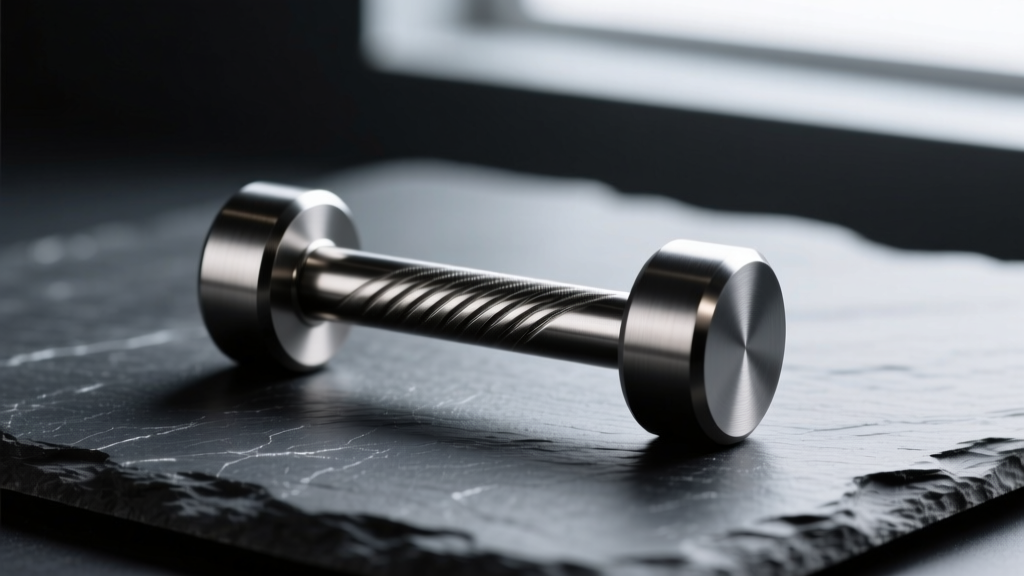
The Metallurgical Reality: Alloys vs. Surface Finishes
When consumers search for gunmetal earrings, they are typically envisioning a specific dark, moody, grey-black aesthetic. However, from a metallurgical standpoint, the term "gunmetal" is heavily misunderstood in the modern jewelry industry. Historically, gunmetal was a specific bronze alloy consisting of roughly 88% copper, 10% tin, and 2% zinc. While this alloy possesses a naturally dark grey hue, it is highly reactive, prone to severe oxidation, and entirely unsuitable for modern body piercing due to its copper and zinc content, which can cause contact dermatitis and heavy metal toxicity in healing fistulas.
Therefore, virtually all high-quality gunmetal earrings on the market today are not solid gunmetal alloy. Instead, they are advanced surface finishes applied over biocompatible base metals. The dark, iridescent grey color is achieved primarily through Physical Vapor Deposition (PVD) of Titanium Carbonitride (TiCN) or through the electroplating of Black Rhodium. Understanding the distinction between these coating methods is critical for predicting the longevity, safety, and wear-resistance of your body jewelry.
PVD vs. Electroplating: A Technical Comparison
The method used to apply the gunmetal finish dictates the jewelry's lifespan. Physical Vapor Deposition (PVD) is a vacuum-chamber process where titanium is vaporized and bonded with carbon and nitrogen at the atomic level, creating a microscopic ceramic-like layer on the jewelry's surface. Electroplating, conversely, uses an electrical current to deposit a thin layer of black rhodium or oxidized metal onto the substrate. The structural differences are vast.
| Finish Type | Coating Thickness | Vickers Hardness (HV) | Biocompatibility | Avg. Price Range |
|---|---|---|---|---|
| PVD Titanium (TiCN) | 0.5 - 2.0 microns | ~3000 HV | Excellent (Inert) | $40 - $90 |
| Black Rhodium Plating | 0.1 - 0.5 microns | ~800 HV | Good (Until worn) | $60 - $150 |
| Oxidized Sterling Silver | N/A (Surface reaction) | ~25 HV (Base metal) | Poor for fresh piercings | $25 - $60 |
As the data illustrates, PVD coatings are exponentially harder than electroplated alternatives. A Vickers Hardness of 3000 HV means PVD gunmetal earrings are highly resistant to micro-abrasions from daily wear, hair snagging, and friction against clothing. Black rhodium, while offering a beautiful deep black-grey sheen, is much softer and will eventually wear away on high-friction areas like earring posts and clasp mechanisms.
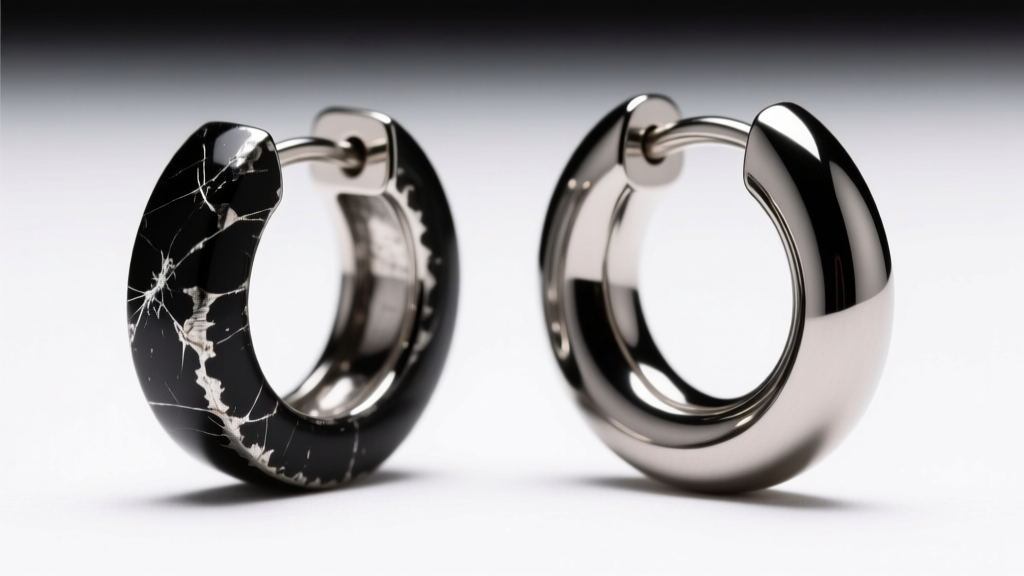
Base Metal Substrates and Biocompatibility
A gunmetal finish is only as safe as the metal beneath it. When evaluating high-end body jewelry, the substrate must meet strict implant-grade standards. The Association of Professional Piercers (APP) recommends ASTM F138 implant-grade stainless steel or ASTM F136 implant-grade titanium for initial piercings and long-term wear. You can review the full APP body jewelry materials guidelines for comprehensive safety standards.
The danger arises when cheap gunmetal finishes are applied over "surgical steel" (a largely unregulated marketing term that often contains high levels of nickel). When the PVD or rhodium coating inevitably experiences micro-fractures over years of wear, sweat and sebum penetrate the barrier. If the base metal contains nickel, galvanic corrosion occurs, leaching nickel salts into the piercing tract and triggering severe allergic contact dermatitis. Always verify that your gunmetal earrings are PVD-coated over ASTM F136 titanium, which is completely nickel-free and biologically inert, ensuring that even if the coating chips, the exposed metal remains 100% hypoallergenic.
Threading Standards: Protecting the Coating During Insertion
One of the most common failure modes for dark-coated body jewelry is coating degradation during insertion and removal. This is directly tied to the threading standard used by the manufacturer.
- External Threading: The screw threads are cut into the post (the part that passes through the ear). When you push an externally threaded gunmetal earring through a piercing, the sharp metal threads act like a file, scraping against the fistula and simultaneously catching on the jewelry's own PVD coating. Over time, this strips the gunmetal finish right at the insertion point.
- Internal Threading: The screw threads are cut into the inside of the decorative end or ball. The post itself is completely smooth. This allows the jewelry to glide through the piercing without friction, preserving both the delicate tissue and the microscopic PVD gunmetal layer.
- Threadless (Push-Pin): Utilizes tension to hold the decorative end inside a smooth, hollow post. This is the gold standard for preserving dark coatings on cartilage and lobe studs.
Premium manufacturers like BVLA utilize precision internal threading and threadless designs to ensure their PVD and anodized finishes remain intact for decades. If you are buying gunmetal barbells or labret studs, strictly avoid external threading.
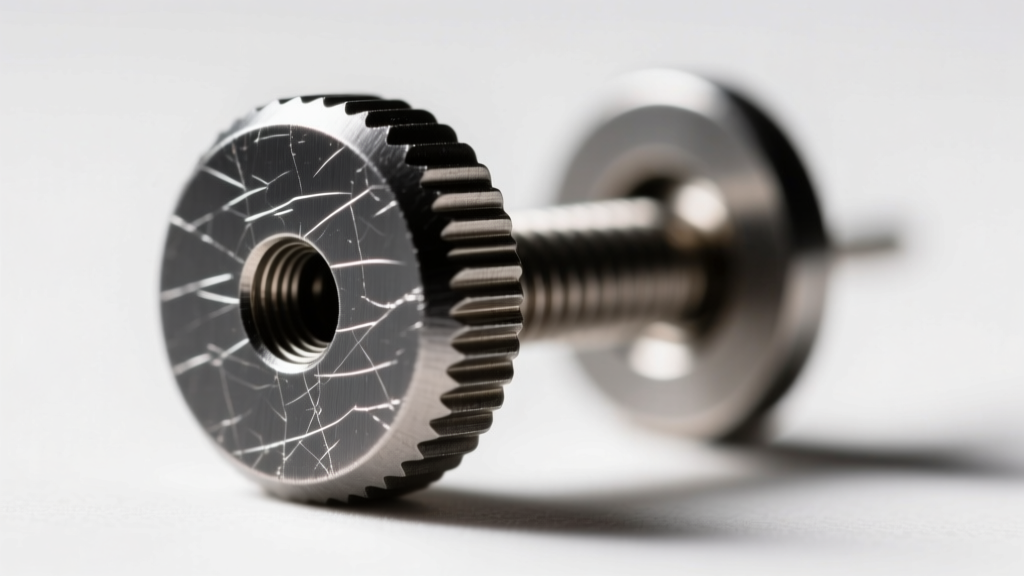
Gauge Sizes and Structural Integrity
The structural requirements for gunmetal earrings vary heavily depending on the piercing placement. Because PVD coatings add a microscopic layer of ceramic-like material, the underlying metal must still bear the structural load of the jewelry.
For standard earlobes, 20-gauge (0.81mm) and 18-gauge (1.02mm) are common. However, dark finishes show bending and warping more visibly than polished silver or gold because any deformation alters how light reflects off the TiCN layer. For cartilage placements like the helix, tragus, or conch, 16-gauge (1.29mm) and 14-gauge (1.60mm) are strongly recommended. The thicker base metal prevents the post from bowing under the pressure of swelling or accidental impacts, which could otherwise cause the rigid PVD coating to micro-crack and flake.
Environmental Degradation and Care Protocols
While PVD gunmetal is incredibly resilient, it is not invincible. The coating can be compromised by specific chemical exposures. Human sweat has a pH ranging from 4.5 to 7.0, which is generally harmless to TiCN. However, prolonged exposure to highly alkaline or heavily chlorinated environments—such as hot tubs, swimming pools, or harsh household cleaning agents—can degrade the atomic bonds of cheaper PVD applications over time.
Expert Maintenance Tip: Never use ultrasonic jewelry cleaners with harsh alkaline solutions on electroplated black rhodium gunmetal earrings, as the cavitation process will strip the soft plating. PVD titanium, however, can safely withstand ultrasonic cleaning with mild, pH-neutral soap, making it the superior choice for low-maintenance, long-term wear.
Ultimately, investing in gunmetal earrings requires looking past the aesthetic and interrogating the manufacturing process. By prioritizing PVD TiCN coatings over implant-grade titanium substrates, utilizing internal threading, and selecting appropriate gauge thicknesses, you can secure a dark, moody aesthetic that survives the rigors of daily wear without compromising your tissue health.


