French Earring Backs: Material Comparison & Security Guide
Discover the best materials for french earring backs. Compare titanium, gold, and silicone options for secure, hypoallergenic, and comfortable wear.

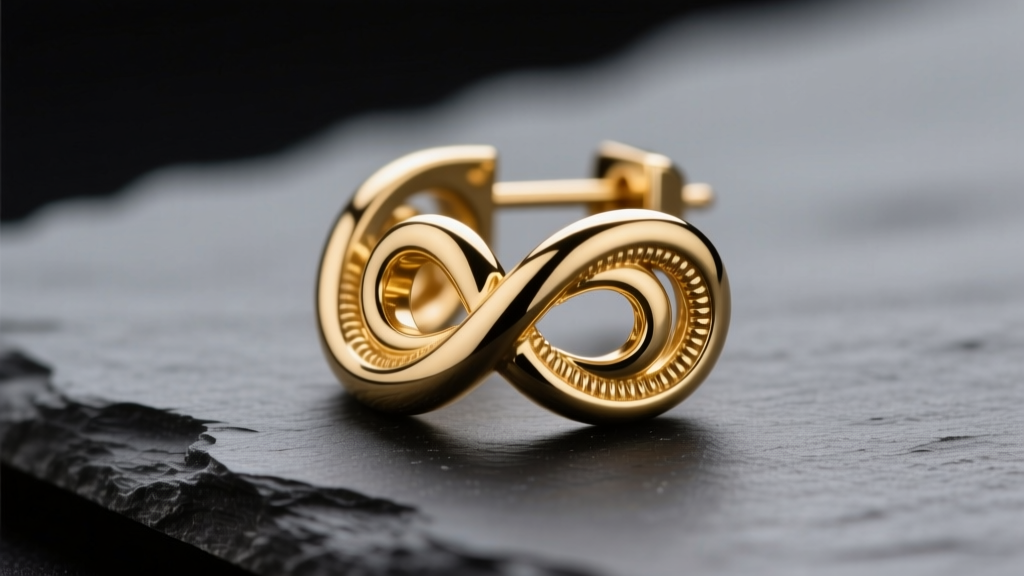
When it comes to securing your favorite studs and lightweight drops, the hardware on the back of the ear is just as critical as the gemstone on the front. French earring backs—commonly referred to as butterfly backs, friction backs, or push backs—remain the most ubiquitous securing mechanism in fine jewelry. However, not all friction backs are created equal. The metallurgical composition of the backing dictates its tension retention, hypoallergenic properties, and overall lifespan.
In this comprehensive guide, we analyze the material properties of french earring backs, comparing implant-grade titanium, solid gold alloys, surgical steel, and medical-grade polymers to help you make an informed, skin-safe choice.
The Mechanics of French Earring Backs
Before diving into materials, it is essential to understand the mechanical forces at play. A standard french earring back relies on a stamped or cast metal scroll featuring two tension loops. When pushed onto the earring post, these loops compress and grip the metal. The security of the backing is entirely dependent on the metal's yield strength and its ability to spring back to its original shape after repeated compression.
The earring post itself features a friction notch—a microscopic groove, typically 0.2mm deep, machined into the wire. The tension loops of the french back snap into this notch to prevent the earring from sliding off during daily movement. If the backing material is too soft, the loops will permanently deform (creep), leading to a loose fit and lost jewelry.
Material Breakdown: Metallurgy and Polymer Science
Implant-Grade Titanium (ASTM F136)
For sensitive ears and fresh piercings, implant-grade titanium is the undisputed champion. Specifically, you want to look for Ti-6Al-4V ELI (Extra Low Interstitial) certified to ASTM F136 standards. This alloy contains zero nickel and boasts a Vickers hardness of approximately 350 HV, meaning it will not lose its tension grip over time.
- Nickel Content: 0%
- Tension Retention: Exceptional; will not warp under normal use.
- Best For: Fresh piercings, severe metal allergies, and heavy sleepers.
- Price Range: $8 to $18 per pair for high-quality, precision-machined backs.
14k vs. 18k Solid Gold
Gold is a traditional favorite, but its purity drastically affects its mechanical performance. Pure 24k gold is far too soft for friction backs. Therefore, jewelers use alloys. 14k gold (58.5% pure gold) is alloyed with copper, silver, and zinc, giving it a hardness of roughly 150 HV. This provides excellent spring tension for the butterfly scroll.
Conversely, 18k gold (75% pure gold) is softer, with a hardness around 120 HV. While 18k french earring backs are luxurious and highly resistant to tarnish, they are prone to tension loss. If you frequently remove your earrings, 18k gold backs will eventually stretch out and require professional retightening or replacement. Note: Avoid white gold backs unless certified nickel-free, as nickel is frequently used to bleach the gold alloy.
316L Surgical Stainless Steel
Surgical steel is the most common material for mass-market fashion jewelry. While it is highly polished and resistant to corrosion, 316L steel contains between 8% and 12% nickel. According to the Association of Professional Piercers, the nickel release rate from 316L steel often exceeds the safe limits for prolonged skin contact, making it a poor choice for anyone with contact dermatitis or unhealed piercings.
Medical-Grade Silicone and Polymers
Silicone friction backs (often called 'earring stoppers' or 'O-rings') offer a modern alternative to metal. They provide immense friction against the post, making them nearly impossible to knock off accidentally. However, silicone is porous. It absorbs sebum, sweat, and dead skin cells, which can lead to bacterial buildup and foul odors if not cleaned weekly. Furthermore, exposure to isopropyl alcohol or harsh perfumes will cause the silicone to dry out, crack, and fail within a few months.
Performance and Durability Matrix
To help you visualize the trade-offs between different materials, we have compiled a performance matrix based on bench testing and metallurgical data.
| Material | Nickel Content | Vickers Hardness (HV) | Tension Lifespan | Avg. Cost |
|---|---|---|---|---|
| ASTM F136 Titanium | 0% | ~350 | 10+ Years | $12 - $18 |
| 14k Yellow Gold | 0% (Usually) | ~150 | 5 - 8 Years | $25 - $45 |
| 18k Yellow Gold | 0% (Usually) | ~120 | 2 - 4 Years | $40 - $75 |
| 316L Surgical Steel | 8% - 12% | ~220 | 5+ Years | $2 - $5 |
| Medical Silicone | 0% | N/A (Polymer) | 3 - 6 Months | $1 - $3 |
Gauge Sizing and Post Compatibility
A frequent cause of lost earrings and damaged jewelry is mismatched gauge sizing. The thickness of the earring post must perfectly match the internal diameter of the french earring back's scroll.
Standard Post Gauges
- 20 Gauge (0.81mm): The standard for most lightweight diamond studs, pearl earrings, and fine jewelry. A 20G post requires a precisely stamped 0.85mm internal scroll.
- 18 Gauge (1.02mm): Common for slightly heavier drops, cartilage studs, and vintage pieces.
- 16 Gauge (1.29mm): Rarely used for standard lobe studs, but found in some body jewelry and heavy gauge fashion earrings.
The Danger of Mismatching: Forcing a 20-gauge french back onto an 18-gauge post will permanently stretch the tension loops, ruining the back. Conversely, placing an 18-gauge back onto a 20-gauge post will result in a loose fit that slides right off the friction notch, guaranteeing a lost earring.
Troubleshooting Common Failure Modes
Even the highest quality french earring backs can fail if subjected to improper care or mechanical stress. Here is how to identify and resolve the most common issues:
1. Tension Loss (The 'Loose' Back)
Cause: Repeated pulling, bending the loops with fingernails, or using a softer metal like 18k gold.
Fix: For titanium or steel, you can gently squeeze the outer loops together using flat-nose nylon-jaw jewelry pliers to restore tension. For gold, take it to a jeweler to avoid scratching the metal or snapping the scroll.
2. Sebum and Debris Buildup
Cause: The dual-loop design of a butterfly back creates tiny crevices where skin oils and hair products accumulate, leading to a grey, waxy buildup.
Fix: Soak metal backs in a small ultrasonic cleaner with warm water and a drop of mild dish soap for three minutes. Avoid ultrasonic cleaning for silicone backs, as the high-frequency vibrations can cause micro-tears in the polymer.
3. Friction Notch Wear
Cause: Over years of use, the metal scroll can actually wear down the friction notch on the earring post itself, especially if the backing is made of a harder metal (like titanium) than the post (like high-karat gold).
Fix: If the post is smooth and no longer clicks into the backing, a bench jeweler can use a laser welder to add a microscopic bead of metal to the post, recreating the notch.
Expert Verdict: Choosing Your Backing
The ideal material for your french earring backs depends entirely on your lifestyle and skin sensitivity. If you suffer from contact dermatitis or are healing a new piercing, ASTM F136 implant-grade titanium is a non-negotiable necessity. Its superior hardness ensures the backing will outlast the earring itself.
For fine jewelry collectors who prioritize aesthetic cohesion, 14k solid gold backs offer the perfect balance of luxury and mechanical resilience. Reserve 18k gold backs for earrings that are rarely removed, and strictly avoid 316L surgical steel if you have any history of nickel sensitivities. Finally, keep a pack of medical-grade silicone stoppers on hand for travel or active days when maximum friction is required, but remember to replace them every few months to maintain optimal ear hygiene.


