What Is a Friction Back Earring? Cost & Value Guide
Learn what a friction back earring is, how they compare in cost, and if push-back studs offer the best budget value for daily fine jewelry wear.

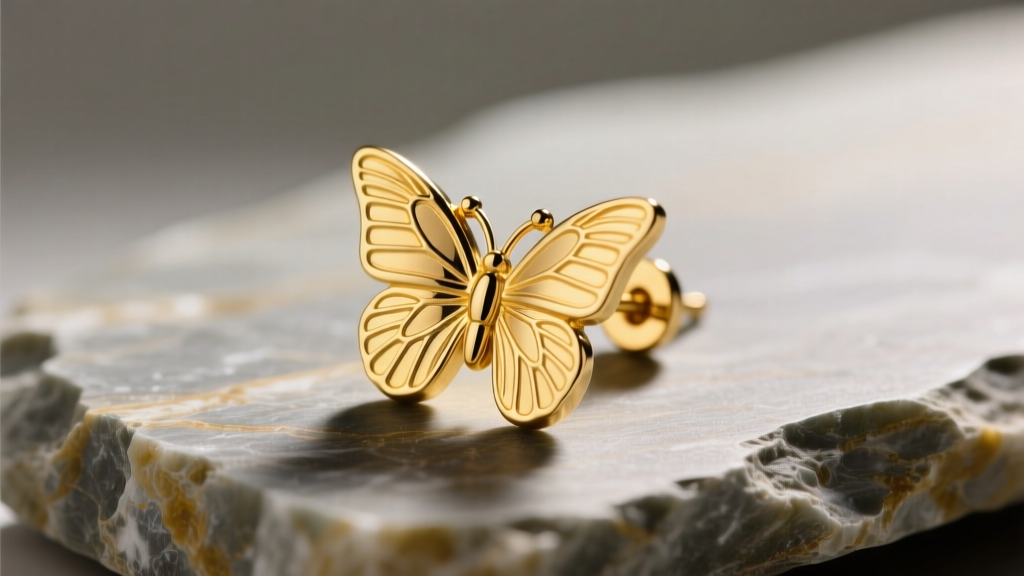
What Is a Friction Back Earring? The Mechanics Explained
When browsing fine jewelry or assessing your current collection, you might ask: what is a friction back earring? Commonly referred to as push backs, butterfly backs, or post clutches, friction backs are the most ubiquitous earring securing mechanism in the global jewelry market. The system relies on two primary components: a straight, notched metal post and a backing piece featuring two curled metal loops that create tension.
From a budget and value assessment perspective, understanding the metallurgy and mechanics of this design is crucial. The post is typically manufactured in standard wire gauges, most commonly 20-gauge (0.81mm) or 18-gauge (1.02mm) for fine jewelry. The backing piece slides onto the post, and the curled loops compress slightly against the notches, utilizing the metal's tensile memory (springback) to grip the wire. While they are the most cost-effective backing to produce, their long-term value depends entirely on the specific metal alloy used and the weight of the earring they are supporting.
Material Grades and the Budget Impact
The true cost of a friction back earring is not just the initial purchase price; it is the replacement cost, durability, and material integrity over time. According to the Gemological Institute of America (GIA), the alloy composition of precious metals drastically affects their hardness and spring properties. Pure 24k gold is far too soft to hold tension, which is why friction backs are alloyed with metals like copper, silver, and zinc to increase their Vickers hardness and yield strength.
When evaluating budget options, consumers often encounter base-metal backs plated with a microscopic layer of gold or rhodium. While these save money upfront (often included free with low-tier sterling silver earrings), they represent a poor long-term value. Once the plating wears off, the underlying brass or copper reacts with the sulfur and acids in human sweat, leading to structural degradation and skin irritation.
| Material Grade | Avg. Replacement Cost (Pair) | Tensile Memory | Corrosion Resistance | Estimated Lifespan |
|---|---|---|---|---|
| Plated Brass/Copper | $5 - $12 | Poor (Bends easily) | Very Low | 6 - 12 Months |
| Solid Sterling Silver | $15 - $25 | Fair (Softens over time) | Moderate (Tarnishes) | 2 - 4 Years |
| Solid 14k Gold | $35 - $60 | Excellent (High springback) | Very High | 10+ Years |
| Solid 18k Gold | $50 - $85 | Good (Slightly softer than 14k) | Very High | 8+ Years |
| Platinum (950) | $90 - $150 | Poor (Requires thick casting) | Exceptional | Lifetime |
As highlighted by industry analyses in Jewelers Circular Keystone (JCK), 14k gold remains the undisputed champion for friction backs. It offers the perfect balance of precious metal value and the mechanical stiffness required to maintain a tight grip on the earring post for decades without losing tension.
Hidden Costs: Failure Modes and the "Cheese-Cutter" Effect
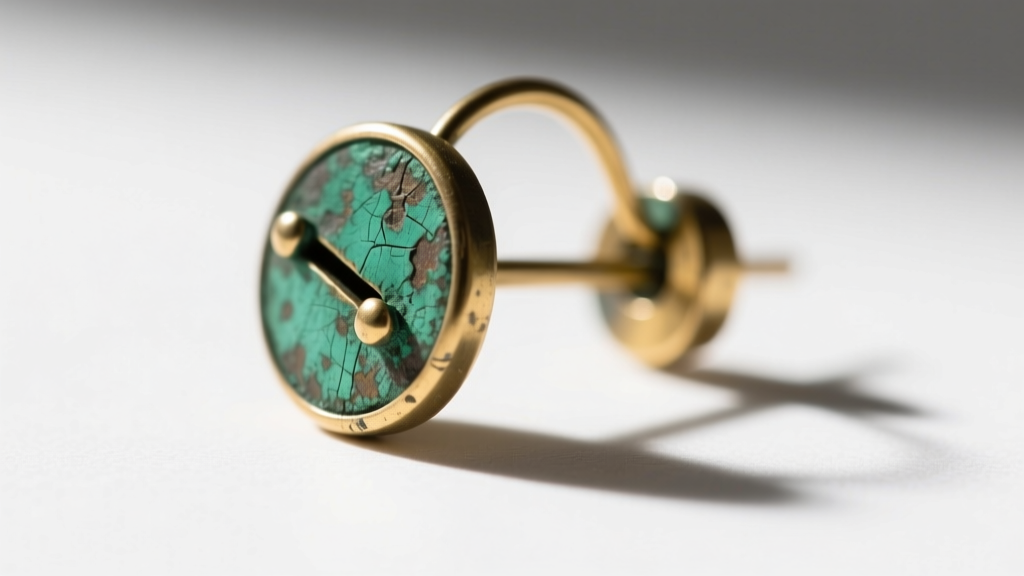
A cheap friction back can ultimately cost you the earring itself. When assessing the value of push-back studs, you must account for common mechanical failure modes that lead to lost jewelry. Budget shoppers should be aware of the following structural vulnerabilities:
- Tension Loss (Loop Spreading): Over time, repeatedly pushing and pulling the back onto the post causes the tension loops to spread apart. If the metal lacks adequate tensile memory (common in sterling silver and base metals), the back becomes loose and slides off the post during sleep or when removing clothing.
- Corrosion and Seizing: Plated base metals oxidize in the microscopic crevices of the butterfly loops. This creates a gritty buildup that increases friction artificially, eventually causing the back to seize onto the post or crumble under pressure.
- The "Cheese-Cutter" Effect: This is a severe failure mode where a heavy earring (e.g., a 4-gram diamond stud) is paired with a thin 22-gauge (0.64mm) post and a tight friction back. The concentrated downward pressure of the heavy backing causes the thin wire to slowly slice through the earlobe tissue over months of wear. To prevent this, always ensure heavy studs are fitted with 18-gauge (1.02mm) or 16-gauge (1.29mm) posts.
Expert Troubleshooting Tip: If your 14k gold friction back feels loose, do not discard it. You can restore its value by using a pair of flat-nose jewelry pliers to gently squeeze the two butterfly loops closer together, restoring the original factory tension.
Value Assessment: Friction Backs vs. Alternatives
Is a friction back the best use of your jewelry budget, or should you invest in upgraded mechanisms? To determine the true value, we must compare them to their primary competitors: screw backs and secure-locking backs (like the Chrysmela or La Pousette mechanisms).
"While screw backs offer superior security for high-carat diamond studs, they require precise threading alignment and cost up to 40% more to manufacture. For everyday, lightweight jewelry, the friction back remains the most economically rational choice."
Screw backs require a threaded post, which is inherently weaker than a solid, smooth wire post because the threading removes metal mass. Furthermore, if the threads strip or cross-thread, the entire post and back must be replaced by a jeweler, costing upwards of $100. Friction backs, conversely, utilize a solid, smooth post that is structurally stronger and allows the backing to be replaced independently for a fraction of the cost.
However, for heirloom pieces or diamond studs valued over $3,000, the budget assessment shifts. The $50 premium for a secure-locking mechanism is a negligible insurance cost against losing a high-value asset. For everyday fashion jewelry, hoops, and lightweight studs under 2 grams, the friction back offers unbeatable cost-efficiency.
Expert Verdict: Maximizing Your Earring Budget
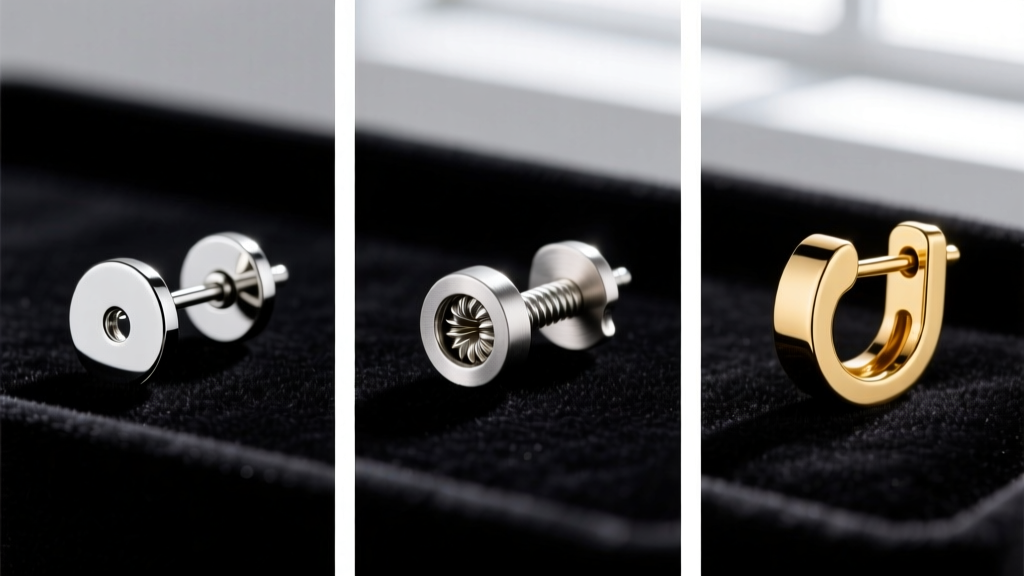
So, what is a friction back earring's true place in a smart jewelry budget? It is the workhorse of the earring industry, offering an optimal blend of low manufacturing cost, structural post integrity, and ease of use. To maximize your value, adhere to these strict purchasing rules:
- Never buy plated friction backs for sensitive ears or daily wear. The cost of treating contact dermatitis outweighs the savings of cheap jewelry. Opt for solid 14k gold or implant-grade titanium (ASTM F136).
- Match the gauge to the weight. Demand 18-gauge posts for any earring featuring a center stone larger than 5mm or weighing more than 2 grams to prevent earlobe tearing.
- Factor in maintenance. Clean your friction backs weekly with warm water and mild dish soap. Avoid ultrasonic cleaners for anything other than solid, unplated gold or platinum, as the high-frequency vibrations will strip the flash plating off budget alternatives.
Ultimately, a solid 14k gold friction back is a highly cost-effective, reliable, and structurally sound choice for the vast majority of earring styles. By understanding the metallurgy and gauge requirements, you can confidently assess the value of any push-back earring on the market, ensuring your budget is spent on lasting quality rather than disposable accessories.


