The 2026 Fringe Earring Value Guide: Budget to Luxury
Discover if a designer fringe earring is worth the investment. We break down 2026 pricing tiers, material grades, and hidden earlobe strain costs.

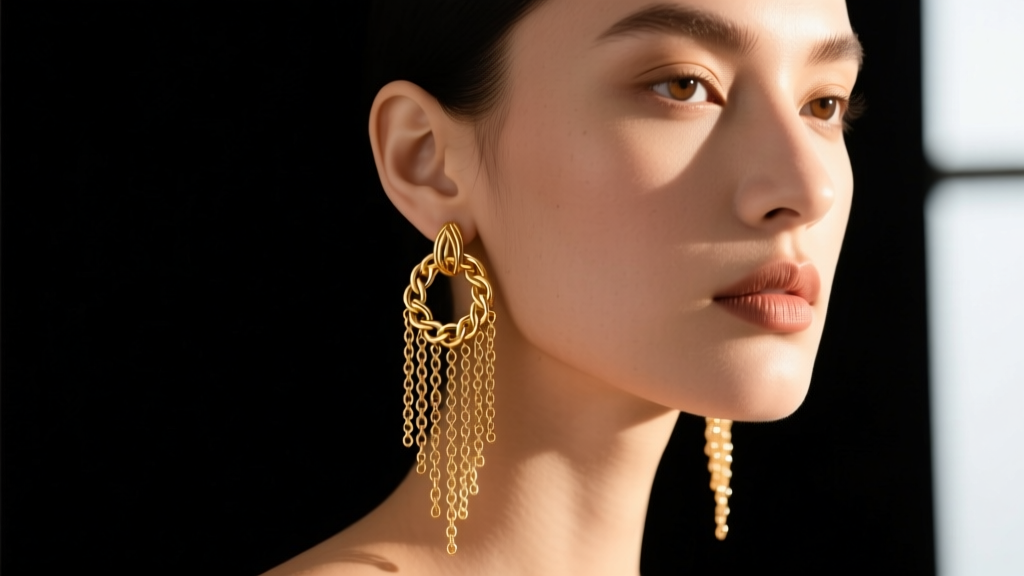
The classic fringe earring has evolved dramatically by 2026, transitioning from a fleeting festival trend to a staple of modern fine jewelry. However, as the market floods with options ranging from $15 fast-fashion pairs to $1,500 luxury designer pieces, consumers are left asking a critical question: where does the true value lie? Evaluating a fringe earring requires looking far beyond the initial price tag. You must assess material longevity, structural engineering, and even the hidden physiological costs of wearing heavy jewelry. This comprehensive value assessment breaks down the anatomy, pricing tiers, and long-term return on investment (ROI) for every type of fringe earring on the market today.
The Anatomy of a Fringe Earring: What Drives the Cost?
Unlike a simple stud or hoop, a fringe earring is a complex assembly of moving parts. The cost disparity between budget and luxury options is rarely just about the brand name; it is fundamentally tied to the manufacturing techniques used to assemble the tassel components. When a manufacturer cuts corners on the structural integrity of the fringe, the earring becomes a tangled, broken mess within weeks.
Chain Link Integrity and Soldering
The most critical point of failure in any fringe earring is the jump ring—the tiny metal loop that connects the delicate chains to the main earring cap or housing. In budget-tier earrings (typically under $30), these jump rings are simply pressed shut. Over time, the natural friction of walking and turning your head causes these unsoldered rings to pull apart, resulting in lost chains and an asymmetrical, ruined silhouette. Mid-tier and luxury jewelers utilize laser-soldered jump rings. This microscopic weld ensures the ring remains permanently closed, meaning the chain itself will likely snap before the connection point fails. This single manufacturing step adds significant labor costs but exponentially increases the lifespan of the piece.
Post Gauge and Hardware Engineering
The wire gauge of the earring post is another hidden value indicator. Standard fashion earrings use a 20-gauge (0.8mm) wire. However, because fringe earrings carry substantial weight, a 20-gauge wire is highly susceptible to bending or snapping under the leverage of the swinging chains. High-value fringe earrings are engineered with an 18-gauge (1.0mm) or even 16-gauge (1.2mm) post. Furthermore, luxury tiers often abandon the standard butterfly clutch—which offers a minimal surface area against the earlobe—in favor of omega backs or custom-jumbo friction backs that distribute the weight across a wider area of the ear.
2026 Market Tiers: Budget vs. Mid-Tier vs. Luxury
To accurately assess value, we must categorize the market into three distinct tiers based on materials, manufacturing origin, and expected lifespan. The following table outlines what you can realistically expect from each price bracket in the current market.
| Value Tier | Price Range (Pair) | Primary Materials | Plating / Purity | Expected Lifespan |
|---|---|---|---|---|
| Budget / Fast Fashion | $15 - $45 | Brass, Zinc Alloy, Stainless Steel | Flash Plated (< 0.1 microns) | 3 - 6 Months |
| Mid-Tier / Demi-Fine | $60 - $150 | 925 Sterling Silver, Recycled Brass | Gold Vermeil (2.5+ microns) | 2 - 5 Years |
| Luxury / Fine Jewelry | $300 - $1,500+ | Solid 14k/18k Gold, Platinum | Solid Alloy (No plating) | Lifetime / Heirloom |
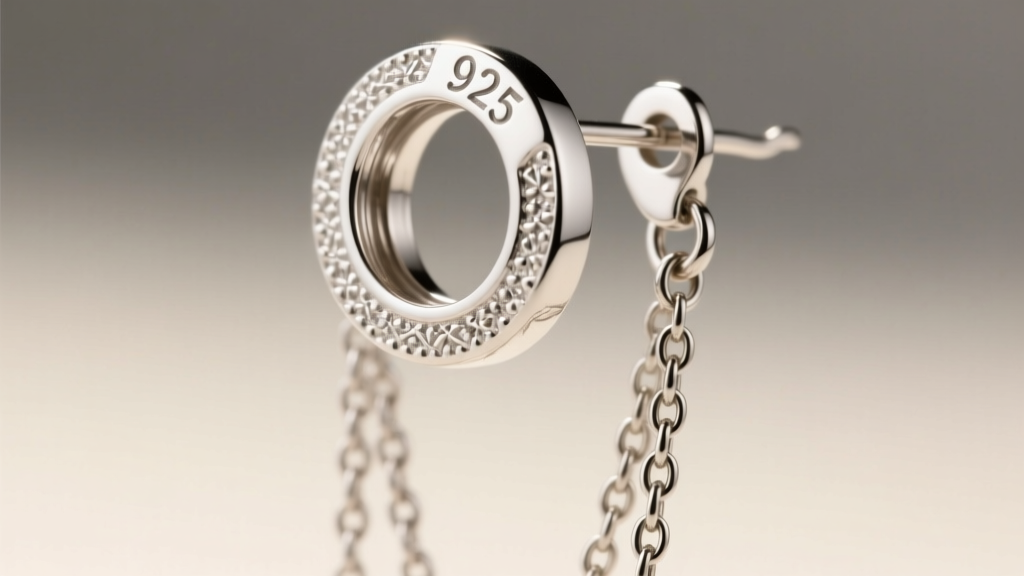
The mid-tier 'demi-fine' category currently offers the highest ROI for the average consumer. Brands in this space utilize a sterling silver base, which prevents the green skin oxidation associated with budget brass alloys, while applying a thick layer of gold vermeil. According to the Federal Trade Commission (FTC) Jewelry Guides, true gold vermeil must feature a sterling silver base and a gold plating thickness of at least 2.5 microns. This thickness is crucial; anything less will wear through to the silver base within months of daily friction.
The Hidden Cost: Earlobe Strain and Repair
When calculating the true cost of a fringe earring, you must factor in the physiological toll heavy jewelry takes on your body. The swinging motion of a long fringe earring creates a pendulum effect, multiplying the downward force on the earlobe piercing. Over time, this repetitive stress causes micro-tears in the collagen matrix of the earlobe, leading to permanent stretching, thinning, and eventually, complete lobe splitting.
Weight Thresholds and Prevention
Dermatologists and piercing experts generally agree that any earring exceeding 15 grams per side requires mechanical support. Many budget and mid-tier fringe earrings easily weigh between 20 and 35 grams. The American Academy of Dermatology frequently notes that repetitive trauma from heavy jewelry is a leading cause of acquired earlobe deformities, which require surgical repair costing anywhere from $500 to $1,500 per lobe. Therefore, a $40 pair of heavy brass fringe earrings could theoretically cost you thousands in future reconstructive surgery.
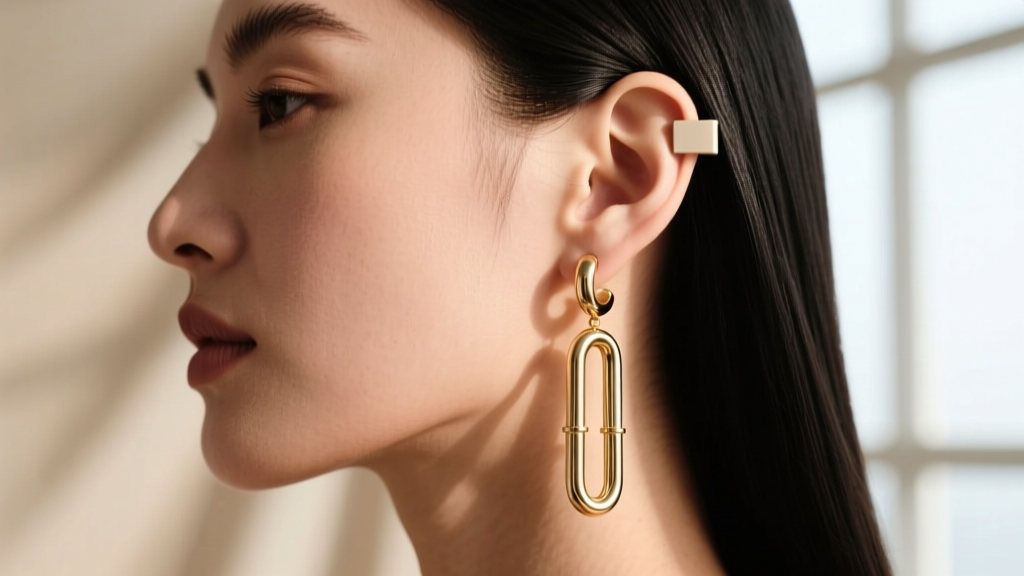
To mitigate this hidden cost without sacrificing the dramatic look of a fringe earring, consumers should look for 'hollow-tube' fringe designs. By using hollow metallic micro-tubes instead of solid wire chains, jewelers can reduce the weight of a 3-inch fringe earring from 30 grams down to a highly manageable 8 grams. Additionally, investing in invisible earlobe support patches (such as BlingDots) is a non-negotiable requirement for wearing heavy vintage or solid gold fringe pieces safely.
How to Inspect a Fringe Earring Before Purchasing
Whether you are shopping online or examining a piece in a boutique, use this expert checklist to determine if the earring is engineered for longevity or destined for the landfill.
- The Tangle Test: Gently shake the earring. High-quality fringe chains are weighted and finished in a way that allows them to fall back into alignment. Poorly finished chains with rough microscopic burrs will immediately snag and tangle.
- The Hallmark Check: Look for a laser-engraved '925' stamp on the post or cap. If the piece is gold-toned and stamped '925', it is vermeil (provided the plating is thick enough). Avoid pieces marked 'Tibetan Silver' or 'Alpaca', which are nickel-heavy alloys known to cause severe contact dermatitis.
- The Clasp Mechanism: For heavier fringe styles, a simple fishhook wire is inadequate. Look for a secure leverback closure or a post with a jumbo silicone or metal omega clutch to prevent accidental loss.
- The Cap Finish: Inspect the inside of the metal cap that houses the chain origins. It should be smooth and polished. Rough, unfinished interiors will catch and pull on fine hair.
Final Verdict: Maximizing Your ROI
If you view jewelry purely as a seasonal accessory, the budget tier offers immediate visual gratification, provided you accept that the plating will degrade and the chains will tangle. However, from a strict value assessment perspective, the mid-tier demi-fine market is the undisputed winner for 2026. By spending between $80 and $120 on a pair of 18-gauge, 2.5-micron gold vermeil fringe earrings with soldered jump rings, you secure a piece that will maintain its structural integrity and aesthetic brilliance for years. Avoid the hidden medical costs of heavy jewelry by prioritizing hollow-tube engineering and utilizing earlobe supports, ensuring your investment remains both beautiful and physically sustainable.


