Fulani Earring Trends 2026: Sizing, Metals & Styling
Explore 2026 Fulani earring trends, from traditional brass to modern 14k gold. Discover sizing, gauge specs, and lobe health tips for this iconic hoop.

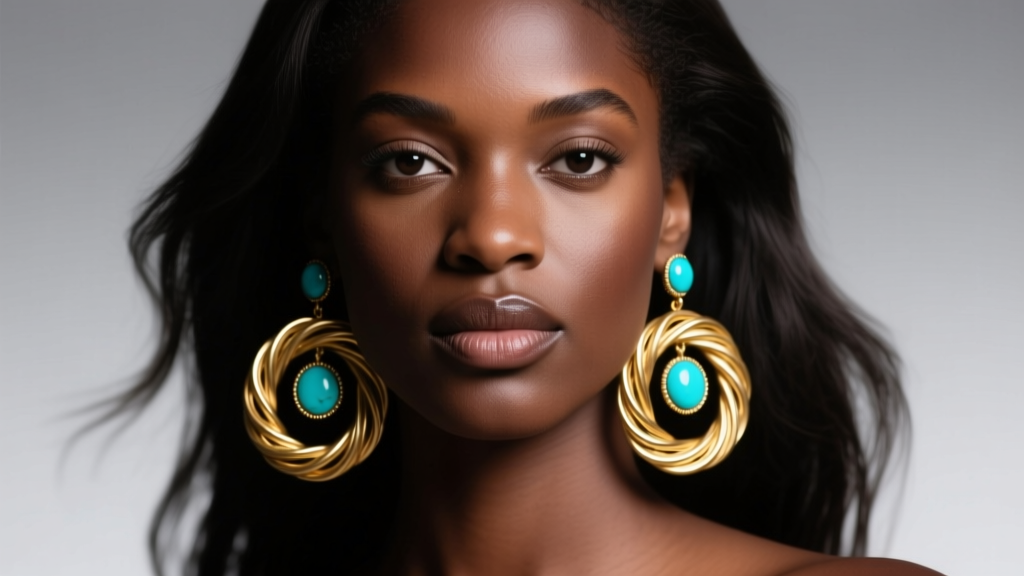
The Fulani earring—historically known as Kwottone or Dibia—has transcended its origins as a marker of nomadic wealth in West Africa to become a staple of global high fashion and streetwear. As we navigate the 2026 jewelry landscape, the iconic elongated, twisted teardrop silhouette is experiencing a massive renaissance. However, the modern iteration of the Fulani earring is no longer just a direct replica of ancestral brass designs; it is a masterclass in metallurgical upgrades, ergonomic engineering, and proportional styling.
At Jewel Style Radar, we are tracking a distinct shift away from heavy, unyielding traditional brass toward lightweight, hypoallergenic alloys that preserve the dramatic visual impact of the Fulani hoop without compromising lobe health. This comprehensive trend analysis breaks down the anatomy, material science, and styling frameworks you need to master the Fulani earring in 2026.
The Anatomy and Gauge Specifications
The defining characteristics of a true Fulani earring include an elongated "boat" or teardrop shape, a central twisted wire motif designed to catch the light, and a focal bead (traditionally amber, glass, or turquoise) resting at the bottom curve. While the aesthetic remains rooted in the heritage of the Fulani (Peul) people of Mali, Senegal, and Guinea, the structural engineering has evolved to accommodate modern piercing standards.
The Gauge Dilemma: Traditional vs. Modern
Historically, West African artisans crafted these earrings from solid brass or copper, utilizing thick 14-gauge (1.6mm) or 12-gauge (2.0mm) wire hooks. This thickness was necessary to support the immense weight of the metal and prevent the soft brass from snapping. However, standard modern lobe piercings are typically 20-gauge (0.81mm) or 18-gauge (1.02mm). Forcing a 14-gauge wire through an 18-gauge piercing causes micro-tearing and severe inflammation.
In 2026, premium jewelers have solved this by employing a hybrid soldering technique. The visual body of the earring retains the chunky, twisted 12-gauge aesthetic, but the actual post that passes through the ear is a hardened, 18-gauge stainless steel or 14k gold French hook. This provides the structural integrity required to hold a large hoop while remaining perfectly compatible with standard piercings.
Material Matrix: Moving Beyond Brass
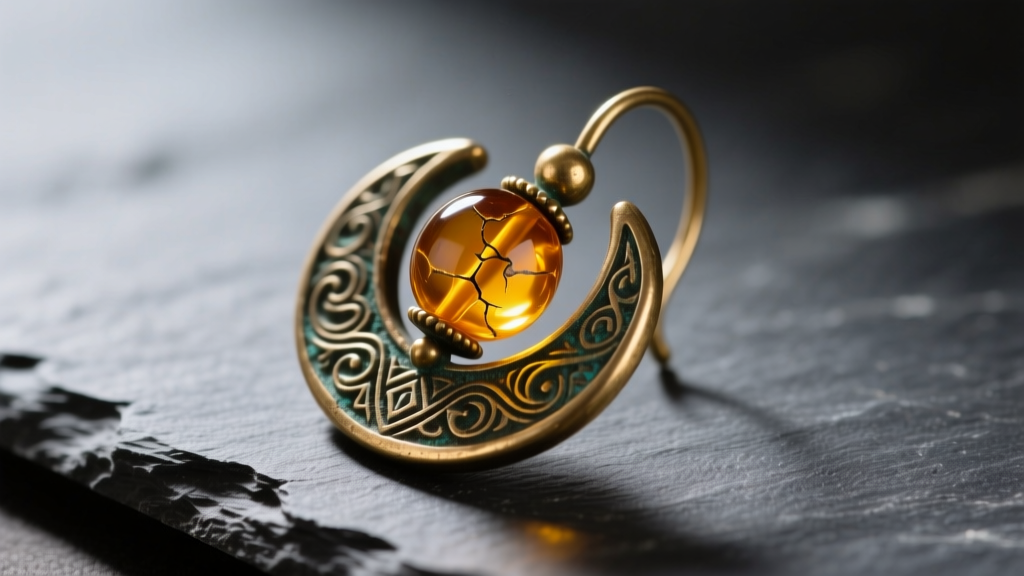
Traditional brass Fulani earrings are culturally significant and visually striking, but they come with inherent drawbacks: they are exceptionally heavy, prone to severe oxidation (tarnishing), and the copper content frequently causes contact dermatitis or the dreaded "green skin" effect. The 2026 market has pivoted toward advanced materials that prioritize wearability and skin safety.
| Material Grade | Avg. Weight (3-inch Hoop) | 2026 Price Range | Tarnish & Allergy Profile | Best For |
|---|---|---|---|---|
| Traditional Solid Brass | 35 - 50 grams | $25 - $60 | High tarnish; Copper allergy risk | Collectors, short-term wear |
| 18k Gold Vermeil (Sterling Core) | 18 - 24 grams | $90 - $180 | Moderate tarnish; Hypoallergenic if thickly plated | Everyday fashion, trend adopters |
| Solid 14k Gold (Hollow-cast) | 10 - 14 grams | $450 - $1,200 | Tarnish-free; Highly biocompatible | Heirloom investment, sensitive ears |
| Grade 23 Titanium (Ti-6Al-4V ELI) | 6 - 9 grams | $75 - $150 | Zero tarnish; 100% Nickel-free | Hyper-sensitive ears, oversized silhouettes |
According to standards outlined by Jewelers of America, buyers seeking gold vermeil must ensure the plating is at least 2.5 microns thick over a sterling silver base to prevent rapid wear-through. For those with severe metal sensitivities, the emergence of Grade 23 Titanium (an aerospace-grade alloy) in jewelry casting has been the breakout trend of 2026, allowing for massive 4-inch Fulani hoops that weigh less than a standard pair of denim jeans buttons.
Lobe Health and the "Cheese-Cutter" Effect
The most critical failure mode of wearing oversized Fulani earrings is lobe elongation, commonly referred to in dermatology as the "cheese-cutter effect." When a heavy earring (over 25 grams) rests on a thin wire, the downward gravitational force concentrates on a microscopic surface area of the earlobe, slowly slicing through the tissue over time.
2026 Ergonomic Styling Hacks
- Silicone Support Patches: Invisible, medical-grade silicone lobe patches (such as BlingWraps) distribute the weight of a 40-gram brass Fulani hoop across the entire back of the earlobe, reducing point-pressure by up to 80%.
- Electroforming Technology: Modern jewelers use electroforming to create a microscopic shell of 14k gold over a wax model, which is later melted out. This results in a massive, voluminous Fulani boat shape that is completely hollow and feather-light.
- The 10-Gram Rule: For daily wear exceeding four hours, dermatologists recommend keeping earring weight under 10 grams. Reserve heavy, solid brass pieces for evening events or photoshoots lasting under two hours.

Proportional Styling and Face Shape Pairing
The elongated, sweeping lines of the Fulani earring make it a powerful tool for facial contouring. However, because the silhouette is inherently dramatic, sizing must be calibrated to the wearer's proportions and neckline.
The Sizing Framework
Round Faces: Opt for the elongated teardrop variation (3 to 4 inches in length). The vertical drop draws the eye downward, creating an optical illusion of a longer, more angular jawline. Avoid the wider, circular "boat" shapes, which can accentuate facial width.
Square Faces: Choose medium-sized hoops (2 to 2.5 inches) with softer, rounded curves and a pronounced central twist. The organic curves of the twisted wire soften strong mandibular angles.
Heart-Shaped Faces: A classic 2-inch Fulani hoop with a heavier bottom bead adds visual weight to the lower half of the face, perfectly balancing a narrower chin and wider forehead.
Neckline Synergy
Because Fulani earrings command attention, they require adequate negative space. In 2026, the prevailing styling rule is to pair large Fulani hoops with structured, high-neck garments (like a silk mock-neck or a sharp blazer) or completely bare shoulders (strapless or halter tops). Wearing them with busy, ruffled collars or heavy statement necklaces creates visual clutter and diminishes the architectural beauty of the earring.
Cultural Appreciation vs. Appropriation
As the Fulani earring cements its place in global trend cycles, the conversation around ethical sourcing and cultural respect has never been more vital. The Smithsonian National Museum of African Art notes that for the Fulani people, gold and brass jewelry are not mere decorations; they are portable wealth, deeply tied to nomadic identity, marriage dowries, and social status.
"True appreciation in 2026 means moving beyond fast-fashion knockoffs. It involves seeking out fair-trade cooperatives in Dakar and Bamako, or supporting contemporary West African designers who are actively reinterpreting their own heritage with modern metallurgical standards."
When shopping, look for brands that explicitly credit the Peul/Fulani origin of the design and provide transparent supply chain data. Avoid mass-market retailers that label these pieces simply as "boho twist hoops," erasing the rich cultural lineage of the garment.
The 2026 Forecast: Miniaturization and Mixed Metals
While the massive 4-inch statement hoop remains the undisputed icon of the style, the cutting edge of the 2026 trend is miniaturization. We are seeing "Fulani Huggies"—1-inch, tightly curved twisted hoops designed for cartilage piercings and helixes. Additionally, mixed-metal oxidation is trending heavily; jewelers are intentionally oxidizing the recessed grooves of sterling silver Fulani earrings while polishing the raised twists, creating a high-contrast, antique aesthetic that bridges the gap between ancient artifact and futuristic streetwear.


