Full Earring Cuff Buying Guide: Fit, Metals & Styles
Discover how to choose the perfect full earring cuff. Our buying guide covers gauge thickness, hypoallergenic metals, and tension-fit adjustments.

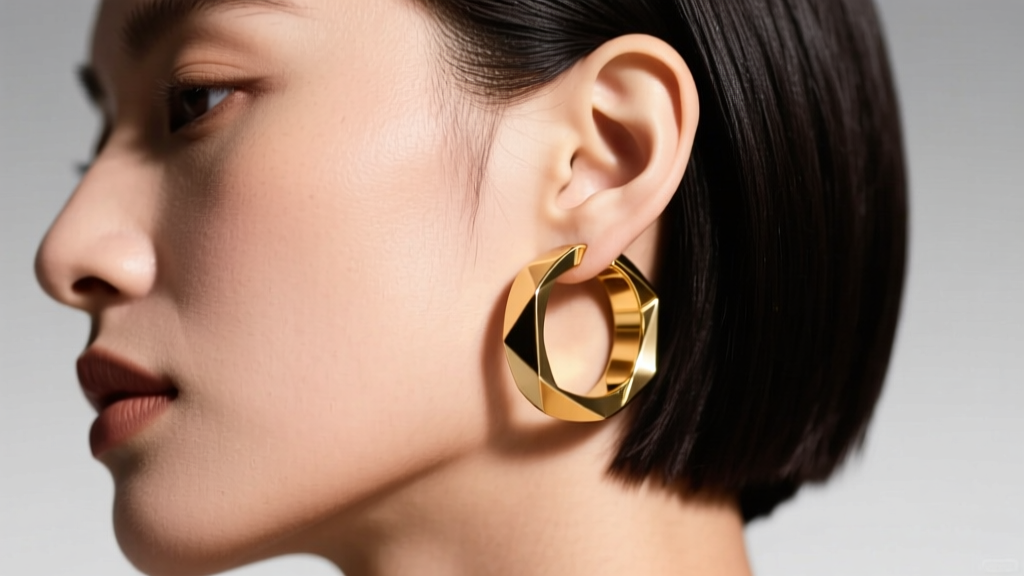
The Anatomy of a Full Earring Cuff
A full earring cuff is an ambitious, statement-making piece of jewelry designed to trace the natural architecture of the ear. Unlike standard studs or simple hoops, a full ear wrap typically bridges multiple zones of the ear—connecting the lobe to the helix, or wrapping continuously around the outer cartilage ridge. Because these pieces cover more surface area and interact with complex ear geometries, buying one requires a much deeper understanding of metallurgy, tension mechanics, and structural integrity than purchasing standard earrings.
Whether you are shopping for a non-piercing tension wrap or a chain-linked lobe-to-helix piece, the margin for error is small. A poorly designed full earring cuff will either slip off the moment you turn your head or cause cartilage fatigue through improper pressure distribution. This comprehensive buying guide breaks down the exact specifications, material grades, and gauge thicknesses you need to look for to ensure your investment is both secure and comfortable.
Three Primary Styles of Full Ear Wraps
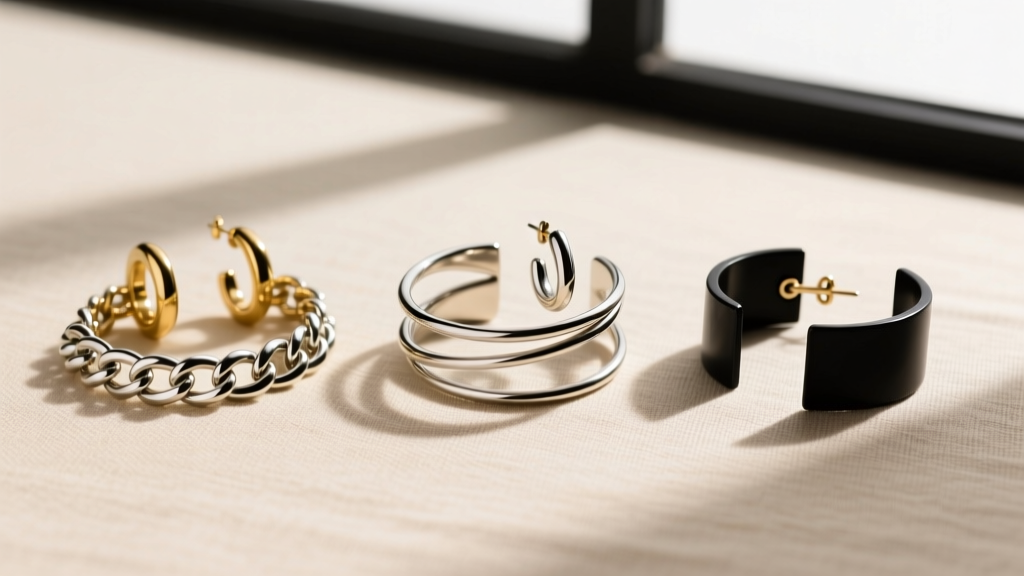
Before evaluating metals, you must determine which structural style suits your piercing status and lifestyle. The market generally categorizes these pieces into three distinct types:
1. Chain-Linked Lobe-to-Helix Cuffs
This style requires at least one standard lobe piercing and one upper helix piercing. A delicate chain (usually 1.2mm to 1.5mm wide) bridges the gap between a lobe stud and a helix cuff or stud. Best for: Those who want the "full ear" aesthetic with zero risk of the jewelry falling off, as both anchor points are secured through actual piercings. Failure Point: Hair snagging. Fine link chains (like cable or box chains) easily catch on stray hairs, which can yank the helix piercing and cause migration or tearing.
2. Tension-Fit Cartilage Wraps
These require zero piercings. They rely on the outward spring tension of the metal to grip the outer edge of the helix or conch. Best for: Non-pierced individuals or those wanting temporary, dramatic styling. Failure Point: Metal creep and tension loss. If the alloy is too soft, the cuff will slowly expand over time and lose its grip.
3. Continuous Wire Ear Wraps
A single, unbroken piece of wire that threads through a lobe piercing and wraps entirely around the outer ear ridge, ending in a decorative coil or cuff at the top. Best for: Minimalists who want a seamless, sculptural look. Failure Point: Improper bending. Because the wire must be shaped to your specific ear, over-manipulation can lead to metal fatigue and snapping.
Material Grades: What to Look For (And What to Avoid)
When buying a full earring cuff, the metal dictates both the safety of your skin and the longevity of the piece's fit. According to the Association of Professional Piercers (APP), only specific grades of metal should be worn in prolonged contact with the skin, especially in high-friction areas like the outer ear ridge.
| Material | Grade / Standard | Tension Retention | Hypoallergenic? | Avg. Price Range |
|---|---|---|---|---|
| Implant-Grade Titanium | ASTM F136 | Excellent (High springback) | Yes (Nickel-free) | $45 - $120 |
| Niobium | Commercially Pure (CP) | Good (Highly malleable) | Yes | $30 - $80 |
| Solid Gold | 14k or 18k (Nickel-free alloy) | Moderate (Prone to creep) | Mostly (Check alloys) | $150 - $450+ |
| Sterling Silver | 925 | Poor (Work-hardens quickly) | No (Contains copper) | $25 - $60 |
| Brass / "Tibetan Silver" | Unregulated | Variable | No (High nickel/lead risk) | $10 - $25 |
Expert Insight: If you are buying a non-piercing tension cuff, always opt for ASTM F136 Titanium or Niobium. Gold is inherently a softer metal; a solid 18k gold tension cuff will slowly stretch out (a phenomenon known as metallurgical creep) and lose its grip on your cartilage within a few months of daily wear. Furthermore, as noted by the Gemological Institute of America (GIA), gold alloys often contain nickel or zinc for hardness, which can trigger severe contact dermatitis when pressed tightly against the thin skin of the helix.
Gauge Thickness and Metal Fatigue
The thickness of the wire—measured in American Wire Gauge (AWG)—is the most overlooked factor when purchasing a full earring cuff. The gauge determines the structural integrity of the piece and how it distributes pressure across your ear.
- 22G to 20G (0.64mm - 0.81mm): Avoid these for full ear wraps. Wire this thin lacks the structural memory to maintain tension. It will bend out of shape if you brush your hair too vigorously and will eventually snap from metal fatigue.
- 18G (1.02mm): The absolute sweet spot for continuous wire wraps and tension cuffs. It provides enough rigidity to hold its shape while remaining lightweight enough not to drag down the upper ear.
- 16G (1.29mm): Excellent for chain-linked anchor points (like the lobe stud or helix clicker), but generally too thick and rigid for the wrapping portion of a continuous cuff. It will exert too much outward pressure, leading to cartilage soreness.
Understanding Work Hardening
When you bend a metal wire to fit your ear, you are altering its crystalline structure—a process called work hardening. Every time you bend the wire back and forth, it becomes harder but significantly more brittle. If you buy a continuous wire full earring cuff, you should only bend it once or twice to achieve your custom fit. Repeatedly adjusting it will cause microscopic fractures, leading to a sudden snap.
Sizing, Adjustment, and Troubleshooting
Achieving a secure fit with a non-piercing full earring cuff requires precision. Most high-quality tension cuffs are sold with a "universal" fit, meaning you must customize the tension band to your specific helix ridge.
The Proper Adjustment Technique
Never use your bare fingers to squeeze the tension band of a high-end cuff; the oils from your skin can degrade certain patinas, and uneven pressure will warp the decorative elements. Never use standard steel jewelry pliers, as the steel teeth will permanently mar and scratch the metal.
"Always use nylon-jaw pliers when adjusting the tension band of a full ear wrap. Apply pressure only to the plain wire section behind the ear, never near the gemstone settings or the decorative front-facing coils." — Master Bench Jeweler
Troubleshooting Common Fit Issues
Issue: The cuff slips off when I talk or chew.
Cause: The jaw hinge (TMJ) sits directly below the ear canal and subtly shifts the shape of your lower cartilage when you speak. If your cuff is sitting too low on the anti-helix, jaw movement will push it off.
Solution: Reposition the cuff higher up on the rigid helix ridge, away from the mobile lower cartilage.
Issue: My cartilage aches after two hours of wear.
Cause: The tension is too high, or the wire gauge is too thick (16G or lower), creating a localized pressure point that restricts blood flow to the skin.
Solution: Gently expand the tension band using nylon-jaw pliers, or switch to a lighter, 18G titanium alternative.
Issue: The chain on my lobe-to-helix wrap keeps tangling in my hair.
Cause: The chain links are too wide or feature open jump rings.
Solution: Upgrade to a micro-box chain or a snake chain, both of which feature a smooth, continuous surface profile that allows hair to slide off rather than catch.
Final Buying Checklist
Before adding a full earring cuff to your cart, run it through this final E-E-A-T checklist to ensure you are getting a piece that will last:
- Metal Verification: Is it explicitly listed as ASTM F136 Titanium, Niobium, or solid 14k/18k gold? (Avoid vague terms like "surgical steel" or "silver-plated").
- Gauge Check: Is the wrapping wire between 18G and 20G? (18G preferred).
- Setting Security: If it features gemstones, are they bezel-set or prong-set? (Bezel is vastly superior for ear wraps, as prongs will constantly snag on clothing and hair).
- Adjustability: Does the brand provide a tension-adjustment guide or include a nylon shaping tool?
By prioritizing structural mechanics and metallurgical quality over fast-fashion aesthetics, you can find a full earring cuff that not only looks breathtaking but functions flawlessly as an extension of your personal style.


