Expert Buying Guide: Choosing Garnet Bead Earrings
Discover what to look for when buying garnet bead earrings. Learn about stone grades, metal pairings, wire gauges, and pricing in our expert guide.

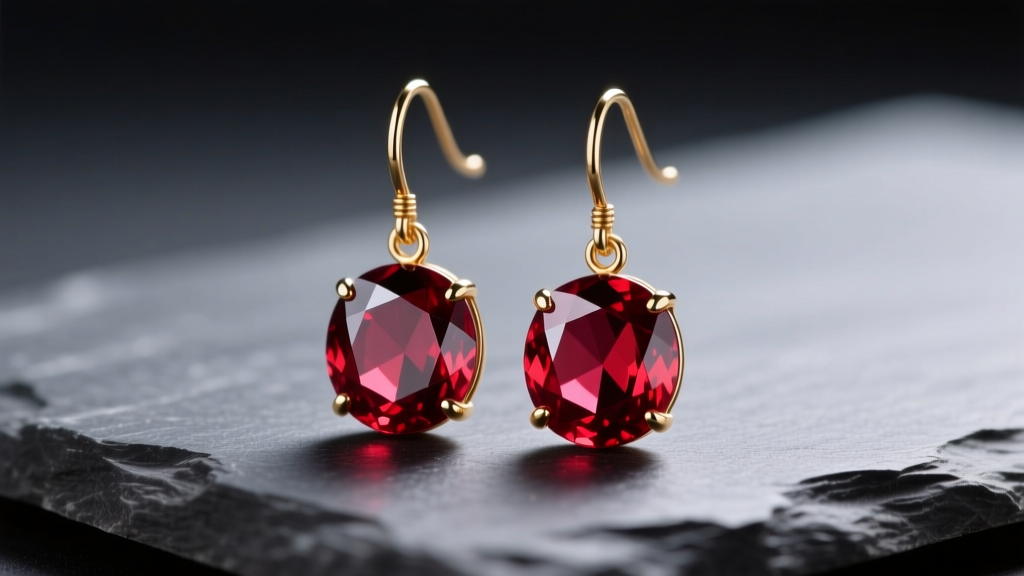
The Gemology of Garnet Beads: Beyond the Birthstone
When most consumers think of garnet, they envision the standard deep red gemstone associated with January birthdays. However, as a buyer evaluating garnet bead earrings, you must understand that 'garnet' is not a single mineral, but a complex group of silicate minerals. According to the Gemological Institute of America (GIA), the garnet group includes several distinct species, each with unique optical properties, hardness levels, and market values. Understanding these distinctions is the first step in separating high-quality artisan jewelry from mass-produced commercial accessories.
In the realm of bead earrings, you will predominantly encounter two species: Almandine and Pyrope. Almandine is the most common and affordable, characterized by its deep, sometimes slightly brownish or purplish-red hue. Pyrope, on the other hand, is highly prized for its pure, vibrant red color without the brown modifiers. A third, rarer option is Rhodolite, a hybrid of pyrope and almandine that yields a stunning raspberry or purplish-red bead, usually commanding a premium price in fine jewelry markets.
Evaluating Bead Quality: Color, Clarity, and Calibration
The Importance of Calibration and Polish
Unlike faceted gemstones where precision cutting dictates the price, garnet beads are evaluated on their spherical symmetry, surface polish, and drill hole quality. When shopping for premium garnet bead earrings, look for 'calibrated' beads. This means every bead in the pair has been machine-cut or carefully sorted to match exact millimeter dimensions (e.g., precisely 6.0mm). Uncalibrated or 'nugget' beads are cheaper but result in asymmetrical earrings that look unbalanced on the ear.
Surface polish is another critical E-E-A-T indicator. High-grade AAA garnet beads should have a glass-like, vitreous luster. Run your fingers over the bead (or examine macro photos); any pitting, dull spots, or visible grinding marks indicate lower-tier commercial tumbling. Furthermore, inspect the drill holes. Poorly drilled beads will have chipped or 'blown-out' edges at the entry and exit points. These micro-fractures not only ruin the aesthetic but become weak points where the bead can eventually split under the tension of wire wrapping.
Clarity and the 'Sleepy' Bead Phenomenon
Garnets are Type II clarity gems, meaning they naturally form with inclusions. In faceted stones, heavy inclusions are penalized. In beads, however, minor rutile needles or zircon halos are acceptable and prove natural origin. What you must avoid is a 'sleepy' or milky appearance. This cloudiness is caused by massive internal fracturing or microscopic liquid inclusions that scatter light, robbing the bead of its signature deep red transparency. Always hold the bead up to a direct light source; it should glow like a dark ruby, not look like opaque red glass.
Construction and Hardware: Preventing the 'Wire Saw' Effect
The most common failure mode in bead earrings is not the metal breaking, but the bead itself cracking or snapping off the wire. This is often due to the 'wire saw' effect. Garnet ranks between 6.5 and 7.5 on the Mohs hardness scale. If a jeweler uses a hard, unpolished base metal wire or aggressively wraps a thick gauge wire through a tight 0.8mm drill hole, the metal acts like a saw against the stone every time the earring moves. Over months of wear, the wire widens the drill hole, creates internal stress, and eventually causes the bead to fracture.
To prevent this, expert jewelers use specific wire gauges and techniques:
- 22-Gauge (0.64mm) Wire: The industry standard for 4mm to 6mm garnet beads. It provides enough structural integrity to hold a wrapped loop while leaving adequate clearance inside a standard 0.8mm drill hole, preventing lateral stress on the stone.
- 20-Gauge (0.81mm) Wire: Reserved for 8mm to 10mm statement beads. These larger beads require heavier drill holes (usually 1.0mm to 1.2mm) to accommodate the thicker wire, which is necessary to support the increased weight of the stone without the headpin bending.
- Wire Guards and French Wire: For heavy 10mm+ garnet beads, the bead should be suspended on a flexible silk cord or a specialized wire guard attached to a sturdy French ear wire, completely eliminating rigid metal-on-stone friction.
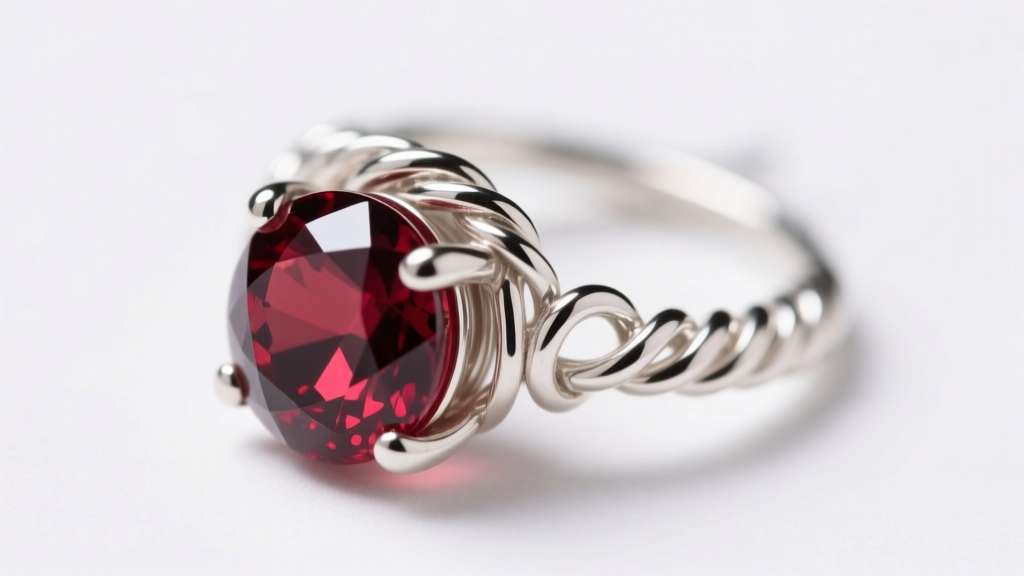
Metal Pairings and Durability Matrix
The metal you choose for your garnet bead earrings impacts both the aesthetic contrast and the longevity of the piece. Deep red garnet is incredibly versatile, but certain metals enhance its fire better than others. Below is a structural breakdown of the most common metal pairings used in quality garnet bead jewelry.
| Metal Type | Best Gauge for Beads | Pros & Aesthetics | Cons & Maintenance |
|---|---|---|---|
| Sterling Silver (925) | 22g - 20g | Provides a crisp, high-contrast backdrop that makes the red pop. Affordable and widely available. | Prone to sulfur tarnish. Requires regular polishing. Soft metal can bend if dropped. |
| 14k Gold-Filled | 20g | Thick layer of 14k gold over brass core. Warm tone complements almandine garnet beautifully. Highly durable. | Cannot be aggressively polished without risking the gold layer. Not suitable for severe metal allergies. |
| Niobium | 20g | Hypoallergenic and biocompatible. Can be anodized to black or gunmetal for a moody, gothic aesthetic with dark garnets. | Limited traditional jewelry finishes. Heavier than silver or gold. |
| Solid 14k/18k Gold | 22g | The ultimate luxury pairing. Will never tarnish. Ideal for heirloom-quality rhodolite garnet beads. | High cost. Solid gold is very soft, so 22g wire must be handled carefully to avoid bending the loops. |
Sizing, Weight, and Ergonomics
Garnet is a relatively dense gemstone (specific gravity of roughly 3.5 to 4.3). This means a garnet bead will feel noticeably heavier than a glass or quartz bead of the exact same millimeter size. When selecting your earrings, you must balance visual impact with earlobe ergonomics.
- 4mm to 5mm Beads (Subtle & Lightweight): Perfect for second-hole piercings, cartilage studs, or minimalist everyday wear. These weigh less than 1 gram per ear and can be worn on standard friction-back posts or simple shepherd hooks without dragging the earlobe.
- 6mm to 8mm Beads (The Standard Drop): The most popular size for dangle earrings. They offer excellent color saturation and visibility from a profile view. At this size, a standard 20-gauge French wire is sufficient, but adding a clear silicone earring back is highly recommended to prevent the heavy bead from pulling the earring out during sleep or when removing sweaters.
- 10mm to 12mm Beads (Statement Weight): These are bold, luxurious, and heavy. Earrings of this size require reinforced ear wires (often lever-backs or thick 18-gauge French wires). If you have thin or stretched earlobes, avoid 12mm solid garnet beads, as the constant downward pull can cause tissue fatigue over time.

Pricing Tiers: What You Should Actually Pay
Navigating the pricing of garnet bead earrings can be confusing due to the vast range of material qualities. Use this 2026 market framework to ensure you are paying a fair price based on the components used.
Commercial Tier ($15 - $35)
At this price point, you are typically looking at heavily included, opaque Almandine beads or even dyed glass imitations. The hardware is usually plated brass or thin sterling silver headpins that are simply bent into a loop rather than properly wire-wrapped. These are fine for fast fashion but lack longevity and gemological value.
Artisan & Mid-Tier ($45 - $95)
This is the sweet spot for high-quality, everyday jewelry. Expect AAA-grade, well-polished Pyrope or clean Almandine beads (6mm-8mm) paired with 14k gold-filled or heavy sterling silver hardware. The construction should feature secure, hand-wrapped wire loops that prevent the bead from slipping off the headpin.
Fine Jewelry Tier ($150 - $350+)
In the fine tier, you are paying for rare material and precious metals. Look for perfectly matched, translucent Rhodolite garnet beads, or custom-faceted briolette beads, set on solid 14k or 18k gold wires. These pieces often feature diamond or white sapphire accent beads and are crafted by master jewelers who use specialized drilling techniques to ensure zero stress on the gemstones.
Care, Cleaning, and Storage Protocols
While garnet is durable enough for daily wear, bead earrings require specific care to maintain their luster and structural integrity. The American Gem Trade Association (AGTA) advises against using ultrasonic cleaners for garnets, especially if the beads have surface-reaching fractures or have been treated with fracture-filling resins (a common practice in lower-grade commercial beads). The high-frequency vibrations can shatter the bead or melt the filler, leaving you with a cloudy, ruined stone.
Expert Maintenance Tip: To clean your garnet bead earrings, mix a few drops of mild, phosphate-free dish soap in lukewarm water. Use a baby-hair toothbrush to gently sweep away skin oils and lotion from the wire wraps and the top of the drill holes. Rinse with distilled water to prevent hard water spotting, and dry immediately with a microfiber cloth. Store them flat in a fabric-lined box to prevent the wire loops from bending under the weight of the beads.
By understanding the gemological nuances, hardware mechanics, and proper sizing dynamics of garnet bead earrings, you can confidently invest in pieces that are not only visually striking but structurally engineered to last a lifetime.


