Which Is the Gay Earring Side? Debunking Myths & Styling Tips
Worried about the gay earring side myth? We debunk historical codes, troubleshoot uneven lobe stretching, and explore modern queer earring aesthetics.

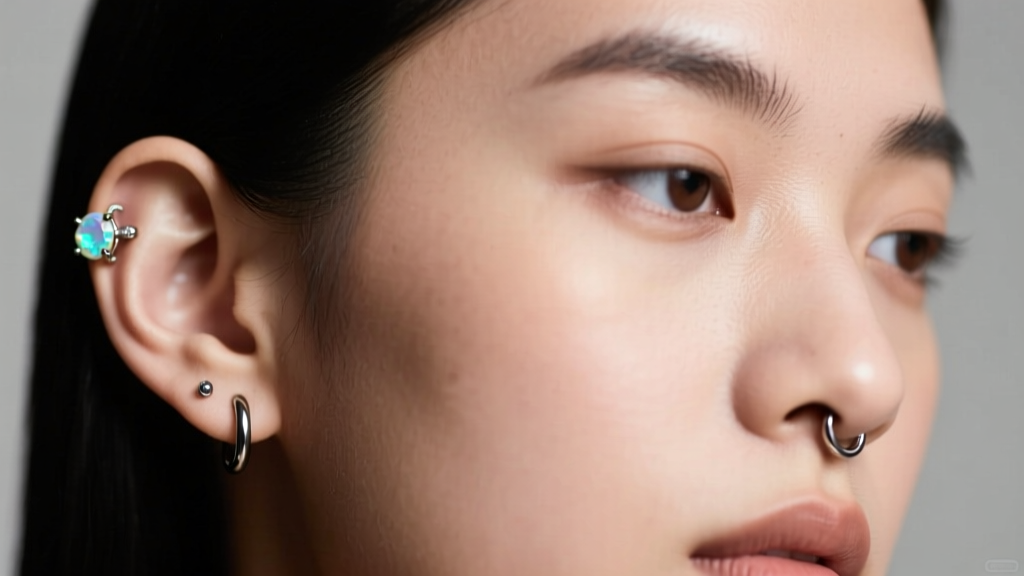
The Historical Code: What Was the "Gay Earring Side"?
Even in 2026, search engines still see thousands of monthly queries for the "gay earring side." For younger generations exploring vintage fashion, or individuals anxious about accidentally sending the wrong signal, the persistence of this myth is fascinating. To troubleshoot modern earring anxiety, we first have to understand the origin of the code.
During the 1970s and 1980s, LGBTQ+ individuals faced severe societal hostility and legal discrimination. Covert signaling systems, much like the hanky code documented by LGBTQ+ historians, became necessary for community recognition and safety. The prevailing dog-whistle of the era was "left is right, and right is wrong"—meaning a single earring in the right earlobe was widely recognized in Western subcultures as an indicator of homosexuality, while the left ear denoted heterosexuality.
Today, this binary placement code is entirely obsolete. Modern queer expression relies on aesthetic curation, intentionality, and personal style rather than covert anatomical placement. However, the revival of the "single statement earring" trend has led many to intentionally wear heavy, sculptural pieces on the right ear to reclaim the vintage code or embrace high-fashion asymmetry. This brings us to a very real, physical troubleshooting issue: the anatomical toll of unilateral earring wear.
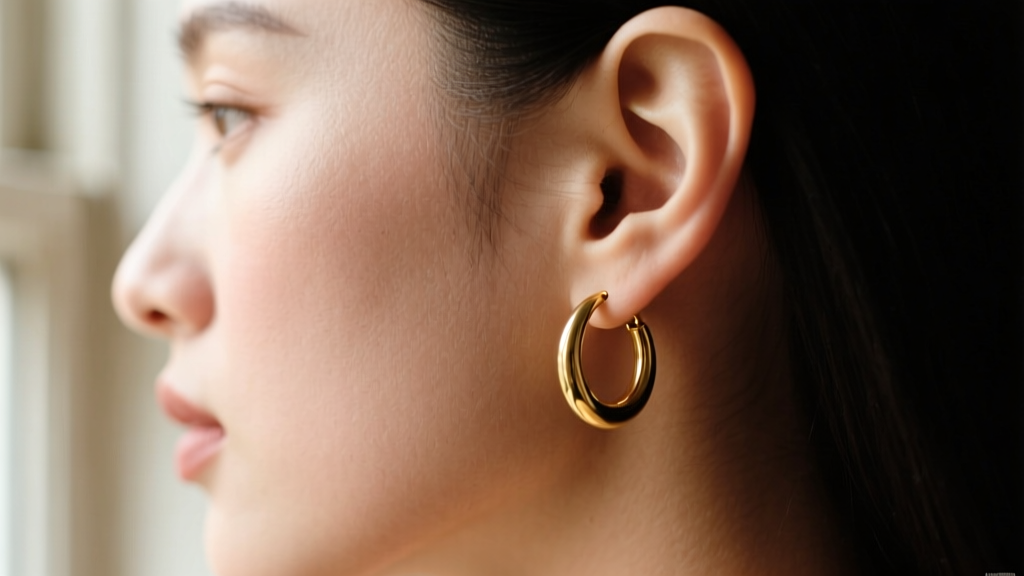
Troubleshooting the Physical Toll of Single-Side Wear
When you consistently wear a single, heavy statement earring on one side—whether to nod to historical queer codes or simply to balance an asymmetrical haircut—you introduce uneven gravitational stress to your earlobes. Earlobes are composed of areolar connective tissue and adipose (fat), completely lacking the structural rigidity of cartilage.
A standard 14k gold 15mm hoop weighs roughly 2.5 grams. However, modern sculptural drops, heavy signet hoops, or gemstone-laden dangles can easily weigh between 8 and 14 grams. Over months and years, wearing a 10-gram earring exclusively on the right ear will cause unilateral lobe elongation. It is incredibly common for the right earlobe to hang 3mm to 5mm lower than the left in individuals who favor single-side wear.
Problem 1: Post Slicing and Migration
Most commercial fashion earrings are manufactured at 20-gauge (0.81mm) or 18-gauge (1.0mm). When a heavy 10-gram earring rests on a 20G post, the sheer force is concentrated on a microscopic surface area. This acts like a cheese wire, slowly slicing through the bottom of the piercing channel and causing migration.
- The Fix (Gauge Upsizing): Transition your heavy statement pieces to 16-gauge (1.2mm) or 14-gauge (1.6mm). According to the Association of Professional Piercers (APP), thicker posts distribute weight more evenly across the fistula, drastically reducing the risk of tissue tearing.
- The Fix (Support Discs): If you must wear a fine 20G wire, use silicone earring support discs (like those from Blome or generic 8mm silicone backers). These sit behind the earlobe, dispersing the downward drag across a wider surface area of skin.
Problem 2: Asymmetrical Sagging
If your right earlobe is already visibly lower than your left due to years of single-side wear, you can troubleshoot the aesthetic imbalance without resorting to surgical lobe reconstruction.
- The Taping Method: For formal events, apply a small piece of porous, hypoallergenic medical tape (like 3M Nexcare) to the back of the stretched lobe. Pierce the earring through the tape and the lobe. The tape acts as a structural splint, lifting the lobe to match the height of the left ear.
- Visual Rebalancing: Wear a slightly larger, visually heavier earring on the higher (left) ear, and a delicate, lightweight stud on the stretched (right) ear. This optical illusion tricks the eye into ignoring the height discrepancy.
- Tissue Massage: Nightly massage with pure jojoba oil or vitamin E can improve tissue elasticity, though it will not reverse severe stretching. It primarily prevents further micro-tearing.
Moving Beyond Placement: Modern Queer Coding
If the "gay earring side" is a relic of the past, how does the LGBTQ+ community signal identity through jewelry today? In 2026, queer coding in jewelry is about materiality, motifs, and curation rather than left-vs-right binary placement. The focus has shifted to high-quality, body-safe materials and subtle symbolic nods.
| Era | The "Code" | Modern 2026 Equivalent |
|---|---|---|
| 1970s - 1990s | Single earring in the right earlobe | Curated constellations, intentional asymmetry, and threadless systems |
| 1980s - 2000s | Specific metal colors or cheap novelty shapes | ASTM F-136 implant-grade titanium anodized in subtle pride flag hues |
| 1990s - 2010s | Overt, mass-produced slogan jewelry | Micro-motifs (interlocking circles, subtle botanical elements, salt-and-pepper gems) |
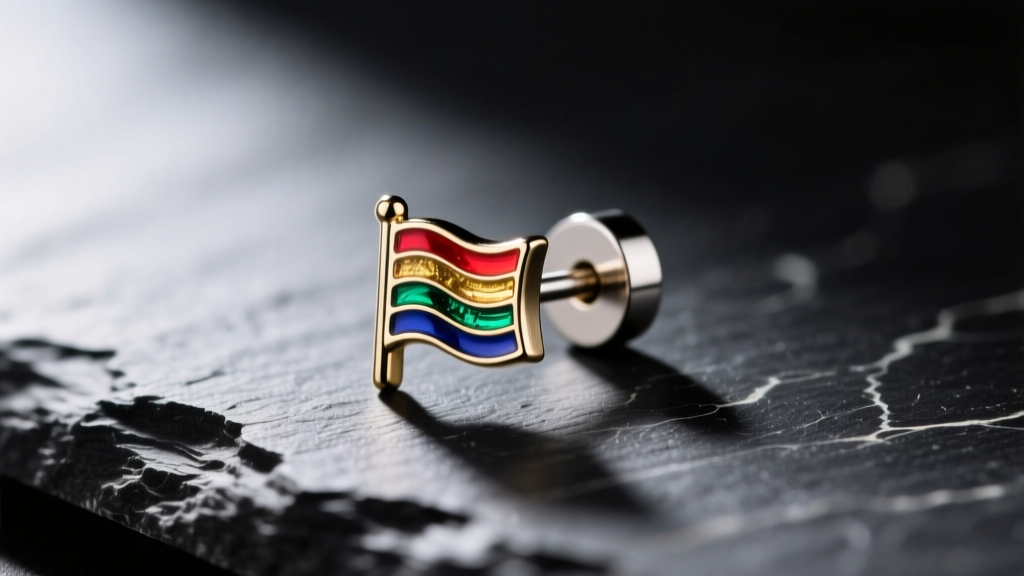
Material as Identity
The shift toward premium body jewelry brands like BVLA and Neometal has heavily influenced queer aesthetics. The use of implant-grade titanium (ASTM F-136) is a hallmark of modern piercing culture. Because titanium can be anodized using electrical currents to create vibrant, permanent colors without using toxic dyes or plating, many queer individuals opt for custom-anodized threadless ends in specific colorways that subtly mirror pride flags—such as anodizing titanium to a deep bisexual pink and periwinkle blue, or a non-binary yellow and white.
Furthermore, the rejection of traditional, gendered jewelry norms (like diamonds for women, plain metals for men) has led to a surge in alternative gemstones. Salt-and-pepper diamonds, raw uncut sapphires, and black spinels are heavily favored in queer and alternative circles for their rejection of "flawless" heteronormative beauty standards.
How to Style Asymmetrical Ear Curations Intentionally
If you want to embrace the single-earring look or an asymmetrical setup without looking like you simply lost your other earring, you must apply the principles of visual weight and anatomical mapping.
The Rule of Visual Anchoring
When styling one ear heavily and leaving the other bare (or nearly bare), the heavy ear needs an "anchor" to prevent it from looking bottom-heavy and dragging the face down.
- The Helix Counterweight: If you are wearing a heavy, 8-gram drop earring in the right lobe, balance it by placing a crisp, bright gemstone (like a 3mm synthetic opal) in the upper right helix. This draws the eye upward, elongating the neck and balancing the drag of the lobe piece.
- The Tragus Bridge: A simple 16G titanium tragus stud on the opposite (left) ear provides just enough metallic glint to show the asymmetry was a deliberate styling choice, not a morning mistake.
Expert Tip: Never use friction "butterfly" backs for heavy, single-side statement earrings. The tension on the friction post will inevitably slip over the course of a day, causing the heavy earring to droop forward or fall out entirely. Always opt for threadless (push-pin) or internally threaded systems, which lock the jewelry securely into the post.
Final Thoughts on Earring Anxiety
The anxiety surrounding the "gay earring side" is a testament to how deeply historical fashion codes can linger in the cultural subconscious. However, as we navigate the style landscape of 2026, it is vital to remember that your identity is not defined by the lateral placement of a piece of metal. Whether you are curating a right-ear constellation to honor queer history, or simply troubleshooting the physical toll of a heavy vintage gold hoop, the focus should always be on high-quality, body-safe materials and intentional styling. Wear what brings you joy, prioritize the health of your tissue, and let your aesthetic speak for itself.


