Gecko Earrings Value Assessment: Budget vs Fine Gold
Discover the true value of gecko earrings in 2026. We compare budget alloys, surgical steel, and solid gold to help you choose the best lizard jewelry.

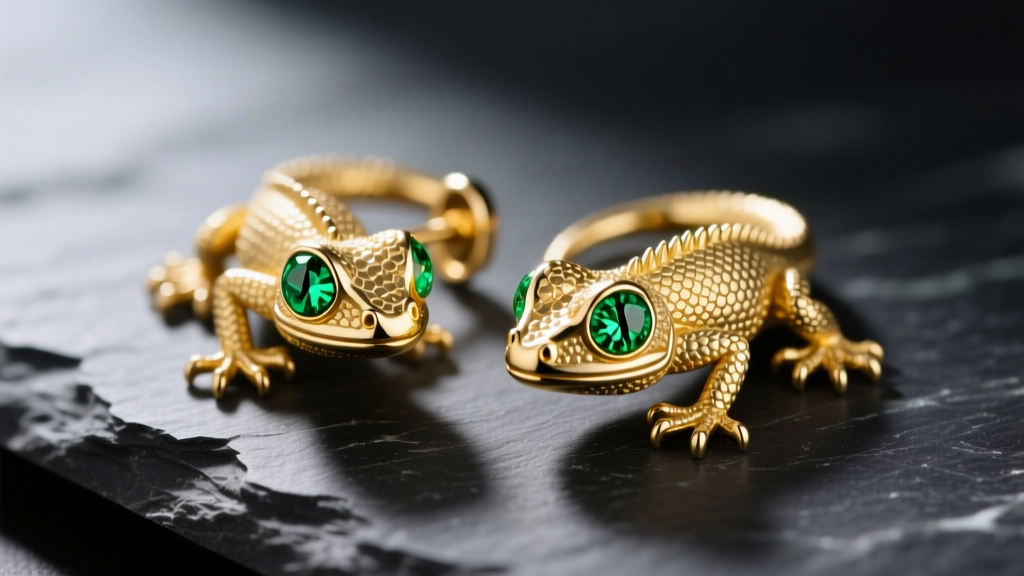
Nature-inspired jewelry has experienced a massive resurgence, and gecko earrings sit precisely at the intersection of whimsical novelty and high-end artisanal craft. Whether you are drawn to the symbolic meaning of the lizard—representing regeneration, adaptability, and survival—or simply appreciate the intricate anatomical detailing of reptilian motifs, the market is flooded with options. However, when prices range from $12 on fast-fashion marketplaces to over $1,200 at boutique jewelers, assessing true value becomes a complex metallurgical and gemological exercise.
In 2026, the rising cost of raw precious metals has fundamentally shifted the landscape of animal-motif jewelry. To determine where your money is best spent, we must look past the aesthetic appeal and evaluate material grades, structural integrity, and long-term wearability. This comprehensive value assessment will break down exactly what you are paying for across different budget tiers.
The Resurgence of Reptilian Motifs in Modern Jewelry
Historically, reptile jewelry was relegated to cheap costume pieces or highly specific subcultures. Today, luxury houses and independent bench jewelers are embracing the gecko's dynamic silhouette. The splayed toes, curving tail, and textured scales offer a canvas for advanced metalworking techniques. However, the intricate nature of a gecko design—featuring thin, protruding limbs and delicate tails—makes it uniquely vulnerable to structural failure if cast in improper alloys or insufficient gauges. Understanding these vulnerabilities is the first step in making a value-driven purchase.
Material Tiers: Where Does Your Budget Actually Go?
When shopping for gecko earrings, the material dictates not only the price but the lifespan of the piece. We can categorize the market into three distinct tiers, each with specific failure modes and value propositions.
Tier 1: Zinc Alloys and Cold Enamel (The Fast-Fashion Trap)
Budget gecko earrings, typically priced between $10 and $35, are usually die-cast from zinc alloys (often marketed vaguely as 'silver-tone' or 'gold-tone') and filled with cold epoxy enamel to simulate vibrant scales. While visually striking in product photos, these pieces represent the lowest long-term value. The primary failure mode is galvanic corrosion; the acidic pH of human sweat rapidly breaks down the alloy, leading to green skin discoloration and structural pitting. Furthermore, the cold enamel is highly susceptible to chipping upon minor impacts, leaving the porous base metal exposed and ruining the aesthetic within months.
Tier 2: 316L Surgical Steel with PVD Coating (The Value Sweet Spot)
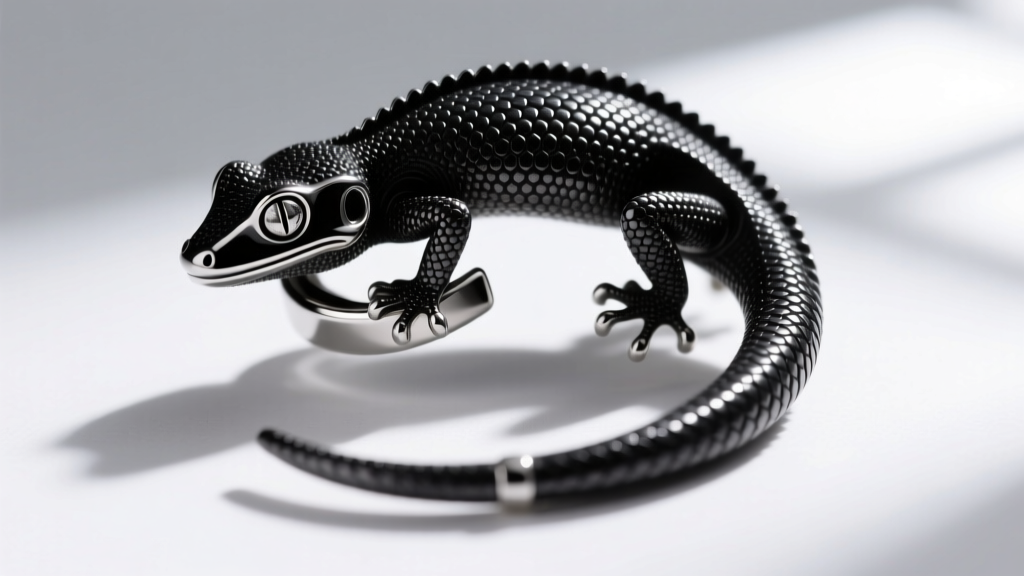
Priced between $45 and $120, 316L stainless steel gecko earrings offer the best balance of affordability and longevity for daily wear. 316L is a marine-grade, hypoallergenic alloy that resists tarnish and corrosion entirely. In 2026, the industry standard for coloring these pieces is Physical Vapor Deposition (PVD). Unlike traditional electroplating, which merely rests on the surface and flakes off, PVD bonds a microscopic layer of titanium nitride or 14k gold to the steel in a vacuum chamber. According to material science standards referenced by the Jewelers of America, PVD coatings can withstand daily friction and skin acids for 3 to 5 years without revealing the base metal, making this tier the undisputed champion of budget-conscious value.
Tier 3: Solid 14k and 18k Gold (The Heirloom Investment)
Entering the $400 to $1,500+ range, solid gold gecko earrings are treated as fine jewelry and potential heirlooms. For intricate animal shapes, 14k gold (58.5% pure gold) is actually superior to 18k gold. The alloyed metals in 14k gold (such as copper and silver) provide higher tensile strength, which is critical for preventing the thin toes and tails of the gecko design from bending or snapping if caught on clothing. While the initial capital outlay is high, solid gold retains intrinsic melt value and can be easily repaired or polished by a bench jeweler, offering a cost-per-wear that eventually outpaces cheaper alternatives.
Price vs. Longevity: A Value Assessment Matrix
To visualize the return on investment for reptile-themed ear jewelry, refer to the matrix below. This data reflects average market pricing and expected lifespans based on daily wear conditions.
| Material Tier | Avg. Price Range (2026) | Expected Lifespan | Primary Failure Mode | Best Use Case |
|---|---|---|---|---|
| Zinc Alloy + Enamel | $10 - $35 | 3 - 6 Months | Enamel chipping, skin discoloration | Occasional costume wear |
| 316L Steel + PVD | $45 - $120 | 3 - 5 Years | Eventual coating wear on high-friction edges | Daily wear, active lifestyles |
| Solid 14k Gold | $400 - $900 | Lifetime / Heirloom | Bending of thin extremities if snagged | Fine jewelry collections, gifts |
| Solid 18k Gold + Gems | $800 - $1,500+ | Lifetime / Heirloom | Softer metal prone to scratching | Special occasions, luxury investment |
Structural Integrity: Gauge Sizes and Top-Heavy Dangles
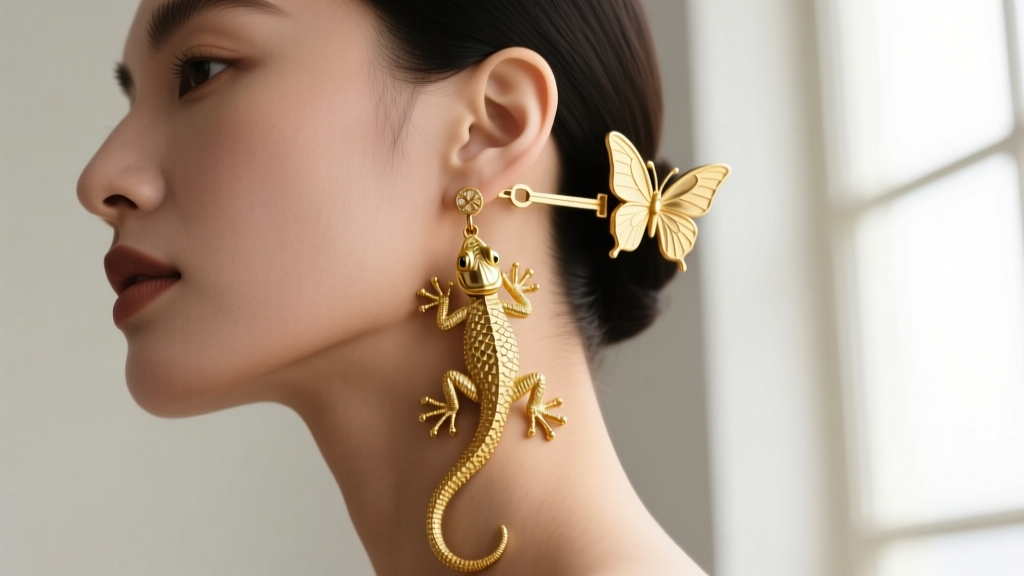
One of the most overlooked aspects of buying animal-shaped earrings is structural engineering. Geckos are inherently top-heavy or bottom-heavy depending on the pose. A solid gold gecko dangle measuring 25mm in length can easily weigh 3.5 to 4.5 grams per earring. If this weight is suspended on a standard 20-gauge (0.81mm) post, the metal will slowly yield to gravity, causing the post to bend downward and the earring to point awkwardly at the floor.
For optimal value and wearability, buyers must check the post thickness. For gecko studs under 15mm, a standard 20-gauge or 19-gauge post is sufficient. However, for larger dangles or cartilage placements, you should actively seek out 18-gauge (1.02mm) or 16-gauge (1.29mm) posts. Pairing a heavier gold gecko with a jumbo silicone clutch or a secure screw-back earring nut is mandatory to distribute the weight across the earlobe and prevent stretching over time.
Gemstone Accents: Choosing the Right 'Eyes'
The eyes of a gecko earring are typically where jewelers introduce gemstones, and this is where budget assessments become critical. The vibrant green of a reptile's eye is usually represented by one of three stones:
- Cubic Zirconia (CZ): Found in budget and mid-tier pieces. While initially brilliant, CZ is highly oleophilic, meaning it attracts oils and soap scum, dulling its appearance rapidly. It requires frequent ultrasonic cleaning to maintain its 'pop'.
- Tsavorite Garnet: The premium choice for high-end gecko earrings. Tsavorite offers a vivid, electric green hue. According to the GIA Gem Encyclopedia, tsavorite has a Mohs hardness of 7 to 7.5 and, crucially, lacks the heavy internal inclusions found in emeralds. This makes it highly resistant to chipping—a vital trait for protruding gemstone eyes that are prone to being bumped against doors or mirrors.
- Emerald: While traditional and luxurious, emeralds are notoriously brittle due to their 'jardin' (internal inclusions). An emerald-eyed gecko earring dropped on a hard tile floor has a significantly higher risk of fracturing than a tsavorite equivalent, negatively impacting its long-term value proposition.
Final Verdict: Maximizing Your Investment
If your goal is purely aesthetic novelty for a single event or a seasonal trend, a $20 zinc-alloy pair will suffice, provided you accept its disposable nature. However, for genuine value, the 316L surgical steel with PVD coating represents the smartest allocation of funds under $150, offering years of hypoallergenic, tarnish-free wear. For those viewing jewelry as a lasting asset, investing in a 14k solid gold gecko with tsavorite accents, engineered with an 18-gauge post for structural stability, provides an unparalleled blend of artisanal beauty, gemological durability, and intrinsic metal value.


