Gingerbread Man Earrings: 2026 Enamel & Metal Guide
Discover the technical details behind gingerbread man earrings in 2026. We analyze enamel types, metal grades, and gauge sizes for lasting holiday wear.

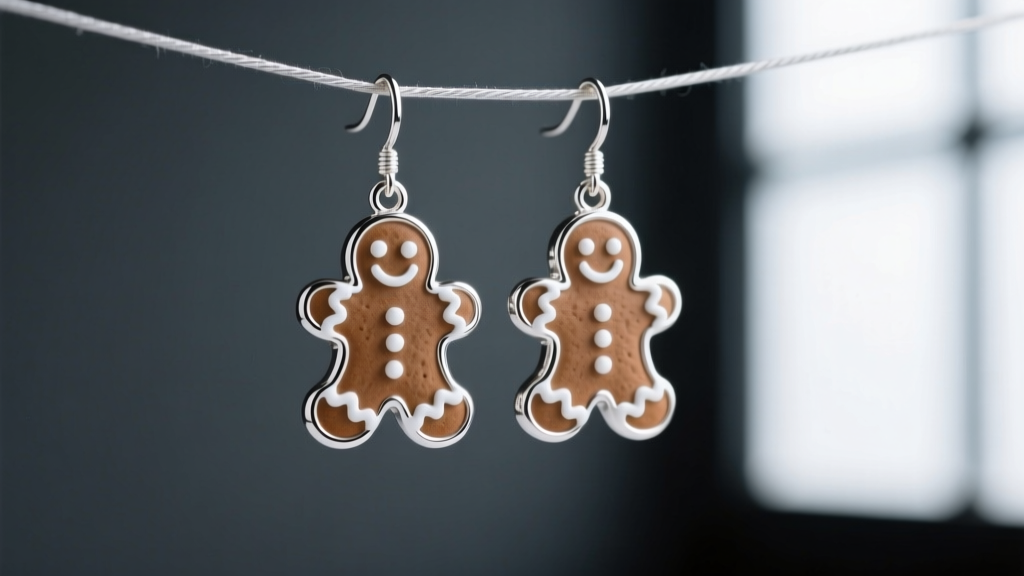
As the 2026 holiday season approaches, the demand for novelty jewelry has surged, with gingerbread man earrings emerging as a dominant trend in festive accessory searches. However, the transition from a seasonal novelty to a lasting wardrobe staple requires a deep understanding of jewelry metallurgy, enamel chemistry, and structural engineering. Most mass-market holiday earrings fail within a single season due to poor weight distribution, substandard alloy blends, and degrading epoxy resins. This expert guide deconstructs the technical specifications of high-quality gingerbread man earrings, providing buyers and collectors with the exact metrics needed to identify superior craftsmanship.
The Anatomy and Center of Gravity in Novelty Drops
The silhouette of gingerbread man earrings presents a unique structural challenge: they are inherently top-heavy and elongated. Unlike a simple circular stud or a balanced hoop, a gingerbread man shape acts as an inverted pendulum when suspended from the earlobe. The center of gravity typically sits around the torso of the figure, roughly 12mm to 18mm below the piercing axis. If the earring post is soldered at the very top of the head without a counterbalance or a reinforced solder joint, the earring will continuously tilt forward, causing the post to bend and the earlobe to stretch.
Expert artisans solve this by utilizing a "drop-style" jump ring attachment rather than a direct stud post. By suspending the gingerbread man charm from a small, fixed stud (like a simple gold or silver ball) via a reinforced 3mm jump ring, the charm is allowed to swing freely. This dynamic movement dissipates kinetic energy and prevents the metal post from absorbing the torque generated by the charm's swinging weight.
Enamel Techniques: Cold Resin vs. Vitreous Glass
The "icing" details on gingerbread man earrings are almost universally achieved through enameling. However, the term "enamel" is frequently misused in the commercial jewelry market. There is a vast technical divide between cold enamel and vitreous enamel, directly impacting the longevity and aesthetic of the piece.
Cold Enamel (Epoxy Resin)
Cold enamel is not actually enamel; it is a two-part epoxy resin that cures at room temperature. It is the standard for mass-produced gingerbread man earrings priced under $40. While it allows for vibrant, opaque colors and intricate detailing without the need for a kiln, epoxy resin has a Mohs hardness of only 2.5 to 3.0, making it highly susceptible to scratching. More importantly, according to material degradation studies referenced by The Enamelist Society, epoxy resins are prone to photo-oxidation. When exposed to UV light over 18 to 24 months, the white "icing" details on cold enamel earrings will inevitably yellow and become brittle, eventually flaking off the metal base.
Vitreous Enamel (Kiln-Fired Glass)
True vitreous enamel consists of finely ground glass (silica, soda ash, and metal oxides) fused to a metal substrate at temperatures between 1380°F and 1560°F (750°C to 850°C). The resulting surface has a Mohs hardness of 5.5 to 6.0, making it as scratch-resistant as window glass. Vitreous enamel is entirely UV-stable; the white icing details on a vitreous gingerbread man earring will remain brilliantly opaque for centuries. Artisans use a technique called "champlevé," where channels are carved or cast into the metal base and filled with the glass powder before firing, ensuring the enamel sits flush with the metal walls to prevent edge-chipping.
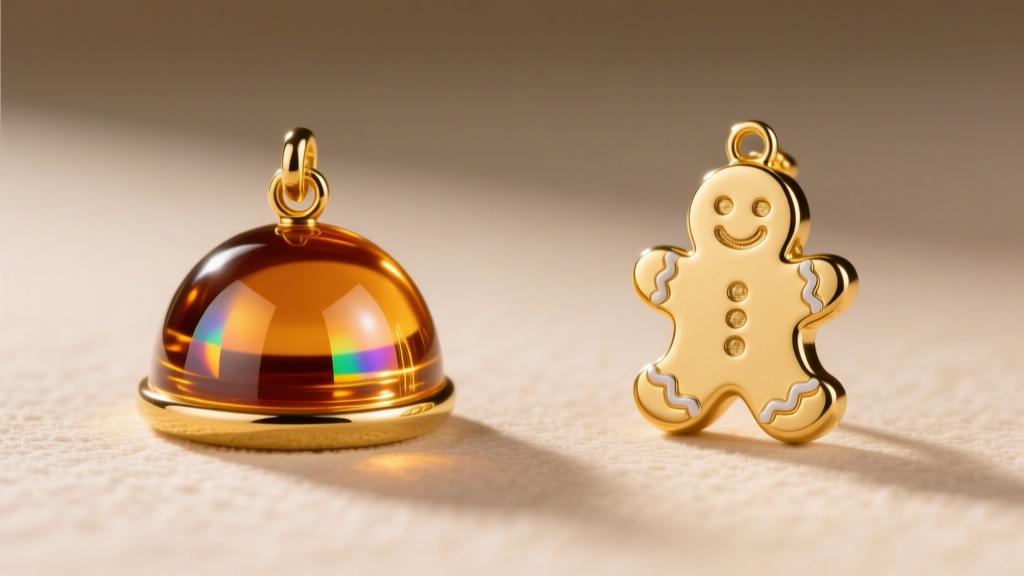
Metal Alloys, Hypoallergenic Standards, and Plating
The base metal of gingerbread man earrings dictates both the structural integrity of the post and the biocompatibility of the piece against the skin. The two most common metals used in this category are 925 Sterling Silver and Brass.
Sterling Silver (925) vs. Brass
Sterling silver (92.5% silver, 7.5% copper) is the premium choice for hypoallergenic jewelry. According to The Silver Institute, the addition of copper increases the Vickers hardness of pure silver from 25 HV to approximately 65 HV. However, 65 HV is still relatively soft for a load-bearing earring post. Conversely, brass (an alloy of copper and zinc) boasts a Vickers hardness of 100 to 130 HV, making it far more resistant to bending. Because brass contains copper, it will oxidize and cause green discoloration on the skin, and it often contains trace nickel. To mitigate this, brass earrings must be heavily plated. Buyers should look for a minimum of 0.5 microns of 24k gold or rhodium plating to ensure the plating does not wear through to the brass core during a season of heavy use.
The Nickel Directive and Contact Dermatitis
For sensitive ears, avoiding nickel is paramount. The European Union's REACH regulation limits nickel release from jewelry to 0.5 micrograms per square centimeter per week. As documented by NCBI StatPearls, nickel contact dermatitis affects up to 20% of the population. When purchasing gingerbread man earrings, always verify that the posts are stamped "925" or explicitly labeled as ASTM F136 implant-grade titanium. Avoid generic "silver-plated" or "gold-tone" listings, as these frequently utilize nickel-silver (German silver) as a base, which contains no actual silver and is a primary trigger for allergic reactions.
Gauge Thickness and Weight Distribution
The thickness of the earring post, measured in gauge, is critical for supporting the weight of a novelty charm. Standard fashion earrings utilize a 20-gauge (0.81mm) post. However, a solid metal gingerbread man charm measuring 20mm x 30mm can easily weigh 4 to 6 grams. A 20-gauge sterling silver post supporting 6 grams of pendulum weight will experience plastic deformation (permanent bending) within a few weeks of daily wear. Expert jewelers upgrade the posts on heavy novelty drops to 18-gauge (1.02mm) or even 16-gauge (1.29mm). This 26% increase in diameter more than doubles the cross-sectional area, exponentially increasing the post's resistance to bending moments.
| Material Specification | Vickers Hardness (HV) | Optimal Gauge for Drops | Expected Lifespan (Daily Wear) | 2026 Avg. Artisan Price |
|---|---|---|---|---|
| 925 Sterling Silver + Vitreous Enamel | 65 HV | 18-Gauge (1.02mm) | Lifetime (Generational) | $85 - $140 |
| Solid Brass + Rhodium Plating + Cold Resin | 115 HV (Base) | 20-Gauge (0.81mm) | 1 - 2 Seasons (Resin Yellows) | $25 - $45 |
| Implant-Grade Titanium (Ti-6Al-4V) + Anodized | 350 HV | 18-Gauge (1.02mm) | Lifetime (Hypoallergenic) | $60 - $95 |
Troubleshooting Common Failure Modes in Novelty Drops
Even well-crafted gingerbread man earrings can suffer from specific mechanical failures if the backing systems and edge protections are not properly engineered. Understanding these failure modes allows collectors to inspect pieces before purchasing.
Clutch Friction Loss and Earring Dropping
The standard "butterfly" friction clutch relies on the tension of two small metal loops gripping the post's groove. When an elongated gingerbread man earring swings, it creates a levering effect that slowly pries the friction clutch open. By the end of a holiday party, the earring is often lost. The technical solution is the use of La Pousette backs (which utilize a spring-loaded double-locking mechanism) or heavy-duty silicone O-ring clutches. If a vendor is selling heavy novelty drops with standard butterfly clutches, it is a hallmark of poor structural foresight.
Enamel Chipping at the Perimeter
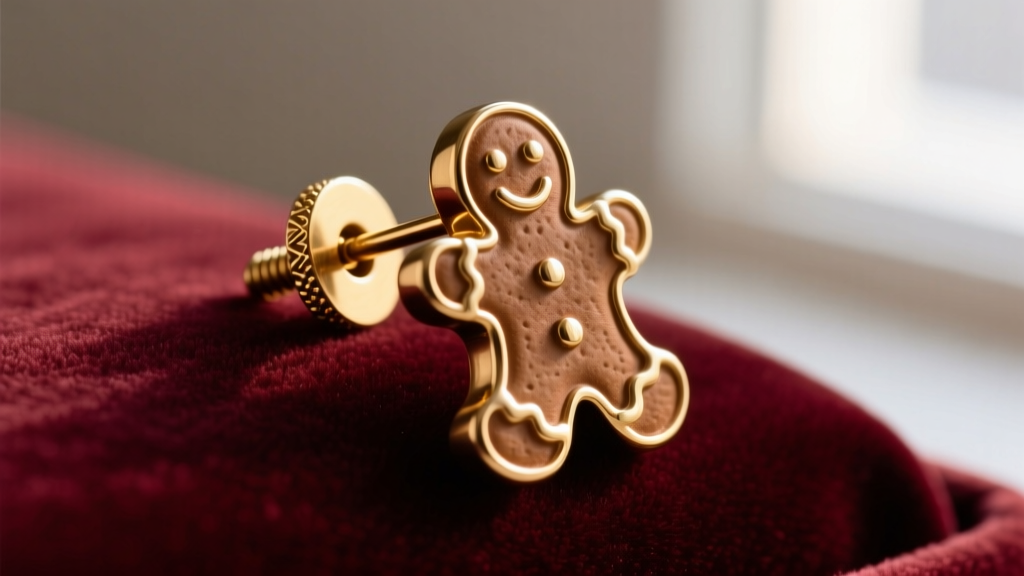
In champlevé or cloisonné enameling, the glass must be contained within metal walls. If the enamel is applied "over the edge" or flush with a sharp, 90-degree metal border, any minor impact (such as dropping the earring on a tile floor) will cause the glass to conchoidal fracture and chip away from the metal. High-end gingerbread man earrings feature a "bezel" or a raised metal rim that wraps slightly over the edge of the enamel, protecting the vulnerable glass-to-metal junction from direct impact.
2026 Artisan Benchmarks and Sourcing
When sourcing gingerbread man earrings for the 2026 season, buyers must look past the initial aesthetic and evaluate the piece as a micro-engineered object. A true investment piece will feature an 18-gauge post, a suspended jump-ring bail to manage kinetic torque, and kiln-fired vitreous enamel protected by raised metal bezels. While the initial cost for an artisan-crafted pair will range between $85 and $150, the cost-per-wear over a decade vastly outperforms the $25 mass-market resin alternatives that end up in landfills by January. By demanding exact material grades and structural transparency, consumers can elevate holiday novelty jewelry into enduring, heirloom-quality accessories.


