How Long Do Earring Holes Take to Close? A Complete Healing Guide
Discover how long earring holes take to close based on piercing age, placement, and gauge. Expert tips on keeping lobes and cartilage open.

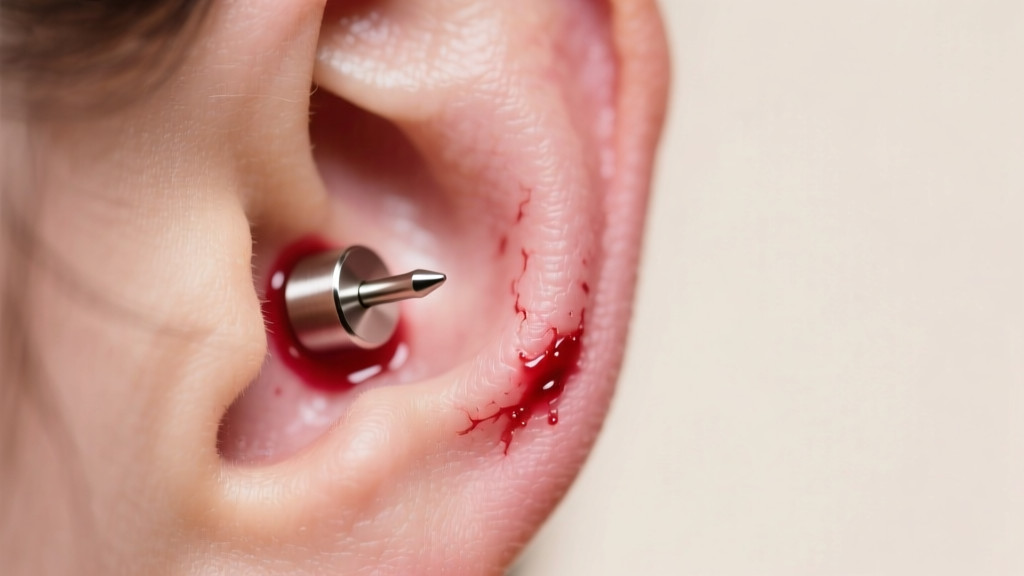
Taking out your earrings, whether for a surgical procedure, contact sports, or simply because you are experiencing metal fatigue, often triggers a universal panic: how long do earring holes take to close? The answer is not a simple number of hours or days. It depends entirely on the biological maturity of your fistula, the anatomical placement of the piercing, and the gauge of the jewelry. As a beginner-friendly explainer, this guide breaks down the exact science of piercing closure, providing actionable data to help you manage your ear jewelry safely.
The Short Answer: Closure Timelines by Piercing Age
Before diving into the cellular biology of wound healing, it is helpful to look at the general timelines for piercing closure. The following table outlines how long you can expect a hole to remain open based on its age and placement.
| Piercing Age | Placement | Estimated Closure Time | Tissue State |
|---|---|---|---|
| 1-6 Months | Earlobe | 12-48 Hours | Raw wound, no fistula |
| 1-2 Years | Earlobe | 3-7 Days | Immature fistula |
| 5+ Years | Earlobe | Weeks to Never | Mature, epithelialized |
| 1-6 Months | Cartilage | 2-12 Hours | Raw wound, high shrinkage |
| 1+ Years | Cartilage | 1-3 Days | Cartilage memory retraction |
The Biology of Piercing Closure: Why Tissue Matters
To understand why some holes close in hours while others stay open for decades, you must understand the fistula. When a professional piercer uses a hollow, beveled surgical steel needle to remove a core of tissue, the body initiates a complex wound healing cascade. According to the Cleveland Clinic, wound healing occurs in four phases: hemostasis, inflammation, proliferation, and remodeling.
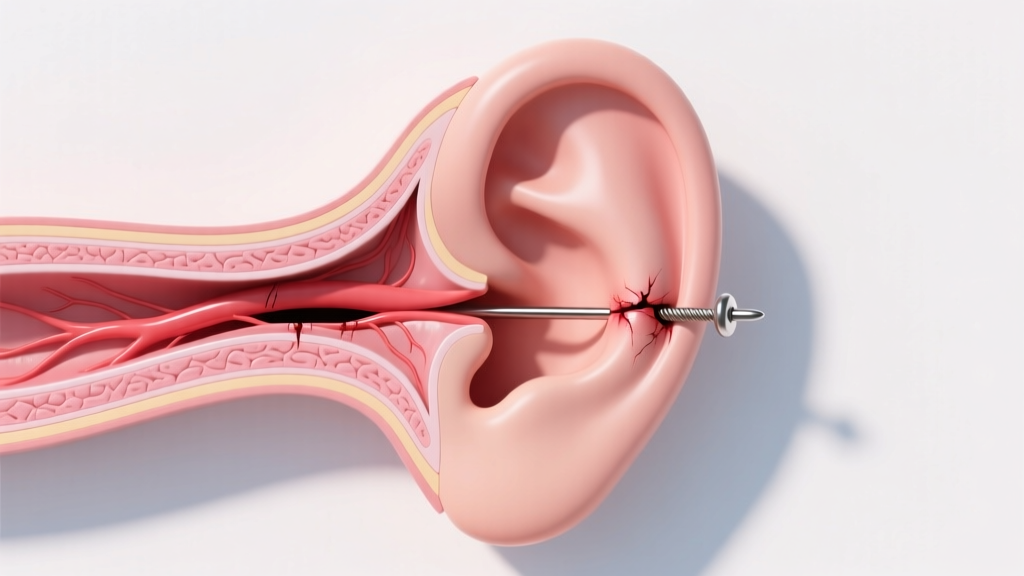
During the proliferation phase, the body builds the fistula—a tube of scar tissue that lines the piercing channel. The Association of Professional Piercers (APP) notes that a fully mature fistula is lined with epithelial cells. Essentially, the inside of a healed piercing becomes an extension of your outer skin. Once this skin tube is complete and calloused, the hole cannot "heal shut" in the traditional sense; it can only shrink or contract as the underlying collagen and elastin fibers pull inward.
Timeline Breakdown: Fresh, Healed, and Legacy Piercings
Fresh Piercings (0-6 Months)
If your piercing is less than six months old, your body still recognizes the channel as an active, open wound. If you remove a standard 20-gauge (0.81mm) or 18-gauge (1.02mm) stud during this window, epithelial cells will rapidly migrate across the gap to seal the wound. Expect the hole to close or shrink to an unusable size within 24 hours. Cartilage piercings, such as the helix or tragus, will close even faster due to the rigid nature of the tissue.
Mature Piercings (1-5 Years)
At this stage, the fistula is established but still possesses active elastin fibers that want to contract. Without jewelry, a standard lobe piercing will shrink significantly over a few days. While the hole may not close entirely for a week or more, attempting to push a standard earring post back through will likely cause micro-tears, pain, and bleeding.
Legacy Piercings (10+ Years)
Decades of continuous wear result in a permanent, heavily calloused tube. These holes rarely close completely. However, they will shrink to a fraction of their original gauge. A legacy 14-gauge (1.63mm) hole might shrink down to the size of a 20-gauge needle, requiring careful stretching to accommodate standard jewelry again.
The Cartilage Factor: Why Helix and Tragus Holes Shrink Faster
Cartilage piercings behave entirely differently from soft tissue lobe piercings. Cartilage is avascular, meaning it lacks a direct blood supply, which makes the initial healing process much slower (often taking 6 to 12 months). More importantly, cartilage has structural "memory." When pierced, the rigid tissue is physically compressed. Once the jewelry is removed, the cartilage attempts to spring back to its original, unpierced shape, physically squeezing the fistula shut. This is why a cartilage hole that is two years old can close up overnight, whereas a lobe hole of the same age might stay open for weeks.
Factors That Accelerate or Delay Closure
- Gauge Size: A standard 20G (0.81mm) hole will close much faster than a 14G (1.63mm) hole. The larger the volume of tissue removed, the longer the body takes to bridge the gap.
- Ear Stretching: If you have stretched your lobes, the closure timeline changes dramatically. Piercings stretched beyond 2-gauge (6mm) often reach the "point of no return," where the tissue has permanently expanded and the hole will never fully close without surgical intervention.
- Trauma and Scarring: Piercings that have suffered blowouts, tearing, or keloid scarring feature disorganized collagen networks. These holes may shrink irregularly or remain permanently open due to severe structural damage to the tissue.
- Rejection: If your body was actively rejecting a surface piercing or cartilage piercing, the tissue will thin and close rapidly once the foreign object (the jewelry) is removed.
How to Keep Your Holes Open Without Jewelry
If you must remove metal jewelry for an MRI, surgery, or workplace restrictions, you need to use a retainer. However, not all retainers are created equal. Here is a breakdown of materials based on safety and efficacy:
"For long-term wear or medical procedures, borosilicate glass is the gold standard for retainers. It is completely non-porous, hypoallergenic, and can be autoclaved. Avoid cheap acrylics, which degrade and harbor bacteria." — Professional Piercing Best Practices
- Borosilicate Glass: The safest option. Glass retainers are inert, smooth, and will not cause contact dermatitis.
- Implant-Grade Titanium (ASTM F-136): If you need a flexible option for sports, a titanium flat-back labret with a discreet anodized finish is excellent.
- PTFE (Bioplast): While flexible and MRI-safe, PTFE is porous and can trap dead skin cells and sebum, leading to odor and irritation if worn for more than a few weeks.
Troubleshooting: What to Do If Your Hole Starts Shrinking
If you took your earrings out for the weekend and are now struggling to reinsert them, never force a standard earring post through the resistance. Forcing jewelry causes blunt force trauma to the delicate fistula, triggering an immune response that leads to hypertrophic scarring (irritation bumps) or localized infection.
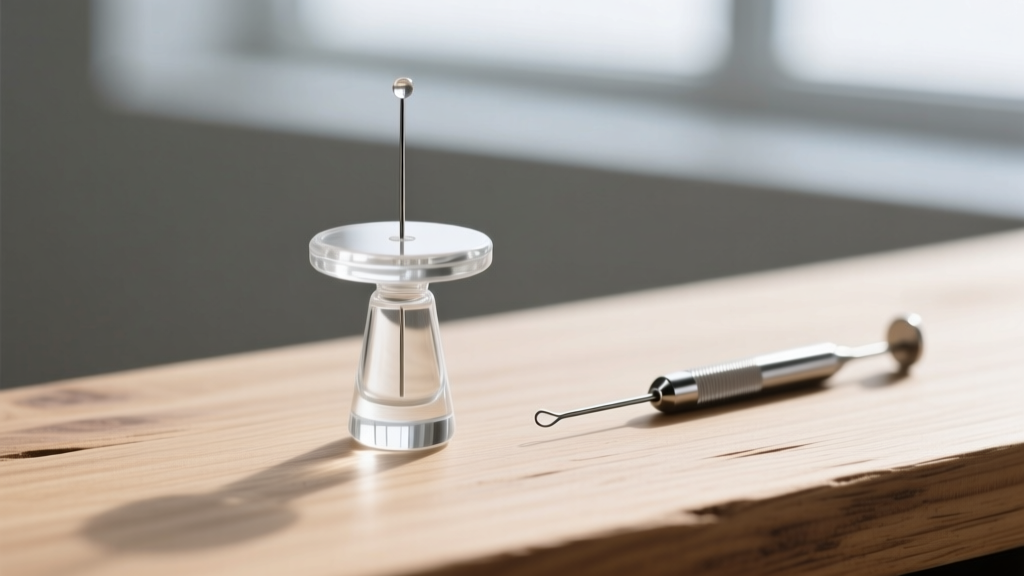
Instead, use a sterile, single-use insertion taper. Apply a few drops of pure jojoba oil or vitamin E oil to the taper to lubricate the channel. Gently slide the taper through the shrunken hole to gradually stretch the tissue back to its original gauge. Once the taper is through, immediately follow it with your sterilized jewelry. If you meet hard resistance or feel sharp pain, stop immediately and visit a professional piercer who can safely re-open the channel using specialized tools.


