Gold Angel Earrings: 10K, 14K, and 18K Material Properties
Compare 10K, 14K, and 18K gold for angel earrings. Learn how karat weight, hardness, and casting properties affect intricate wing and halo designs.

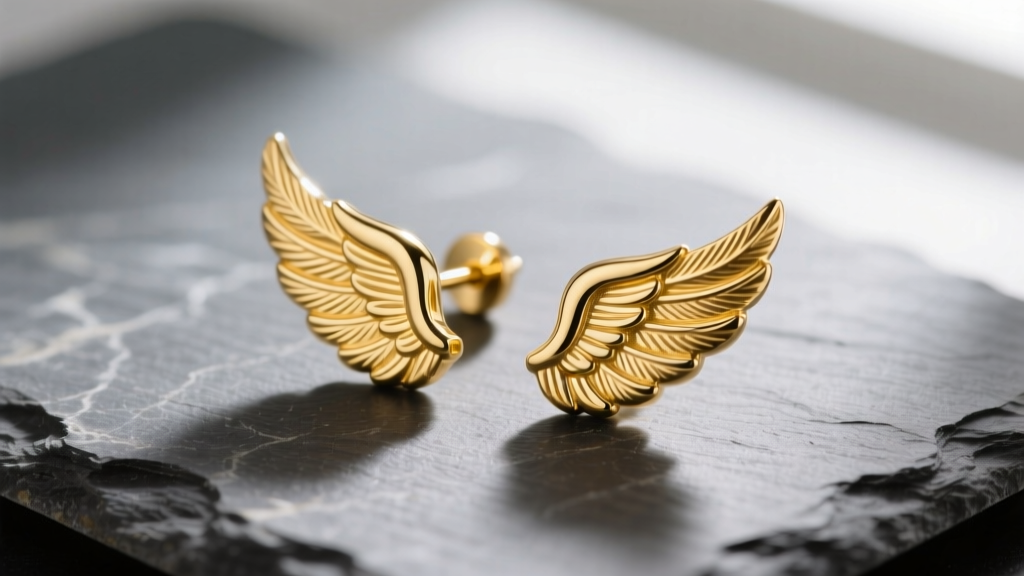
When shopping for gold angel earrings, the design's intricate details—delicate wings, tiny halos, and flowing robes—demand specific metallurgical properties. Unlike simple geometric studs or plain hoops, angel motifs require a gold alloy that perfectly balances castability with long-term structural integrity. A poorly chosen alloy can result in bent wings, snapped halos, or lost gemstones. In this comprehensive material guide, we break down the exact properties of 10K, 14K, and 18K gold, alongside vermeil alternatives, to help you choose the perfect pair of angel earrings for your collection.
The Metallurgy of Angel Motifs: Why Karat Weight Matters
The vast majority of detailed gold angel earrings are created using a lost-wax casting process. A wax model of the angel is encased in investment plaster, burned out, and replaced with molten gold. The intricate nature of angel wings—which feature micro-tapered edges and deep filigree crevices—means the molten metal must flow flawlessly into the finest details of the mold before cooling.
This is where karat weight becomes a critical factor. Pure 24K gold is exceptionally soft, registering at roughly 25 on the Vickers Hardness (HV) scale. While it boasts a rich color, it lacks the tensile strength to hold the shape of a protruding angel wing or a delicate halo. Conversely, lower-karat golds contain higher percentages of alloy metals like copper, zinc, and silver. While these alloys increase hardness, they also raise the melting point and alter the viscosity of the molten metal, which can lead to incomplete fills in micro-detailed wing feathers during the casting process.
10K vs 14K vs 18K Gold: A Detailed Property Breakdown
To understand how different gold purities perform in intricate jewelry, we must look at their exact metallurgical profiles. Below is a comparison of the most common gold alloys used in angel motif earrings.
| Gold Type | Purity (%) | Vickers Hardness (HV) | Best Angel Motif | Avg. Price Range |
|---|---|---|---|---|
| 10K Gold | 41.7% | 160-180 HV | Thick, chunky angel wings | $80 - $150 |
| 14K Gold | 58.3% | 140-160 HV | Detailed feathered wings, dangles | $150 - $400 |
| 18K Gold | 75.0% | 120-130 HV | Filigree halos, micro-pavé settings | $300 - $800+ |
| 24K Gold | 99.9% | 25-30 HV | Not recommended for earrings | N/A |
14K Gold: The Durability Sweet Spot
Comprising 58.3% pure gold, 14K gold is the industry standard for everyday fine jewelry. Its Vickers hardness of roughly 150 HV makes it highly resistant to bending. If you are purchasing gold angel earrings with long, dangling wings or protruding elements that might catch on clothing, 14K gold is the most practical choice. The alloy mix (typically copper and silver) provides excellent durability, though it yields a slightly paler yellow hue compared to higher karats.
18K Gold: The Premium Choice for Intricate Castings
At 75% pure gold, 18K gold offers a deeply saturated, warm yellow color that enhances the 'heavenly' aesthetic of angel jewelry. Metallurgically, 18K gold has a lower melting point and superior fluidity during the casting process. According to the Gemological Institute of America (GIA), this fluidity allows jewelers to capture incredibly fine details, making 18K the superior choice for angel earrings featuring micro-pavé diamond halos or ultra-thin filigree robes. However, its softer nature (around 125 HV) means the earring posts and prongs must be engineered slightly thicker to prevent warping.
Gold Vermeil and Gold-Filled: Are They Safe for Angel Earrings?
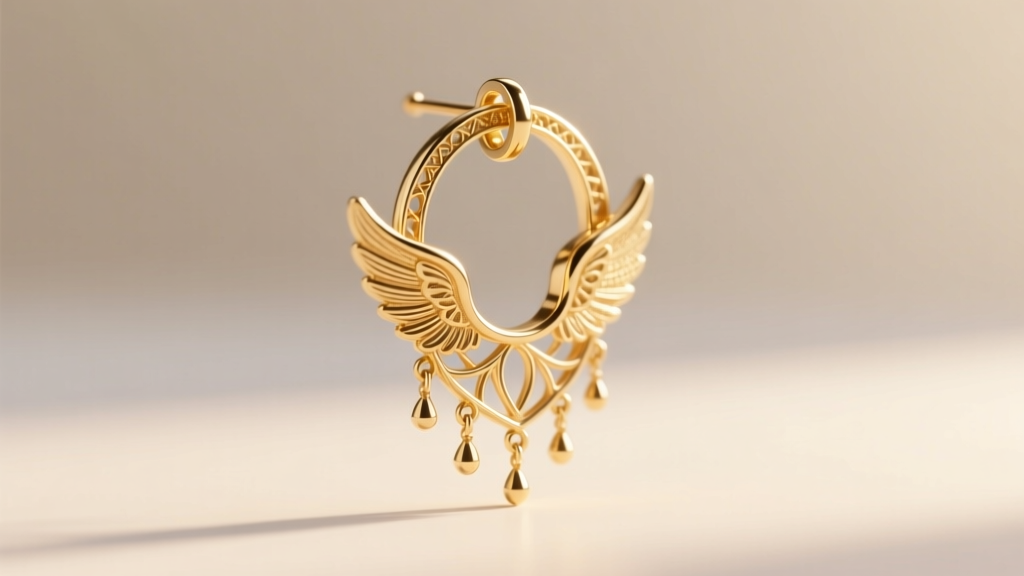
For budget-conscious buyers, gold vermeil and gold-filled angel earrings are widely available. However, their material properties present unique challenges for this specific motif. The Federal Trade Commission (FTC) mandates that gold vermeil must consist of a sterling silver base plated with at least 2.5 microns of gold.
The issue arises from the geometry of angel earrings. Wings and halos have high surface areas and sharp, protruding edges. These edges experience high friction against hair, scarves, and pillowcases. Over time, this friction will wear away the thin gold plating on the extremities of the angel's wings, exposing the tarnish-prone sterling silver beneath. If you choose vermeil angel earrings, opt for rounded, compact designs (like a cherub face or a folded-wing stud) rather than sprawling, detailed wings to maximize the lifespan of the plating.
Post Gauge and Backing Security for Top-Heavy Designs
An often-overlooked material property in earring design is the gauge (thickness) of the post. Angel earrings, particularly those featuring a vertical dangle or a heavy 18K gold halo, are inherently top-heavy.
- 22-Gauge Posts (0.64mm): Too thin for heavy gold angel motifs. The weight of the earring will cause the post to bend downward in the earlobe, making the angel face the floor.
- 20-Gauge Posts (0.81mm): The standard for most 14K gold stud earrings. Sufficient for lightweight angel wings and small cherub faces.
- 18-Gauge Posts (1.02mm): Required for heavy 18K gold angel drops or designs featuring multiple gemstones. Ensure your earlobes are stretched to accommodate this thicker post.
For heavy gold angel dangles, always pair the thick post with a secure backing. Standard friction backs (butterfly clasps) often slip under the weight of solid gold. Upgrade to screw-backs or silicone disc backers to keep your angel earrings sitting perfectly flush and upright on the earlobe.
Care and Maintenance for Intricate Gold Angel Castings
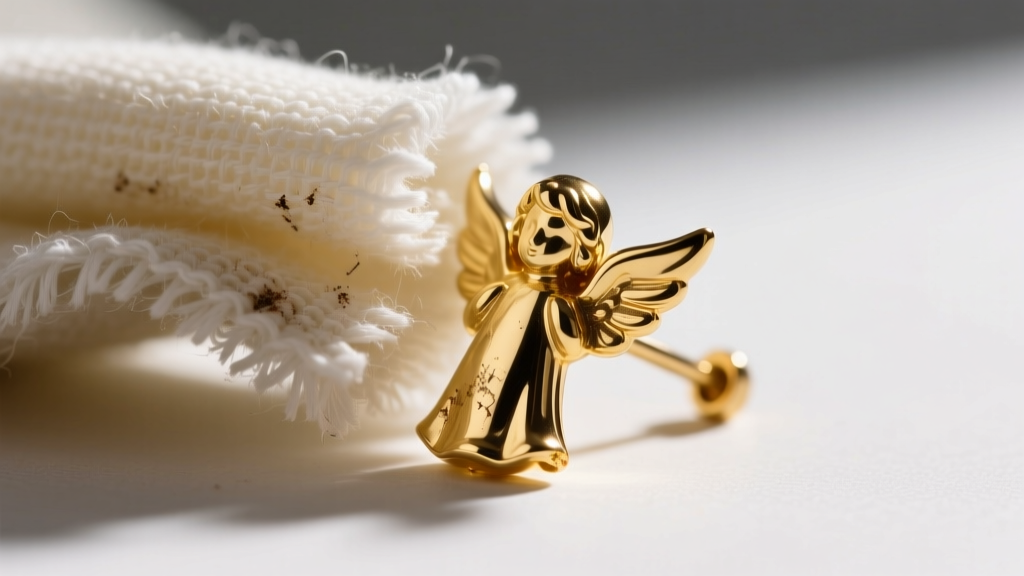
The deep crevices found in cast angel wings and flowing robes are magnets for skin oils, lotions, and environmental dust. Proper maintenance depends entirely on the material of your earrings.
"Never use a hard-bristled brush on high-karat gold angel motifs. The abrasive action can easily scratch the soft 18K gold and dull the high-polish finish on the delicate wing feathers." — Master Bench Jeweler
For solid 14K and 18K gold angel earrings, an ultrasonic jewelry cleaner is highly effective. The high-frequency sound waves create microscopic cavitation bubbles that safely blast debris out of the deepest filigree crevices without scratching the metal. Simply use a mild, ammonia-free jewelry solution for three minutes, rinse with distilled water, and dry with a soft lint-free cloth.
Conversely, never put gold vermeil or gold-plated angel earrings in an ultrasonic cleaner. The intense vibrations will rapidly accelerate the flaking and peeling of the gold layer, especially on the fragile tips of the angel's wings. For plated pieces, stick to gentle wiping with a damp microfiber cloth and a drop of mild dish soap, taking care to avoid aggressive rubbing on the high-friction edges.
Final Thoughts on Material Selection
Choosing the right material for your gold angel earrings requires balancing your budget, your aesthetic preferences, and the physical demands of the design. If you want a highly detailed, richly colored piece for special occasions, 18K gold offers unparalleled casting precision. For an everyday pair of angel wings that can withstand the rigors of daily wear, 14K gold remains the undisputed champion of durability. By understanding these metallurgical properties, you can invest in a piece of jewelry that maintains its heavenly beauty for a lifetime.


