Gold Chandelier Earrings: A Beginner's Styling Guide
Discover how to choose, style, and wear gold chandelier earrings with our beginner-friendly guide. Learn about weights, face shapes, and karat options.

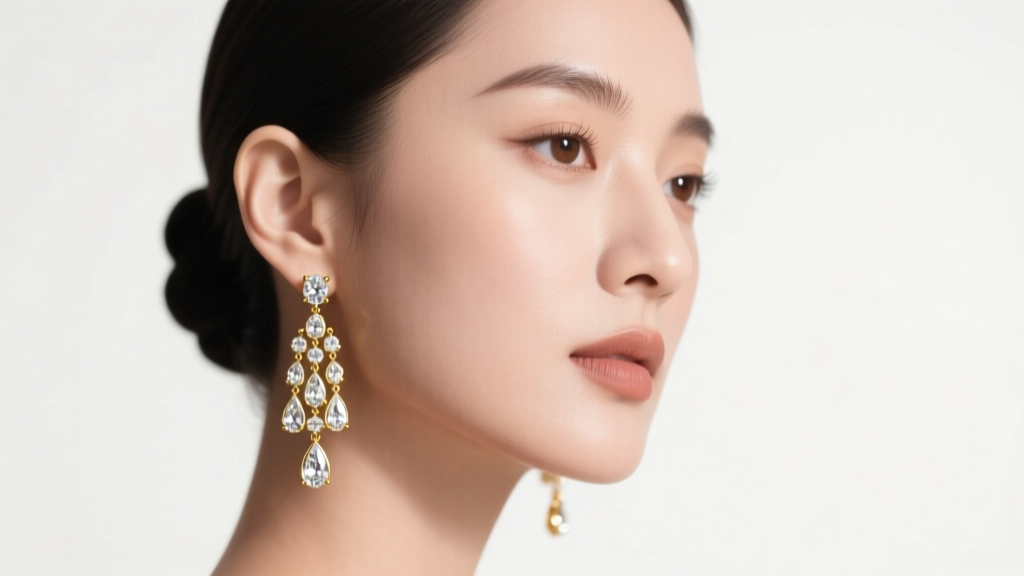
Gold chandelier earrings are the undisputed showstoppers of the fine jewelry world. With their cascading tiers, intricate metalwork, and undeniable movement, they possess a unique ability to elevate a simple outfit into a red-carpet-worthy ensemble. However, for beginners, navigating the world of statement earrings can feel intimidating. How do you balance their visual weight? What gold karat is best for everyday wear versus special occasions? And most importantly, how do you prevent heavy jewelry from stretching your earlobes?
This comprehensive, beginner-friendly explainer will demystify gold chandelier earrings, providing you with actionable advice on materials, face shapes, styling mechanics, and earlobe health.
What Exactly Are Chandelier Earrings?
Before diving into styling, it is crucial to understand what separates a chandelier earring from a standard drop or dangle earring. While all chandelier earrings are technically dangles, not all dangles are chandeliers.
- Drop Earrings: Typically feature a single gemstone or motif that hangs just below the earlobe. They are stationary and minimal.
- Dangle Earrings: Hang below the earlobe and swing back and forth on a single vertical axis. They offer movement but usually lack width.
- Chandelier Earrings: Characterized by their multi-tiered, branching structure. They mimic the shape of a crystal chandelier, featuring significant width, volume, and multiple focal points that move independently. They are designed to frame the face and draw the eye.
Understanding Gold Karats and Weight Limits
When investing in gold chandelier earrings, the purity of the gold dictates not only the color and price but also the structural integrity of the piece. Because chandelier designs require intricate wirework and structural branches, choosing the right karat is essential. According to the Gemological Institute of America (GIA), the alloy metals mixed with pure gold determine its durability.
| Gold Karat | Purity | Durability & Structure | Best Use Case |
|---|---|---|---|
| 22k Gold | 91.7% Pure | Very soft; prone to bending under heavy weight. | Lightweight, solid-cast designs; not recommended for intricate wirework. |
| 18k Gold | 75.0% Pure | Excellent balance of rich color and moderate strength. | Luxury event pieces; fine jewelry with diamond or gemstone accents. |
| 14k Gold | 58.3% Pure | Highly durable; holds intricate filigree shapes perfectly. | Heavy, elaborate chandelier designs meant for frequent wear. |
The Weight Threshold: Protecting Your Lobes
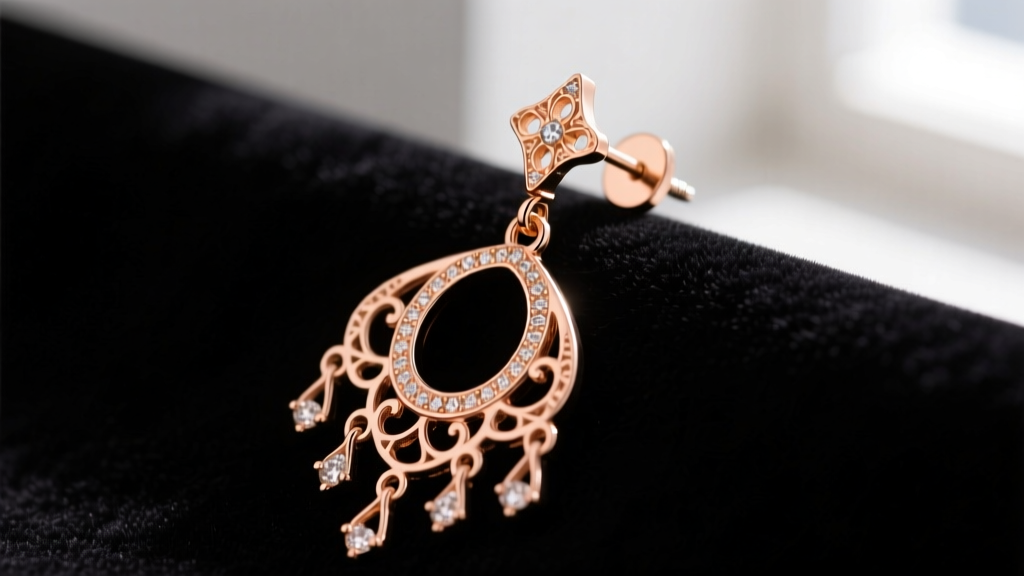
A common beginner mistake is ignoring the physical weight of the earrings. The average human earlobe can comfortably support about 7 to 10 grams per earring before experiencing fatigue, pain, or long-term stretching. Because gold is a dense metal, a large pair of solid 18k gold chandelier earrings can easily exceed 15 grams per ear. If you love the look of massive chandeliers, opt for 14k gold (which is slightly lighter due to alloy metals) or choose hollow-core and filigree designs that maximize visual volume while minimizing physical weight.
Matching Gold Chandelier Earrings to Your Face Shape
Chandelier earrings are essentially architectural frames for your face. Choosing the right silhouette can highlight your best features and create visual harmony.
Round Faces
If your face is roughly equal in length and width with soft, curved angles, your goal is to create the illusion of length. Avoid wide, circular, or hoop-style chandeliers. Instead, choose angular, linear, or rectangular chandelier designs that feature long, vertical drops. The sharp geometric lines will contrast beautifully with your soft features and elongate your neck.
Square Faces
A strong, wide jawline defines a square face. To soften these striking angles, look for chandelier earrings with curved motifs, teardrop shapes, and rounded oval elements. Avoid harsh geometric squares or sharp triangles, which will only emphasize the angularity of your jaw.
Heart-Shaped Faces
Heart-shaped faces are wider at the forehead and taper down to a narrow chin. You want to add visual weight to the lower half of your face. Opt for bottom-heavy chandelier earrings that are narrower at the top stud and flare out into wide, voluminous teardrops or pear-shaped gems near the jawline.
Oval Faces
Oval faces are naturally balanced, meaning you can pull off almost any chandelier style. However, to maintain proportion, ensure the width of the earrings does not extend significantly past the width of your cheeks, which can overwhelm your natural symmetry.
The Beginner's Guide to Styling and Balancing
Because gold chandelier earrings are inherently loud, the golden rule of styling them is subtraction. Let the earrings be the sole focal point of your look.
- The Neckline Rule: Chandelier earrings need negative space to swing and catch the light. Pair them with strapless, sweetheart, off-the-shoulder, or deep V-necklines. Avoid high collars, turtlenecks, or busy ruffled blouses, which will tangle with the metalwork and create a cluttered visual.
- The Jewelry Hierarchy: If you are wearing massive gold chandeliers, skip the statement necklace entirely. A delicate gold chain or a simple pendant is all you need. You can pair them with gold bangles or a cocktail ring, but keep the neckline bare.
- Hair Placement: To showcase the intricate details, wear your hair in a sleek chignon, a high ponytail, or a half-up style that sweeps the hair behind your ears. If wearing your hair down, ensure it is tucked behind one ear to reveal at least one earring fully.
Practical Tips for Comfort and Earlobe Health
The most beautiful pair of gold chandelier earrings is useless if they cause pain or damage your piercings. Heavy jewelry can lead to the dreaded 'cheese-cutter effect,' where a thin wire slowly slices downward through the earlobe tissue.
Gauge Sizes Matter
Most standard fashion earrings use a 20-gauge (0.81mm) or 18-gauge (1.02mm) post. However, for heavy gold chandeliers, you should actively seek out or ask a jeweler to fit the earrings with a 16-gauge (1.29mm) or even 14-gauge (1.63mm) post. A thicker post distributes the weight over a larger surface area of the piercing hole, drastically reducing downward pressure and preventing lobe tearing.
Upgrading Your Clasps and Backs
Never trust a standard friction post and butterfly back to hold a heavy chandelier earring securely. The weight will cause the earring to droop forward, and the backing can easily slip off.
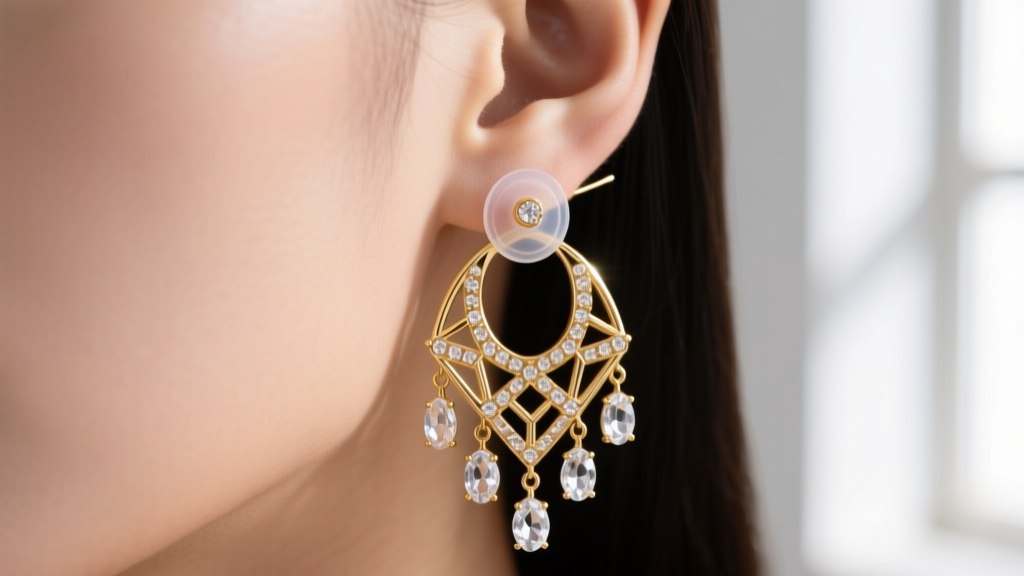
Pro-Tip from Master Jewelers: 'Always opt for a leverback clasp or a secure latch-back for heavy statement pieces. If you must use a post, pair it with a wide, medical-grade silicone earring back (like a Bling Guard or Lobe Wonder patch) that rests flush against the back of the earlobe to provide a wide base of support and keep the earring facing forward.'
By understanding the mechanics of gold purity, respecting the physical limits of your earlobes, and styling with intentional balance, you can confidently wear gold chandelier earrings. They are not just accessories; they are wearable art that, when chosen correctly, will frame your face and elevate your personal style for decades to come.


