Gold Hibiscus Earrings: 2026 Tropical Trend & Style Guide
Explore the 2026 gold hibiscus earrings trend. Our expert style guide covers material grades, face-shape pairings, and care for botanical jewelry.

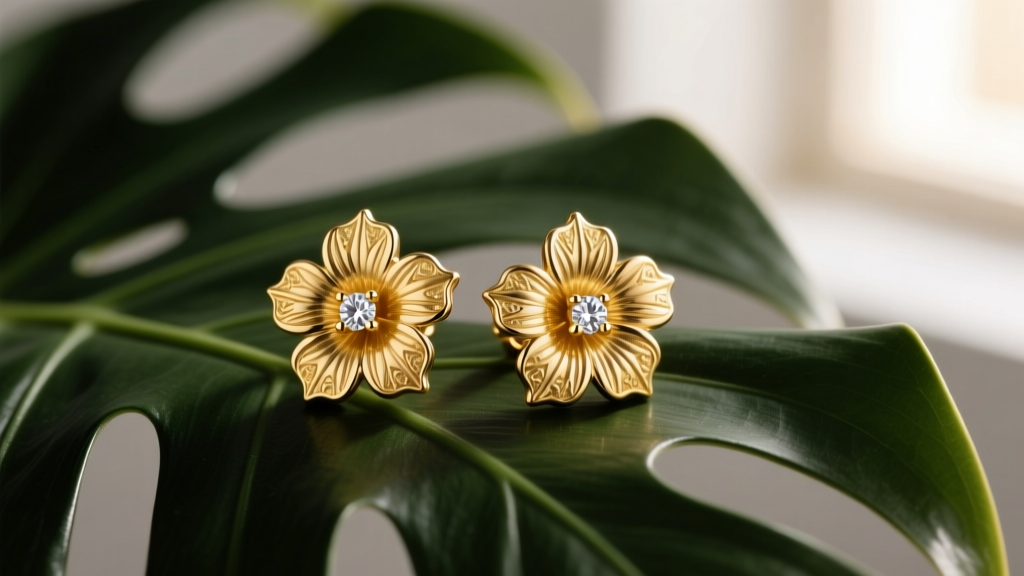
The 2026 Botanical Shift: Why Gold Hibiscus Earrings Are Dominating
As we navigate the jewelry landscape of 2026, the industry has seen a definitive pivot away from the stark, hyper-minimalist geometric shapes that defined the early 2020s. In their place, organic botanical motifs have taken center stage, driven by a cultural desire for 'dopamine dressing' and wearable escapism. Among these, gold hibiscus earrings have emerged as the undisputed leaders of the tropical trend. The hibiscus flower, with its sweeping, asymmetrical petals and prominent stamen, offers a masterclass in natural geometry, translating beautifully into fine and demi-fine metalwork.
Unlike generic floral studs, the hibiscus carries a distinct architectural weight. Designers are leveraging 3D CAD modeling to create deep relief carvings that catch the light, moving beyond flat, stamped-out silhouettes. Whether rendered as a delicate 6mm lobe stud or an exaggerated, shoulder-grazing dangle, the gold hibiscus serves as a versatile anchor in modern ear styling. However, as demand surges, the market has been flooded with varying qualities of craftsmanship. Understanding the nuances of material grades, casting techniques, and anatomical placement is critical for curating a collection that transcends seasonal costume jewelry.
Material & Manufacturing: What Separates Fine from Fast Fashion
When investing in botanical jewelry, the structural integrity of the petals is paramount. Thinly cast gold can suffer from 'petal joint fatigue,' where the narrow connections between the bloom and the earring post snap under minor tension. To avoid this, one must understand the metallurgy of the piece. According to the Gemological Institute of America (GIA), the alloy mix in karat gold directly impacts both the color and the tensile strength of the jewelry.
For everyday wear, 14k solid gold (58.3% pure gold) remains the gold standard for durability, offering enough alloyed metals like copper and zinc to withstand the friction of daily use without bending. Conversely, 18k gold (75% pure) yields a richer, more saturated yellow hue that beautifully mimics the warmth of a tropical sunset, but it is inherently softer and more prone to scratching on high-relief textures.
| Material Grade | Composition & Standards | Price Range (2026) | Durability & Best Use |
|---|---|---|---|
| 14k Solid Gold | 58.3% Gold, alloyed with copper/silver | $250 - $650 | Highly durable; ideal for everyday lobe studs and active wear. |
| 18k Solid Gold | 75% Gold, richer yellow tone | $600 - $1,400+ | Softer metal; best for occasional-wear dangles and heirloom pieces. |
| Gold Vermeil | Sterling silver base, min 2.5 microns gold | $85 - $180 | Moderate durability; requires careful maintenance to prevent base metal exposure. |
| Gold Plated (Brass) | Brass base, flash plating (<0.5 microns) | $25 - $60 | Low durability; prone to rapid tarnishing and skin discoloration. |
Consumers must also be wary of deceptive marketing regarding vermeil. The Federal Trade Commission (FTC) Jewelry Guides strictly mandate that for a piece to be labeled 'vermeil,' it must have a sterling silver base and a gold coating of at least 2.5 microns. Anything less is merely gold-plated and will quickly wear through on high-friction areas like earring posts and clutch backs.
Silhouette & Placement: Matching the Bloom to Your Anatomy
The hibiscus is an inherently bold motif, meaning scale and placement dictate whether the earring looks elegantly curated or overwhelmingly costumey. Mapping the earring style to your facial geometry and piercing anatomy is a non-negotiable step in the styling process.
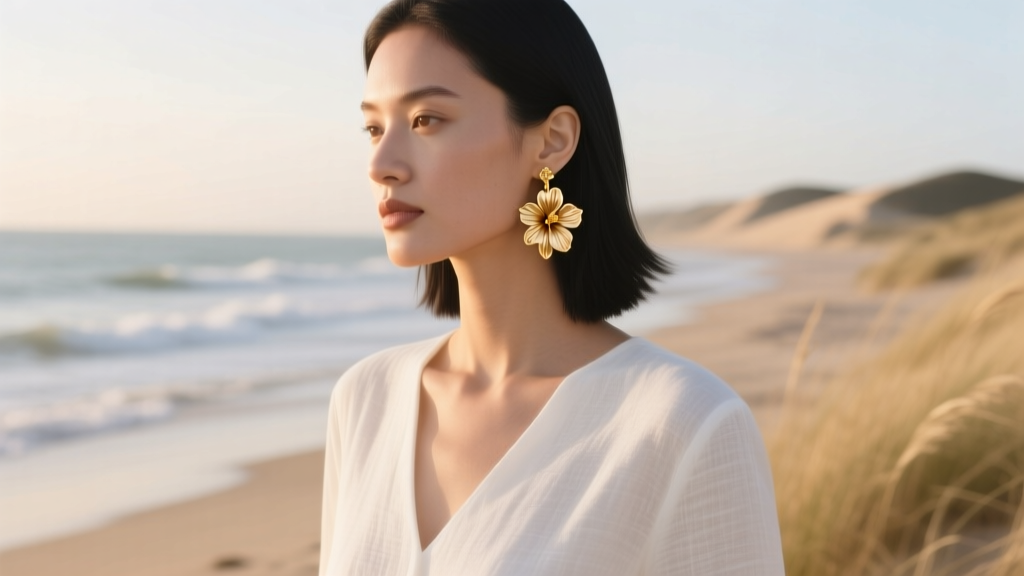
The Helix Cuff vs. The Lobe Dangle
For those with round or square face shapes, elongated gold hibiscus dangles (ranging from 30mm to 50mm in drop length) are highly recommended. The vertical line created by a dangle earring draws the eye downward, creating an optical illusion that lengthens the jawline and neck. These should be hung from an 18-gauge (1.0mm) or 20-gauge (0.8mm) French wire or leverback to support the weight of the 3D casting without stretching the lobe over time.
Conversely, oval and heart-shaped faces benefit from the width and volume provided by hibiscus ear cuffs or large huggie hoops adorned with floral charms. A wrap-around helix cuff requires no piercing and relies on tension to stay in place. Look for cuffs with a silicone grip interior or a highly adjustable 16-gauge (1.2mm) wire core to prevent the piece from slipping down the cartilage ridge throughout the day.
- Standard Lobe Studs: Opt for 6mm to 10mm widths. Anything larger risks the heavy metal casting pulling the piercing downward, causing discomfort.
- Cartilage Flat-Backs: If utilizing a 16g flat-back labret post for a helix or tragus placement, ensure the hibiscus face is laser-welded, not glued, to the post to prevent the bloom from snapping off.
- Threadless Ends: For a secure, custom fit in 14k or 18k gold, threadless push-pin ends featuring a hibiscus motif offer superior security compared to traditional threaded screws.
Styling Frameworks: Integrating Tropical Motifs into Minimalist Wardrobes
The most common failure mode when styling botanical jewelry is leaning too heavily into the 'vacation aesthetic,' which can limit the wearability of the pieces in professional or urban environments. The 2026 styling ethos relies on The Rule of Contrast. Gold hibiscus earrings achieve maximum impact when juxtaposed against structured, minimalist tailoring.
Pair an oversized, sculptural 18k gold hibiscus dangle with a crisp, architectural white poplin blazer or a monochromatic charcoal silk slip dress. The rigidity of the clothing provides a neutral canvas that allows the organic curves and high-polish reflections of the gold petals to command attention. Furthermore, do not shy away from metal mixing. While the hibiscus is traditionally rendered in warm yellow gold, integrating a single white gold or platinum geometric stud higher up in the ear stack creates a sophisticated, modern tension that grounds the tropical motif.
Curating the 2026 Ear Stack with Botanical Elements
Building a multi-piercing ear stack around a central hibiscus piece requires careful spatial planning. The 'Anchor and Orbit' method is the preferred framework for jewelers and stylists this year.
- The Anchor: Place your primary gold hibiscus piece in the primary lobe piercing. If using a dangle, keep the upper piercings minimal to avoid visual clutter near the cheekbone.
- The Orbit: In the secondary and tertiary lobe piercings, use micro-studs (2mm-3mm) that echo the center of the hibiscus. A tiny bezel-set citrine, yellow sapphire, or champagne diamond complements the gold without competing with the floral silhouette.
- The Helix Accent: Finish the stack with a simple, unadorned gold hoop or a subtle chain-link ear cuff in the upper cartilage. This draws the eye upward, balancing the visual weight of the hibiscus anchor below.
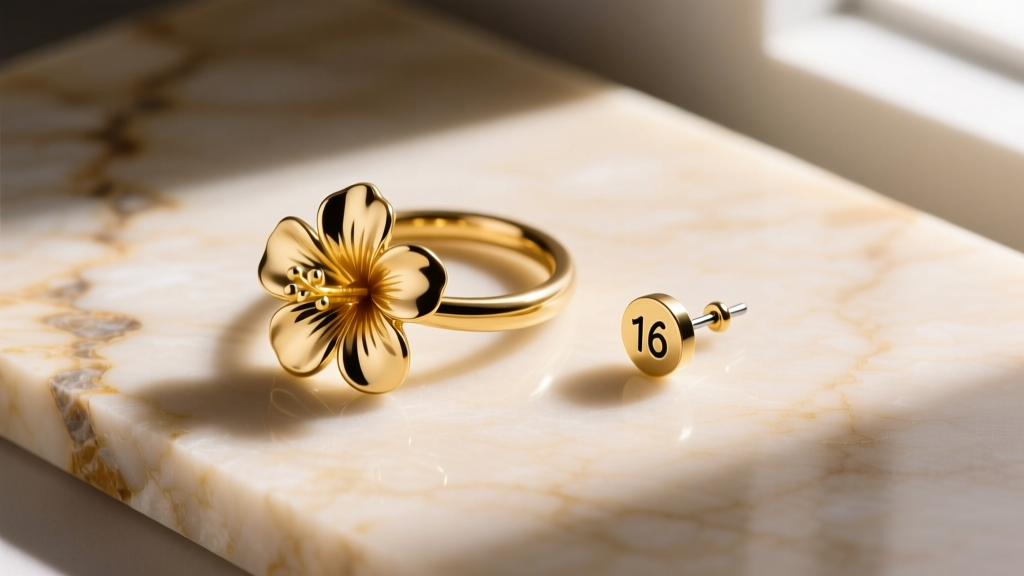
Care & Maintenance: Preventing Enamel Chips and Gold Wear
Many premium gold hibiscus earrings incorporate cold enamel or guilloché techniques to add vibrant reds, pinks, or deep blacks to the petal recesses. While visually stunning, enamel is essentially glass fused to metal, making it highly susceptible to micro-fractures and chipping upon impact.
Crucial Maintenance Rules:
- Never use ultrasonic cleaners on enameled botanical jewelry. The high-frequency vibrations will shatter the enamel from the inside out. Instead, use a soft-bristled baby toothbrush with a drop of mild dish soap and lukewarm water to gently lift sebum and lotion from the deep petal grooves.
- Perfume and Hairspray Protocol: Always apply aerosols and fragrances before putting on your earrings. The alcohol and chemical solvents in these products will rapidly degrade gold vermeil and strip the protective top-coat off enameled pieces.
- Storage Separation: The intricate, raised stamen and petal edges of a 3D hibiscus casting can easily scratch softer gold pieces or become tangled in chain necklaces. Store them individually in microfiber-lined compartments or soft anti-tarnish pouches to preserve the high-polish finish of the gold.
By prioritizing structural metallurgy, anatomical precision, and disciplined styling, gold hibiscus earrings transition from a fleeting seasonal novelty into a cornerstone of a sophisticated, nature-inspired fine jewelry wardrobe.


