Gold Hoop Clip On Earrings: 2026 Budget & Value Guide
Discover the true value of gold hoop clip on earrings in 2026. We analyze mechanisms, metal grades, and pricing to help you avoid painful, cheap fakes.

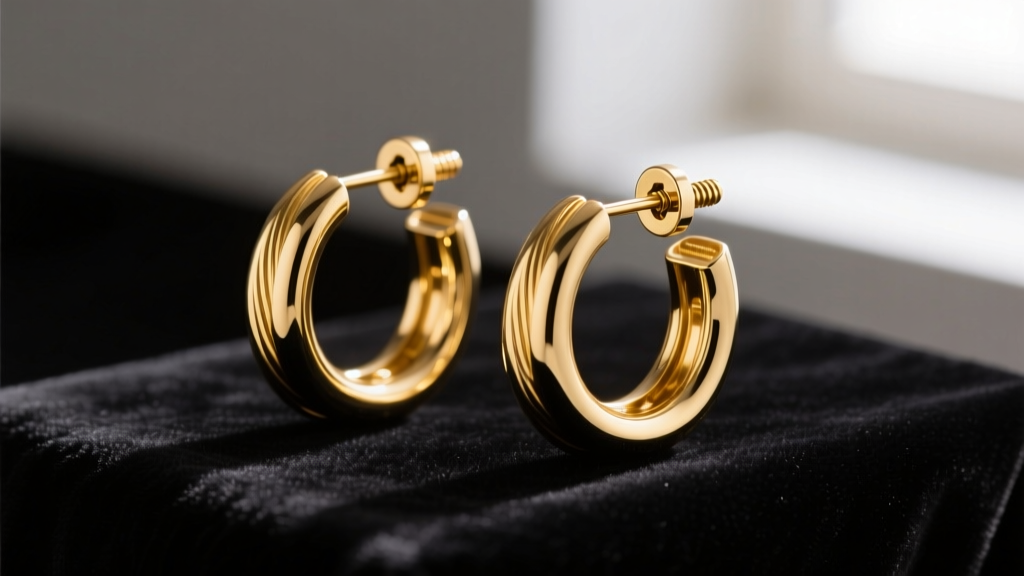
For decades, non-pierced jewelry has carried an unfair stigma, often associated with uncomfortable pinching and cheap, fast-fashion metals. However, as gold prices continue their upward trajectory in 2026, the market for high-quality non-pierced alternatives has matured significantly. Today, finding the perfect pair of gold hoop clip on earrings is no longer about settling for discomfort; it is about understanding the intersection of metallurgy, mechanical engineering, and long-term value.
Whether you have sensitive earlobes, simply prefer not to pierce, or want to rotate heavy statement hoops without stretching your piercings, evaluating the true cost-per-wear of clip-on jewelry requires a deep dive into how they are constructed. This guide strips away the marketing fluff to assess what you are actually paying for when you invest in non-pierced gold hoops.
The Physics of the Pinch: Why Cheap Hardware Fails
The most common complaint regarding clip-on earrings is pain, usually followed closely by the earring slipping off. Both of these failure modes are directly tied to poor hardware engineering and improper weight distribution. When evaluating gold hoop clip on earrings on a budget, the first thing to inspect is the contact surface area of the clip.
- The 8mm Rule: The padded cushion of the clip that rests against the back of your earlobe should be at least 8mm wide. Anything narrower concentrates the clamping force into a tiny point, leading to ischemic pain (cutting off blood flow) within 30 minutes.
- Spring Tension Degradation: Budget earrings often use low-grade base metal springs. After approximately 200 to 300 open-close cycles, these cheap springs suffer from metal fatigue, losing the clamping force required to hold the earring in place.
- Pad Material: Avoid hard plastic pads. High-value clip-ons utilize medical-grade silicone or soft rubberized cushions that increase friction against the skin, allowing for a looser, more comfortable grip without sacrificing security.
Mechanism Breakdown: Screw-Back vs. Paddle-Back
Not all clips are created equal. The mechanism dictates both the lifespan of the earring and the level of comfort you can expect. Here is how the two dominant styles compare in terms of long-term value.
Screw-Back Mechanisms
Screw-back clips feature a threaded post that allows the wearer to manually adjust the tension of the earring against the earlobe. This is the gold standard for heavier gold hoops. By controlling the exact pressure, you eliminate the pinching associated with fixed-tension clips. However, the primary failure mode here is user error: over-tightening the screw can strip the microscopic threads or bend the post, rendering the adjustable feature useless.
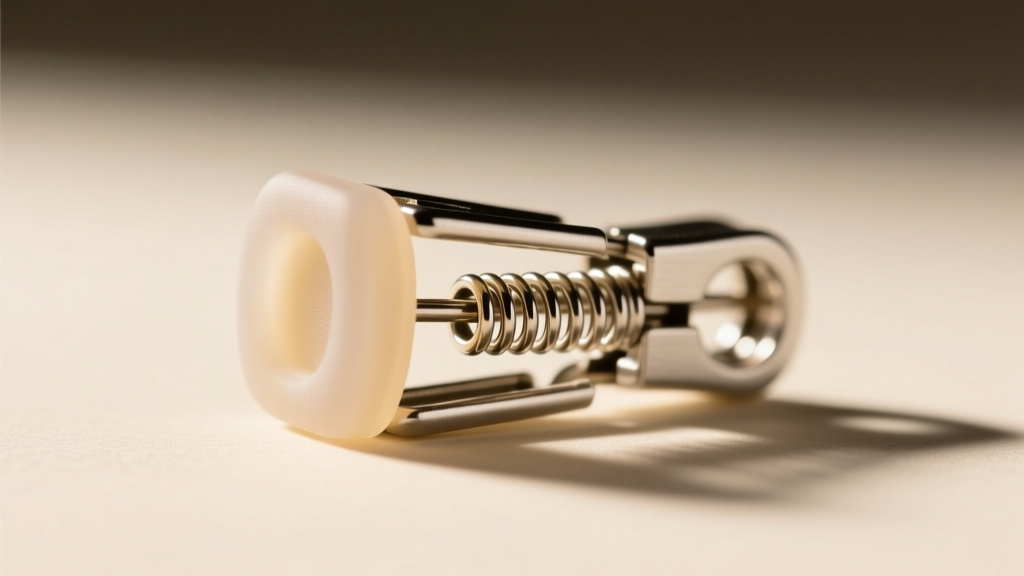
Paddle-Back (Comfort Fit) Mechanisms
Paddle-backs rely on a hinged, spring-loaded arm that snaps into place. Modern, high-end paddle-backs use a dual-spring system that distributes pressure evenly across a wide silicone paddle. While they lack the micro-adjustability of screw-backs, premium paddle-backs are vastly superior to the rigid, single-spring clips found in discount bins. When shopping, look for brands that explicitly state their hinges are tested for over 5,000 tension cycles.
Metallurgy and Material Grades: Decoding the Gold
The term 'gold' in product descriptions is heavily regulated by the Federal Trade Commission (FTC), yet marketing language can still be confusing. Understanding the difference between plating, vermeil, and gold-filled is critical for budget assessment, as it dictates how long the earrings will last before the base metal is exposed.
| Material Grade | Base Metal | Gold Thickness / Content | Expected Lifespan | 2026 Price Range |
|---|---|---|---|---|
| Gold Plated | Brass or Copper | Less than 0.5 microns | 3 - 6 months | $15 - $30 |
| Gold Vermeil | Sterling Silver (925) | Minimum 2.5 microns | 1 - 3 years | $45 - $95 |
| Gold-Filled | Jeweler's Brass | 5% gold by weight (1/20) | 5 - 10+ years | $40 - $85 |
| Solid 10k/14k | None (Alloyed Gold) | 41.7% - 58.3% pure gold | Lifetime | $150 - $400+ |
For the best balance of budget and longevity, gold-filled is the undisputed champion for clip-on hoops. Because the gold layer is mechanically bonded to the core under high heat and pressure, it will not flake or peel like electroplated jewelry. Furthermore, because clip-on earrings do not pass through the ear canal, the risk of brass-induced contact dermatitis (a common issue with gold-filled pierced posts) is virtually zero, provided the clip pad remains intact.
According to the Gemological Institute of America (GIA), gold-filled items contain significantly more gold than gold-plated pieces, making them highly resistant to tarnishing and ideal for items subjected to frequent handling and friction, such as clip-on mechanisms.
Weight Distribution: The Hidden Value Factor
When assessing the value of gold hoop clip on earrings, weight is a double-edged sword. Solid gold is incredibly dense; a 30mm solid 14k gold hoop can easily weigh over 12 grams per earring. While this signifies high material value, it is a nightmare for clip-on mechanics.
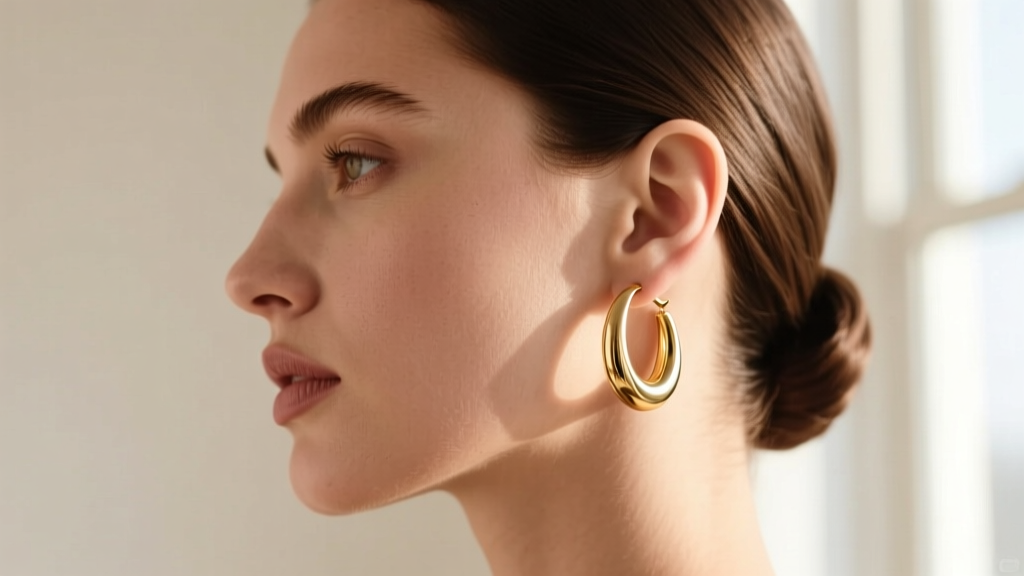
Hoops that exceed 15 grams per earring will naturally pull downward due to gravity, creating a lever effect that pries the top of the clip away from the earlobe. To counteract this, high-value heavyweight clip-ons incorporate a 'counter-balance' design or a wider, curved front cradle that hugs the front of the earlobe, distributing the sheer force across a broader surface area. If a retailer is selling heavy, solid-gold clip-on hoops without detailing how the weight is managed, it is a major red flag for poor ergonomic design.
How to Calculate Cost-Per-Wear for Clip-Ons
To truly assess value, abandon the initial price tag and calculate the cost-per-wear (CPW). The formula is simple: Total Cost ÷ Estimated Number of Wears = CPW.
- The Fast Fashion Trap: A $20 gold-plated pair might be worn 10 times before the plating rubs off on the clip hinge or the spring snaps. CPW = $2.00.
- The Gold-Filled Investment: A $65 pair of 14k gold-filled hoops with a reinforced screw-back mechanism can easily be worn 150 times over three years. CPW = $0.43.
As demonstrated, spending triple the upfront cost on superior materials and hardware actually reduces your long-term expenditure while entirely eliminating the discomfort of failing hardware.
Final Verdict: Where to Invest Your Budget
In 2026, the market for gold hoop clip on earrings offers exceptional value if you know exactly what specifications to demand. Avoid anything labeled simply as 'gold plated' over brass, and be highly skeptical of heavy hoops that rely on basic spring hinges. Your budget is best allocated toward 14k gold-filled or heavy gold vermeil pieces that feature adjustable screw-back mechanisms, wide silicone comfort pads, and a total weight kept under 12 grams per earring. By prioritizing mechanical integrity and regulated metal grades, you can enjoy the luxurious aesthetic of gold hoops with zero compromise on comfort or longevity.


