Why Earrings Turn Green: 2026 Hypoallergenic Guide
Discover why earrings turn green, the chemistry behind copper oxidation, and the 2026 metallurgy trends solving the green ear problem.


There are few things more frustrating in the world of jewelry styling than taking off a gorgeous pair of vintage-inspired chunky hoops after a long day, only to reveal a stark, unsightly green ring encircling your piercing. The phenomenon of why earrings turn green is one of the most common grievances among jewelry enthusiasts and casual wearers alike. However, as we navigate the jewelry landscape in 2026, the intersection of advanced metallurgy and dermatology has provided new insights—and new manufacturing standards—to combat this age-old issue. This guide breaks down the exact chemistry behind the green ear, analyzes current manufacturing trends, and provides a definitive framework for selecting earrings that keep your skin clean and healthy.
Oxidation vs. Allergy: Decoding the Green Ear
To solve the problem, we must first correctly diagnose it. The vast majority of consumers mistakenly believe that green skin is a sign of a metal allergy. In reality, a green stain is almost exclusively a chemical oxidation reaction, not an immune response. When base metals—specifically copper and its alloys like brass or bronze—come into contact with the oxygen, moisture, and chlorides found in human sweat, they undergo a chemical reaction that produces copper chloride and copper carbonate. This compound, commonly known as verdigris, is what leaves the green or blackish residue on your earlobes.
Conversely, a true metal allergy (most commonly to nickel or cobalt) presents as allergic contact dermatitis. According to the American Academy of Dermatology, nickel allergies manifest as red, itchy, swollen, or even weeping skin, rather than a simple surface stain. Understanding this distinction is crucial: if your ear is green but not itchy, you are dealing with copper oxidation. If your ear is red, inflamed, and itchy, you are dealing with an allergy. Many cheap, mass-market earrings contain both copper cores and nickel plating, meaning they can trigger both reactions simultaneously.
The 925 Sterling Silver Paradox
A common point of confusion arises when wearers experience green ears from jewelry stamped ".925" or "Sterling Silver." Many assume that because sterling silver is a precious metal, it should never discolor the skin. However, pure silver (99.9%) is too soft for functional jewelry. To create sterling silver, manufacturers alloy it with exactly 7.5% copper to increase its tensile strength and durability.
While 7.5% seems negligible, it is more than enough to cause oxidation under the right conditions. The primary catalyst here is your skin's natural pH level. Human skin typically has a slightly acidic pH ranging from 4.5 to 5.5. If your diet, stress levels, or skincare products lower your skin's pH (making it more acidic), or if you wear the earrings while exercising and sweating heavily, the acid breaks down the silver-copper matrix at a microscopic level, leaching the copper onto your skin. In 2026, many high-end silversmiths have begun utilizing argon gas e-coating or rhodium under-plating to seal the copper within the silver alloy, effectively neutralizing this reaction without altering the metal's hallmark status.
2026 Manufacturing Trends: PVD and E-Coating
The fast-fashion jewelry sector has historically relied on brass (an alloy of copper and zinc) as a cheap base metal, flashing it with a microscopic layer of gold or silver plating. Once that thin plating wears away from friction against the earlobe, the copper core is exposed, and the green staining begins.
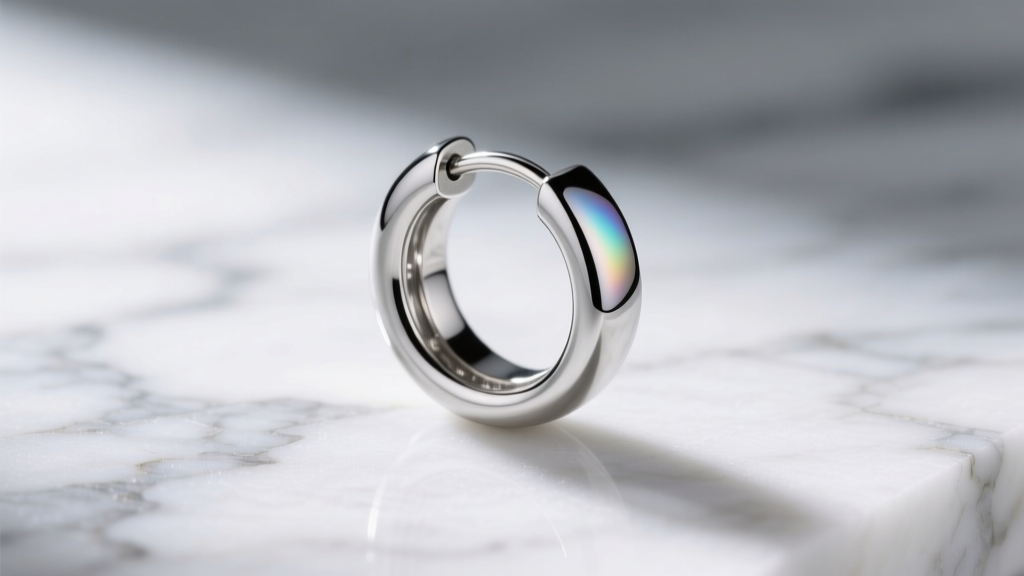 However, the 2026 trend analysis shows a massive industry pivot away from electroplated brass toward PVD (Physical Vapor Deposition) coating on 316L stainless steel. PVD is a vacuum-chamber process that bonds titanium nitride or real gold molecules to the steel at an atomic level. Because 316L stainless steel contains zero copper, it is physically impossible for PVD-coated steel earrings to turn your ears green, even if the coating eventually scratches. Furthermore, modern electrophoretic deposition (e-coating) is now being used on affordable silver jewelry, creating a flexible, invisible nano-ceramic barrier that prevents sweat from ever touching the copper alloys beneath.
Material Breakdown: What Actually Prevents Green Skin?
When shopping for earrings, the base metal is the single most important factor in preventing oxidation. Below is a comparative analysis of common earring materials, their oxidation risk, and their ideal use cases based on current market pricing and dermatological safety.
| Metal / Alloy | Copper Content | Green Oxidation Risk | Average Price Range | Best Use Case |
|---|---|---|---|---|
| Brass / Bronze Base | 60% - 90% | Extreme | $5 - $20 | Occasional wear only; avoid in heat. |
| 925 Sterling Silver | 7.5% | Moderate (pH dependent) | $25 - $80 | Standard lobe piercings; daily wear if kept dry. |
| 316L Surgical Steel | 0% | None | $15 - $45 | Cartilage, helices, and active lifestyles. |
| ASTM F136 Titanium | 0% | None | $35 - $90 | Fresh piercings, highly reactive skin, sleeping. |
| Niobium | 0% | None | $20 - $60 | Hypoallergenic hoops and seamless rings. |
The "Clear Nail Polish" Myth and Modern Alternatives
For decades, the internet's most popular hack for stopping earrings from turning green was painting the earring posts with clear nail polish. From a modern materials science perspective, this is a highly flawed and potentially dangerous practice. Standard nail polish is brittle; it chips rapidly against the friction of a piercing fistula. Worse, those microscopic chips create jagged edges that can micro-tear the delicate healing tissue inside the ear canal. Furthermore, nail polish traps moisture and bacteria against the metal, creating an ideal breeding ground for staph infections, particularly in cartilage piercings which have very low blood flow.
The 2026 alternative is the use of jewelry-specific nano-ceramic barrier sprays or liquid e-coating solutions. These products are formulated with flexible, medical-grade polymers that bond to the metal, expanding and contracting with temperature changes without chipping. If you must wear a beloved pair of brass vintage earrings, applying a specialized jewelry guard spray and allowing it to cure for 24 hours will provide a safe, flexible barrier that lasts for dozens of wears before needing reapplication.
Cartilage vs. Lobe: Gauge Sizes and Healing Protocols
The location of your piercing heavily dictates how you should approach metal selection. Earlobes are highly vascular and heal relatively quickly, making them more forgiving of minor oxidation. Cartilage (helix, tragus, conch), however, is avascular and notoriously prone to irritation bumps and prolonged healing phases.
 According to guidelines referenced by the New Zealand Dermatological Society, introducing reactive metals or oxidation-prone alloys into a healing cartilage fistula can lead to chronic inflammation and localized hyperpigmentation.
Gauge Sizing and Surface Area
When selecting metals for sensitive areas, consider the gauge (thickness) of the earring post.
- 20G (0.81mm): Standard for most commercial lobe earrings. The thin post has a high surface-area-to-volume ratio, meaning plating wears off faster, exposing copper cores quickly.
- 18G (1.02mm) & 16G (1.29mm): The standard for professional cartilage piercings. Thicker posts made of solid ASTM F136 titanium or 14k solid gold not only provide structural stability for the healing fistula but also eliminate the risk of plated layers wearing through to a base metal.
Final Styling Takeaways
The era of accepting the "green ear" as an unavoidable tax on trendy, affordable jewelry is over. By understanding the difference between copper oxidation and nickel allergies, you can curate a collection that is both stylish and dermatologically sound. Prioritize PVD-coated stainless steel for trendy, seasonal pieces, reserve your 925 sterling silver for dry, low-sweat environments, and invest in ASTM F136 titanium for your foundational, everyday cartilage and lobe staples. Your piercings—and your earlobes—will thank you.


