Expert Guide to Gold and Pearl Hoop Earrings: Specs & Care
Discover the technical specs, gold karat grades, and pearl types for gold and pearl hoop earrings. An expert guide to construction and care.


Gold and pearl hoop earrings represent a masterclass in balancing organic fragility with metallurgical permanence. While often categorized simply as classic staples, the engineering required to seamlessly marry a delicate, calcium-carbonate gemstone with a continuous precious metal loop is highly technical. This expert deep dive examines the material science, structural tolerances, and failure modes inherent in gold and pearl hoop earrings, providing a definitive framework for collectors, jewelers, and informed buyers.
The Metallurgy of Gold Hoops: Karat Weight vs. Structural Tension
The structural integrity of any hoop earring is dictated by the Vickers hardness (HV) of its gold alloy. According to the American Gem Society (AGS), pure 24k gold is far too malleable for jewelry that requires mechanical tension. Therefore, alloying is mandatory. However, the choice between 14k and 18k gold fundamentally alters the earring's lifespan and performance.
14k Gold (58.5% Pure Gold): With an HV rating of approximately 120-140, 14k gold offers superior structural memory. For continuous hoops or huggies where the metal must maintain a precise circular geometry to keep the clasp engaged, 14k is the optimal choice. The copper and zinc alloys provide the necessary rigidity to prevent the hoop from warping under the asymmetric weight of a pearl drop.
18k Gold (75% Pure Gold): Dropping to an HV of 80-100, 18k gold is significantly softer. While it offers a richer, warmer hue and higher hypoallergenic properties, it is highly susceptible to oval deformation. If an 18k hoop is constructed with a wire gauge thinner than 1.0mm, the sheer weight of a 10mm South Sea pearl will cause the bottom arc of the hoop to stretch permanently, altering the earring's drape and compromising the clasp alignment.
Pearl Taxonomy: Matching Nacre Thickness to Hoop Dynamics
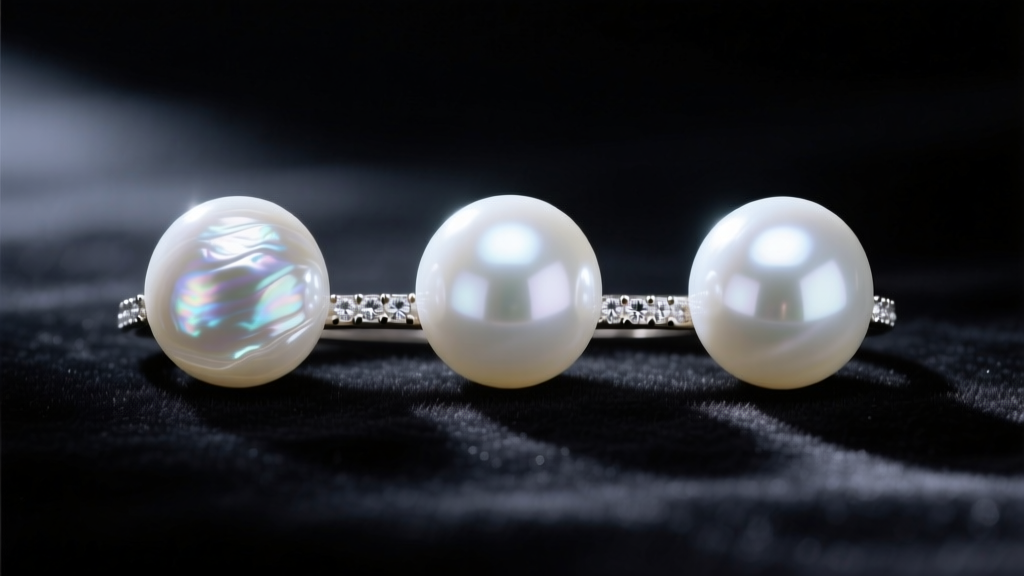
The Gemological Institute of America (GIA) evaluates pearls on seven critical factors, but for hoop earring integration, nacre thickness and drill-hole geometry are the primary engineering constraints. Unlike stud earrings, which hide the drill hole against the earlobe, hoops expose the pearl in 360 degrees of rotation.
Akoya vs. Freshwater Structural Viability
Akoya Pearls: Prized for their mirror-like luster resulting from highly aligned aragonite crystals, Akoyas typically possess a relatively thin nacre layer (0.3mm to 0.5mm) over a bead nucleus. When mounted on hoops via a peg-and-epoxy system, the drill hole must not exceed 10% of the pearl's total depth to avoid compromising the nacre shell. If the epoxy bond fails, the thin nacre around the drill hole is highly prone to chipping.
Freshwater Pearls: Composed of solid nacre without a bead nucleus, modern tissue-nucleated freshwater pearls offer exceptional structural resilience. They can be fully drilled and wire-wrapped or secured via mechanical tension sleeves on the hoop without the risk of delamination. For active wearers, solid-nacre freshwater pearls mounted on 14k gold hoops represent the most failure-resistant combination.
Clasp Mechanics and Failure Modes in Pearl Hoops
The clasp is the most common point of catastrophic failure in hoop earrings. The integration of pearls shifts the center of gravity, placing unique torque on the hinge and locking mechanisms.
- Hinged Snap Clasps: These rely on a microscopic tension pin fitting into a receiving groove. Over time, cosmetic powders and skin oils accumulate in the groove, increasing the tolerance gap. When the gap exceeds 0.15mm, the 'click' fails, and the hoop will slide out of the earlobe when weighed down by the pearl.
- Continuous (Endless) Hoops: Featuring a thinner wire post that slides into a hollow receiving tube. The primary failure mode here is 'post fatigue.' Repeated bending of the post to insert it into the ear weakens the metal at the stress point, eventually leading to a clean snap.
- Latch-Back (Saddle) Clasps: The most secure for heavy pearl hoops. The hinged saddle physically locks over the wire post, providing a secondary mechanical barrier that prevents the earring from slipping out even if the primary friction fit loosens.
Technical Specifications & Buying Matrix
When commissioning or purchasing gold and pearl hoop earrings, refer to this technical matrix to ensure the metallurgical and gemological specifications align with your intended wear frequency.
| Component | Everyday Huggie (Active) | Statement Drop (Occasional) | Heirloom Investment |
|---|---|---|---|
| Gold Alloy | 14k Yellow or White Gold | 18k Yellow Gold | 18k or 22k (with reinforced core) |
| Wire Gauge | 16G (1.2mm) to 18G (1.0mm) | 18G (1.0mm) | 18G (1.0mm) with internal steel armature |
| Pearl Type | Solid Nacre Freshwater | Akoya (0.4mm+ nacre) | South Sea (2.0mm+ nacre) |
| Mounting Method | Fully drilled, tension sleeve | Half-drilled, marine epoxy peg | Half-drilled, laser-welded cup peg |
| Est. Price Range | $250 - $600 | $800 - $2,500 | $3,500 - $12,000+ |
Maintenance Protocols: Preventing Galvanic and Chemical Degradation
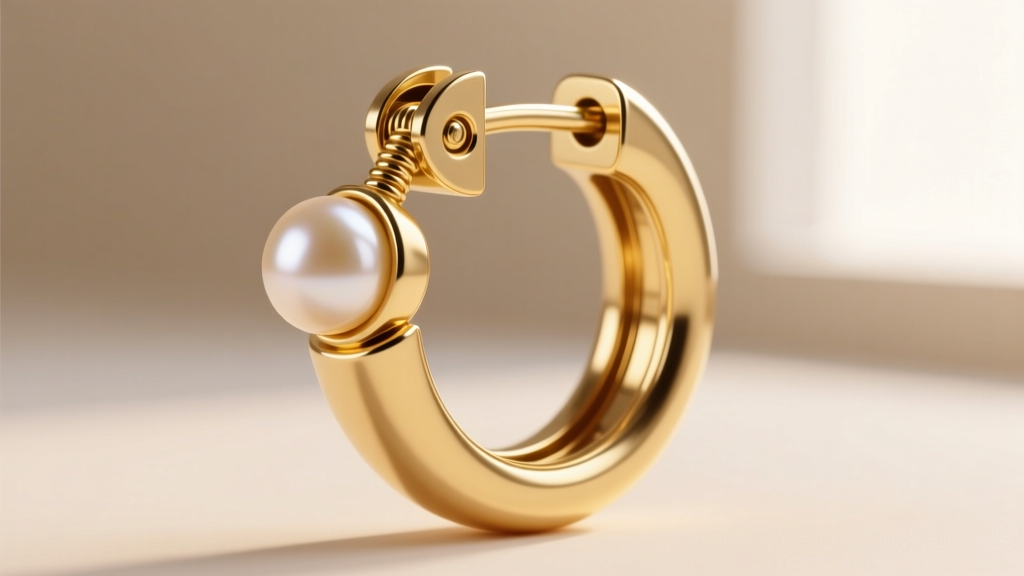
Maintaining gold and pearl hoop earrings requires navigating a chemical minefield. Standard jewelry cleaning protocols will actively destroy the organic gemstone. According to the Jewelers Mutual Care Guide, pearls are highly sensitive to acids, alkalis, and extreme heat.
The Ultrasonic Cleaner Trap
Never place pearl hoop earrings in an ultrasonic cleaner. The high-frequency cavitation bubbles will not only strip the pearl's delicate nacre layers, causing irreversible dulling, but the vibrations will also shatter the cyanoacrylate or epoxy bonds used in half-drilled peg mountings. Once the epoxy micro-fractures, the pearl will detach and be lost.
Proper Chemical Isolation
To clean the gold components without damaging the pearls, use a localized application method. Dip a micro-swab in a mild, non-detergent soap solution and carefully trace the gold wire, stopping 2mm short of the pearl's drill hole. Dry immediately with compressed air. Furthermore, always apply perfumes, hairsprays, and cosmetics a full 15 minutes before donning the earrings; the alcohol and volatile organic compounds (VOCs) in these products will rapidly degrade the pearl's luster and attack the gold alloy's copper content, leading to premature tarnishing.
Expert Verdict: Engineering the Perfect Pair
The ideal gold and pearl hoop earring is not merely a visual pairing, but a triumph of micro-engineering. For daily wear, prioritize a 14k gold huggie with an 18-gauge wire and solid-nacre freshwater pearls secured via mechanical tension. For high-end, occasional wear, an 18k gold latch-back hoop featuring half-drilled Akoya pearls with verified nacre thickness offers the ultimate expression of luxury. By understanding the metallurgical limits and organic vulnerabilities of these materials, you can select pieces that will maintain their structural and aesthetic integrity for generations.


