Expert Care, Cleaning, and Maintenance for Gold Screw Earrings
Learn how to safely clean, maintain, and store your gold screw earrings. Expert tips on protecting threads, polishing karat gold, and preventing loss.

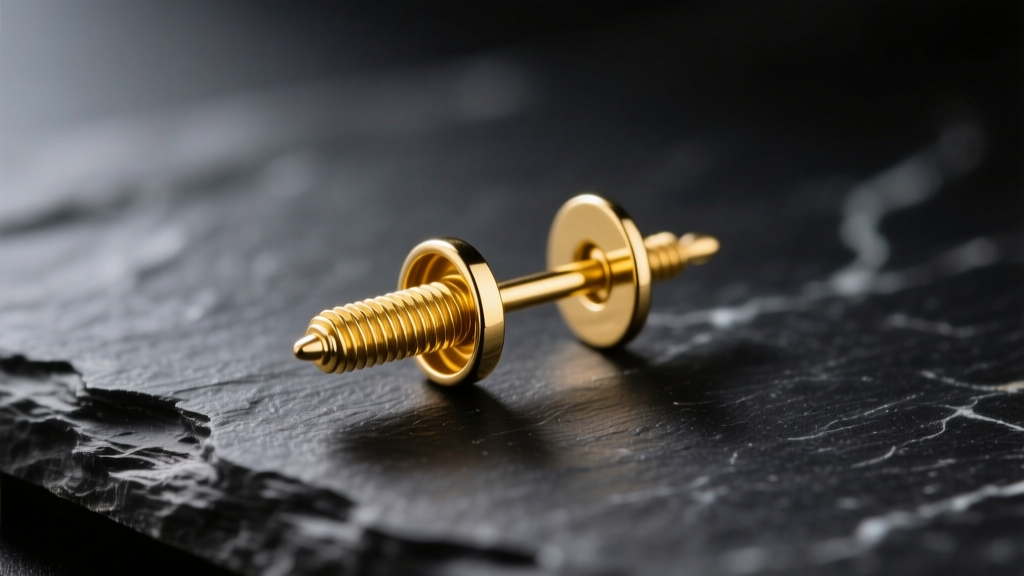
The Anatomy of Gold Screw Earrings: Why Threads Matter
Gold screw earrings represent the pinnacle of earring security and luxury. Whether you are wearing internally threaded posts for secure body jewelry or precision-machined screw backs for high-end diamond studs, these pieces rely on exact metallurgical tolerances rather than the degrading tension of friction backs. However, this precision engineering makes them uniquely vulnerable to improper cleaning, chemical degradation, and cross-threading.
As of 2026, advancements in CNC micro-machining have allowed jewelers to cut finer, more precise threads into precious metals. While this results in a smoother, more secure fit, it also means that older, harsher cleaning methods can easily destroy the thread pitch. Understanding the specific alloy composition of your gold is the first step in proper maintenance. According to the Gemological Institute of America (GIA), the alloy metals mixed with pure gold (such as copper, silver, and zinc) dictate both the hardness of the threads and their chemical reactivity.
14k vs. 18k Gold: Hardness and Thread Durability
- 14k Gold (58.5% Pure): With a higher Vickers hardness due to its alloy content, 14k gold is highly resistant to thread stripping. It is the industry standard for externally threaded body jewelry and heavy screw-back studs.
- 18k Gold (75% Pure): Softer and more malleable, 18k gold offers a richer color but requires a gentler touch. Forcing an 18k gold screw back can easily warp the threads, leading to a permanent mechanical failure.
Step-by-Step Cleaning Protocol for Threaded Gold
Because dirt, sebum, and dead skin cells can accumulate deep within the microscopic grooves of a screw thread, simply wiping the earring with a cloth is insufficient. You must dissolve organic buildup without triggering stress corrosion cracking in the gold alloys.
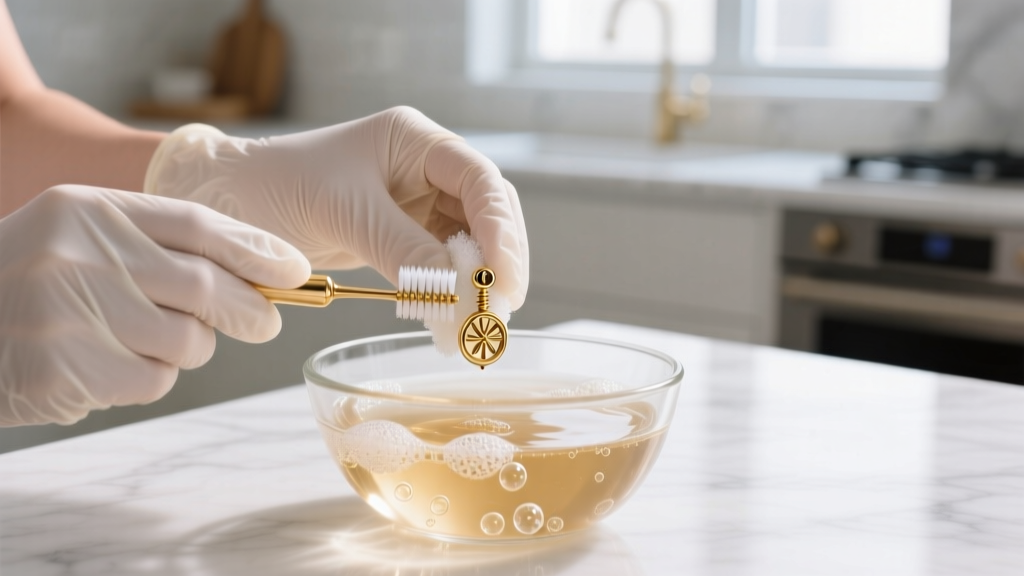
What You Need
- Distilled water (tap water contains chlorine and minerals that can leave deposits in the threads)
- pH-neutral, phosphate-free dish soap (e.g., original Dawn)
- Ultra-soft baby toothbrush or specialized jewelry detailing brush
- Lint-free microfiber cloth
- Nitrile gloves (to prevent grip slippage and protect the gold from acidic skin oils)
The Cleaning Process
- Disassemble Completely: Never clean gold screw earrings while assembled. Unscrew the back or post entirely to expose all threaded surfaces.
- Prepare the Solution: Mix three drops of pH-neutral dish soap into a small glass bowl of warm (not hot) distilled water.
- Soak: Submerge the disassembled earring components for exactly 5 to 10 minutes. This softens hardened sebum trapped in the thread grooves.
- Agitate Gently: Wearing nitrile gloves, use the ultra-soft brush to gently sweep along the direction of the threads. Never scrub against the grain of the thread, as this can bend microscopic gold burrs.
- Rinse and Dry: Rinse under a slow stream of distilled water. Pat dry with a microfiber cloth, then use a hair dryer on the 'cool' setting to blow moisture out of the deep thread valleys.
Expert Warning: Never use chlorine bleach or swim in chlorinated pools while wearing gold screw earrings. Chlorine reacts violently with the copper and silver alloys in karat gold, causing stress corrosion cracking that can cause a threaded post to snap cleanly off inside the piercing.
Internal vs. External Threading: Specific Maintenance Risks
The Association of Professional Piercers (APP) heavily advocates for internally threaded jewelry, but both styles require specific maintenance awareness.
- Internally Threaded (Threads on the backing/screw): The post is smooth, and the backing has the internal threads. The primary risk here is dropping the backing and denting the internal threads, which will prevent it from screwing onto the post. Store these backings in a dedicated, padded compartment.
- Externally Threaded (Threads on the post): The post itself has the threads. The risk here is external thread degradation from friction against the ear tissue during insertion, or cross-threading when attaching the backing. Always ensure the post is perfectly clean and dry before insertion to reduce tissue drag.
Data Table: Cleaning Agents and Gold Karat Compatibility
| Cleaning Agent | 14k Gold Compatibility | 18k Gold Compatibility | Effect on Threading |
|---|---|---|---|
| Mild Dish Soap & Distilled Water | Safe | Safe | Preserves thread integrity; removes sebum. |
| Isopropyl Alcohol (70%) | Occasional Use | Occasional Use | Can dry out lubricants; safe for bare metal threads. |
| Ultrasonic Cleaners | Safe (No Stones) | Safe (No Stones) | Excellent for deep thread cleaning; avoid if pave diamonds are present. |
| Chlorine / Bleach | DANGER | DANGER | Causes stress corrosion cracking; destroys threads. |
| Baking Soda Paste | Avoid | Avoid | Abrasive; will wear down thread peaks over time. |
How to Safely Insert and Remove Screw Backs Without Stripping
The most common cause of failure in gold screw earrings is user error during insertion. Cross-threading occurs when the male and female threads are misaligned and forced together, permanently stripping the soft gold.
The 'Back-Off' Alignment Technique
To ensure perfect alignment, place the screw back onto the post and turn it counter-clockwise (left) very slowly. You will feel a subtle 'click' or drop when the threads naturally align. Once you feel this drop, reverse direction and screw it in clockwise. If you encounter any resistance before the backing is fully seated, stop immediately, unscrew it, and start the alignment process over. Never use brute force.
Storage Solutions to Prevent Thread Damage
Proper storage is just as critical as cleaning. When gold screw earrings are tossed loosely into a jewelry box, the threads can knock against harder gemstones (like diamonds or sapphires), causing micro-dents that ruin the screw mechanism.
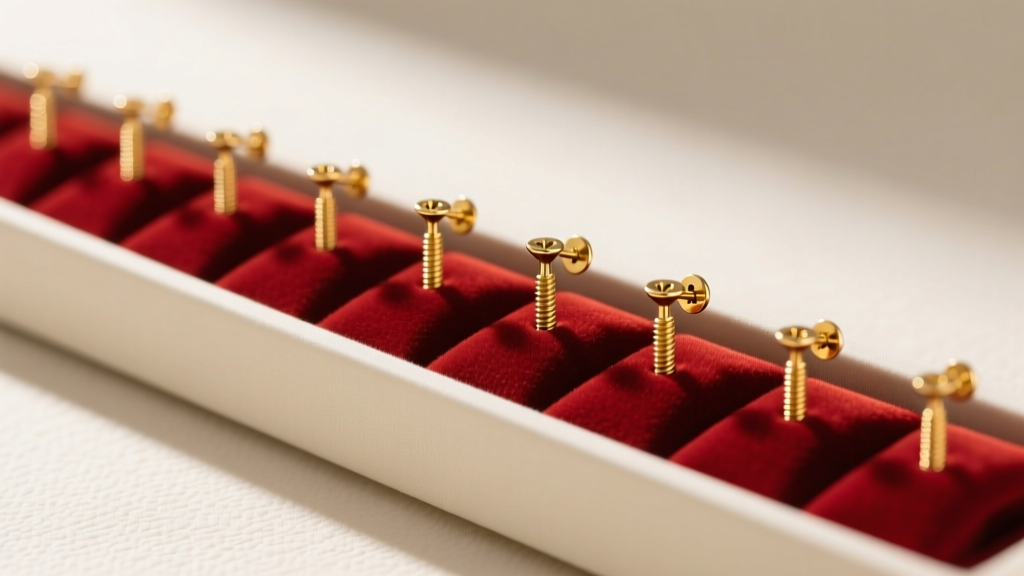
- Use Individual Velvet Pouches: Store each pair in its own soft pouch to prevent metal-on-metal contact.
- Keep Assembled (Loosely): Store the earrings with the screw backs attached, but only screwed on two or three turns. This protects the threads from dust and impact while preventing the backing from getting lost or seized due to long-term tension.
- Silica Gel Packets: Keep a silica gel packet in your jewelry box to control humidity, preventing the oxidation of the copper alloys which can cause threads to 'stick' or seize over time.
Troubleshooting Common Thread Issues
Stuck or Seized Screw Backs
If a screw back refuses to budge, do not reach for metal pliers. Pliers will crush the gold and obliterate the threads. Instead, put on a pair of textured nitrile or latex gloves. The rubber provides immense grip without damaging the metal. Apply a microscopic drop of mineral oil to the thread seam, let it sit for 10 minutes, and use the rubber-gloved fingers to gently twist counter-clockwise.
Cross-Threaded Backings
If you have accidentally cross-threaded a backing, it is generally unfixable at home. Because karat gold is soft, attempting to 're-cut' the threads with a tool will remove too much material, resulting in a loose, insecure fit. According to the APP Jewelry Materials Guide, the only safe remedy for a cross-threaded precious metal component is to take it to a professional bench jeweler who can use a micro-lathe to carefully re-tap the threads or replace the backing entirely.


