Gold Shrimp Earrings: 2026 Trend Analysis & Styling Guide
Discover why gold shrimp earrings dominate 2026's oceanic surrealism trend. Explore casting techniques, material grades, and expert styling tips.

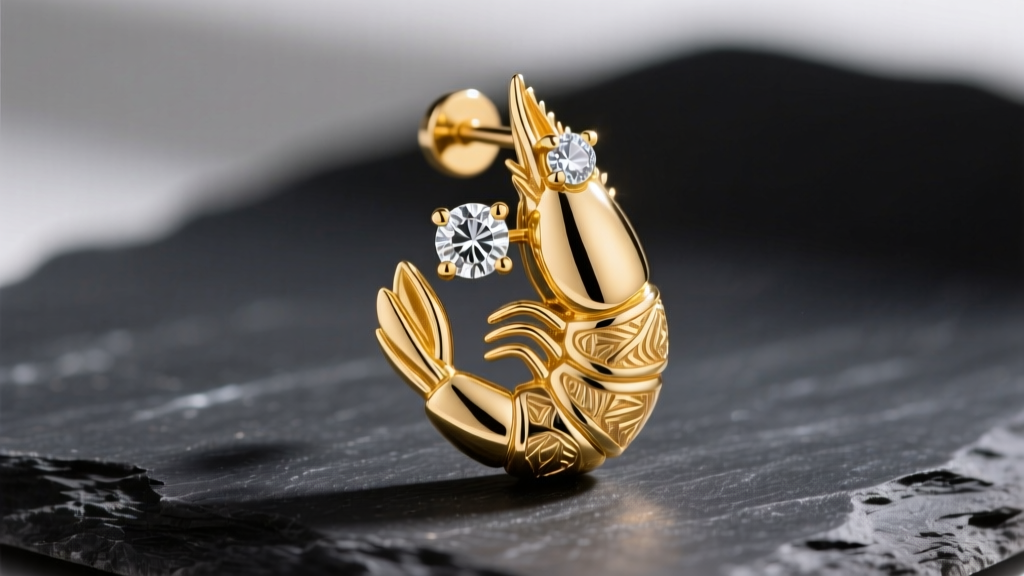
The jewelry landscape of 2026 has decisively pivoted away from the ultra-minimalist aesthetics of the early 2020s, embracing a bold, narrative-driven era known as 'oceanic surrealism.' At the absolute forefront of this movement are gold shrimp earrings. Far from being a mere novelty, the crustacean motif represents a sophisticated intersection of high-fashion whimsy and masterful micro-sculpting. As collectors and style enthusiasts seek pieces that tell a story, the intricate anatomy of the shrimp—complete with segmented tails, delicate walking legs, and sweeping antennae—offers a masterclass in wearable art.
The Evolution of Marine Motifs: Beyond the Starfish
Historically, marine-inspired jewelry relied on the static, symmetrical shapes of starfish, cowrie shells, and seahorses. While these remain staples of coastal resort wear, they lack the dynamic, kinetic energy demanded by contemporary fashion. The shrimp introduces asymmetry, articulation, and a touch of the avant-garde. Drawing inspiration from the surrealist jewelry archives of Elsa Schiaparelli, modern designers are utilizing the shrimp to challenge traditional notions of elegance. According to the Victoria & Albert Museum's jewelry archives, surrealist motifs in adornment have always served to provoke and delight, turning the ordinary into the extraordinary. In 2026, the gold shrimp earring is the ultimate conversation starter, bridging the gap between coastal-core casualness and high-jewelry craftsmanship.
Metallurgy and the Lost-Wax Casting Challenge
Creating a highly detailed gold shrimp earring is a metallurgical and engineering challenge. The intricate undercuts of the shrimp's folded walking legs and the extreme thinness of the antennae require advanced CAD/CAM milling and precise lost-wax casting. Designers must carefully select their gold alloys to ensure the delicate extremities do not snap during the casting process or subsequent polishing.
According to the Gemological Institute of America (GIA), the alloy composition drastically affects the durability and color of the final piece. For a motif with protruding, fragile elements like antennae, 14k gold is often preferred over 18k gold due to its higher Vickers hardness, providing better resistance to bending.
| Material | Gold Purity | Durability & Hardness | Average Price Range (Dangles) | Best For |
|---|---|---|---|---|
| 14k Solid Gold | 58.3% | High (Excellent for thin antennae) | $180 - $350 | Everyday wear, intricate casting |
| 18k Solid Gold | 75.0% | Medium (Softer, prone to bending) | $350 - $650 | Luxury collectors, rich yellow hue |
| Gold Vermeil | N/A (Sterling base) | Low (Plating wears in crevices) | $65 - $120 | Trend testing, occasional wear |
Silhouette Analysis: From Lobe Studs to Helix Cuffs
The versatility of the shrimp motif allows it to be adapted across various earring categories, each requiring distinct engineering solutions.
Articulated Dangles and Drop Earrings
The most popular iteration of the gold shrimp earring is the articulated dangle. To mimic the natural, fluid movement of a swimming shrimp, the tail is divided into three or four separate segments. These segments are connected using micro jump rings. High-end manufacturers use laser welding to close these jump rings, ensuring that the 22-gauge gold loops do not pull apart under the weight of the tail. The post is typically a standard 20-gauge (0.8mm) wire, secured by a la-back (butterfly clutch) or, for heavier solid gold pieces, a secure screw-back to prevent loss.
Cartilage Integration: The Shrimp Ear Cuff
The natural, curved anatomy of a shrimp perfectly mirrors the curvature of the human ear's helix. Designers have capitalized on this by creating shrimp ear cuffs that wrap snugly around the upper cartilage without requiring a piercing.
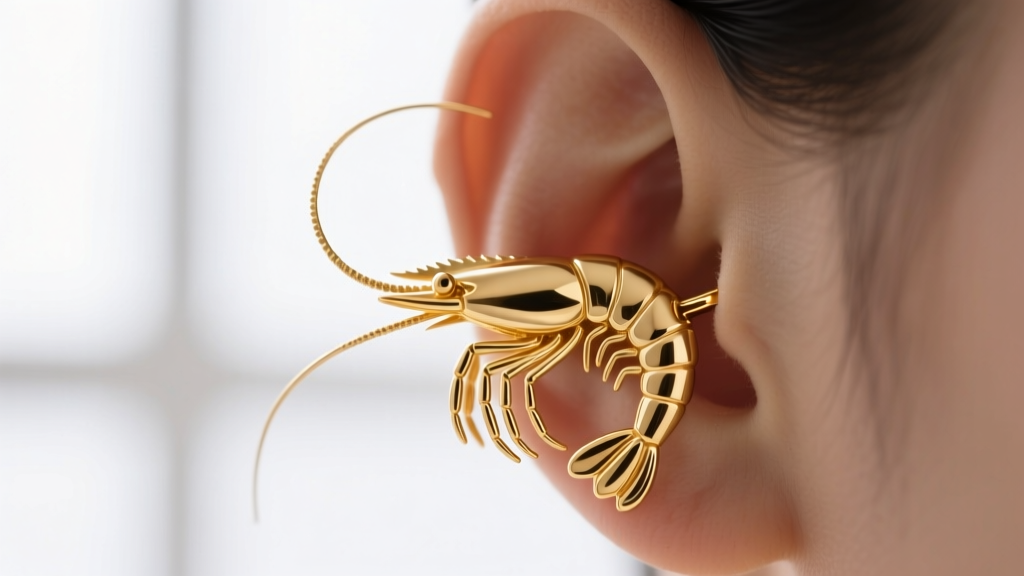 These cuffs are typically forged from 18-gauge (1.0mm) or 16-gauge (1.2mm) wire to maintain tension and grip the ear securely. The shrimp's head rests on the front of the helix, while the curved tail wraps behind, creating an illusion of a crustacean clinging to the ear. The primary challenge here is tension fatigue; repeated opening and closing of vermeil cuffs will cause the metal to snap, making solid gold or silver-gold alloys essential for longevity.
Troubleshooting Structural Failure Modes
When investing in gold shrimp earrings, particularly those with high relief textures and moving parts, buyers must be vigilant about structural integrity. Here are the most common failure modes and how to identify them before purchasing:
- Antennae Snagging and Breakage: Sweeping, wire-like antennae are prone to catching on hair and knitwear. Inspect the base of the antennae where they meet the carapace. There should be a smooth, reinforced solder joint or a thickened base in the CAD design to prevent shearing.
- Crevices Plating Loss: In gold vermeil or gold-plated brass shrimp earrings, the deep grooves between the abdominal segments trap moisture, sweat, and cosmetics. This accelerates the degradation of the gold layer, leading to rapid tarnishing in the crevices. For textured marine motifs, solid gold is highly recommended to avoid this trap.
- Jump Ring Separation: On articulated tails, gently pull the segments apart. If the gap in the jump ring opens easily, it is a mechanical failure waiting to happen. Only purchase pieces where the jump rings are seamlessly laser-welded or soldered shut.
- Post Shearing at the Solder Point: The connection between the shrimp's body and the earring post bears the brunt of the leverage when the earring is bumped. Look for a 'pad' or a widened base at the solder joint rather than a direct, flush weld of a thin 20G wire to the gold body.
Styling Frameworks: Face Shapes and Wardrobe Pairings
Styling gold shrimp earrings requires balancing their inherent visual weight and quirky silhouette with your facial structure and wardrobe.
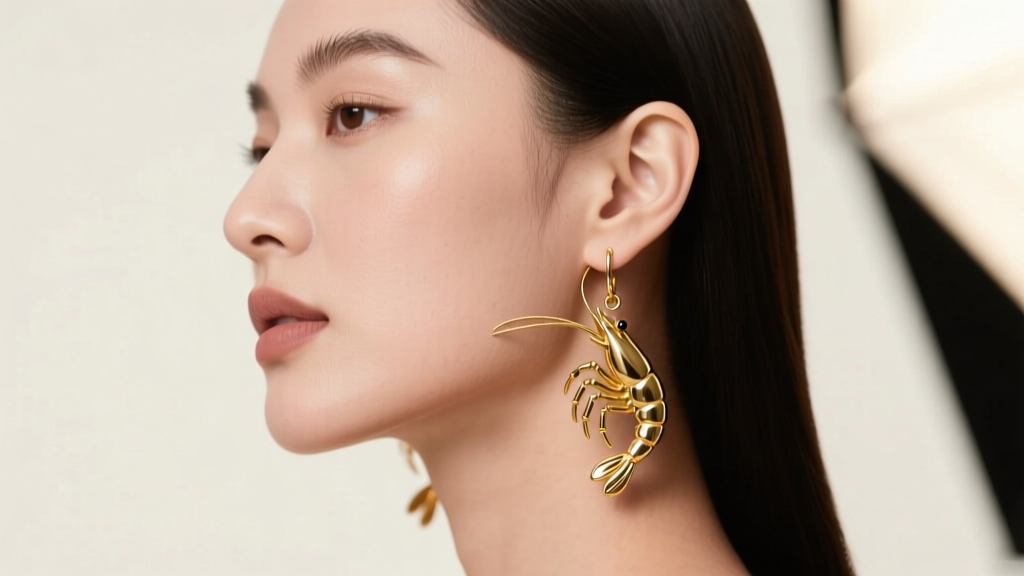
For round and square face shapes, elongated, articulated shrimp drop earrings are ideal. The vertical line created by the dangling, segmented tail helps to visually elongate the face and draw the eye downward, softening strong jawlines. Conversely, those with long or oval face shapes should opt for wider, horizontal shrimp studs or ear cuffs that add lateral volume and balance the face's proportions without adding excessive length.
'The gold shrimp earring is not a background piece; it is a focal point. Pair it with structured, minimalist tailoring—a crisp white poplin shirt or a sleek turtleneck—to allow the intricate gold work and surrealist silhouette to command attention without competing with busy patterns.'
As the oceanic surrealism trend continues to dictate the jewelry market in 2026, the gold shrimp earring stands out as a testament to the industry's return to joy, humor, and impeccable micro-craftsmanship. Whether chosen as an 18k luxury heirloom or a 14k everyday staple, this crustacean motif proves that true elegance often lies in the most unexpected corners of the natural world.


