Style Guide for the Modern Golden Earring Man in 2026
Discover the 2026 style guide for the modern golden earring man. Explore trending silhouettes, gold karats, gauge sizes, and expert placement tips.

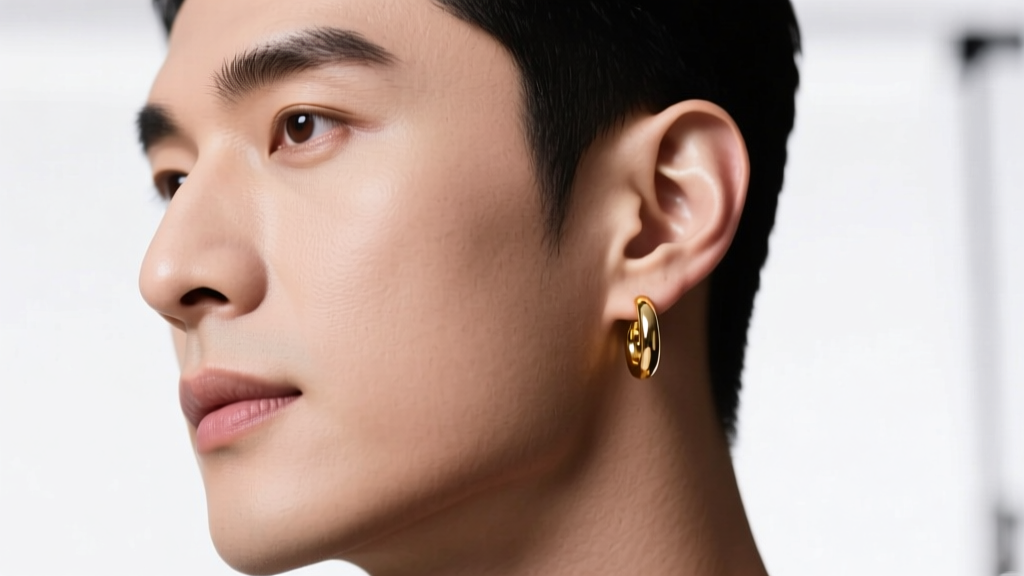
The archetype of the golden earring man has undergone a radical transformation. If the 2010s were defined by the ubiquitous, hyper-polished micro-stud, and the early 2020s by the minimalist seamless hoop, 2026 marks the era of tactile heritage and structural intentionality. Today’s men’s gold earwear is less about subtle accentuation and more about architectural expression. From hammered huggies that catch the light with every turn of the head to signet-style studs that echo vintage pinky rings, the modern aesthetic demands a deeper understanding of metallurgy, gauge physics, and facial geometry.
This comprehensive style and trend analysis breaks down exactly what defines the golden earring man in 2026, providing actionable frameworks for selecting pieces that offer both structural longevity and sartorial impact.
The Evolution of Men's Gold Earwear
Historically, men's gold earrings were confined to two extremes: the flashy, oversized hoops of 1980s pop culture or the conservative, barely-there diamond solitaires of the corporate 1990s. The current landscape rejects both binaries. The 2026 aesthetic is rooted in quiet luxury mixed with artisanal craft. High-polish finishes have been largely replaced by brushed, matte, and hammered textures that develop a rich patina over time. Men are increasingly treating their earwear as permanent fixtures of their personal uniform, opting for heavier gram weights and bespoke silhouettes that feel substantial to the touch.
Defining the 2026 Aesthetic: Key Silhouettes
To build a curated ear stack or select a definitive single piece, it is crucial to understand the three dominant silhouettes driving the market this year.
1. The Textured Huggie
The huggie has evolved from a simple, smooth clicker into a canvas for metalworking. In 2026, the most sought-after huggies feature hand-hammered or sandblasted finishes.
- Optimal Inner Diameter (ID): 8mm to 9mm for a snug lobe fit; 10mm to 12mm for a helix placement.
- Thickness: 2.5mm to 3.5mm width to provide a masculine, substantial profile without dragging the lobe down.
- Hardware: Hidden clicker hinges are preferred over latch-backs to maintain a continuous, unbroken circle of textured gold.
2. The Signet Stud
Borrowing from classic men's signet rings, these studs feature a flat, wide face (typically 4mm to 7mm in diameter) with a matte or brushed finish. Some feature subtle, tone-on-tone engravings or a single, flush-set dark gemstone like black onyx or salt-and-pepper diamond. They sit flush against the lobe, offering a bold geometric anchor that pairs exceptionally well with tailored menswear.
3. The Asymmetric Cartilage Curve
For men with multiple piercings, the trend is moving away from symmetrical matching sets. Instead, the focus is on asymmetric curvature—pairing a heavy, 14-gauge seamless gold ring in the upper helix with a low-profile, textured gold cuff on the conch. This creates a dynamic, sculptural look that follows the natural anatomy of the ear.
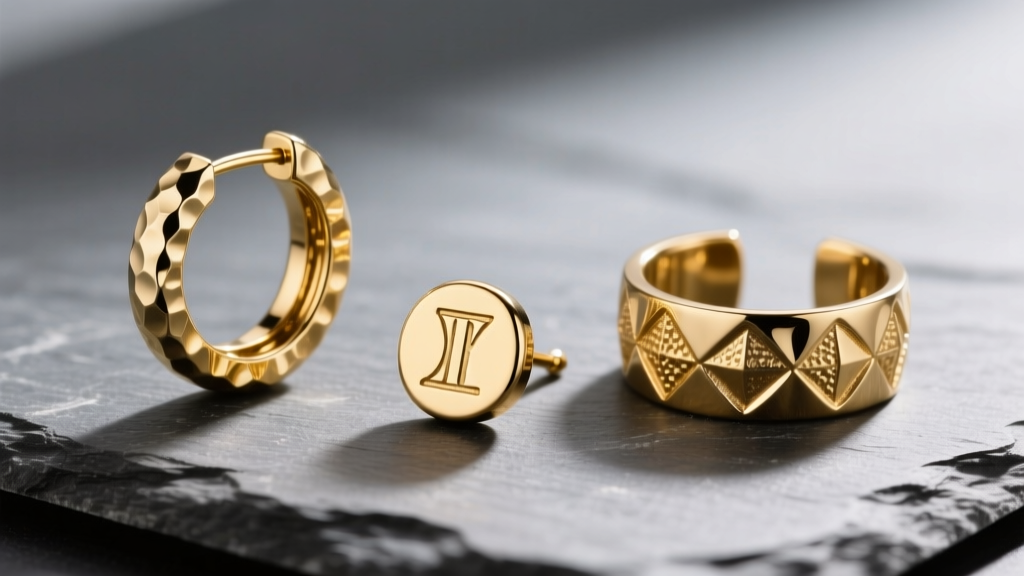
Metallurgy & Material Grades: What to Actually Buy
Not all gold is created equal, especially when subjected to the friction, moisture, and impact of daily wear. Understanding the Vickers hardness and alloy composition of your gold is critical for long-term durability. According to the Gemological Institute of America (GIA), the karat weight dictates not just the color, but the structural integrity of the piece.
| Karat | Gold Purity | Durability & Hardness | Color Profile | Best Use Case | Price Range (Per Stud/Huggie) |
|---|---|---|---|---|---|
| 14k | 58.5% | High (Excellent for daily wear, resists warping) | Warm, slightly muted yellow | Seamless hoops, clicker huggies, active lifestyles | $150 – $350 |
| 18k | 75.0% | Medium (Prone to micro-scratches, softer hinges) | Rich, deep, saturated yellow | Signet studs, low-impact lobe wear, luxury pieces | $300 – $650 |
| 22k | 91.6% | Low (Highly malleable, bends easily) | Intense, orange-leaning yellow | Artisanal cuffs, occasional wear, collector pieces | $500 – $1,200+ |
Expert Insight: For the modern golden earring man who refuses to take his earrings off in the shower or gym, 14k yellow gold remains the undisputed champion. The alloy metals (typically copper and silver) provide the necessary tensile strength to keep clicker hinges snapping shut securely and prevent seamless rings from warping out of shape.
Gauge Sizes and Piercing Logistics
A common failure mode in men's jewelry is selecting the wrong gauge (thickness) for the specific piercing placement, leading to the "cheese-cutter effect" (where thin metal migrates through the tissue) or hardware that simply looks disproportionately delicate on a masculine frame.
The Association of Professional Piercers (APP) outlines standard sizing, but men's styling in 2026 often intentionally scales up for visual weight.
- Standard Lobe (20g / 0.81mm or 18g / 1.02mm): Best for signet studs and lightweight huggies. If you are wearing a heavy, solid-gold textured huggie, ensure your lobe is pierced at 18g or 16g to support the gram weight without stretching the fistula over time.
- Cartilage / Helix (16g / 1.29mm or 14g / 1.60mm): Men’s cartilage jewelry should almost never be 18g or thinner. A 16g or 14g seamless ring provides the structural rigidity needed to maintain a perfect circle and prevents the metal from bending when snagged on clothing or towels.
- Industrial / Conch (14g / 1.60mm): For barbells or large conch hoops, 14g is the baseline for safety and aesthetic proportion.
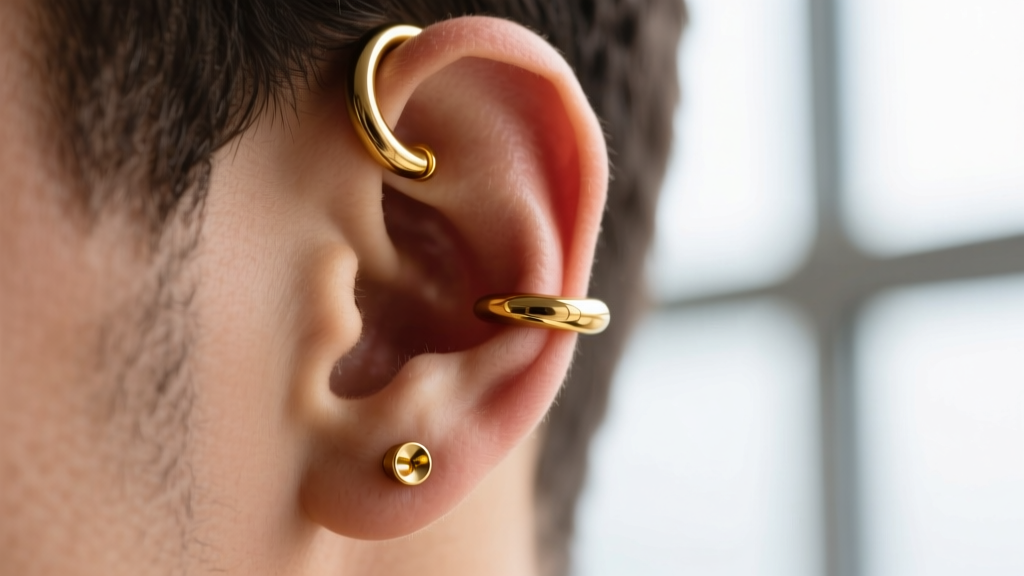
Face Shape & Placement Strategy
The placement and silhouette of a gold earring can subtly alter the perceived geometry of the face. Here is a practical decision framework for 2026:
Square and Angular Jawlines
Men with strong, square jaws should lean into curved silhouettes to soften the lower half of the face. A medium-weight, hammered gold huggie (10mm ID) or a continuous seamless hoop in the lower lobe complements angular features without competing with them. Avoid sharp, geometric drop earrings, which can make the face look overly severe.
Round and Oval Faces
For rounder face shapes, introducing angularity and verticality is key. A flat-faced, hexagonal gold signet stud or a subtle, structured gold drop earring (no longer than 15mm) draws the eye downward, elongating the profile. Helix placements with structured, geometric gold cuffs also help to add vertical structure to the upper face.
Maintenance and Patina Preservation
The 2026 aesthetic embraces the "lived-in" look, meaning you do not need to obsessively polish your gold to a mirror shine. In fact, a slight patina in the crevices of a hammered huggie adds depth and character. However, basic maintenance is required to prevent the buildup of sebum and environmental debris, which can degrade the alloy over time and cause skin irritation.
"The goal of modern men's gold jewelry isn't to look like it just came out of a velvet box. The goal is to look like it has been worn every day for a decade, molding to the wearer's life while retaining its structural integrity."
Actionable Care Routine:
- Weekly Wash: Use a few drops of mild, phosphate-free dish soap in warm water. Soak the earrings (if removed) or gently lather the lobes (if left in) for 3 minutes.
- Soft Agitation: Use an extra-soft baby toothbrush to gently sweep the inside of the huggie hinge and the back of the signet stud post. Hinge failure is almost always caused by microscopic soap and skin cell buildup preventing the mechanism from locking.
- Drying: Pat dry with a microfiber cloth. Avoid paper towels, which can leave micro-scratches on high-polish accents.
- Chemical Avoidance: While 14k gold is highly resistant to tarnish, prolonged exposure to chlorinated pool water can weaken the copper and silver alloys, leading to structural brittleness over years of exposure. Rinse with fresh water immediately after swimming.
The Verdict
The golden earring man of 2026 is defined by intentionality. By moving away from mass-market, high-polish basics and investing in textured, properly gauged, and anatomically considered pieces, men are reclaiming gold earwear as a cornerstone of modern masculine style. Whether you are anchoring your look with a heavy 14k signet stud or curating an asymmetric cartilage stack with hammered hoops, the key lies in respecting the metallurgy and embracing the patina of daily wear.


